The State of Honda's Plug-In Hybrid Strategy
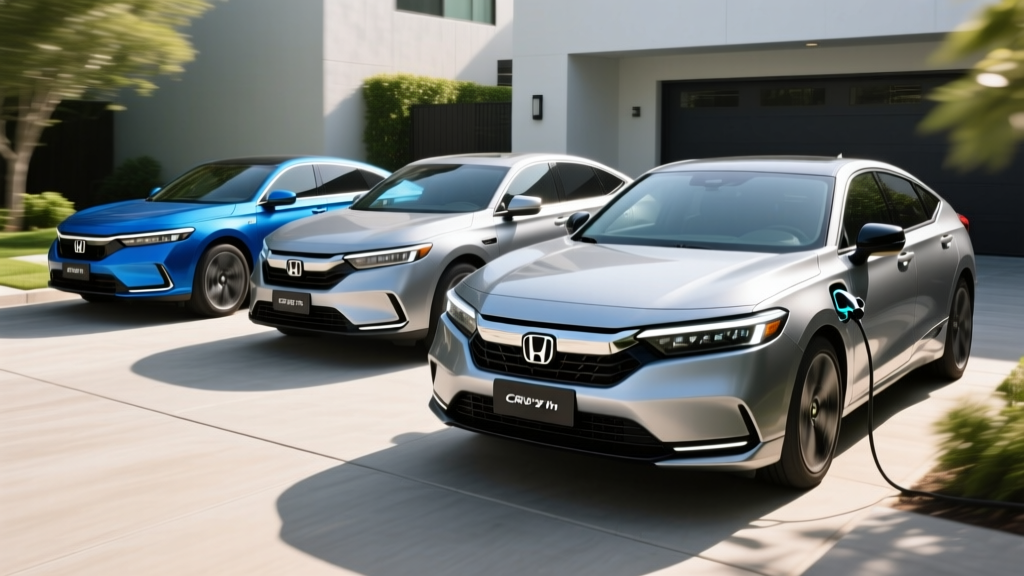
Honda has taken a cautious path into plug-in hybrids compared to rivals like Toyota (RAV4 Prime) and Hyundai (Tucson PHEV). As of 2026, the primary Honda PHEV available in North America is the CR-V e:PHEV, while the broader lineup leans heavily on conventional hybrids (HEVs) like the Accord Hybrid and CR-V Hybrid. The earlier Clarity Plug-In Hybrid was discontinued after the 2021 model year, leaving a gap that Honda is only now filling with updated e:PHEV technology.
If you're searching for a "Honda PHEV," you're likely weighing whether Honda's plug-in offering is worth the premium over its strong conventional hybrids — or whether a full battery-electric vehicle (BEV) like the Honda Prologue makes more sense. This guide breaks down the exact specs, real-world efficiency, tax credit eligibility, and ownership economics you need to decide.
HEV vs PHEV: What Honda Actually Sells
Before diving into specs, it's critical to understand the difference between Honda's hybrid types, because the charging requirements, fuel economy, and pricing diverge significantly.
| Feature | HEV (Conventional Hybrid) | PHEV (Plug-In Hybrid) |
|---|---|---|
| Plug in to charge? | No — regenerates via braking and engine | Yes — plug in to unlock electric-only driving |
| Battery size | 1.0–1.3 kWh (small buffer) | 17.7 kWh usable (CR-V e:PHEV) |
| Electric-only range | ~1 mile at low speed | 34 miles EPA (CR-V e:PHEV) |
| Example (2026) | CR-V Hybrid, Accord Hybrid | CR-V e:PHEV |
| Federal tax credit | None | Up to $7,500 (subject to §30D rules) |
| Price premium over gas | ~$1,500–$2,500 | ~$6,000–$8,000 |
Conventional Honda hybrids like the Accord Hybrid (48/47/48 MPG city/highway/combined per fueleconomy.gov) never need a plug. They use a small battery and regenerative braking to assist the gasoline engine, delivering excellent efficiency without lifestyle changes. PHEVs add a larger battery and more powerful electric motor, enabling daily electric-only commuting — but require access to charging to realize their full benefit.
2026 Honda CR-V e:PHEV: Full Specs and Efficiency
The CR-V e:PHEV is Honda's flagship plug-in for the U.S. market. Here's the complete data table:
| Specification | 2026 Honda CR-V e:PHEV |
|---|---|
| Powertrain | 2.0L Atkinson-cycle 4-cyl + 2 electric motors |
| Combined output | 204 hp / 247 lb-ft torque |
| Battery (usable) | 17.7 kWh, lithium-ion (NMC chemistry) |
| EPA electric-only range | 34 miles |
| EPA MPGe (electric + gas) | 105 MPGe combined |
| EPA MPG (gas-only, after battery depletes) | 40 city / 37 highway / 39 combined |
| Total combined range | ~430 miles (gas + electric) |
| Level 1 charging (120V) | ~12 hours (0–100%) |
| Level 2 charging (240V, 3.6 kW) | ~5.5 hours (0–100%) |
| DC fast charging | Not supported |
| 0–60 mph | ~7.8 seconds |
| Drivetrain | FWD standard (AWD available on select trims) |
| Cargo volume (rear seats up) | 36.3 cu ft (slightly reduced vs. HEV due to battery) |
| Base MSRP (Sport Touring PHEV) | $40,450 |
Real-World MPG vs. EPA Sticker
The EPA rates the CR-V e:PHEV at 39 MPG combined once the battery is depleted. In real-world mixed driving, owners typically report 37–41 MPG depending on climate and terrain. Highway-only driving at 75+ mph tends to yield 35–37 MPG — the Atkinson-cycle engine prioritizes efficiency over high-RPM power. In city driving with frequent regenerative braking opportunities, 42–44 MPG is achievable.
For the electric-only portion, the 34-mile EPA range assumes moderate temperatures and mixed speeds. Expect 28–30 miles in winter (below 40°F) and 30–32 miles at sustained highway speeds. If your commute is under 30 miles round-trip and you charge nightly, you may go weeks without burning gasoline.
EPA electric-only: 34 miles | Real-world summer: ~32–34 mi | Real-world winter: ~26–30 mi
EPA gas-only: 39 MPG combined | Real-world highway: ~35–37 MPG | Real-world city: ~41–44 MPG
Charging the CR-V PHEV: What You Need to Know
The CR-V e:PHEV charges at a maximum of 3.6 kW on Level 2 (240V). This is relatively modest — it means a full charge takes roughly 5.5 hours, which is fine for overnight home charging but means you won't top up quickly at a public station during a shopping trip.
| Charging Level | Power | Time (0–100%) | Miles of EV Range Added per Hour |
|---|---|---|---|
| Level 1 (120V household) | ~1.4 kW | ~12 hours | ~3 miles/hour |
| Level 2 (240V, 16A) | 3.6 kW | ~5.5 hours | ~6 miles/hour |
| DC Fast Charge | N/A — not supported | N/A | N/A |
Key takeaway: The lack of DC fast charging is the CR-V e:PHEV's biggest limitation for road trips. On long drives, you'll operate exclusively as a hybrid (39 MPG) after the first 34 miles. If you frequently take road trips and want to charge quickly at public DC stations, a full BEV or a PHEV with DC capability (like the Toyota RAV4 Prime, which also lacks DCFC, or the Hyundai Tucson PHEV) should be evaluated. In practice, most PHEV owners charge at home and rarely need public charging.
Pricing, Trims, and Tax Credit Eligibility
The 2026 CR-V e:PHEV is offered primarily in the Sport Touring trim at a starting MSRP of $40,450 (plus destination). This represents a premium of roughly $6,500 over the CR-V Hybrid Sport Touring.
Does the Honda CR-V PHEV Qualify for a Federal Tax Credit?
Under IRS §30D Clean Vehicle Credit rules, the CR-V e:PHEV's eligibility depends on several factors that change annually:
- Battery capacity: The 17.7 kWh battery exceeds the 7 kWh minimum ✓
- MSRP cap: SUVs must be under $80,000 — the CR-V e:PHEV at $40,450 qualifies ✓
- Buyer income cap: AGI must not exceed $150,000 (single) / $300,000 (joint) — verify your situation
- Critical minerals & battery sourcing: Must meet phased-in percentages for North American sourcing — Honda has been working to localize supply chains, but verify current-year compliance on the IRS eligible vehicles list
- Final assembly: Must be assembled in North America — the CR-V for the U.S. market is built in Ohio ✓
- Point-of-sale transfer: As of 2024+, you can transfer the credit to the dealer for an immediate price reduction at purchase
Critical caveat: Battery sourcing requirements tighten each year under the Inflation Reduction Act. A vehicle that qualifies in January may face different rules by December. Always check the fueleconomy.gov tax credit lookup and consult a tax professional before relying on the credit in your purchase decision. The maximum potential credit is $7,500, but partial credits ($3,750) apply if only one of the two sourcing thresholds is met.
Battery Warranty, Reliability, and Replacement Cost
Honda provides a hybrid battery warranty of 8 years / 100,000 miles (10 years / 150,000 miles in CARB states including California, New York, Massachusetts, and others). This warranty covers defects and capacity loss below a specified threshold — typically 60–70% of original capacity, though Honda's exact retention guarantee should be confirmed in your purchase documentation.
Standard: 8 years / 100,000 miles
CARB states: 10 years / 150,000 miles
Coverage: Defects + capacity loss below threshold
Estimated out-of-warranty replacement: $8,000–$12,000 (battery pack + labor)
Is the Honda CR-V PHEV Reliable?
Honda's two-motor hybrid system has been in production since the 2014 Accord Hybrid and has proven durable. The e:PHEV system is an evolution of this architecture with a larger battery. IIHS typically rates the CR-V highly for crash safety, and Honda Sensing (ADAS suite) is standard.
The primary reliability concern is long-term battery degradation. Lithium-ion NMC batteries in PHEVs typically lose 10–15% capacity over 8–10 years based on data from similar systems. Because the CR-V e:PHEV has a relatively modest electric range to begin with (34 miles), a 15% loss would reduce that to ~29 miles — still usable for short commutes. Out-of-warranty battery replacement is estimated at $8,000–$12,000, though prices are expected to decline as battery manufacturing scales.
Honda PHEV vs. HEV vs. Full EV: Which Fits You?
- Your daily commute is under 30 miles round-trip and you can charge at home nightly
- You want electric daily driving but need 400+ mile road-trip range without planning charging stops
- You live in a region with extreme cold where BEV range loss is a concern
- You want to reduce gasoline consumption by 60–80% without full EV commitment
- You cannot install a home charger (apartment, street parking, no garage)
- Your budget is tighter — the HEV saves $6,500 upfront with only marginally higher fuel costs
- You want simplicity — no charging cables, no battery preconditioning, no plug-in habits to build
- You drive mostly highway miles where the HEV's 37–40 MPG is already excellent
- You have reliable home Level 2 charging and your daily driving is under 250 miles
- You want zero tailpipe emissions and minimal maintenance (no oil changes, no engine)
- You want the full $7,500 federal tax credit with fewer sourcing complications (BEVs typically qualify more readily)
- You're willing to plan DC fast-charging stops on road trips
5-Year Ownership Cost Snapshot
| Cost Factor | CR-V Hybrid (HEV) | CR-V e:PHEV | Notes |
|---|---|---|---|
| Purchase price (MSRP) | $33,950 | $40,450 | Before incentives |
| Federal tax credit | $0 | $0–$7,500 | Depends on §30D sourcing rules |
| Fuel/energy (5 yrs, 15k mi/yr) | ~$7,200 (gas) | ~$3,800 (electric + gas) | Assumes 70% electric commuting |
| Maintenance (5 yrs) | ~$2,800 | ~$2,400 | PHEV: less engine runtime = less wear |
| Insurance (5 yrs) | ~$7,500 | ~$8,200 | PHEV slightly higher replacement cost |
| Estimated 5-yr total | ~$51,450 | ~$47,350–$54,850 | PHEV wins only if credit applies |
The math is clear: the CR-V e:PHEV becomes the better financial choice only if you qualify for the full or partial federal tax credit AND you charge regularly to capture electric-only miles. Without the credit and without home charging, the HEV is the more economical path.
Frequently Asked Questions
How many MPG does the Honda CR-V PHEV get?
The EPA rates the 2026 CR-V e:PHEV at 40 city / 37 highway / 39 combined MPG after the battery is depleted. In electric mode, it achieves 105 MPGe combined. Real-world results vary: expect 41–44 MPG in city driving with regen opportunities and 35–37 MPG on sustained highway runs.
How far can the Honda CR-V PHEV go on electric only?
The EPA-rated electric-only range is 34 miles. In real-world conditions, expect 30–34 miles in warm weather and 26–30 miles in freezing temperatures. Highway driving at 70+ mph reduces electric range to roughly 28–30 miles.
Does the Honda PHEV need to be plugged in?
Yes, to get the benefit of electric-only driving. However, if you never plug it in, the CR-V e:PHEV still operates as a conventional hybrid with 39 MPG combined — just like the CR-V Hybrid. You won't damage the vehicle by skipping charging; you simply forfeit the electric range and fuel savings.
Does the Honda CR-V PHEV qualify for a tax credit?
Potentially up to $7,500 under IRS §30D, but eligibility depends on current-year battery sourcing requirements, your income, and the vehicle's MSRP (which is under the $80,000 SUV cap). Always verify on fueleconomy.gov before purchasing, as rules change annually.
Is the Honda PHEV battery reliable and what does replacement cost?
Honda's two-motor hybrid system has a strong reliability track record dating to 2014. The battery is warrantied for 8 years/100,000 miles (10/150,000 in CARB states). Out-of-warranty replacement is estimated at $8,000–$12,000, though costs are declining. Most PHEV batteries retain 85–90% capacity at the 8-year mark based on industry data.
Can the Honda CR-V PHEV DC fast charge?
No. The CR-V e:PHEV supports only Level 1 (120V) and Level 2 (240V at 3.6 kW max). A full charge on Level 2 takes about 5.5 hours. This is typical for most compact PHEVs — DC fast charging is generally reserved for full battery-electric vehicles.
Should I buy the Honda PHEV or a full electric vehicle?
If you have home charging, drive under 250 miles daily, and are comfortable planning road-trip charging stops, a full BEV like the Honda Prologue (296-mile EPA range) offers lower running costs and zero tailpipe emissions. If you lack reliable charging access, regularly drive 300+ miles, or live in extreme cold, the CR-V e:PHEV gives you electric commuting without range anxiety.
- 34-mile electric range covers most commutes
- 39 MPG hybrid mode is excellent for the class
- No range anxiety — 430+ total miles
- Honda Sensing ADAS standard
- Strong reliability track record
- Eligible for up to $7,500 tax credit (verify yearly)
- No DC fast charging
- Modest 3.6 kW Level 2 rate
- ~$6,500 premium over CR-V Hybrid
- Cargo space slightly reduced vs. HEV
- Tax credit eligibility uncertain year-to-year
- Only available in Sport Touring trim