The 2026 Ford Plug-In Hybrid Lineup: What's Actually Available?
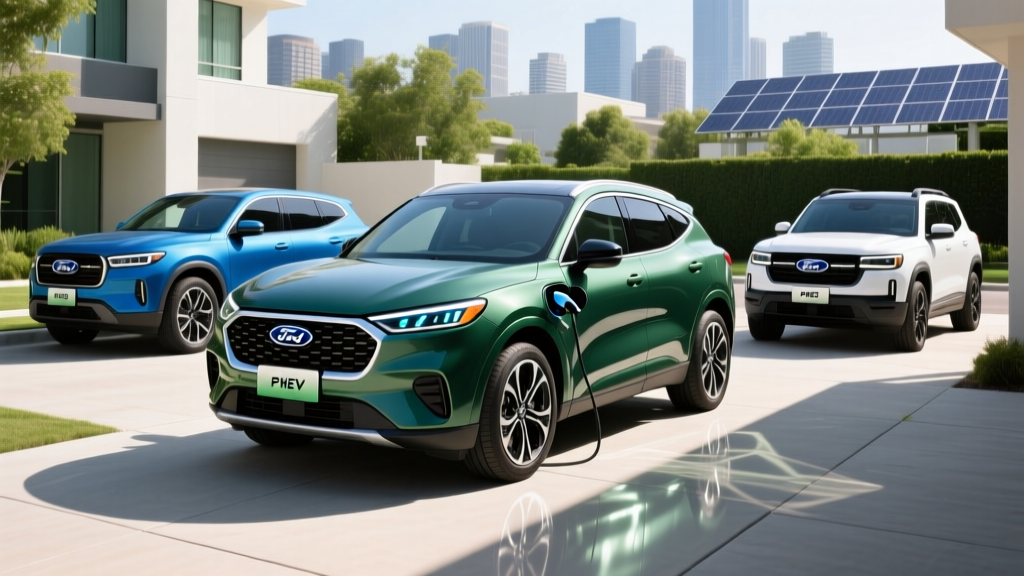
If you're researching Ford plug-in hybrids, the picture in 2026 is straightforward: the Ford Escape Plug-In Hybrid (PHEV) is the sole model in Ford's U.S. PHEV lineup. The Maverick hybrid and F-150 PowerBoost are conventional hybrids (HEVs) — they cannot plug in. The Explorer Hybrid was discontinued after 2024. That makes the Escape PHEV the definitive answer for buyers who want Ford's plug-in electrification without committing to a full battery-electric vehicle like the Mustang Mach-E.
The Escape PHEV pairs a 2.5-liter Atkinson-cycle four-cylinder engine with a front-mounted electric motor and a 14.4 kWh lithium-ion battery pack, delivering an EPA-estimated 37 miles of electric-only range and 105 MPGe when operating in EV mode. Once the battery depletes, it functions as a conventional hybrid returning 40 MPG combined. For the right buyer — someone with home charging access and a daily commute under 35 miles — it can operate as an EV on most days while retaining gas-engine flexibility for road trips.
HEV vs. PHEV: Know the Difference Before You Buy
Conventional Hybrid (HEV) — Found in the Ford Maverick Hybrid and F-150 PowerBoost. Uses a small battery (typically 1–2 kWh) recharged exclusively through regenerative braking and the gas engine. Never plugs in. Delivers modest MPG gains with zero behavior change.
Plug-In Hybrid (PHEV) — The Ford Escape PHEV. Uses a larger battery (14.4 kWh) that you charge by plugging into a wall outlet or Level 2 charger. Provides meaningful electric-only driving range (37 miles) before the gas engine engages. Requires access to charging infrastructure to realize full value.
2026 Ford Escape PHEV: Full Specifications
| Specification | 2026 Ford Escape PHEV |
|---|---|
| Powertrain | 2.5L Atkinson-cycle I4 + permanent-magnet electric motor |
| Combined Horsepower | 210 hp (net system output) |
| Battery Capacity | 14.4 kWh (lithium-ion, NMC chemistry) |
| Electric-Only Range (EPA) | 37 miles |
| Total Combined Range | ~520 miles (EV + gas, 14.2-gal tank) |
| MPGe (EV Mode) | 105 MPGe combined |
| MPG (Hybrid Mode) | 40 combined / 42 city / 36 highway |
| Drivetrain | Front-wheel drive (eCVT) — AWD not available on PHEV |
| 0–60 mph | ~8.4 seconds |
| Level 1 Charging (120V) | ~10–11 hours (full charge) |
| Level 2 Charging (240V) | ~3.5 hours (full charge at 3.6 kW onboard charger) |
| DC Fast Charging | Not supported |
| Cargo Volume | 34.4 cu ft (rear seats up) |
| Base MSRP | $39,400 (PHEV FWD base) |
Source: fueleconomy.gov and Ford Motor Company 2026 specifications.
Fuel Economy: EPA Ratings vs. Real-World MPG
| Driving Mode | City | Highway | Combined |
|---|---|---|---|
| Electric-Only (MPGe) | 110 | 99 | 105 |
| Hybrid Mode (MPG) | 42 | 36 | 40 |
| Real-World Highway (est.) | — | ~33–35 | — |
The EPA's 40 MPG combined figure is a solid baseline, but real-world results depend heavily on how you use the vehicle. In city driving with frequent stops — where regenerative braking recaptures the most energy — owners regularly report 42–46 MPG in hybrid mode, sometimes exceeding the EPA city rating. Highway driving at 75+ mph tells a different story: expect 33–35 MPG once the battery is depleted, as the boxy crossover profile and engine RPM at speed work against efficiency.
The electric-only range of 37 miles EPA is achievable in moderate temperatures (60–80°F) on flat, suburban routes. In winter conditions below 30°F, battery chemistry and cabin heating demands reduce that figure to approximately 25–30 miles. If your daily commute is 25 miles round-trip and you charge at home nightly, you may go weeks without the engine engaging at all — Ford's system will periodically start the engine for maintenance cycles, but fuel consumption drops dramatically.
Charging: What You Need to Know Before You Plug In
The Escape PHEV uses a standard J1772 connector for AC charging. It does not support DC fast charging — a limitation common to most PHEVs, where the smaller battery makes DC infrastructure unnecessary for daily use.
Practical charging reality: The onboard charger is limited to 3.6 kW. Even on a 48-amp Level 2 home charger capable of delivering 11.5 kW, the Escape PHEV will only draw 3.6 kW. This means a full 0–100% charge takes roughly 3.5 hours on Level 2. The upside: you don't need an expensive high-amperage charger. A basic 16-amp Level 2 unit (like the Ford Mobile Power Cord with a 240V NEMA 14-50 outlet) handles the job perfectly and costs significantly less to install.
For most PHEV owners, Level 1 charging (standard 120V household outlet) is sufficient. Plugging in overnight yields a full charge in 10–11 hours — more than enough to replenish the 37-mile range by morning. If your commute is shorter than the electric range and you have access to a standard outlet at home or work, Level 1 alone may be all you need, avoiding the $500–$1,500 cost of Level 2 installation entirely.
Pricing, Trims, and Tax Credit Eligibility
The 2026 Ford Escape PHEV starts at $39,400 (including destination) for the base FWD trim. Higher trims — Premium and PHEV Platinum — push the MSRP to approximately $43,000–$45,000 with additional features like the BlueCruise hands-free driving system, panoramic sunroof, and upgraded infotainment.
Federal Tax Credit: Does the Escape PHEV Qualify?
Under current IRS §30D rules, the Ford Escape PHEV does not qualify for the full $7,500 federal tax credit. To qualify, a PHEV must have a battery capacity of at least 7 kWh (the Escape meets this at 14.4 kWh) and satisfy critical-mineral sourcing and battery-component manufacturing requirements that shift annually. As of the 2026 tax year, most Ford PHEVs fail the battery-component sourcing test due to foreign entity of concern (FEOC) restrictions on materials processed in China.
However, some buyers may qualify for a partial credit depending on how the sourcing rules apply at point of sale. Always verify current eligibility on fueleconomy.gov and consult a tax professional before relying on credit projections. The $7,500 point-of-sale transfer option is available only for vehicles that meet full eligibility.
Income caps still apply: $150,000 single / $225,000 head of household / $300,000 joint filers (modified AGI).
State and local incentives may partially offset the price. California's Clean Vehicle Rebate, Colorado's tax credit, and various utility-company rebates for PHEV purchases can reduce the effective price by $1,000–$4,000 depending on your jurisdiction. Check your state energy office and local utility for current programs.
Hybrid vs. PHEV vs. Full EV: Which Powertrain Fits You?
Choose the Ford Escape PHEV If:
- Your daily commute is under 35 miles round-trip and you have home charging access
- You want electric daily driving but take road trips where charging infrastructure is sparse
- You live in an apartment or area where reliable public DC fast charging is limited
- You want to reduce fuel consumption by 70–90% on weekdays without range anxiety on weekends
Choose a Conventional Ford Hybrid (Maverick HEV, F-150 PowerBoost) If:
- You have no access to home or workplace charging
- You want improved MPG with zero behavior change — no plugging in required
- You need AWD or a truck platform (Escape PHEV is FWD-only)
Choose a Full EV (Mustang Mach-E) If:
- Your daily driving is under 250 miles and you have reliable Level 2 home charging
- You want to eliminate gasoline purchases entirely and access the full $7,500 federal credit (Mach-E eligibility varies by sourcing)
- You want lower maintenance costs — no oil changes, no spark plugs, no transmission fluid
The PHEV occupies a specific niche: it's the rational bridge for buyers who aren't ready to commit to full electric but want to dramatically cut fuel costs. The math works best when you charge daily. If you never plug in a PHEV, you're carrying 300+ pounds of dead battery weight and getting worse MPG than a conventional hybrid — the worst of both worlds.
Reliability, Battery Warranty, and Long-Term Costs
Ford Hybrid/PHEV Battery Warranty: 8 years / 100,000 miles (whichever comes first), covering the high-voltage battery against defects and capacity loss below 70% of original capacity. In California and states adopting CARB emissions standards, the warranty extends to 10 years / 150,000 miles.
Ford's hybrid powertrain has accumulated substantial real-world reliability data. The 2.5L Atkinson-cycle engine used in the Escape PHEV is a naturally aspirated, low-stress design — no turbocharger, no direct injection complexity — that has powered Ford hybrids since 2013. The eCVT transmission contains no traditional gears or clutch packs; it uses a planetary gearset that is mechanically simple and durable.
High-voltage battery replacement cost for the Escape PHEV, should it be needed outside warranty, typically ranges from $4,500 to $7,000 including labor at a dealership. However, PHEV battery failure before 150,000 miles is uncommon. Ford's battery management system maintains a buffer zone — the usable 14.4 kWh is less than the gross cell capacity — which reduces degradation stress. Most owners report less than 10% capacity loss over the first 5 years of ownership.
For context, the conventional hybrid components (motor, inverter, eCVT) are also covered under the 8-year/100,000-mile warranty. Ford's official warranty documentation details specific coverage terms by component.
Pros, Cons, and the Bottom Line
Pros
- 37-mile electric range covers most daily commutes entirely on electricity
- 40 MPG combined in hybrid mode is competitive for a compact crossover
- No range anxiety — 520+ mile total range with the gas engine
- Level 1 charging is sufficient for most owners (no expensive install required)
- Strong city MPG that often exceeds EPA estimates in stop-and-go traffic
- 8-year/100,000-mile hybrid battery warranty provides peace of mind
Cons
- Front-wheel drive only — no AWD option on the PHEV variant
- Limited federal tax credit eligibility due to battery sourcing rules
- No DC fast charging — acceptable for PHEV, but a limitation vs. full EVs
- 3.6 kW onboard charger caps Level 2 speed (can't leverage faster home chargers)
- $39,400 starting price is ~$8,000 more than the gas-only Escape
- Highway MPG drops noticeably above 70 mph once the battery is depleted
The 2026 Ford Escape PHEV makes a compelling case for a specific buyer: the commuter with home charging who wants electric daily driving without sacrificing road-trip flexibility. It won't match a full EV's per-mile fuel cost savings, and the lack of AWD eliminates it for snow-belt buyers who need all-weather traction. But for the suburban two-car household looking to electrify one vehicle without the commitment, the Escape PHEV delivers where it counts — at the gas pump on Monday through Friday.
Frequently Asked Questions
How many MPG does the Ford Escape PHEV get?
The EPA rates the 2026 Escape PHEV at 42 city / 36 highway / 40 combined MPG when operating in hybrid mode (after the battery is depleted). In electric-only mode, it achieves 105 MPGe combined. Real-world city driving often exceeds the EPA city rating, reaching 42–46 MPG, while sustained highway driving at 75+ mph typically yields 33–35 MPG.
How far can the Ford Escape PHEV go on electric only?
The EPA estimates 37 miles of electric-only range. In moderate temperatures with suburban driving, this figure is achievable. Expect 25–30 miles in cold weather (below 30°F) due to battery chemistry limitations and cabin heating demands. Total combined range (electric + gas) is approximately 520 miles.
Does the Ford Escape PHEV qualify for a federal tax credit?
As of the 2026 tax year, the Escape PHEV does not qualify for the full $7,500 §30D federal tax credit due to battery-component sourcing requirements under the FEOC rules. Some partial credit may apply depending on IRS guidance at time of purchase. Verify eligibility at fueleconomy.gov and consult a tax professional. State and utility incentives may provide additional savings.
Is the Ford Escape PHEV reliable, and what does battery replacement cost?
Ford's 2.5L hybrid powertrain has been in production since 2013 and has a strong reliability track record. The high-voltage battery is warranted for 8 years/100,000 miles (10 years/150,000 miles in CARB states). Out-of-warranty battery replacement costs $4,500–$7,000, though premature failure is rare. Most batteries retain over 90% capacity after 5 years of typical use.
Do I need to install a Level 2 charger for the Escape PHEV?
No. The Escape PHEV's 14.4 kWh battery charges fully in 10–11 hours on a standard 120V household outlet (Level 1), which is sufficient for daily use if your commute is within the 37-mile electric range. A Level 2 charger reduces charge time to ~3.5 hours but is optional. Given the 3.6 kW onboard charger limit, an inexpensive 16-amp Level 2 unit is adequate — no need for a premium 48-amp charger.
Can I get all-wheel drive on the Ford Escape PHEV?
No. The 2026 Escape PHEV is front-wheel drive only. AWD is available on the conventional gas and hybrid Escape trims, but the PHEV powertrain's packaging does not accommodate a rear motor or driveshaft. If AWD is a priority, you'll need to consider the Escape Hybrid (HEV) or a competing PHEV like the Toyota RAV4 Prime, which offers electronic AWD via a rear motor.