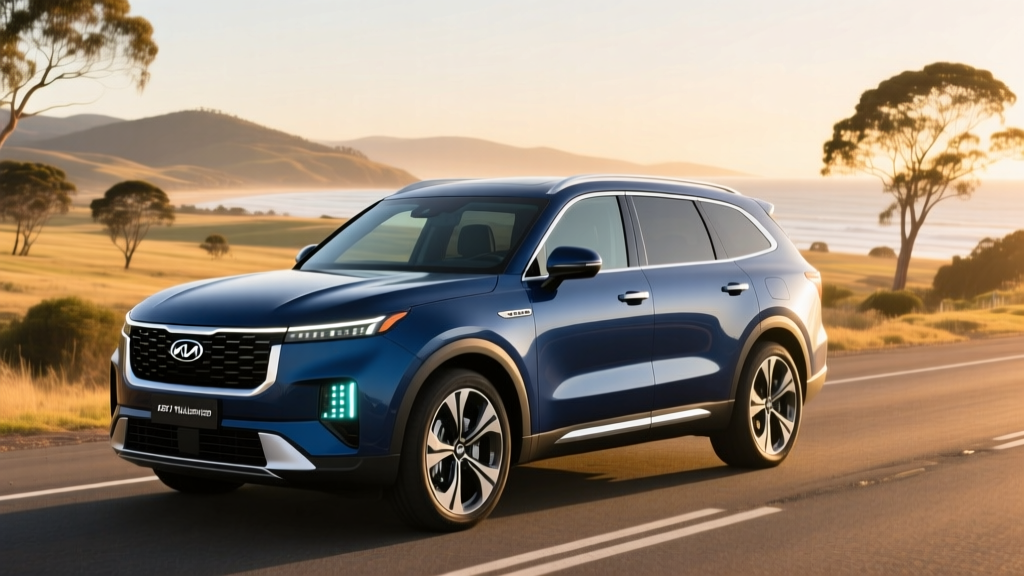
The three-row SUV segment is one of the last holdouts for full electrification. Families need range, towing, and cargo space — and while battery-electric options like the Kia EV9 are impressive, not every buyer has reliable home charging or wants to plan road trips around DC fast chargers. Enter the 2027 Kia Telluride Hybrid, an anticipated addition to the Telluride lineup that promises to bridge the gap between the gasoline V6 and a fully electric future.
As of early 2026, Kia has confirmed that a hybridized Telluride is in development, though final EPA certification figures and trim-level pricing remain preliminary. This guide compiles everything confirmed or credibly projected about the 2027 Telluride Hybrid — powertrain architecture, expected fuel economy, battery warranty, tax credit eligibility, and whether a conventional hybrid (HEV) or plug-in hybrid (PHEV) variant is coming.
HEV vs PHEV: Which Telluride Hybrid Is Coming?
Kia has indicated that the next-generation Telluride will offer a hybrid option, but the exact configuration matters enormously for buyers. Here's the distinction:
Conventional Hybrid (HEV)
- No plug required — charges via regenerative braking and the engine
- Small battery (~1.5–2.0 kWh)
- Electric motor assists the gas engine at all speeds
- Target: maximize MPG without changing driver behavior
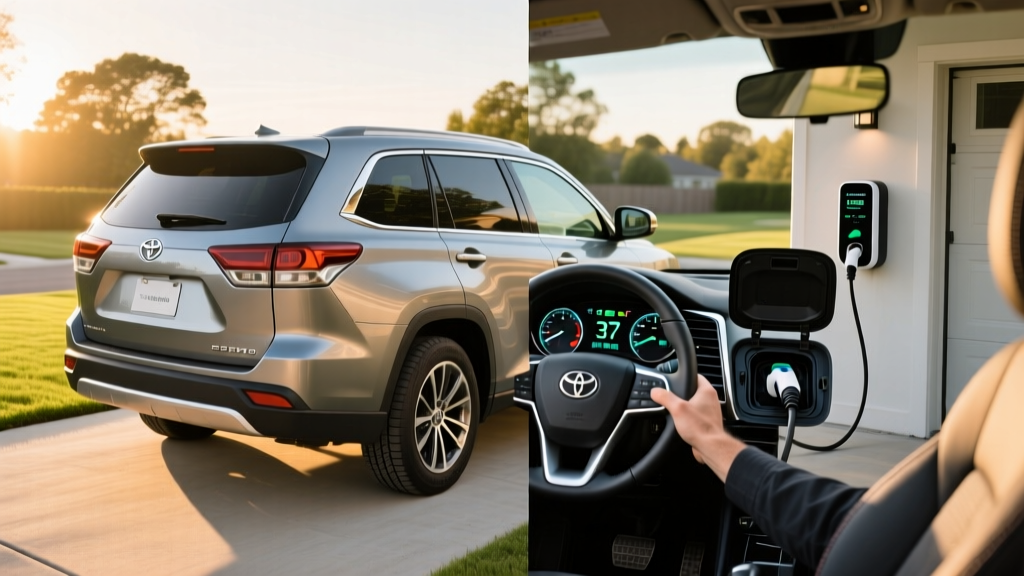
- Example: Toyota Grand Highlander Hybrid
Plug-In Hybrid (PHEV)
- Plugs in to charge a larger battery (~12–25 kWh)
- 25–40 miles of electric-only driving before the engine engages
- Requires home or workplace charging to realize full benefit
- May qualify for partial federal tax credits
- Example: Toyota Grand Highlander (no PHEV yet), Mazda CX-90 PHEV
Based on Kia's current powertrain strategy and statements from the company's U.S. leadership, the 2027 Telluride Hybrid will most likely debut as a conventional HEV, similar to the Hyundai Santa Fe Hybrid's 1.6-liter turbocharged hybrid system. A PHEV variant is possible for a later model year but has not been confirmed. Kia's larger Sorento already offers both HEV and PHEV configurations, so the technology exists in-house — but the Telluride's larger platform and towing requirements may delay a plug-in version.
Projected Powertrain and Performance Specs
| Attribute | Projected Spec |
|---|---|
| Powertrain | 1.6L turbocharged 4-cylinder + electric motor (HEV) |
| Combined Horsepower | ~258 hp (estimated, based on Santa Fe Hybrid) |
| Combined Torque | ~277 lb-ft (estimated) |
| Transmission | 6-speed automatic |
| Drivetrain | FWD standard; AWD available (expected) |
| Battery (HEV) | ~1.5–2.0 kWh lithium-ion (not plug-in) |
| Towing Capacity | ~5,000 lbs (projected, matching current Telluride) |
| Seating | 7 or 8 passengers |
| EPA MPG (Projected) | ~28–32 combined (est.) |
The 1.6-liter turbo hybrid system is Kia-Hyundai's workhorse for larger crossovers. In the Hyundai Santa Fe Hybrid, it produces 232 hp combined. The Telluride, being heavier, may receive a tuned variant with additional electric motor output to reach approximately 258 hp — enough for confident highway merging and the projected 5,000-pound towing rating.
Unlike a plug-in hybrid, the HEV's small battery never needs to be plugged in. It charges itself through regenerative braking and engine-driven generation. You simply fill up with gas and drive — the hybrid system operates transparently in the background.
Fuel Economy: What MPG Can You Expect?
The current gasoline-only 2026 Kia Telluride with the 3.8L V6 achieves an EPA-rated 20 city / 26 highway / 22 combined MPG with FWD, and 18/24/20 with AWD (per fueleconomy.gov). The hybrid variant should deliver a substantial improvement.
| Configuration | City MPG | Highway MPG | Combined MPG |
|---|---|---|---|
| 2026 Telluride V6 (FWD) | 20 | 26 | 22 |
| 2026 Telluride V6 (AWD) | 18 | 24 | 20 |
| 2027 Telluride Hybrid FWD (est.) | 30–33 | 27–30 | 28–32 |
| 2027 Telluride Hybrid AWD (est.) | 28–31 | 25–28 | 26–30 |
| Toyota Grand Highlander Hybrid (AWD) | 35 | 34 | 35 |
These estimates are based on the hybrid efficiency gains seen in the Santa Fe Hybrid (which jumps from ~24 to ~34 combined MPG over its gas counterpart) scaled to the Telluride's heavier curb weight. The Toyota Grand Highlander Hybrid sets the benchmark at 35 MPG combined — Kia will be chasing that number, though the Telluride's boxier aerodynamics may keep it a few MPG behind.
Real-World MPG vs. EPA Sticker
Hybrids tend to exceed their EPA city ratings in stop-and-go traffic because regenerative braking recaptures energy that a gas car wastes as heat. On the highway, however, the electric motor contributes less, and aerodynamic drag dominates — so highway MPG often falls slightly below the EPA figure.
For the Telluride Hybrid, expect:
- City driving: Real-world may exceed EPA by 1–3 MPG (regen-heavy routes benefit most)
- Highway driving (70–80 mph): Expect 1–2 MPG below EPA sticker
- Cold weather (below 32°F): Engine runs more often for cabin heat; expect a 10–15% MPG drop
- Towing: Expect 14–18 MPG when pulling a trailer near the 5,000-lb limit
Bottom line: a family averaging 15,000 miles/year at 30 combined MPG would use roughly 500 gallons/year, compared to 682 gallons for the current V6 at 22 combined — a savings of about 182 gallons, or roughly $640/year at $3.50/gallon.
Pricing, Trims, and Tax Credit Eligibility
The 2026 gasoline Telluride starts at approximately $37,590 (LX FWD) and tops out near $53,000 (SX-Prestige X-Pro AWD). The hybrid variant will carry a premium over its gas equivalent — typically $1,500–$2,500 based on Kia's Sorento Hybrid pricing strategy.
| Trim (Projected) | Est. MSRP | Hybrid Premium Over Gas |
|---|---|---|
| EX Hybrid | ~$42,000 | +$1,800 |
| SX Hybrid | ~$46,500 | +$2,000 |
| SX-Prestige Hybrid | ~$51,000 | +$2,200 |
Does the Telluride Hybrid Qualify for a Federal Tax Credit?
For a conventional hybrid (HEV): No. The federal §30D Clean Vehicle Credit applies only to plug-in electric vehicles (BEVs and PHEVs) with a minimum battery capacity of 7 kWh. A standard HEV with a ~1.5 kWh battery does not qualify.
If Kia later introduces a PHEV variant with a battery ≥7 kWh and an MSRP under the $80,000 SUV cap, it could qualify for up to $7,500 under current IRS §30D rules — but only if the buyer meets income caps ($150K single / $300K joint), the battery meets critical-mineral and component sourcing requirements, and the vehicle is assembled in North America. Kia's Telluride is built in West Point, Georgia, which satisfies the assembly requirement. However, battery sourcing compliance is model-specific and can change year to year.
- MSRP under $80,000 (SUV classification) ✓ likely
- Buyer AGI: ≤$150K single, $225K HOH, $300K joint
- Battery ≥7 kWh and meets critical mineral + component sourcing rules
- North American final assembly ✓ (West Point, GA)
- Point-of-sale transfer available at participating dealers
- Always verify current-year eligibility at irs.gov or with a tax professional before purchasing.
Battery Warranty, Reliability, and Replacement Cost
Hybrid battery longevity is the single most common concern among first-time hybrid buyers. Here's what the data shows:
- Hybrid battery: 10 years / 100,000 miles (Kia's standard hybrid battery warranty)
- Hybrid system components: 10 years / 100,000 miles
- Powertrain (engine + transmission): 10 years / 100,000 miles
- Bumper-to-bumper: 5 years / 60,000 miles
Kia's hybrid battery warranty is among the best in the industry, matching Hyundai and exceeding Toyota's 8-year/100,000-mile coverage.
How Long Do Hybrid Batteries Actually Last?
Modern lithium-ion hybrid batteries are engineered for longevity because they never fully charge or discharge — the system maintains a state-of-charge buffer (typically operating between 40% and 80% SoC), which dramatically reduces degradation. Real-world data from Toyota Prius fleets and Kia/Hyundai hybrids shows:
- Most hybrid batteries last 150,000–200,000+ miles before significant capacity loss
- Failure within the warranty period is uncommon (<2% based on industry data)
- The HEV battery is small (~1.5 kWh), so replacement cost is far lower than a full EV battery: expect $2,000–$4,000 for a replacement hybrid battery pack if needed out of warranty
For context, the Telluride Hybrid's battery is roughly 1/50th the size of a Kia EV9's 100 kWh pack. The financial risk of battery replacement is modest compared to a BEV.
Overall Reliability Outlook
Kia's hybrid systems have proven dependable since the Niro's 2017 debut. The 1.6L turbo hybrid architecture in the Sorento Hybrid has been in production since 2023 with no widespread failure patterns reported. The Telluride nameplate itself carries strong reliability scores from IIHS (Top Safety Pick+ for recent model years), and the hybrid variant should inherit the same structural safety ratings.
2027 Telluride Hybrid vs. The Competition
✅ Pros
- Significant MPG gains over V6 (~30 vs ~22 combined)
- No charging required — drive it like a normal SUV
- 5,000-lb towing capacity retained
- Industry-leading 10yr/100K-mile warranty
- Telluride's proven interior space, tech, and resale value
- Built in Georgia (supports domestic manufacturing)
❌ Cons
- HEV does not qualify for federal tax credit
- ~$1,500–$2,500 price premium over gas model
- Likely 2–5 MPG behind Toyota Grand Highlander Hybrid
- Turbo 4-cylinder may feel less refined than V6 at highway speeds
- Not yet on sale — specs still preliminary
- No EV-only driving mode (unlike a PHEV or BEV)
Hybrid vs PHEV vs EV: Which Three-Row SUV Fits You?
The 2027 Telluride Hybrid enters a market with several electrified three-row options. Here's how to decide:
| Factor | HEV (Telluride Hybrid) | PHEV (e.g., CX-90 PHEV) | BEV (e.g., Kia EV9) |
|---|---|---|---|
| Home charging needed? | No | Yes (to realize value) | Yes (essential) |
| Electric-only range | 0 mi | 25–35 mi | 250–300+ mi |
| Federal tax credit | No | Up to $7,500* | Up to $7,500* |
| Road trip ease | Gas & go | Gas & go | Plan charging stops |
| Annual fuel cost (15K mi) | ~$1,750 | ~$1,200–$1,600 | ~$550–$900 |
| Best for | No home charging, long trips | Short daily commute + road trips | Home charging, mostly local driving |
* Federal tax credit eligibility depends on income caps, MSRP limits, battery sourcing rules, and point-of-sale transfer. Verify at irs.gov before purchase.
Decision Framework
Choose the Telluride Hybrid (HEV) if: You don't have access to home or workplace charging, you regularly tow or take long road trips, and you want better fuel economy without changing any driving habits.
Wait for a PHEV variant if: You have a garage with a 120V or 240V outlet, your daily commute is under 30 miles, and you want some electric-only driving plus the option for a partial tax credit.
Consider the Kia EV9 (BEV) if: You can install a Level 2 home charger, most of your driving is within 250 miles, you want the lowest operating costs, and you qualify for the full $7,500 federal credit.
Frequently Asked Questions
How many MPG does the 2027 Kia Telluride Hybrid get?
Based on comparable Kia-Hyundai hybrid systems and the Telluride's weight, expect approximately 28–32 MPG combined (FWD), with city MPG potentially reaching 30–33. Final EPA figures will be confirmed closer to launch. This represents a roughly 40–45% improvement over the current V6's 22 combined MPG.
Does the 2027 Telluride Hybrid need to be plugged in?
No. As a conventional hybrid (HEV), the Telluride Hybrid charges its small battery through regenerative braking and the gasoline engine. You never plug it in — you simply refuel at a gas station as usual.
Will there be a plug-in hybrid (PHEV) Telluride?
Kia has not confirmed a PHEV variant for the 2027 model year. If one arrives later, it would likely offer 30–40 miles of electric-only range with a larger (~15–20 kWh) battery and potential eligibility for a partial federal tax credit. Watch for announcements in late 2026 or 2027.
Is the hybrid battery expensive to replace?
The HEV battery in the Telluride Hybrid is small (~1.5 kWh) and covered by Kia's 10-year/100,000-mile warranty. Out-of-warranty replacement is estimated at $2,000–$4,000 — a fraction of a full EV battery replacement. In practice, most hybrid batteries last well beyond 150,000 miles.
Can the Telluride Hybrid still tow?
Yes. The projected towing capacity is 5,000 pounds, matching the current gasoline Telluride. The hybrid system's electric motor provides strong low-end torque, which is beneficial for trailer launches. Expect fuel economy to drop to roughly 14–18 MPG while towing near the maximum rating.
Is the Telluride Hybrid better than the Toyota Grand Highlander Hybrid?
The Grand Highlander Hybrid currently leads the segment at 35 MPG combined. The Telluride Hybrid is projected to trail by 3–5 MPG but may compete on interior space, tech features, warranty coverage, and design preference. If maximum fuel economy is your top priority, the Grand Highlander Hybrid remains the benchmark. If you prefer the Telluride's styling, ride quality, and Kia's warranty, the hybrid version closes the efficiency gap significantly.