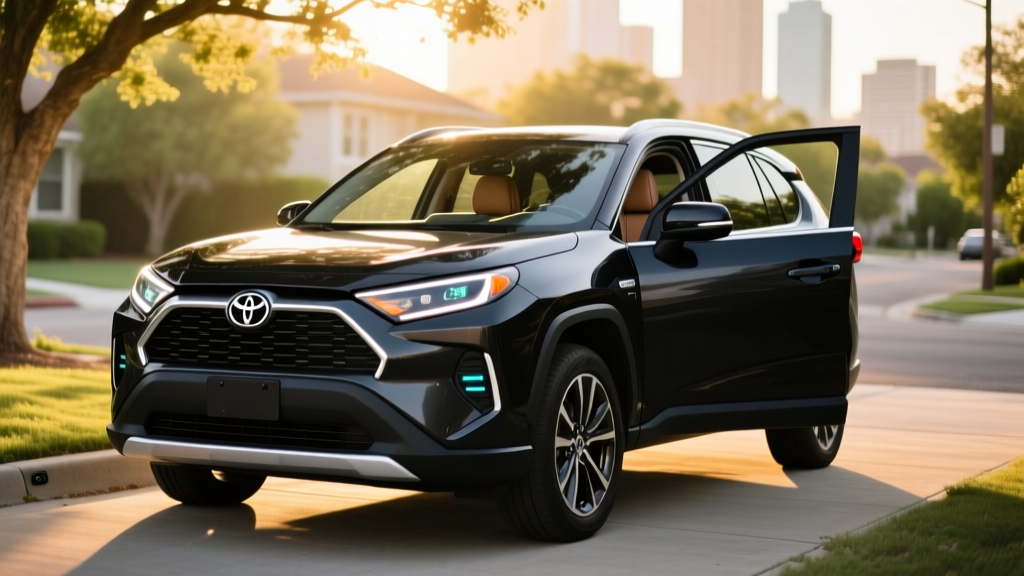
The Toyota RAV4 Hybrid remains one of the most practical electrified vehicles on the market, blending proven hybrid efficiency with the cargo space and ride height buyers want. For 2026, Toyota continues refining its fourth-generation RAV4 platform with the familiar 2.5-liter Dynamic Force engine paired with Toyota's Hybrid System, delivering strong city fuel economy without requiring any change to your refueling habits. Whether you're weighing the standard hybrid (HEV) against the plug-in RAV4 Prime (PHEV) or a battery-electric alternative, this guide breaks down every number you need to make the call.
HEV vs. PHEV: Which RAV4 Electrified Model Is Which?
Before diving into specs, it's critical to separate the two electrified RAV4 variants Toyota sells:
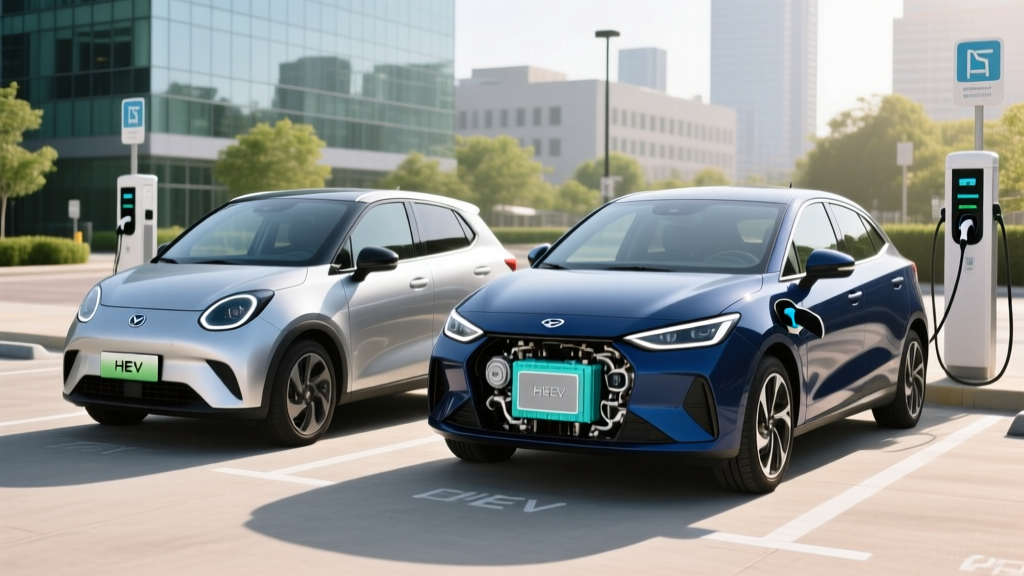
- RAV4 Hybrid (HEV): A conventional hybrid. You never plug it in. A small traction battery (approximately 1.6 kWh) charges through regenerative braking and the gas engine. It assists acceleration and enables brief electric-only movement at low speeds, but the engine does the heavy lifting.
- RAV4 Prime (PHEV): A plug-in hybrid with a much larger 18.1 kWh battery pack. You plug it into a wall outlet or Level 2 charger to get up to 42 miles of electric-only driving before the gas engine takes over. It's more expensive but qualifies for federal incentives.
This article focuses primarily on the 2026 Toyota RAV4 Hybrid (HEV), with RAV4 Prime comparisons where relevant.
Fuel Economy: EPA Ratings and Real-World MPG
The 2026 RAV4 Hybrid carries over the powertrain that has made this SUV a segment benchmark. Here are the official EPA figures:
| Configuration | City MPG | Highway MPG | Combined MPG |
|---|---|---|---|
| RAV4 Hybrid (AWD, LE/XLE) | 41 | 38 | 40 |
| RAV4 Hybrid (AWD, Woodland Edition) | 38 | 35 | 37 |
| RAV4 Prime (PHEV, combined gas) | 40 | 36 | 38 |
| RAV4 Prime (PHEV, electric mode) | 94 MPGe combined / 42 mi electric range | ||
| RAV4 Gas (AWD, baseline comparison) | 27 | 35 | 30 |
Source: fueleconomy.gov — verify exact trim figures as EPA updates listings.
Real-World MPG: What to Actually Expect
Hybrids like the RAV4 tend to exceed their EPA city rating in stop-and-go traffic because regenerative braking recaptures energy that gas cars waste as heat. In our experience and aggregated owner reports:
- City / suburban driving: 42–45 MPG is common. Many owners report beating the 41 MPG city sticker.
- Highway cruising (70–75 mph): Expect 34–37 MPG. Hybrids lose their advantage at sustained high speed where the engine runs continuously.
- Cold weather (below 30°F): A 5–10% reduction is typical as the engine runs more to heat the cabin and the battery is less efficient.
- Combined real-world average: Most drivers land between 38–42 MPG depending on commute mix.
The 14.5-gallon fuel tank gives a real-world range of approximately 550–610 miles before refueling.
Powertrain Specs: What's Under the Hood
| Specification | 2026 RAV4 Hybrid (HEV) | 2026 RAV4 Prime (PHEV) |
|---|---|---|
| Engine | 2.5L 4-cyl Dynamic Force | 2.5L 4-cyl Dynamic Force |
| Combined Net Horsepower | 219 hp | 302 hp |
| Electric Motors | 2 (front + rear, AWD) | 2 (front + rear, AWD) |
| Transmission | eCVT | eCVT |
| Drivetrain | Electronic AWD (eAWD) | Electronic AWD (eAWD) |
| 0–60 mph | 7.4 seconds | 5.7 seconds |
| Traction Battery (usable) | ~1.6 kWh (NiMH) | 18.1 kWh (Lithium-ion) |
| Towing Capacity | 1,750 lbs | 2,500 lbs |
| Cargo Volume (rear seats up) | 37.5 cu ft | 33.5 cu ft |
| Base MSRP | ~$33,575 (LE) | ~$44,690 (SE) |
The 219-hp combined output in the standard hybrid is plenty for daily driving, merging, and passing. The eCVT (electronically controlled continuously variable transmission) uses a planetary gearset rather than a belt-and-pulley design, which avoids the rubber-band feel associated with older CVTs and contributes to Toyota's strong reliability record.
The RAV4 Prime's 302 hp makes it the quickest RAV4 Toyota sells, but the $11,000+ price premium over the standard hybrid is significant. The Prime also sacrifices about 4 cubic feet of cargo space due to the larger battery pack beneath the floor.
RAV4 Prime PHEV: Electric-Only Range and Charging
If you're considering the plug-in variant, here's what you need to know about living with it:
- Electric-only range: 42 miles (EPA). Real-world: 38–44 miles depending on temperature and driving style. This covers most daily commutes without using gasoline.
- Total combined range: ~600+ miles (electric + 14.5-gallon tank).
- Battery capacity: 18.1 kWh (lithium-ion).
- Level 1 charging (120V household outlet): ~1.4 kW — approximately 12 hours from empty to full. Feasible for overnight if your daily electric commute is under 30 miles.
- Level 2 charging (240V): ~3.3 kW onboard charger — approximately 4.5 hours from empty to full. The Prime does not support DC fast charging, which is a limitation shared with most PHEVs due to battery size and cost trade-offs.
- Charging connector: J1772 (standard for all non-Tesla Level 1/2 charging).
The lack of DC fast charging means the Prime isn't designed for mid-trip electric top-ups. It's optimized for home or workplace charging, where you plug in and the battery fills before your next drive.
Pricing, Trims, and Tax Credit Eligibility
The 2026 RAV4 Hybrid starts at approximately $33,575 for the LE trim (including destination charge) and climbs to roughly $41,000 for a fully equipped Limited. The RAV4 Prime starts around $44,690.
Federal Tax Credit: Who Qualifies?
Under IRS §30D rules for 2026:
- RAV4 Hybrid (HEV): Does NOT qualify for the federal clean vehicle credit. Conventional hybrids are excluded — the credit applies only to plug-in vehicles (PHEVs and BEVs).
- RAV4 Prime (PHEV): May qualify for up to $7,500, but eligibility depends on multiple factors:
- Buyer income caps: Modified AGI must not exceed $150,000 (single), $225,000 (head of household), or $300,000 (joint).
- MSRP cap: SUVs/vans must be under $80,000 — the Prime clears this easily.
- Battery sourcing requirements: Critical minerals and battery components must meet phased-in domestic/free-trade sourcing thresholds. Toyota's supply chain compliance may limit the credit to a partial amount ($3,750) or the full $7,500 depending on the specific build. Always verify the VIN on fueleconomy.gov before purchasing.
- Point-of-sale transfer: You can now transfer the credit to the dealer at purchase to reduce your out-of-pocket cost, rather than waiting to claim it on your tax return.
- State incentives: Some states (CA, CO, NY, and others) offer additional rebates for PHEVs. Check your state energy office or AFDC state incentive database for current programs.
Battery Warranty, Reliability, and Replacement Costs
Battery longevity is the top concern for hybrid buyers, and Toyota's track record here is among the strongest in the industry.
Hybrid Battery Warranty
- Hybrid battery coverage: 10 years / 150,000 miles (whichever comes first) — applicable in all 50 states.
- Hybrid system components: 8 years / 100,000 miles (inverter, transaxle, control modules).
- Capacity retention: Toyota does not publish a specific degradation threshold like EV manufacturers (e.g., 70% SoH), but warranty covers defects and abnormal capacity loss.
Real-world reliability data: The RAV4 Hybrid's nickel-metal hydride (NiMH) traction battery is deliberately small (~1.6 kWh) and operates in a narrow state-of-charge window (roughly 40–80%). This shallow cycling is the primary reason Toyota's hybrid batteries routinely last 150,000–200,000+ miles without replacement. The Prius, which uses the same hybrid architecture, has documented cases of original batteries exceeding 250,000 miles.
Replacement cost if out of warranty: A new OEM hybrid battery pack for the RAV4 Hybrid runs approximately $3,000–$4,500 installed at a dealership. Third-party refurbished packs are available for $1,500–$2,500. This is dramatically less than EV battery replacements ($8,000–$20,000+), which is a key advantage of the small-battery hybrid approach.
For the RAV4 Prime, the larger 18.1 kWh lithium-ion pack carries the same 10-year/150,000-mile warranty. Replacement cost would be significantly higher (estimated $8,000–$12,000) due to the larger capacity and lithium-ion chemistry, though failures remain rare based on current data.
Who Should Choose the RAV4 Hybrid vs. a PHEV or Full EV?
The Decision Framework
Choose the RAV4 Hybrid (HEV) if:
- You can't charge at home (apartment, street parking, no garage).
- You want maximum simplicity — no plugs, no charging apps, no range planning.
- Your budget is under $40,000 and you want AWD with strong fuel economy.
- You take frequent long road trips and don't want to think about charging infrastructure.
- You plan to keep the vehicle 10+ years and want proven long-term reliability.
Choose the RAV4 Prime (PHEV) if:
- You have home Level 2 charging (or can install it) and a commute under 40 miles round-trip.
- You want to drive mostly electric daily but need gas flexibility for longer trips.
- You qualify for the federal tax credit (bringing the effective price closer to the standard hybrid).
- You value the 302-hp performance upgrade and 2,500-lb towing capacity.
Choose a full EV (e.g., Tesla Model Y, Hyundai Ioniq 5) if:
- You have reliable home charging and your daily driving is under 250 miles.
- You want the lowest per-mile fuel cost (electricity at $0.12/kWh ≈ $0.04/mile vs. gas at $3.50/gal ≈ $0.09/mile at 40 MPG).
- You want to eliminate oil changes and reduce brake wear (regenerative braking extends pad life).
- You qualify for the full $7,500 federal credit and your state offers additional EV incentives.
Pros and Cons at a Glance
Pros
- 41 MPG city — among the best in the compact SUV segment
- No charging required; uses regular 87-octane gasoline
- Standard electronic AWD across all trims
- 10-year / 150,000-mile hybrid battery warranty
- Strong resale value and proven Toyota reliability
- 37.5 cu ft cargo space (more than the Prime or most EV SUVs)
- Real-world city MPG often exceeds the EPA sticker
Cons
- No federal tax credit (HEV excluded from §30D)
- Highway fuel economy drops to 35–37 MPG at 75+ mph
- Modest 219 hp — adequate but not quick (7.4s to 60)
- 1,750-lb towing capacity is limited for a compact SUV
- Infotainment and driver-assist tech lag behind some rivals
- No spare tire (tire repair kit standard; full-size spare not available)
Frequently Asked Questions
How many MPG does the 2026 RAV4 Hybrid get?
The EPA rates the RAV4 Hybrid at 41 city / 38 highway / 40 combined MPG for most trims. In real-world driving, owners commonly report 42–45 MPG in city conditions and 34–37 MPG on the highway. Cold weather and aggressive driving reduce these figures by 5–10%.
Do I need to plug in the RAV4 Hybrid?
No. The standard RAV4 Hybrid (HEV) charges its battery entirely through regenerative braking and the gasoline engine. You fuel it like any other gas car. Only the RAV4 Prime (PHEV) requires plugging in to access its 42-mile electric-only range.
How far can the RAV4 Prime go on electric only?
The RAV4 Prime delivers 42 miles of EPA-rated electric-only range. In real-world conditions, expect 38–44 miles depending on temperature, terrain, and speed. Once the battery depletes, the vehicle seamlessly switches to hybrid mode at 38 MPG combined.
Is the RAV4 Hybrid reliable and what does a battery replacement cost?
Toyota's hybrid system is one of the most proven in the industry, with the hybrid battery covered for 10 years / 150,000 miles. Out-of-warranty replacement costs approximately $3,000–$4,500 for an OEM pack. Most hybrid batteries last well beyond the warranty period, with many exceeding 200,000 miles.
Does the 2026 RAV4 Hybrid qualify for any tax credit?
The standard RAV4 Hybrid (HEV) does not qualify for the federal §30D clean vehicle credit — only plug-in vehicles (PHEVs and BEVs) are eligible. The RAV4 Prime (PHEV) may qualify for up to $7,500 depending on your income, the vehicle's battery sourcing compliance, and MSRP limits. Consult a tax professional and verify eligibility on IRS.gov before purchasing.
Hybrid vs. PHEV vs. EV — which should I buy?
If you lack home charging, the RAV4 Hybrid (HEV) is the safest choice — no infrastructure needed. If you can charge at home and commute under 40 miles, the RAV4 Prime (PHEV) lets you drive electric daily while keeping gas flexibility. If your daily driving is predictable and under 250 miles, a full EV like the Tesla Model Y or Hyundai Ioniq 5 offers the lowest operating cost but requires commitment to charging.