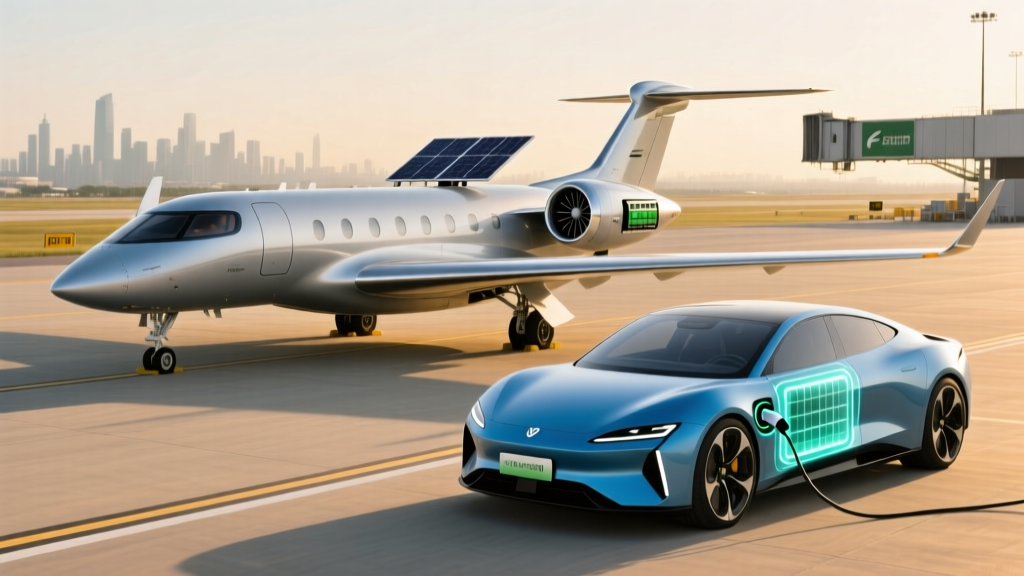
Search for "hybrid airplanes" and you will find concept aircraft that pair a turbine or piston engine with an electric motor and battery pack — not unlike the plug-in hybrid electric vehicles (PHEVs) already on our roads. While aviation regulators certify hybrid-electric prototypes from companies like Ampaire, Heart Aerospace, and Eviation, consumers cannot buy a hybrid airplane today. What you can buy is a PHEV that captures the same engineering philosophy: an internal combustion engine for long range, an electric motor for quiet, efficient short trips, and a battery large enough to matter.
This guide uses the 2026 Toyota RAV4 Prime — the best-selling PHEV in America — as a stand-in for the hybrid-airplane question. If you are researching hybrid propulsion and want something you can actually drive today, this is the blueprint.
What "Hybrid" Means on the Ground vs. in the Air
In both aviation and automotive contexts, "hybrid" covers two distinct architectures:
| Feature | HEV (e.g., RAV4 Hybrid) | PHEV (e.g., RAV4 Prime) |
|---|---|---|
| Plug-in required? | No — charges via regenerative braking and engine | Yes — 120V or 240V outlet |
| Electric-only range | <1 mile at low speed | 42 miles EPA |
| Battery size | 1.6 kWh (NiMH) | 18.1 kWh (Li-ion) |
| Federal tax credit | None | Up to $7,500 (§30D, eligibility varies) |
| Best for | Drivers without home charging | Drivers with a plug and short commutes |
Aviation hybrid concepts follow the same split. A mild hybrid aircraft might use an electric motor only for takeoff boost, while a plug-in hybrid-electric regional aircraft would fly short routes (100–300 miles) on battery alone, then engage a turbine generator for longer legs. The RAV4 Prime is the automotive equivalent of the latter.
2026 RAV4 Prime: The Specs That Matter
| Powertrain | 2.5L 4-cylinder + 2 electric motors (front/rear), AWD |
| Combined horsepower | 302 hp net |
| Battery | 18.1 kWh lithium-ion (usable ~14.5 kWh) |
| Electric-only range (EPA) | 42 miles |
| Total combined range | ~600 miles (EV + gas) |
| EPA MPG (hybrid mode) | 38 city / 35 highway / 38 combined |
| MPGe (electric mode) | 94 MPGe combined |
| Level 2 charge time (240V, 6.6 kW) | ~2.5 hours (0–100%) |
| DC fast charging | Not supported |
| 0–60 mph | 5.7 seconds |
| Base MSRP (SE trim) | $44,515 |
| XSE trim MSRP | $48,525 |
| Battery warranty | 10 years / 150,000 miles |
Fuel Economy: EPA Sticker vs. Real-World MPG
Hybrids famously beat their EPA highway numbers in city driving because regenerative braking recovers energy that gas cars waste as heat. The RAV4 Prime is no exception.
| Condition | City | Highway | Combined |
|---|---|---|---|
| EPA sticker (hybrid mode, battery depleted) | 38 | 35 | 38 |
| Real-world city (mixed regen, 65°F) | 40–43 | — | — |
| Real-world highway (75 mph, flat) | — | 32–34 | — |
| Cold-weather city (25°F, short trips) | 33–36 | — | — |
Owners who charge nightly and commute under 40 miles often report using zero gasoline for weeks at a time. On a 300-mile road trip with no charging, expect the combined figure to settle near 34–36 MPG — still excellent for a 302-hp AWD crossover.
Electric-Only Range and the Commuter Math
Forty-two miles of electric range covers the U.S. average one-way commute (roughly 16 miles per the Census Bureau) with room to spare. The math is where PHEVs shine against both pure gas cars and full EVs:
- Daily commute of 30 miles round-trip: Runs entirely on electricity if you plug in nightly. Gasoline engine may not start for weeks.
- Weekend road trip of 400 miles: Engine kicks in seamlessly after mile 42. No route planning, no charging stops, no range anxiety.
- Cold-climate ownership: The gas engine provides cabin heat without draining the battery — a real advantage over full EVs in sub-zero weather.
This is the same operational logic proposed for hybrid-electric regional aircraft: battery for short hops (reducing fuel burn and noise on approach), turbine for the long cruise segment.
Charging the RAV4 Prime: What You Need at Home
The RAV4 Prime accepts up to 6.6 kW on Level 2 (240V). It does not support DC fast charging — a deliberate Toyota choice to keep cost, weight, and complexity down. For a PHEV with an 18.1 kWh battery, DC fast charging adds hardware that most owners would rarely use.
| Level | Voltage | Power (kW) | Time to Full | Miles Added/Hour |
|---|---|---|---|---|
| Level 1 (standard outlet) | 120V | ~1.4 kW | ~12 hours | ~4 mi/hr |
| Level 2 (home wall connector) | 240V | 6.6 kW | ~2.5 hours | ~17 mi/hr |
A Level 2 home charger (such as the ChargePoint Home Flex or Emporia Level 2) costs $350–$700 for the unit. Professional installation by a licensed electrician typically runs $500–$2,000 depending on panel proximity and whether a 240V circuit already exists. Most PHEV owners find a simple overnight charge on Level 2 more than sufficient — the battery is small enough that you wake up full every morning.
Tax Credits: Does the RAV4 Prime Qualify?
Under IRS §30D rules, the RAV4 Prime is on the list of eligible vehicles for the federal clean vehicle credit, which can be up to $7,500. However, eligibility is not automatic. Buyers must meet all of the following criteria:
- Income caps: Modified AGI ≤ $150,000 (single), $225,000 (head of household), $300,000 (married filing jointly)
- MSRP cap: Vehicle MSRP must be ≤ $80,000 for SUVs/trucks/vans (RAV4 Prime qualifies at ~$44,515–$48,525)
- Battery sourcing: Critical minerals and battery components must meet phased-in percentage thresholds (increases annually through 2032)
- Point-of-sale transfer: As of 2024, the credit can be transferred to the dealer at purchase, reducing your out-of-pocket cost immediately
Because battery-sourcing rules tighten each year, a RAV4 Prime purchased in 2026 may qualify for the full $7,500, a partial credit, or none at all depending on Toyota's supply chain that model year. Always verify current eligibility at IRS.gov's qualified vehicle list before signing paperwork.
Some states offer additional rebates — California's CVRP, Colorado's state credit, and various utility incentives stack on top. Check your state energy office for current amounts, as these change frequently.
Battery Longevity, Warranty, and Replacement Cost
Toyota has built millions of hybrid battery packs since the original 1997 Prius. Real-world longevity data is strong: many first-generation Prius packs lasted 200,000+ miles before significant degradation. The RAV4 Prime's lithium-ion pack is larger and more sophisticated, but Toyota's thermal management system (liquid cooling) keeps cells within optimal temperature ranges.
Out-of-warranty replacement cost: If you keep the vehicle past 10 years / 150,000 miles and the battery eventually fails, a new RAV4 Prime hybrid battery pack currently costs approximately $4,000–$6,000 installed at a dealership. Independent hybrid specialists can sometimes refurbish packs for $2,000–$3,500. This is dramatically cheaper than a full EV battery replacement ($10,000–$20,000+), because the PHEV pack is much smaller.
For comparison, aviation hybrid-electric battery packs are estimated at $150–$250/kWh at the pack level — similar to automotive pricing — but must meet far stricter FAA certification standards for thermal runaway containment, which adds cost and weight.
Who Should Choose a PHEV Over a Full EV or Gas Car?
Choose the RAV4 Prime (PHEV) if:
- Your daily driving is under 50 miles and you can charge at home
- You take regular road trips of 300+ miles and don't want to plan around chargers
- You live in a cold climate where EV range loss is a real concern
- You want to reduce gasoline consumption without committing to full electric
- You want the flexibility of electric commuting + gas-engine range
Choose a full EV (e.g., Tesla Model Y, Hyundai Ioniq 5) if:
- You have reliable home charging and your trips rarely exceed 250 miles
- You want zero tailpipe emissions and minimal maintenance (no oil changes, no engine)
- You want access to DC fast charging for road trips (10–80% in 18–25 minutes)
Choose a conventional HEV (e.g., RAV4 Hybrid) if:
- You cannot charge at home (apartment, street parking, no garage)
- You want better MPG than a gas car without any behavior change
- Lower purchase price matters (RAV4 Hybrid starts ~$6,000 less than the Prime)
Hybrid Airplanes: When Will They Actually Fly?
For readers who landed on this article genuinely curious about hybrid aircraft, here is the state of play as of 2026:
- Ampaire Electric EEL: A modified Cessna 337 with one piston engine replaced by an electric motor. Demonstrated on short routes in Hawaii and France. Not yet FAA-certified for commercial service.
- Heart Aerospace ES-30: A 30-seat regional airliner with a hybrid-electric turbogenerator for range extension. Announced orders from United Airlines and Air Canada, with service entry targeted for 2028–2029.
- BAE Systems / Cranfield Aerospace: Developing hybrid-electric conversion kits for existing 9-seat aircraft (Islander). Flight testing underway in the UK.
The common thread: every one of these aircraft uses the same powertrain philosophy as the RAV4 Prime — battery for the short, high-power segment (takeoff, approach, short routes), combustion for the long cruise. The difference is that aviation requires FAA supplemental type certificates for any propulsion modification, a process that takes years and adds significant cost.
Until hybrid-electric aircraft achieve type certification and enter commercial service, the PHEV in your driveway remains the most accessible, proven, and affordable hybrid propulsion technology available to consumers.
RAV4 Prime Pros
- 42 miles electric covers most commutes gas-free
- 302 hp makes it the quickest RAV4 ever sold
- 600+ mile total range eliminates road-trip anxiety
- 10-year / 150,000-mile battery warranty
- Eligible for up to $7,500 federal credit (verify yearly)
- AWD standard with rear electric motor
RAV4 Prime Cons
- No DC fast charging
- Dealer markups still common due to high demand
- Cargo space slightly reduced by battery pack (~2 cu ft)
- Electric range drops to ~30 miles in extreme cold
- Higher starting price than RAV4 Hybrid (~$6,000 premium)
Frequently Asked Questions
How many MPG does the RAV4 Prime get?
The EPA rates it at 38 city / 35 highway / 38 combined when running on gasoline (battery depleted). In real-world city driving with regenerative braking, owners regularly see 40–43 MPG. On the highway at 75 mph, expect 32–34 MPG. When running on electricity, it achieves 94 MPGe combined.
How far can the RAV4 Prime go on electric only?
The EPA-rated electric-only range is 42 miles on a full charge. Real-world range varies: 35–40 miles in moderate weather with mixed driving, and as low as 30 miles in freezing temperatures or sustained highway speeds. After the battery depletes, the gasoline engine takes over seamlessly for another ~560 miles of range.
Hybrid vs. PHEV vs. EV — which should I buy?
If you can charge at home and commute under 50 miles daily, a PHEV like the RAV4 Prime gives you electric commuting with no range anxiety on road trips. If you never want to visit a gas station and have reliable charging, go full EV. If you cannot plug in at home, a conventional hybrid (HEV) gives you better MPG without any lifestyle change. The right answer depends on your charging access, commute length, and road-trip frequency.
Is the RAV4 Prime reliable, and what does a battery replacement cost?
Toyota's hybrid systems have an exceptional reliability track record spanning 25+ years and millions of vehicles. The RAV4 Prime's battery is covered by a 10-year / 150,000-mile warranty. Out-of-warranty replacement costs approximately $4,000–$6,000 at a dealership, or $2,000–$3,500 through independent hybrid specialists — far less than a full EV battery replacement.
Does the RAV4 Prime qualify for any tax credit?
It appears on the IRS list of eligible vehicles for the §30D federal clean vehicle credit, which can be up to $7,500. However, you must meet income caps ($150K single / $300K married filing jointly), the vehicle must meet battery-sourcing requirements that tighten each year, and the MSRP must be under $80,000 (the Prime qualifies). Always check the IRS qualified vehicle list for the specific model year before purchasing, as eligibility can change.
Can hybrid airplanes be purchased today?
No. As of 2026, hybrid-electric aircraft from companies like Ampaire, Heart Aerospace, and BAE Systems remain in prototype or flight-testing phases. None have achieved full FAA or EASA type certification for commercial sale. The PHEV is the closest consumer-available equivalent of hybrid-electric propulsion technology.