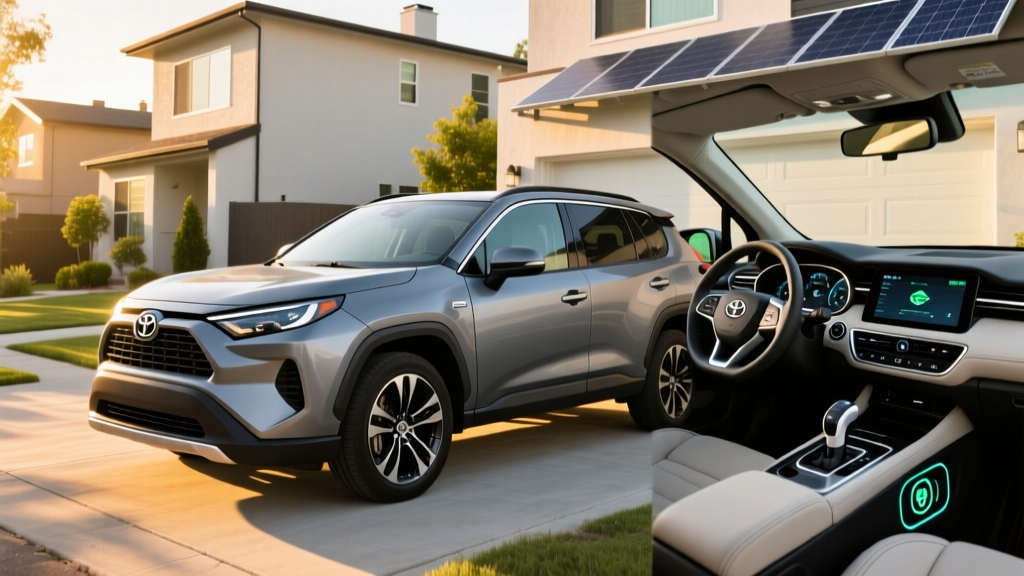
The compact crossover segment has no shortage of electrified options, but the 2026 Toyota RAV4 Hybrid AWD remains the benchmark most competitors measure themselves against. With an EPA-estimated 39 MPG combined, standard electronic all-wheel drive, and a starting MSRP of $33,575, it occupies a sweet spot for buyers who want meaningful fuel savings without plugging in, range-anxiety concerns, or a steep price premium over gas-only rivals.
This guide covers everything a research-heavy buyer needs: exact EPA and real-world fuel economy figures, the complete powertrain breakdown, how the conventional hybrid (HEV) differs from the plug-in RAV4 Prime (PHEV), battery longevity data, and whether any tax credits apply. If you're cross-shopping the RAV4 Hybrid against the Honda CR-V Hybrid, Hyundai Tucson Hybrid, or even a full battery-electric vehicle, this is your decision framework.
2026 RAV4 Hybrid AWD: EPA Fuel Economy & Real-World MPG
The headline number for the 2026 RAV4 Hybrid AWD is 39 MPG combined, but the city/highway split tells the more useful story for daily driving patterns.
| Trim | City MPG | Highway MPG | Combined MPG | Annual Fuel Cost* |
|---|---|---|---|---|
| LE / XLE / Woodland Edition | 41 | 38 | 39 | ~$1,550 |
| XSE / Limited (larger wheels) | 41 | 38 | 39 | ~$1,550 |
*Based on 15,000 miles/year at $3.50/gallon regular unleaded. Source: fueleconomy.gov
Real-World MPG: What Owners Actually See
Toyota's hybrid system excels in stop-and-go traffic where regenerative braking recovers energy that gas-only vehicles waste as heat. In real-world driving, owners frequently report exceeding the EPA city figure:
- City-dominant commuting (under 45 mph): 42–46 MPG is common, especially in warm weather with minimal HVAC load
- Mixed suburban driving: 37–41 MPG tracks closely with the EPA combined estimate
- Sustained highway cruising (70–80 mph): 33–36 MPG — aerodynamic drag and the engine running more continuously reduce the hybrid advantage
- Cold-weather operation (below 32°F): Expect a 5–10% reduction (roughly 35–37 MPG combined) as the engine runs longer to generate cabin heat and the battery operates less efficiently
The net takeaway: if most of your driving is urban or suburban, you'll likely match or beat 39 MPG. If you're a high-speed highway commuter, plan for the mid-30s.
Powertrain Specs: 219 HP With Electronic AWD
The 2026 RAV4 Hybrid pairs a 2.5-liter Atkinson-cycle four-cylinder engine with two electric motor-generators — one on each axle — through Toyota's eCVT (planetary gearset, not a belt-driven CVT). The result is seamless power delivery with no gear-shift shock.
| Specification | Value |
|---|---|
| Engine | 2.5L 4-cylinder Atkinson cycle (176 hp / 163 lb-ft) |
| Front electric motor | 88 kW (118 hp) |
| Rear electric motor (AWD) | 40 kW (54 hp) |
| Net combined system output | 219 hp |
| Transmission | eCVT (planetary gearset) |
| Drivetrain | Electronic on-demand AWD (AWD-i) |
| 0–60 mph | 7.4 seconds |
| Towing capacity | 1,750 lbs |
| Fuel type | Regular unleaded (87 octane) |
| Fuel tank | 14.5 gallons |
| Total driving range | ~565 miles |
The AWD-i system is worth understanding: there is no mechanical driveshaft to the rear axle. Instead, the rear electric motor engages when the system detects slip, during hard acceleration, or in low-traction conditions. It's not a rock-crawling system, but it handles rain, snow, and light off-road duty (the Woodland Edition adds slightly more ground clearance and all-terrain tires).
HEV vs PHEV: RAV4 Hybrid vs RAV4 Prime Explained
Toyota sells two electrified RAV4s, and confusing them is the single most common buyer mistake. Here's the fundamental distinction:
| Attribute | RAV4 Hybrid (HEV) | RAV4 Prime (PHEV) |
|---|---|---|
| Plug-in required? | No — self-charging via regen & engine | Yes — 18.1 kWh battery, plug to access EV range |
| Electric-only range | None (EV mode limited to ~1 mi at low speed) | 42 miles EPA (EV mode) |
| Combined MPG (hybrid mode) | 39 MPG | 38 MPG (gas) / 94 MPGe (with charge) |
| System horsepower | 219 hp | 302 hp |
| 0–60 mph | 7.4 sec | 5.7 sec |
| Starting MSRP | $33,575 | $44,590 |
| Federal tax credit (§30D) | Not eligible | Up to $7,500 (eligibility varies) |
| DC fast charging | N/A | Not available — Level 2 only (~2.5 hrs) |
| Cargo volume | 37.5 cu ft | 33.5 cu ft (battery intrusion) |
The HEV is right for you if: you lack home charging access, want simplicity (no plug, no cord, no charging app), and prioritize lower purchase price and maximum cargo space.
The PHEV (Prime) is right for you if: you can charge at home, your daily commute is under 42 miles round-trip (meaning you'd rarely burn gas on weekdays), and you want the performance bump and potential tax credit.
Pricing, Trims & Tax Credit Eligibility
The 2026 RAV4 Hybrid AWD is offered in five trims. All include AWD as standard equipment — Toyota dropped the FWD-only hybrid variant after the 2024 model year.
| Trim | MSRP | Key Features |
|---|---|---|
| LE | $33,575 | TSS 3.0, 8" touchscreen, wireless CarPlay/Android Auto |
| XLE | $35,025 | Blind-spot monitor, dual-zone climate, smart key |
| Woodland Edition | $36,500 | All-terrain tires, raised suspension, TRD-style accents |
| XSE | $37,625 | Sport-tuned suspension, 20" wheels, SofTex seats |
| Limited | $40,475 | Panoramic roof, JBL audio, heated/ventilated front seats |
Does the RAV4 Hybrid Qualify for a Tax Credit?
No. The conventional RAV4 Hybrid (HEV) does not qualify for the federal §30D Clean Vehicle Credit. That credit applies only to plug-in electric vehicles (BEVs and PHEVs) meeting battery-sourcing, MSRP caps, and buyer-income requirements under current IRS rules. The RAV4 Prime (PHEV) may qualify for up to $7,500, but eligibility depends on your income, the vehicle's battery-component sourcing, and point-of-sale transfer rules — consult a tax professional before assuming the full credit.
Some states and utilities offer rebates for conventional hybrids, but these vary widely by jurisdiction. Check your state energy office or utility provider for current programs.
Battery Longevity, Warranty & Replacement Cost
Hybrid battery anxiety is the top concern for first-time hybrid buyers. Here's what the data actually shows for Toyota's nickel-metal hydride (NiMH) and lithium-ion hybrid packs.
- Hybrid battery: 10 years / 150,000 miles (whichever comes first)
- Hybrid system components (inverter, motor-generators, ECU): 8 years / 100,000 miles
- Basic vehicle: 3 years / 36,000 miles
- Powertrain (engine, transaxle): 5 years / 60,000 miles
Real-World Hybrid Battery Lifespan
Toyota's hybrid battery packs are engineered for the life of the vehicle. Data from high-mileage RAV4 Hybrids (now in their seventh year since the 2019 redesign) shows:
- Typical capacity loss: 5–10% over 150,000 miles — noticeable as slightly reduced EV-mode assist, not catastrophic failure
- Failure rate: Well under 2% within the warranty period based on owner-community data and Toyota dealer service bulletins
- Replacement cost (out of warranty): $2,500–$4,000 for a new OEM pack; refurbished packs available for $1,500–$2,500
- Individual module replacement: Some independent hybrid specialists can replace failed individual cells for $500–$1,000 rather than the full pack
For context, the average American driver covers ~14,000 miles per year, meaning the 150,000-mile warranty covers roughly 10.7 years of driving. Most RAV4 Hybrids will never need a battery replacement during typical ownership.
Who Should Choose the RAV4 Hybrid vs a Full EV or Gas Car?
The RAV4 Hybrid occupies a specific position in the electrification spectrum. Here's how it compares to the alternatives most buyers consider:
| Factor | RAV4 Hybrid (HEV) | RAV4 Prime (PHEV) | Full EV (e.g., Tesla Model Y) | Gas RAV4 (203 hp, FWD) |
|---|---|---|---|---|
| Home charging needed? | No | Yes (for EV benefit) | Yes (essential) | No |
| Fuel cost per mile | ~$0.09 | ~$0.04 (EV) / $0.09 (gas) | ~$0.04–$0.06 | ~$0.13 |
| Upfront cost | $33,575+ | $44,590+ | $44,990+ | $30,075+ |
| Tax credit eligible? | No | Up to $7,500 | Up to $7,500 | No |
| 5-year fuel savings vs gas | ~$2,800 | ~$4,500 (if charging daily) | ~$5,500 | Baseline |
| Maintenance complexity | Low (no plug, proven system) | Moderate (two systems) | Lowest (no engine) | Standard |
Choose the RAV4 Hybrid (HEV) if: you want better fuel economy without changing your fueling habits, lack access to home or workplace charging, prioritize lower upfront cost, and plan to keep the vehicle 8+ years.
Choose the RAV4 Prime (PHEV) if: you have Level 2 home charging, your weekday driving is under 42 miles, and the $7,500 tax credit narrows the price gap enough to justify the $11,000 MSRP premium.
Choose a full EV if: you have reliable home charging, your daily driving is under 250 miles, you want zero tailpipe emissions, and you're ready to adapt to charging routines on road trips.
Ownership Costs: 5-Year Total Cost Snapshot
Fuel economy only tells part of the ownership story. Here's a 5-year / 75,000-mile estimate for the RAV4 Hybrid AWD XLE:
| Category | Estimated Cost |
|---|---|
| Purchase price (MSRP + destination) | $35,025 |
| Fuel (75,000 mi @ 39 MPG, $3.50/gal) | $6,730 |
| Insurance (national avg, varies by driver) | $8,500 |
| Maintenance (oil changes, tires, brakes) | $2,800 |
| Depreciation (est. 45% over 5 years) | $15,760 |
| Total 5-year cost | ~$68,815 |
For comparison, the gas-only RAV4 LE AWD (28 MPG combined) would cost approximately $9,375 in fuel over the same period — a $2,645 fuel premium. The hybrid's slightly higher purchase price pays for itself in fuel savings within roughly 4–5 years for average drivers, sooner for high-mileage commuters.
Pros, Cons & the Competition
- 39 MPG combined — class-leading for AWD crossovers
- No plug-in required; zero lifestyle change from gas cars
- 219 hp is adequate for merging and passing
- 10-year / 150,000-mile hybrid battery warranty
- Strong resale value (Toyota RAV4 is the best-selling non-truck in America)
- Toyota Safety Sense 3.0 standard on every trim
- No federal tax credit (HEV ineligible under §30D)
- Engine noise under hard acceleration (eCVT drone)
- 1,750-lb towing capacity trails turbo competitors
- Infotainment graphics feel dated vs Hyundai/Kia
- Highway MPG drops to mid-30s at sustained 75+ mph
- Woodland Edition's off-road capability is cosmetic-leaning
Key competitors to cross-shop:
- Honda CR-V Hybrid AWD: 40 MPG combined, slightly more cargo room, but $1,000+ more at equivalent trims
- Hyundai Tucson Hybrid AWD: 38 MPG combined, more tech features, but lower reliability ratings historically
- Kia Sportage Hybrid AWD: 38 MPG combined, longest warranty (10yr/100k mi powertrain), similar tech-forward interior
Frequently Asked Questions
How many MPG does the 2026 RAV4 Hybrid AWD actually get?
The EPA rates it at 41 city / 38 highway / 39 combined MPG. In real-world city driving, many owners report 42–46 MPG. Highway-only driving at 75+ mph typically returns 33–36 MPG. Cold weather reduces efficiency by roughly 5–10%.
Does the RAV4 Hybrid need to be plugged in?
No. The RAV4 Hybrid is a conventional hybrid (HEV). It charges its small battery pack through regenerative braking and the gasoline engine. You fuel it exactly like a gas car — no plug, no cord, no charging station required. Only the RAV4 Prime (PHEV) requires plugging in to access its 42-mile electric-only range.
Is the hybrid battery reliable, and what does replacement cost?
Toyota hybrid batteries have an exceptional reliability record, with failure rates well under 2% within the 10-year/150,000-mile warranty period. Out-of-warranty replacement runs $2,500–$4,000 for a new OEM pack, or $1,500–$2,500 for a refurbished unit. Most RAV4 Hybrids will never need a battery replacement during normal ownership.
Does the RAV4 Hybrid qualify for any federal tax credit?
No. The federal §30D Clean Vehicle Credit applies only to plug-in vehicles (BEVs and PHEVs). The conventional RAV4 Hybrid does not qualify. The RAV4 Prime (PHEV) may qualify for up to $7,500 depending on buyer income, battery-component sourcing, and current IRS eligibility rules. Some state or utility rebates may apply to hybrids — check local programs.
How does the RAV4 Hybrid compare to a full EV like the Tesla Model Y?
The RAV4 Hybrid costs ~$11,000 less upfront, requires no home charging installation, has no range limitations on road trips, and costs about $0.09/mile in fuel vs $0.04–$0.06/mile for an EV. A full EV wins on per-mile fuel cost, zero tailpipe emissions, lower maintenance (no oil changes), and available tax credits — but requires reliable charging access and a higher initial investment.
Is the RAV4 Hybrid AWD system good in snow?
The electronic AWD-i system provides confident traction in snow and rain by instantly engaging the rear electric motor when slip is detected. It's not a dedicated off-road system and won't match a Subaru's mechanical AWD in deep snow, but for typical winter commuting with proper winter tires, it performs very well. The Woodland Edition's all-terrain tires add marginal improvement in light off-pavement conditions.