Quick Verdict: The Three-Row Hybrid That Doesn't Ask You to Plug In
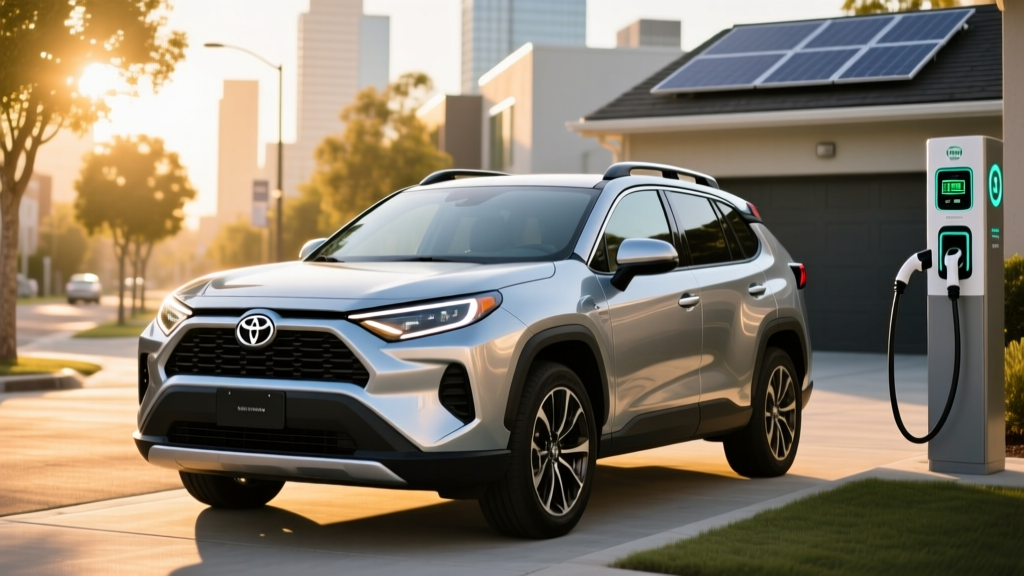
The 2026 Toyota Hybrid Highlander occupies a specific and increasingly popular niche: a three-row family SUV that delivers meaningful fuel savings without requiring a single lifestyle change. No charging cables, no range planning, no electrical panel upgrades. You fuel it like any other SUV at a gas station, and the hybrid powertrain quietly cuts consumption by roughly 35% compared to the gas-only Highlander.
For 2026, Toyota continues the fourth-generation Highlander Hybrid with the proven 2.5-liter four-cylinder hybrid system, rated at 35 MPG combined by the EPA. It's a straightforward, data-backed value proposition for families who want three rows and lower running costs but aren't ready — or able — to transition to a full battery-electric vehicle.
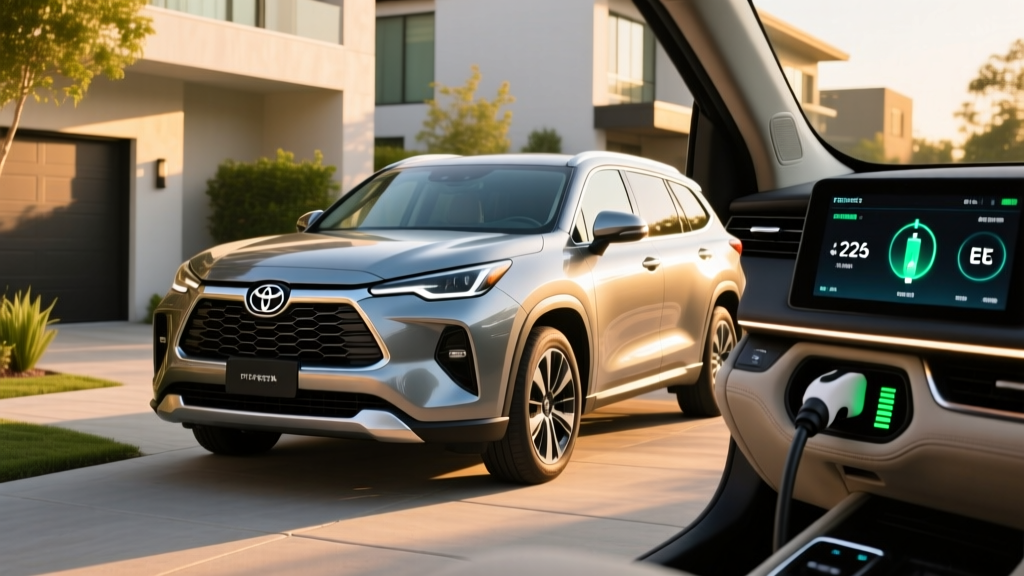
The 2026 Highlander Hybrid is a conventional hybrid electric vehicle (HEV). It charges its own small battery through regenerative braking and the gasoline engine. You never plug it in. A plug-in hybrid (PHEV), by contrast, has a larger battery you charge from a wall outlet and can drive 20–40 miles on electricity alone before the gas engine kicks in. Toyota does not currently offer a Highlander PHEV in the U.S. market. This guide focuses on the HEV, with a comparison section below to help you decide which powertrain type fits your situation.
Spec Snapshot: 2026 Toyota Hybrid Highlander
| Specification | 2026 Highlander Hybrid |
|---|---|
| Powertrain | 2.5L 4-cyl + 2 electric motors (AWD) / 3 motors (AWD-i) |
| Combined Horsepower | 243 hp |
| EPA Fuel Economy (FWD) | 36 city / 35 highway / 36 combined MPG |
| EPA Fuel Economy (AWD-i) | 35 city / 35 highway / 35 combined MPG |
| Fuel Tank | 17.9 gallons |
| Total Driving Range | ~626–644 miles |
| Hybrid Battery | ~1.6 kWh NiMH (self-charging, no plug) |
| 0–60 mph | ~7.8 seconds (est.) |
| Towing Capacity | 3,500 lbs |
| Seating | 7 or 8 passengers |
| Cargo (behind 3rd row) | ~16.1 cu ft |
| Starting MSRP | ~$42,320 (LE FWD, incl. destination) |
| Hybrid Battery Warranty | 10 years / 150,000 miles |
Sources: EPA fueleconomy.gov, Toyota.com Highlander Hybrid. Verify exact pricing and specs at your dealer, as trim configurations may shift during the model year.
Fuel Economy: EPA Numbers vs. Real-World MPG
The EPA rates the 2026 Highlander Hybrid at 36 city / 35 highway / 36 combined MPG in front-wheel-drive form, and 35/35/35 with the AWD-i electronic all-wheel-drive system. These numbers come from the standardized fueleconomy.gov testing cycle and are the figures you'll see on the window sticker.
What You'll Actually See
Hybrids have a distinct real-world behavior that surprises first-time owners: they tend to beat their EPA city rating in stop-and-go traffic. This is because city driving maximizes regenerative braking, which recaptures energy and lets the electric motors do more of the work. Owners frequently report 37–40 MPG in urban and suburban driving.
Highway driving is the reverse story. At sustained 70–80 mph speeds, the gasoline engine carries most of the load, and aerodynamic drag increases with the square of speed. Expect 30–33 MPG on long interstate trips, especially with a full load of passengers and cargo. This is still meaningfully better than the gas-only Highlander's 24 MPG combined, but it's a drop from the combined sticker number.
- City / suburban: 37–40 MPG (frequent stops = more regen)
- Highway (70 mph): 30–33 MPG (engine-dominant at sustained speed)
- Mixed driving (50/50): 34–37 MPG
- Cold weather penalty: Expect a 5–10% drop in winter months as the engine runs more often for cabin heat and the battery is less efficient at low temperatures
- Towing: Drops to approximately 18–22 MPG with a loaded trailer near the 3,500-lb limit
MPG Comparison: Highlander Hybrid vs. Gas vs. Competitors
| Vehicle | City MPG | Highway MPG | Combined MPG |
|---|---|---|---|
| 2026 Highlander Hybrid (FWD) | 36 | 35 | 36 |
| 2026 Highlander Gas (AWD) | 21 | 28 | 24 |
| 2026 Kia Sorento Hybrid | 36 | 33 | 35 |
| 2026 Hyundai Santa Fe Hybrid | 35 | 31 | 33 |
Powertrain Deep Dive: How the Hybrid System Works
The 2026 Highlander Hybrid pairs a 2.5-liter Dynamic Force four-cylinder engine (186 hp, 186 lb-ft on its own) with Toyota's fourth-generation hybrid transaxle. In FWD configuration, two electric motor-generators sit within the transaxle. The AWD-i models add a third electric motor on the rear axle, providing electronic all-wheel drive without a mechanical driveshaft.
Combined system output is 243 horsepower. That's a meaningful step up from the gas-only Highlander's 265-hp turbocharged four-cylinder in terms of low-end responsiveness — the electric motors deliver instant torque from a stop, which is where you feel it most in daily driving: pulling away from lights, merging, and navigating parking lots.
The hybrid battery pack is a compact nickel-metal hydride (NiMH) unit with approximately 1.6 kWh of capacity. It's small by design — it doesn't need to store much energy because the system constantly cycles between charging (via regen and the engine) and discharging (to assist acceleration or enable brief EV-mode crawling). You'll never think about it during normal driving.
Driving Modes and Behavior
The Highlander Hybrid offers Normal, Eco, Sport, and EV driving modes. EV mode is limited to very low speeds (under ~25 mph) for short distances — think pulling through a drive-through or creeping in a parking garage. It's not a meaningful electric-driving mode. Sport mode sharpens throttle response and steering weight. Eco mode softens throttle input and optimizes climate control for efficiency, and it's where you'll spend most of your time if MPG is the priority.
Pricing, Trims, and Tax Credit Eligibility
The 2026 Highlander Hybrid lineup spans multiple trims, with pricing starting around $42,320 for the LE FWD (including destination) and climbing to approximately $53,000+ for a fully loaded Platinum AWD. Here's the approximate trim breakdown:
- LE: ~$42,320 — well-equipped base with Toyota Safety Sense 3.0, 8-inch touchscreen, 7-passenger seating
- XLE: ~$45,500 — adds SofTex seats, heated front seats, power liftgate, wireless charging
- Limited: ~$49,500 — leather, 12.3-inch screen, panoramic roof, ventilated front seats
- Platinum: ~$53,000+ — head-up display, 360-degree camera, premium JBL audio, captain's chairs
Federal Tax Credit: Does the Highlander Hybrid Qualify?
The 2026 Toyota Highlander Hybrid does not qualify for the federal IRS §30D Clean Vehicle Credit. That credit applies only to plug-in electric vehicles (BEVs and PHEVs) with battery packs of at least 7 kWh. The Highlander Hybrid's ~1.6 kWh NiMH pack falls well below this threshold. There is currently no dedicated federal tax credit for conventional hybrids.
However, some states and localities offer their own incentives for hybrid purchases — these vary widely by jurisdiction and change frequently. Check your state's energy or environmental agency website for current programs. Additionally, the Highlander Hybrid's fuel savings can offset its price premium over the gas model relatively quickly depending on your annual mileage and local gas prices.
Cost of Ownership: Hybrid Premium Payback
The hybrid powertrain typically adds $1,500–$2,500 to the MSRP compared to the equivalent gas-only Highlander trim. At 15,000 miles per year and $3.50/gallon gas:
- Gas Highlander (24 MPG combined): ~$2,188/year in fuel
- Hybrid Highlander (35 MPG combined): ~$1,500/year in fuel
- Annual savings: ~$688/year
- Payback period: approximately 2.5–3.5 years
If you drive more miles annually or live in a state with higher gas prices (California, Washington, New York), the payback shortens. Over a 7-year ownership period, the fuel savings typically exceed the hybrid premium by a comfortable margin.
Battery Warranty, Reliability, and Replacement Cost
Toyota covers the Highlander Hybrid's battery pack for 10 years or 150,000 miles, whichever comes first. This applies in all 50 states (Toyota extended the previous 8-year/100,000-mile CARB-state warranty nationwide starting with the 2020 model year). The warranty covers defects and capacity loss below a functional threshold.
How Long Do Toyota Hybrid Batteries Actually Last?
Toyota's hybrid battery track record is among the strongest in the industry, dating back to the original Prius in 2000. The NiMH chemistry used in the Highlander Hybrid is mature and well-understood. Real-world data from Toyota hybrid owners shows most battery packs lasting well beyond 150,000 miles. Failures before 100,000 miles are uncommon.
The key to longevity is the hybrid system's battery management: the computer never allows the pack to fully charge or fully discharge, keeping it in a narrow state-of-charge window (roughly 40–80%) that minimizes stress. This "buffer" strategy is the same principle used in modern EVs, and it's proven effective over decades of Toyota hybrid production.
Replacement Cost If It Fails
If the hybrid battery does need replacement outside of warranty — most likely on a vehicle 12–15+ years old — expect to pay between $3,000 and $5,000 for a new OEM battery pack installed at a Toyota dealer. Independent hybrid specialists often offer refurbished or reconditioned packs for $1,500–$3,000. Individual cell module replacement (only the degraded modules, not the entire pack) can bring costs down further to $800–$1,500 at a qualified shop.
For context, this is a fraction of EV battery replacement costs ($8,000–$20,000+), and the likelihood of needing it during typical ownership is low. The hybrid battery is one of the least worrisome components on the Highlander Hybrid.
Overall Reliability
Toyota's hybrid systems have consistently earned top reliability marks. The Highlander as a nameplate carries strong long-term reliability ratings, and the hybrid variant benefits from reduced wear on certain components: regenerative braking extends brake pad life significantly (many owners report 80,000+ miles on original pads), and the engine experiences less stress because the electric motors handle initial acceleration loads. Toyota Safety Sense 3.0 is standard across all trims, including pre-collision braking, lane departure alert, and full-speed adaptive cruise control. Check IIHS and NHTSA for the latest crash-test ratings as they're updated throughout the model year.
Hybrid vs. PHEV vs. Full EV: Which Fits Your Situation?
Choosing between a conventional hybrid, a plug-in hybrid, and a full battery-electric vehicle depends on your driving patterns, charging access, and comfort with transition. Here's a practical decision framework:
Choose the Highlander Hybrid (HEV) If:
- You don't have access to home or workplace charging
- You want lower fuel costs with zero behavior change
- You take frequent long road trips and don't want to plan charging stops
- You want a proven, low-risk powertrain with a long warranty
- Your budget is under $55K for a three-row SUV
Consider a PHEV (e.g., Toyota RAV4 Prime) If:
- You can charge at home (Level 1 or 2) nightly
- Your daily commute is under 40 miles round-trip
- You want some electric-only driving but also gas flexibility for road trips
- You want to qualify for partial federal/state EV incentives
- You can accept a smaller SUV or wait for PHEV three-row options
Consider a Full EV (e.g., Kia EV9, Tesla Model X) If:
- You have reliable home Level 2 charging installed
- You want to eliminate gas costs entirely and minimize maintenance
- Your daily driving is under 250 miles and you're comfortable planning DC fast-charge stops on road trips
- You want the $7,500 federal tax credit (subject to §30D eligibility rules — income caps, MSRP caps, battery sourcing)
- You can accommodate a higher purchase price ($55K–$80K+ for three-row EVs)
The Highlander Hybrid wins when simplicity and flexibility are the top priorities. It asks nothing of you that a gas car doesn't, and it gives back meaningful fuel savings in return.
Pros and Cons at a Glance
✓ Pros
- 35–36 MPG combined — best-in-class for three-row SUVs
- No plug-in charging required — zero lifestyle change
- 600+ mile total range between fill-ups
- Strong 10-year / 150,000-mile hybrid battery warranty
- Toyota's proven long-term reliability track record
- Standard Toyota Safety Sense 3.0 across all trims
- Regenerative braking extends brake pad life significantly
- Hybrid premium pays back in ~3 years at average mileage
✗ Cons
- No federal tax credit eligibility (conventional hybrid)
- Third-row space is tight for adults on long trips
- CVT-like powertrain drone under hard acceleration
- Cargo space (16.1 cu ft behind 3rd row) is below some rivals
- AWD-i highway MPG drops to ~30–33 in real-world driving
- Infotainment system lags behind competitors in responsiveness
- No PHEV variant available for electric-only commuting
- Towing limited to 3,500 lbs (gas model also 3,500 lbs in 4-cyl)
Frequently Asked Questions
How many MPG does the 2026 Toyota Hybrid Highlander get?
The EPA rates it at 36 city / 35 highway / 36 combined MPG in FWD form, and 35/35/35 with AWD-i. In real-world driving, expect 37–40 MPG in city conditions, 30–33 MPG on the highway, and 34–37 MPG in mixed use. Cold weather and towing reduce these figures.
Do I need to plug in the Highlander Hybrid to charge it?
No. The Highlander Hybrid is a conventional hybrid (HEV), not a plug-in. Its small battery charges itself through regenerative braking and the gasoline engine. You fuel it exclusively at gas stations, exactly like a conventional vehicle.
Does the 2026 Highlander Hybrid qualify for any tax credit?
It does not qualify for the federal §30D Clean Vehicle Credit, which requires a plug-in vehicle with at least 7 kWh of battery capacity. Some states may offer hybrid-specific incentives — check your state's energy agency. The fuel savings versus the gas Highlander typically offset the price premium within 3 years regardless.
Is the Highlander Hybrid reliable? What about the battery?
Toyota's hybrid systems are among the most reliable powertrains in the automotive industry. The hybrid battery is warrantied for 10 years / 150,000 miles, and real-world data shows most packs lasting well beyond that. If replacement is ever needed (typically on vehicles 12+ years old), expect $3,000–$5,000 at a dealer or $1,500–$3,000 from an independent hybrid specialist.
Is there a plug-in hybrid (PHEV) version of the Highlander?
Toyota does not offer a Highlander PHEV in the U.S. market as of the 2026 model year. If you want a Toyota PHEV with three rows, that option doesn't currently exist. The closest Toyota PHEV is the RAV4 Prime (two-row, 42 miles electric-only range). For a three-row PHEV, you'd need to look at competitors like the Jeep Grand Cherokee 4xe or the Mazda CX-70 PHEV.
How does the Highlander Hybrid compare to a full EV like the Kia EV9?
The EV9 offers 230–300+ miles of electric range, zero tailpipe emissions, lower per-mile fuel costs (electricity vs. gas), and eligibility for the $7,500 federal credit. But it costs $15,000–$25,000 more, requires home charging infrastructure, and adds road-trip charging planning. The Highlander Hybrid is the pragmatic choice for buyers who want lower running costs without any charging logistics or upfront infrastructure investment.
What's the towing capacity of the Highlander Hybrid?
3,500 pounds when properly equipped — the same as the gas-only four-cylinder Highlander. This is sufficient for a small boat, a light utility trailer, or a pair of jet skis, but not for larger travel trailers. Expect fuel economy to drop to approximately 18–22 MPG while towing near the maximum rating.