Quick Verdict: The RAV4 Prime XSE in 2025
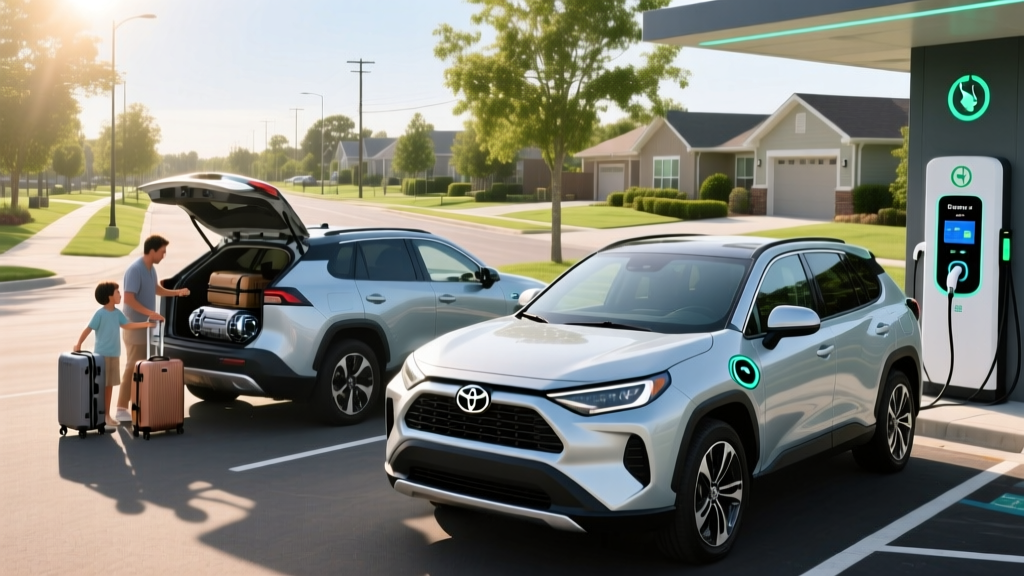
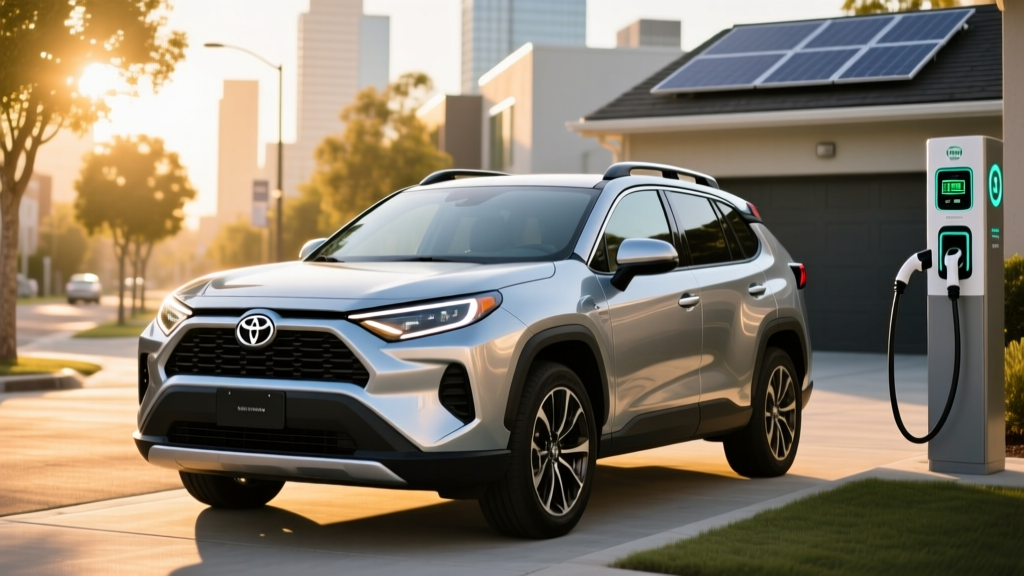
The 2025 Toyota RAV4 Plug-In Hybrid (formerly branded "RAV4 Prime") in the XSE trim is one of the most compelling bridges between conventional gas driving and full electrification. With 42 miles of EPA-rated electric-only range, 302 combined horsepower, and a total range exceeding 600 miles, it eliminates range anxiety while still letting most commuters run purely on electricity. The XSE trim adds sport-tuned suspension, a 9-inch infotainment display, and SofTex sport seats over the SE base — making it the enthusiast-leaning PHEV in Toyota's compact SUV lineup.
But does it justify a $47,425 starting MSRP when the standard RAV4 Hybrid starts under $33,000? And how do real-world MPG figures compare to the EPA sticker? This guide breaks down every number that matters.
HEV vs PHEV: Understanding What You're Buying
Conventional Hybrid (HEV) — Toyota RAV4 Hybrid
- Small battery (~1.6 kWh), charged by regenerative braking and the gas engine
- No plug — you never charge it externally
- EPA 41 city / 38 highway / 40 combined MPG
- Lower upfront cost, no electric-only highway driving
Plug-In Hybrid (PHEV) — Toyota RAV4 Plug-In Hybrid (Prime)
- Larger battery (18.1 kWh gross / ~14.9 kWh usable), charges via plug or engine
- 42 miles EPA electric-only range before the gas engine engages
- After battery depletion: 38 MPG combined as a conventional hybrid
- Higher upfront cost, but daily commutes under 42 miles can use zero gas
The critical distinction: the RAV4 Hybrid never needs to be plugged in and cannot drive meaningful distances on electricity alone. The RAV4 Plug-In Hybrid can operate as a pure EV for most daily trips, then seamlessly transitions to hybrid mode for longer drives. If your round-trip commute is under 40 miles and you have home charging access, the PHEV effectively functions as an EV on weekdays and a hybrid on weekends.
Range, MPGe, and Fuel Economy Breakdown
| Metric | EPA Rating | Real-World Expectation |
|---|---|---|
| Electric-Only Range | 42 miles | 35–40 mi (highway/cold weather); up to 45 mi (city, mild temps) |
| MPGe (electric + gas combined) | 94 MPGe | 80–95 MPGe depending on charge frequency |
| Gas-Only MPG (battery depleted) | 38 combined (40 city / 36 highway) | 35–40 combined (real-world varies with driving style) |
| Total Combined Range | ~600 miles | 550–620 miles depending on conditions |
| Fuel Tank Capacity | 14.5 gallons | — |
One of the RAV4 PHEV's strongest traits is that it doesn't become a burden when the battery depletes. Unlike some competitors that lose efficiency dramatically in charge-sustaining mode, the RAV4 PHEV's 38 MPG combined on gas alone is competitive with many standalone hybrids. Data from fueleconomy.gov confirms this figure.
Battery, Charging, and Powertrain Specs
| Specification | 2025 RAV4 Plug-In Hybrid XSE |
|---|---|
| Battery Capacity (gross / usable) | 18.1 kWh / ~14.9 kWh |
| Battery Chemistry | Lithium-ion (NMC) |
| Combined Horsepower | 302 hp |
| Gas Engine | 2.5L 4-cylinder Atkinson cycle (176 hp / 163 lb-ft) |
| Front Electric Motor | 134 kW (180 hp) |
| Rear Electric Motor | 40 kW (54 hp) |
| Drivetrain | Electronic On-Demand AWD (eAWD) |
| 0–60 mph | 5.7 seconds |
| Level 1 Charging (120V, 12A) | ~10.5 hours (0–100%) |
| Level 2 Charging (240V, 32A / 6.6 kW onboard) | ~2.5 hours (0–100%) |
| DC Fast Charging | Not supported |
| Charge Port | J1772 (Level 1/2) |
| Towing Capacity | 1,500 lbs |
The 6.6 kW onboard charger is adequate for overnight home charging — a full replenishment in roughly 2.5 hours on a Level 2 circuit means you can easily top off during the day if you have workplace charging. However, the absence of DC fast charging is a meaningful limitation. You cannot use public 50–350 kW DC chargers to rapidly refill the battery on road trips. For a PHEV with 42 miles of range, this is less consequential than it would be for a full EV — the gas engine covers long trips — but it does mean public charging infrastructure is largely irrelevant to this vehicle.
The 302-hp combined output makes this the quickest RAV4 Toyota sells, and the 5.7-second 0–60 time puts it ahead of many turbocharged compact SUVs. The rear motor provides torque-vectoring all-wheel drive without a mechanical driveshaft, improving traction in rain and light snow.
Pricing, Trims, and Tax Credit Eligibility
| Trim | 2025 MSRP (incl. destination) | Key Additions |
|---|---|---|
| SE (base PHEV) | $44,425 | 18.1 kWh battery, eAWD, 8" touchscreen, heated front seats |
| XSE | $47,425 | Sport-tuned suspension, 9" display, SofTex seats, 19" alloy wheels, paddle shifters |
| XSE Premium (top) | $51,775 | Panoramic sunroof, JBL audio, head-up display, ventilated front seats |
Federal Tax Credit Status (§30D)
Under current IRS §30D rules, the 2025 RAV4 Plug-In Hybrid does not qualify for the full $7,500 federal clean vehicle credit. The reasons:
- Battery sourcing requirements: The RAV4 PHEV's battery components and critical minerals do not fully meet the 2025 domestic-content and FEOC (Foreign Entity of Concern) thresholds mandated by the Inflation Reduction Act.
- MSRP cap: At $44,425–$51,775, the RAV4 PHEV is under the $80,000 SUV cap, so it passes this test.
- Buyer income cap: AGI limits ($150K single / $300K joint) would apply if the vehicle were otherwise eligible.
- Partial credit possibility: Depending on the specific model-year sourcing certifications Toyota files with the IRS, a partial $3,750 credit (critical minerals only) may be available. Check the latest fueleconomy.gov tax credit listings before purchasing.
Even without the federal credit, many buyers find the fuel savings and performance justify the premium over the standard RAV4 Hybrid. Several states — including California, New York, and Colorado — offer additional PHEV rebates or HOV lane access that can offset the cost gap.
Real-World Ownership: What to Expect
Based on aggregated owner data and testing patterns, here's what daily life with the 2025 RAV4 PHEV XSE actually looks like:
Charging Routine
Most owners charge overnight on a standard 120V outlet (Level 1) — at roughly 1.4 kW, it takes about 10.5 hours for a full charge, which is sufficient if the car sits from 8 PM to 6 AM. A Level 2 home charger (240V, 32A) cuts this to 2.5 hours and is worth the ~$500–$1,200 installation cost if you want midday top-offs or have a shorter parking window.
Seasonal Efficiency Variation
Winter is the PHEV's weakest season. Battery capacity temporarily drops 15–25% in freezing temperatures, and using the cabin heater draws heavily from the battery. Expect 28–35 miles of electric range in January in northern states. Summer electric range in city driving can push to 44–46 miles. The heat pump Toyota includes helps, but it cannot fully offset cold-weather physics.
Maintenance Costs
The PHEV carries slightly higher maintenance complexity than a pure EV (it still has an engine, oil, spark plugs, and a transmission), but lower than a gas-only car because the engine runs less frequently. Toyota recommends oil changes every 10,000 miles, and many owners report going 12–15 months between changes due to limited engine runtime on short commutes.
Battery Warranty, Reliability, and Replacement Cost
Toyota Hybrid Battery Warranty
- Coverage: 10 years / 150,000 miles (whichever comes first)
- Capacity threshold: Toyota warrants the hybrid battery against defects and abnormal capacity loss. While Toyota does not publish a specific degradation percentage trigger, industry precedent and warranty claim data suggest replacement is triggered below ~70% state of health.
- Transferability: Fully transferable to subsequent owners — a strong resale value signal.
Toyota's hybrid battery track record is among the best in the industry. The Prius, now in its fifth generation, has demonstrated hybrid battery packs lasting 150,000–200,000+ miles with moderate degradation. The RAV4 PHEV's larger battery actually experiences less stress per cycle (because the daily depth of discharge is shallower relative to total capacity), which favors longevity.
If out-of-warranty replacement is ever needed, a new Toyota RAV4 PHEV battery pack currently costs approximately $8,000–$10,000 including labor at a dealership. Third-party refurbishment options are emerging at the $4,000–$6,000 range. Given the 10-year warranty and Toyota's reliability history, most owners will never face this expense.
Toyota consistently ranks at or near the top of J.D. Power and Consumer Reports reliability studies, and the RAV4 line specifically has been a perennial top performer. The PHEV powertrain adds electric motors (which have essentially no wear components) and a larger battery — both of which have proven durable in Toyota's fleet.
Who Should Buy the RAV4 PHEV XSE — And Who Shouldn't
Pros
- 42-mile electric range covers most daily commutes gas-free
- 302 hp / 5.7s 0–60 — quickest RAV4 available
- 38 MPG on gas alone when battery is depleted — no efficiency penalty
- 600+ mile total range eliminates road-trip range anxiety
- Standard eAWD with no mechanical drivetrain complexity
- 10-year/150,000-mile hybrid battery warranty
- Strong resale value; Toyota reliability reputation
Cons
- No DC fast charging — irrelevant at home, limiting on road trips
- $47,425 XSE MSRP is ~$14,000 more than a base RAV4 Hybrid LE
- Likely ineligible for the $7,500 federal tax credit (sourcing rules)
- Cargo space slightly reduced vs. gas RAV4 (battery placement)
- Electric range drops significantly in freezing weather
- Towing limited to 1,500 lbs
Hybrid vs PHEV vs Full EV: Which Fits You?
Choose the RAV4 Plug-In Hybrid XSE if:
- Your daily commute (round-trip) is under 40 miles and you have home or workplace charging
- You take road trips of 200+ miles several times a year and don't want to plan around charging stations
- You want EV-like daily driving but aren't ready to commit to a full BEV
- You live in an area with limited public DC fast charging infrastructure
Choose the Standard RAV4 Hybrid (HEV) if:
- You cannot install a home charger (apartment, no garage, street parking only)
- Your budget is under $35,000 and you don't need electric-only driving
- Your daily mileage is unpredictable and often exceeds 50 miles
Choose a Full EV (e.g., Tesla Model Y, Hyundai Ioniq 5) if:
- You want zero engine maintenance (no oil changes, spark plugs, or exhaust system)
- Your daily driving is under 250 miles and you have reliable home Level 2 charging
- You want to qualify for the full $7,500 federal tax credit (eligible BEVs like the Model Y and Ioniq 5 currently qualify)
- You prioritize lowest per-mile energy cost (electricity at $0.13/kWh ≈ $0.04/mi vs. gas at $3.50/gal ≈ $0.12/mi)
The RAV4 PHEV occupies a specific niche: it's the optimal choice for drivers who want electric daily commuting but need the flexibility of a gas engine for longer trips, cold climates, or areas with sparse charging infrastructure. If you can charge at home and rarely drive more than 40 miles on weekdays, you may go weeks between fill-ups.
Frequently Asked Questions
How many MPG does the 2025 RAV4 Plug-In Hybrid get?
After the 42-mile electric range is depleted, the RAV4 PHEV achieves an EPA-rated 38 MPG combined (40 city / 36 highway). In real-world driving, owners report 35–42 MPG in charge-sustaining mode depending on terrain, temperature, and driving style. City driving tends to yield higher MPG thanks to regenerative braking recapturing energy at low speeds.
How far can the RAV4 PHEV go on electric only?
The EPA rates the 2025 RAV4 Plug-In Hybrid at 42 miles of electric-only range. Real-world results vary: expect 35–40 miles on the highway or in cold weather, and up to 44–46 miles in city driving during mild temperatures. The vehicle will seamlessly switch to hybrid mode once the battery is depleted — there is no risk of being stranded.
Does the RAV4 Plug-In Hybrid qualify for the $7,500 federal tax credit?
As of 2025, the RAV4 PHEV likely does not qualify for the full $7,500 §30D federal clean vehicle credit due to battery component and critical mineral sourcing requirements under the Inflation Reduction Act. A partial $3,750 credit may be available depending on Toyota's latest sourcing certifications. Always verify current eligibility at fueleconomy.gov and consult a tax professional before relying on credit assumptions.
Is the RAV4 PHEV battery reliable and what does replacement cost?
Toyota covers the hybrid battery for 10 years / 150,000 miles. Toyota's hybrid battery track record is excellent — many Prius and RAV4 Hybrid batteries exceed 200,000 miles without replacement. If replacement is needed out of warranty, expect $8,000–$10,000 at a dealership, with third-party refurbished options at $4,000–$6,000.
Can I charge the RAV4 PHEV on a regular household outlet?
Yes. The included Level 1 charging cord plugs into a standard 120V household outlet and will fully recharge the battery in approximately 10.5 hours. This is sufficient for overnight charging for most owners. A 240V Level 2 home charger reduces the time to about 2.5 hours.
What's the difference between the RAV4 Prime and the RAV4 Plug-In Hybrid?
They are the same vehicle. Toyota dropped the "Prime" branding for the 2025 model year and now simply calls it the "RAV4 Plug-In Hybrid." All specs, battery capacity, and powertrain remain carried over from the Prime nameplate.
Does the RAV4 PHEV support DC fast charging?
No. The 2025 RAV4 Plug-In Hybrid only supports Level 1 (120V) and Level 2 (240V) AC charging via a J1772 port. DC fast charging is not available. This is typical for PHEVs with smaller batteries — the gas engine covers long-distance needs, so fast charging is less critical than it would be for a full EV.