If you are searching for the 2026 Toyota Corolla Hybrid miles per gallon figures, the headline number is compelling: up to 52 MPG combined on the EPA cycle. But as with any hybrid, the sticker number is only the starting point. Real-world fuel economy depends heavily on your driving mix, climate, and whether you choose front-wheel drive or electronic all-wheel drive. This guide breaks down every trim's EPA ratings, what you can actually expect at the pump, the powertrain underneath, battery longevity, and whether the Corolla Hybrid is the right electrified choice versus a plug-in hybrid or full EV.
HEV vs PHEV: What the Corolla Hybrid Actually Is
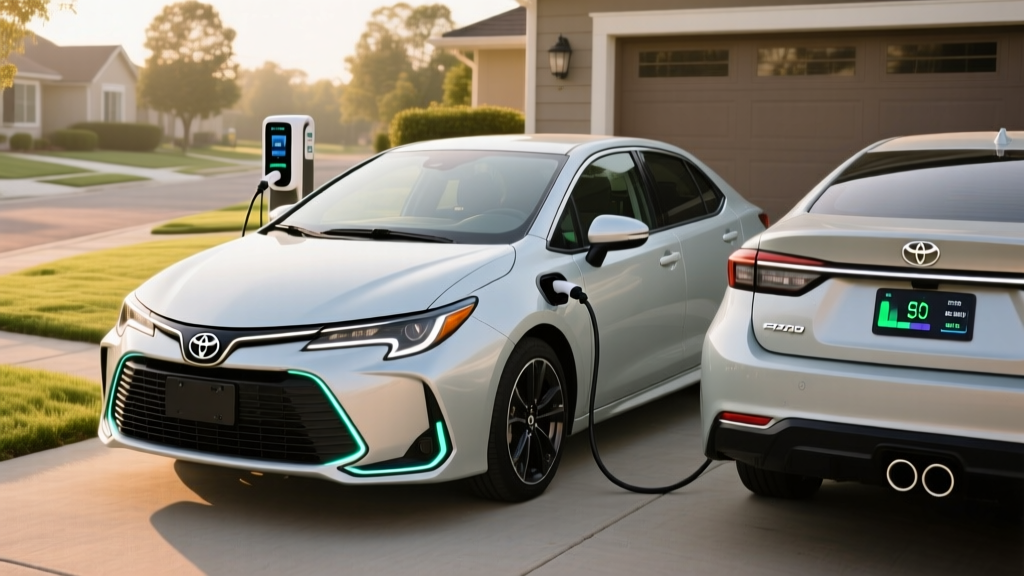
The 2026 Toyota Corolla Hybrid is a conventional hybrid electric vehicle (HEV). It pairs a gasoline engine with a small battery and electric motor(s) to boost efficiency. You never plug it in — the battery recharges through regenerative braking and the engine. There is no Corolla Plug-in Hybrid (PHEV) in the U.S. lineup. Toyota's plug-in offerings sit in the RAV4 Prime and Prius Prime, which offer 40+ miles of electric-only driving before the engine kicks in.
HEV (Corolla Hybrid) vs PHEV (Prius Prime) at a Glance
| Attribute | Corolla Hybrid (HEV) | Prius Prime (PHEV) |
|---|---|---|
| Plugs in? | No | Yes (Level 1/2) |
| Electric-only range | N/A (EV mode ~1 mi at low speed) | ~44 miles EPA |
| Battery size | ~0.9 kWh (NiMH pack) | 13.6 kWh (lithium-ion) |
| EPA combined MPG/MPGe | 50–52 MPG | 52 MPG-e / 48 MPG gas |
| Federal tax credit | Not eligible | Up to $7,500 (§30D, subject to rules) |
| Base MSRP (2026 est.) | ~$24,600 | ~$34,700 |
If your goal is maximum MPG with zero lifestyle change — no charging, no range planning — the Corolla Hybrid is the simpler play. If you have home charging and a short commute, a PHEV like the Prius Prime can run most daily miles on electricity alone.
2026 Corolla Hybrid MPG: EPA Ratings by Trim
Toyota offers the 2026 Corolla Hybrid in LE, SE, and XLE trims, with electronic all-wheel drive (AWD) available on LE and SE. The AWD system adds a rear-mounted electric motor that engages automatically for traction — it does not significantly change the driving feel but does affect fuel economy slightly.
| Trim | Drivetrain | City MPG | Highway MPG | Combined MPG |
|---|---|---|---|---|
| LE | FWD | 53 | 46 | 50 |
| LE | AWD | 51 | 44 | 48 |
| SE | FWD | 53 | 46 | 50 |
| SE | AWD | 51 | 44 | 48 |
| XLE | FWD | 52 | 45 | 49 |
Source: fueleconomy.gov — EPA estimates. Actual mileage will vary.
The FWD trims edge out AWD by about 2 MPG combined. The difference comes from the added weight of the rear motor and slight drivetrain losses. For most buyers, the choice boils down to whether you need all-weather traction enough to trade roughly 4% of your fuel economy.
Real-World MPG: What Owners Actually See
Toyota hybrids consistently punch above their EPA ratings in city driving. The Corolla Hybrid's regenerative braking recaptures energy at every stoplight, and the engine shuts off entirely at idle and low-speed cruising. In suburban and urban driving, many owners report 52–56 MPG in warm weather — exceeding the EPA city estimate.
Highway driving tells a different story. At sustained speeds above 65 mph, aerodynamic drag dominates and the electric motor contributes less. Expect 42–46 MPG on the highway, which aligns with or slightly trails the EPA highway figure. Cold weather compounds this: below freezing, the engine runs more frequently to maintain cabin heat and battery temperature, dropping real-world combined figures to the 40–44 MPG range in winter months.
Real-World MPG Expectations
- City (warm weather): 52–56 MPG — often exceeds EPA
- Highway (70 mph cruise): 42–46 MPG — near EPA estimate
- Combined (mixed driving): 48–52 MPG
- Cold weather (below 32°F): 40–44 MPG combined — expect 10–15% drop
- Annual fuel cost: ~$850–$950 at 15,000 mi/yr and $3.30/gal regular
For a 15,000-mile/year driver, the difference between 50 MPG and a typical 30 MPG compact gas car translates to roughly $550–$650 in annual fuel savings at current gas prices. Over five years, that's $2,750–$3,250 back in your pocket.
Powertrain Specs: What Moves the Corolla Hybrid
| Specification | 2026 Corolla Hybrid |
|---|---|
| Engine | 1.8L 4-cylinder Atkinson cycle |
| Engine output | 97 hp / 105 lb-ft torque |
| Front electric motor | 94 hp (70 kW) |
| Rear motor (AWD only) | 41 hp (30 kW) |
| Combined net horsepower | 138 hp |
| Transmission | eCVT (planetary gearset, no belt) |
| Hybrid battery | ~0.9 kWh nickel-metal hydride (NiMH) |
| 0–60 mph | ~7.6 seconds (est.) |
| Fuel tank | 11.4 gallons |
| Total range | ~570 miles (at 50 MPG combined) |
| Fuel type | Regular unleaded (87 octane) |
The 138 combined horsepower is modest by modern standards, but the electric motor delivers instant torque from a stop, making the Corolla Hybrid feel peppy around town. The eCVT is Toyota's proven planetary gearset design — there's no rubber belt or traditional shifting, which contributes to both smoothness and long-term reliability. The system prioritizes efficiency over performance; highway passing requires planning, but merging and city acceleration are perfectly adequate.
Hybrid Battery Warranty and Replacement Cost
Hybrid battery longevity is the single most common concern among first-time hybrid buyers. Toyota addresses this with one of the strongest warranties in the segment.
Toyota Hybrid Battery Coverage
- Warranty: 10 years / 150,000 miles (whichever comes first), transferable to subsequent owners
- Coverage threshold: Battery capacity must remain above approximately 70% of original — if it drops below, Toyota replaces or reconditions at no cost
- Hybrid system warranty: 8 years / 100,000 miles on all hybrid-specific components (inverter, motor, control module)
In practice, Toyota's NiMH hybrid batteries have demonstrated exceptional longevity. Data from fleet operators and long-term owners shows many Prius and Corolla Hybrid packs lasting 180,000–250,000 miles before significant degradation. The NiMH chemistry is less energy-dense than lithium-ion but is remarkably tolerant of the shallow charge-discharge cycles that hybrids use — the system rarely lets the battery drop below 40% or exceed 80% state of charge, which dramatically extends cycle life.
If you do need an out-of-warranty replacement, expect to pay $2,500–$4,000 for a new OEM hybrid battery pack installed at a Toyota dealer. Refurbished packs from independent hybrid specialists run $1,500–$2,500. Given that most Corolla Hybrids will be well within the 10-year/150,000-mile warranty window, this cost rarely materializes for original owners.
Pricing, Trims, and Tax Credit Eligibility
The 2026 Corolla Hybrid starts at an estimated $24,600 MSRP for the LE FWD, making it one of the most affordable hybrids on the market. Here's the projected trim breakdown:
| Trim | Drivetrain | Est. MSRP |
|---|---|---|
| LE | FWD | $24,600 |
| LE | AWD | $26,000 |
| SE | FWD | $26,900 |
| SE | AWD | $28,300 |
| XLE | FWD | $29,500 |
Federal Tax Credit: Not Eligible
The Corolla Hybrid does not qualify for the federal §30D clean vehicle tax credit. Under current IRS rules, only plug-in electric vehicles (BEVs and PHEVs) with sufficient battery capacity are eligible. Conventional hybrids like the Corolla Hybrid have been excluded from the federal credit since the program's restructuring.
However, some states offer their own incentives for hybrid purchases. Check your state's energy office or department of environmental quality for local programs. Additionally, the Corolla Hybrid's low purchase price means your total cost of ownership can rival that of a more expensive EV even without incentives, especially if you lack access to affordable home charging.
Who Should Buy the Corolla Hybrid (and Who Shouldn't)
Choose the Corolla Hybrid If:
- You want 50+ MPG without changing any habits — no plugging in, no route planning
- You live in an apartment or lack reliable home/workplace charging access
- Your budget is under $30,000 and you want proven Toyota reliability
- You drive a mix of city and highway and want real-world savings from day one
- You want a compact sedan with low insurance costs and strong resale value
Consider a PHEV or Full EV Instead If:
- You have home Level 2 charging and a commute under 40 miles (a PHEV can run purely on electricity daily)
- You want to minimize gasoline use entirely (a BEV eliminates it)
- You qualify for the full $7,500 federal tax credit on a PHEV or BEV, narrowing the price gap
- You want stronger acceleration — the Corolla Hybrid's 138 hp is adequate but not quick
Pros
- 50–52 MPG combined EPA; often exceeds in city driving
- Low starting price (~$24,600)
- 10-year / 150,000-mile hybrid battery warranty
- AWD available for all-weather traction
- No charging infrastructure required
- Strong Toyota resale value and reliability reputation
- ~570-mile total range on one tank
Cons
- 138 hp — modest acceleration for highway merging
- No plug-in option in the Corolla lineup
- No federal tax credit eligibility
- Rear seat and cargo space tighter than RAV4 Hybrid
- NiMH battery less energy-dense than lithium-ion alternatives
- Infotainment system functional but not class-leading
Frequently Asked Questions
How many MPG does the 2026 Toyota Corolla Hybrid get?
The EPA rates the 2026 Corolla Hybrid FWD at 53 city / 46 highway / 50 combined MPG. The AWD variant drops to 51/44/48 MPG. Real-world city driving often exceeds these figures, while sustained highway driving and cold weather can reduce them by 5–15%.
Does the Corolla Hybrid need to be plugged in?
No. The Corolla Hybrid is a conventional HEV. Its small battery recharges through regenerative braking and the gasoline engine. You simply fill up at any gas station with regular 87-octane fuel.
Is there a Corolla Plug-in Hybrid (PHEV)?
Toyota does not offer a Corolla PHEV in the United States. If you want Toyota plug-in capability in a compact, the Prius Prime offers ~44 miles of electric-only range and a starting MSRP around $34,700. The RAV4 Prime offers ~42 miles electric-only in an SUV format.
How long will the Corolla Hybrid battery last?
Toyota warranties the hybrid battery for 10 years or 150,000 miles. Real-world data from Toyota's hybrid fleet shows many NiMH packs lasting 180,000–250,000 miles before significant degradation. The shallow charge-discharge strategy (keeping the battery between ~40–80% state of charge) is key to this longevity.
What does a Corolla Hybrid battery replacement cost?
An out-of-warranty OEM replacement runs $2,500–$4,000 installed at a Toyota dealer. Refurbished packs from hybrid specialists cost $1,500–$2,500. Most owners will never face this cost within the 10-year/150,000-mile warranty period.
Does the 2026 Corolla Hybrid qualify for any tax credit?
It does not qualify for the federal §30D clean vehicle credit, which is limited to plug-in vehicles (BEVs and PHEVs). Some states may offer hybrid-specific incentives — check your state's energy office. The Corolla Hybrid's low purchase price and strong fuel savings often offset the lack of federal incentives over time.
Corolla Hybrid vs. a full EV — which makes more sense?
If you have reliable home charging, a predictable commute, and qualify for federal EV tax credits, a battery-electric vehicle like the Chevrolet Equinox EV or Hyundai Kona Electric can deliver lower per-mile energy costs and zero tailpipe emissions. If you lack charging access, drive long unpredictable routes, or want the lowest upfront cost with zero lifestyle change, the Corolla Hybrid is the pragmatic choice. For a detailed breakdown of total cost of ownership across both categories, see the DOE Fuel Economy Guide.
Is the AWD system worth the MPG trade-off?
The AWD system costs you about 2 MPG combined and roughly $1,400 in added MSRP. If you live in a region with frequent snow, ice, or rain, the electronic AWD provides meaningful traction benefits — the rear motor engages in milliseconds when slip is detected. For dry-climate drivers, FWD is the more efficient and economical choice.
Final Assessment: The Efficiency Benchmark
The 2026 Toyota Corolla Hybrid remains one of the most straightforward paths to 50+ MPG on the market. It asks nothing of the driver — no plugging in, no behavior change, no premium fuel. The trade-offs are modest power and a compact footprint, but for commuters, urban drivers, and anyone who wants to cut fuel costs without the complexity of a plug-in, it delivers exactly what it promises. With a 10-year battery warranty, low insurance costs, and Toyota's track record of hybrid durability, the Corolla Hybrid is a low-risk, high-reward entry into electrified driving.