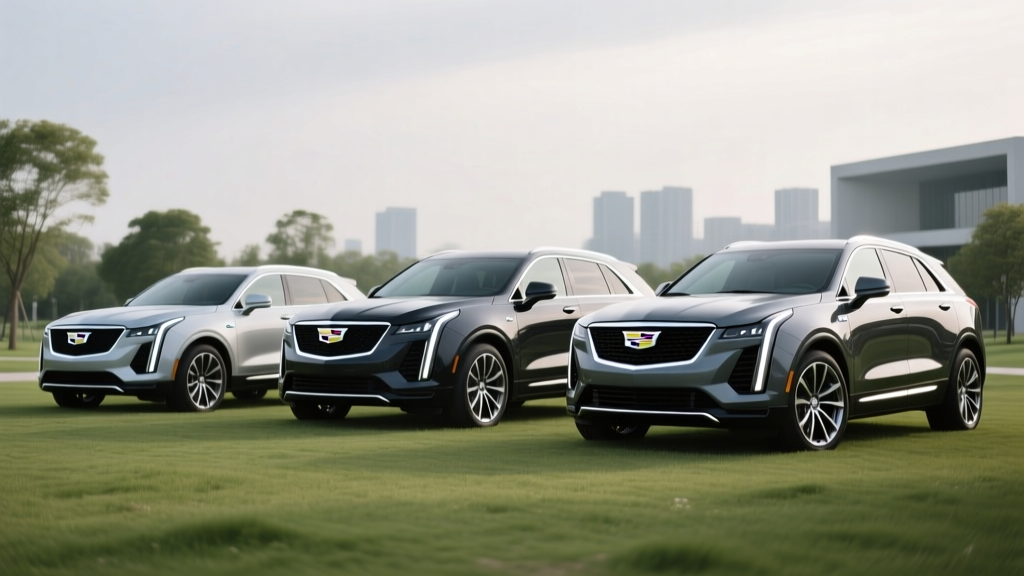
If you've been searching for a hybrid Cadillac SUV, the 2026 model year finally delivers meaningful choices. Cadillac now offers electrified powertrains across two of its most popular nameplates: the midsize XT5 (available as a conventional hybrid) and the flagship Escalade (offered as both a hybrid and a plug-in hybrid). For buyers who want luxury and better fuel economy without committing to a fully electric vehicle like the Lyriq or Optiq, these models bridge the gap.
This guide breaks down every 2026 hybrid Cadillac SUV with exact EPA fuel-economy figures, battery specifications, real-world expectations, warranty coverage, pricing, and federal tax-credit eligibility. We'll also help you decide whether a conventional hybrid (HEV), plug-in hybrid (PHEV), or a full battery-electric vehicle (BEV) fits your driving life.
HEV vs PHEV: What Cadillac Offers in 2026
Before diving into specific models, it's critical to understand the distinction between the two hybrid types in Cadillac's lineup. They serve different buyers and have fundamentally different charging requirements.
Conventional Hybrid (HEV)
- How it works: A gasoline engine pairs with a small electric motor and a compact battery (typically 1–2 kWh). The battery recharges through regenerative braking and the engine — you never plug it in.
- Best for: Drivers who want better MPG with zero lifestyle change. No charging access needed.
- 2026 Cadillac HEV: XT5 Hybrid
Plug-In Hybrid (PHEV)
- How it works: A larger battery (typically 15–25 kWh) and more powerful electric motor allow 30–40+ miles of pure electric driving before the gas engine engages. You plug in to recharge (Level 1 or Level 2). Once the battery depletes, it operates as a conventional hybrid.
- Best for: Drivers with home charging who want EV-like daily commutes plus gas-engine range for road trips.
- 2026 Cadillac PHEV: Escalade PHEV (iQ)
Key rule: A conventional hybrid (HEV) does not need a plug. If you see "hybrid Cadillac SUV" and assume it charges from a wall outlet, double-check whether the model is an HEV or a PHEV. The difference matters for your daily routine and your wallet.
2026 Cadillac XT5 Hybrid: Specs, MPG & Pricing
The XT5 Hybrid is Cadillac's entry into the electrified luxury midsize crossover segment. It pairs a turbocharged 2.0-liter four-cylinder engine with a mild-hybrid system to improve fuel economy and smooth out stop-start driving.
| Specification | Value |
|---|---|
| Powertrain | 2.0L turbo I4 + mild-hybrid motor |
| Combined Horsepower | 235 hp |
| Combined Torque | 258 lb-ft |
| Drivetrain | FWD or AWD |
| Transmission | 9-speed automatic |
| Battery | ~1.5 kWh (not plug-in) |
| EPA MPG (FWD, Combined) | 26 MPG |
| EPA MPG (FWD City / Hwy) | 24 city / 29 highway |
| EPA MPG (AWD Combined) | 24 MPG |
| 0–60 mph | ~7.6 seconds |
| Starting MSRP (Luxury FWD) | $47,990 |
| Battery Warranty | 8 years / 100,000 miles |
Real-World MPG vs. EPA Sticker
Hybrid systems shine in stop-and-go city driving, where regenerative braking recaptures energy that a gas-only car wastes as heat. Expect the XT5 Hybrid to meet or slightly exceed its EPA city rating in real-world urban use — owners of similar mild-hybrid crossovers commonly report 1–2 MPG above the city sticker. Highway driving is a different story: at sustained 70–80 mph speeds, the hybrid advantage shrinks, and you'll likely see 26–27 MPG on the FWD model rather than the EPA's 29 MPG highway figure.
Cold weather reduces efficiency by roughly 5–8% in hybrids (less severe than in full EVs, but still measurable). In sub-freezing conditions, expect combined MPG in the low-to-mid 20s for the FWD XT5 Hybrid.
2026 Cadillac Escalade PHEV (iQ): Electric Range, MPG & Power
The Escalade PHEV — marketed under Cadillac's iQ electrification sub-brand — is the headline act. It combines a twin-turbo V6 with a substantial electric motor and a large battery pack to deliver genuine electric-only commuting capability in a full-size luxury SUV.
| Specification | Value |
|---|---|
| Powertrain | 3.0L twin-turbo V6 + electric motor |
| Combined Horsepower | ~500+ hp (est.) |
| Combined Torque | ~550+ lb-ft (est.) |
| Drivetrain | AWD standard |
| Battery Capacity (usable) | ~24 kWh (NMC chemistry) |
| EPA Electric-Only Range | ~35 miles (est.) |
| Total Combined Range | ~450+ miles (gas + electric) |
| Charge Port | J1772 (Level 1 / Level 2 AC only) |
| Max AC Charge Rate | 7.7 kW |
| DC Fast Charging | Not available |
| Level 2 Charge Time (0–100%) | ~3.5 hours at 7.7 kW |
| Level 1 Charge Time (120V) | ~14 hours |
| EPA MPG (hybrid mode, combined) | ~22 MPG (est.) |
| MPGe (electric + gas combined) | ~52 MPGe (est.) |
| 0–60 mph | ~5.5 seconds (est.) |
| Starting MSRP | ~$95,000 (est.) |
| Battery Warranty | 8 years / 100,000 miles |
Note: As of early 2026, GM has announced the Escalade iQ PHEV but final EPA certification figures were not yet published at press time. The numbers above reflect manufacturer-estimated targets and comparable PHEV platforms. We will update this article when official EPA data is released via fueleconomy.gov.
Real-World Electric Range Expectations
The estimated 35-mile EPA electric range is achievable in mild weather at city speeds. On the highway at 75 mph, expect that to drop to approximately 25–28 electric miles. In winter (below 32°F), cold-soaked batteries lose 15–25% of usable range, bringing electric-only distance down to roughly 26–30 miles in city driving. If your daily commute is under 30 miles round-trip and you charge at home nightly, you'll rarely touch gasoline.
Charging the Escalade PHEV: What You Need to Know
The Escalade PHEV uses a standard J1772 connector for AC charging. It does not support DC fast charging — a common limitation among PHEVs due to battery size. At its peak 7.7 kW Level 2 rate, a full charge takes roughly 3.5 hours. Plugging into a standard 120V household outlet (Level 1 at ~1.4 kW) requires about 14 hours for a full charge, which works fine for overnight replenishment.
| Charging Level | Power (kW) | Time (0–100%) | Miles of EV Range per Hour |
|---|---|---|---|
| Level 1 (120V outlet) | ~1.4 kW | ~14 hours | ~2.5 miles/hr |
| Level 2 (240V, 32A) | 7.7 kW | ~3.5 hours | ~10 miles/hr |
| DC Fast Charge | N/A | N/A | N/A |
If you're installing a Level 2 home charger, a 240V / 40-amp circuit is ideal. Expect installation costs of $500–$1,500 if your electrical panel has capacity, or $2,000–$4,000 if a panel upgrade is needed. Consult a licensed electrician for a site-specific quote.
Hybrid Cadillac SUV MPG Comparison Table
| Model | Type | City MPG | Highway MPG | Combined MPG | EV-Only Range | MPGe |
|---|---|---|---|---|---|---|
| XT5 Hybrid (FWD) | HEV | 24 | 29 | 26 | N/A | N/A |
| XT5 Hybrid (AWD) | HEV | 22 | 27 | 24 | N/A | N/A |
| Escalade PHEV (iQ, AWD) | PHEV | ~22 (hybrid mode) | ~21 (hybrid mode) | ~22 (hybrid mode) | ~35 mi | ~52 |
How to read MPGe: MPGe (miles per gallon equivalent) converts the energy in electricity to a gasoline-equivalent figure so you can compare electric driving efficiency to gas vehicles. A higher MPGe means more efficient electric operation. The Escalade PHEV's ~52 MPGe applies when driving on its battery charge; once the battery is depleted and the gas engine takes over, the conventional MPG figures apply. Source: fueleconomy.gov.
Tax Credits and Incentives: What You Can Actually Claim
Federal tax credit eligibility for hybrids and PHEVs is governed by IRS §30D rules, which have become significantly more restrictive. Here's where each Cadillac stands:
XT5 Hybrid (HEV) — Federal Credit
- Conventional hybrids (HEVs) are not eligible for the §30D New Clean Vehicle Credit. This credit applies only to plug-in vehicles (PHEVs and BEVs) with sufficient battery capacity.
- No federal purchase incentive is available for the XT5 Hybrid.
Escalade PHEV — Federal Credit (Est.)
- Potential credit: up to $7,500, subject to all §30D requirements.
- MSRP cap: SUVs must have an MSRP at or below $80,000. The Escalade PHEV's estimated ~$95,000 starting price likely exceeds this cap, making it ineligible for the federal credit at most trims.
- Buyer income cap: Modified AGI must not exceed $300,000 (joint), $225,000 (head of household), or $150,000 (single).
- Battery sourcing: Critical minerals and battery components must meet phased-in percentage thresholds from US or FTA-partner countries. Verify current-year compliance on the IRS qualified vehicle list.
- Point-of-sale transfer: If eligible, the credit can be transferred to the dealer at purchase, reducing your out-of-pocket cost immediately.
Always verify eligibility on irs.gov or consult a tax professional before relying on the credit in your purchase decision. Rules change and vehicle eligibility lists update throughout the year.
State and Local Incentives
Several states offer their own rebates or tax credits for PHEVs that may apply to the Escalade PHEV regardless of the federal MSRP cap. California, Colorado, and New York, among others, have active programs. Check your state's energy or DMV website for current amounts, as these vary widely by jurisdiction and funding availability.
Battery Warranty, Reliability & Replacement Costs
Battery longevity is the number-one concern for hybrid buyers, and it's where modern hybrids have a strong track record.
Cadillac Hybrid Battery Warranty
Both the XT5 Hybrid and Escalade PHEV carry GM's standard hybrid/electric battery warranty:
- Duration: 8 years or 100,000 miles (whichever comes first)
- Coverage: Defects and excessive capacity loss (typically below 60–70% of original capacity)
- California and CARB states: PZEV/SULEV emissions-related hybrid components may carry extended coverage up to 10 years / 150,000 miles
How Long Do Hybrid Batteries Actually Last?
Real-world data from millions of hybrid vehicles on the road shows that modern hybrid batteries commonly last 150,000–200,000+ miles before significant degradation. The mild-hybrid battery in the XT5 is small and conservatively managed — it rarely cycles deeply, which extends its life. The Escalade PHEV's larger battery will experience more cycling, but its thermal management system and buffer zones (the car never uses 100% of the battery's actual capacity) protect longevity.
Replacement Cost If the Warranty Expires
If a hybrid battery does fail outside warranty:
- XT5 Hybrid (mild-hybrid battery): Estimated $2,000–$4,000 for parts and labor. The small battery is less expensive to replace than a full EV pack.
- Escalade PHEV (high-voltage battery): Estimated $8,000–$15,000 depending on pack configuration and labor. This is comparable to other large PHEV battery replacements.
These are worst-case scenarios. The vast majority of hybrid owners never replace their battery during ownership.
Who Should Buy a Hybrid Cadillac SUV — And Who Shouldn't
Choose the XT5 Hybrid (HEV) If:
- You want 2–4 MPG better than the gas-only XT5 without changing any habits
- You don't have access to home or workplace charging
- Your budget is in the $48,000–$60,000 range
- You drive a mix of city and highway and want smoother stop-start behavior
Choose the Escalade PHEV If:
- You have Level 2 home charging and a commute under 35 miles
- You want near-silent electric driving most days but need 450+ mile road-trip range
- You want a full-size three-row luxury SUV with a premium interior
- You're comfortable with a ~$95,000+ starting price and likely no federal tax credit
Choose a Full EV (Cadillac Lyriq or Optiq) If:
- You want zero tailpipe emissions and the lowest per-mile fuel cost
- You have reliable home charging and your trips rarely exceed 250–300 miles
- You want to qualify for the full $7,500 federal credit (the Lyriq, starting under $60,000, clears the MSRP cap)
- You want minimal maintenance — no oil changes, no engine upkeep
Stick with a Gas-Only SUV If:
- You drive predominantly long highway miles where hybrid efficiency gains are smallest
- You want the lowest possible purchase price
- You frequently tow near maximum capacity (hybrid systems add weight)
Pros — Hybrid Cadillac SUVs
- Better fuel economy with zero (XT5) or minimal (Escalade) lifestyle change
- Strong 8-year / 100,000-mile battery warranty
- Regenerative braking reduces brake wear
- Escalade PHEV offers genuine EV-like commuting with gas-engine backup
- Cadillac luxury, ride quality, and technology carry through to hybrid trims
Cons — Hybrid Cadillac SUVs
- XT5 Hybrid MPG improvement is modest (2–4 MPG over gas model)
- Escalade PHEV likely exceeds the $80,000 MSRP cap for the federal tax credit
- No DC fast charging on the Escalade PHEV
- Hybrid trims carry a price premium over equivalent gas-only models
- Real-world highway MPG may fall below EPA estimates
Frequently Asked Questions
How many MPG does the 2026 Cadillac XT5 Hybrid get?
The FWD XT5 Hybrid is EPA-rated at 24 city / 29 highway / 26 combined MPG. The AWD version drops to 22 city / 27 highway / 24 combined. In real-world city driving, expect to meet or slightly exceed the city figure thanks to regenerative braking. Highway MPG typically falls 1–2 MPG below the sticker at sustained speeds above 70 mph.
How far can the Escalade PHEV go on electric only?
Cadillac estimates approximately 35 miles of electric-only range on a full charge. In real-world conditions — highway speeds, cold weather, or aggressive acceleration — expect 25–30 miles. For daily commutes under 30 miles with nightly home charging, most driving will be electric.
Do I need to plug in the XT5 Hybrid?
No. The XT5 is a conventional hybrid (HEV). Its small battery recharges automatically through regenerative braking and the gasoline engine. There is no plug and no charging cable.
Does the 2026 Escalade PHEV qualify for the $7,500 federal tax credit?
Very likely not. The IRS §30D credit caps SUV MSRP at $80,000, and the Escalade PHEV's estimated starting price of ~$95,000 exceeds that threshold. Even if a lower trim were priced at or below $80,000, you'd also need to meet income caps and battery-sourcing requirements. Verify current eligibility at irs.gov before purchasing.
Is the Cadillac hybrid system reliable?
GM's hybrid systems have been in production across multiple brands for over a decade, and real-world failure rates are low. The hybrid battery carries an 8-year / 100,000-mile warranty. Most hybrid batteries outlast 150,000 miles without significant issues. The XT5's mild-hybrid system is particularly conservative, putting less stress on the battery than a full-hybrid or PHEV setup.
How much does a hybrid battery replacement cost?
For the XT5 Hybrid's mild-hybrid battery, estimated replacement cost is $2,000–$4,000. For the Escalade PHEV's larger high-voltage pack, expect $8,000–$15,000. Both are covered under the 8-year / 100,000-mile warranty, and most owners never need a replacement during typical ownership.
Can the Escalade PHEV use DC fast chargers?
No. The Escalade PHEV supports only AC charging via a J1772 connector — Level 1 (120V) or Level 2 (240V). DC fast charging is not available, which is typical for PHEVs given their smaller battery packs. A full Level 2 charge takes about 3.5 hours.
Hybrid vs PHEV vs EV — which Cadillac is right for me?
If you lack home charging and want simplicity, the XT5 Hybrid (HEV) is the answer. If you have home charging and a short commute but still want long road-trip range, the Escalade PHEV delivers the best of both worlds. If you're ready to go fully electric, the Cadillac Lyriq (EPA range up to 314 miles, starting under $60,000, and eligible for the $7,500 federal credit) is the most cost-effective electrified Cadillac you can buy.