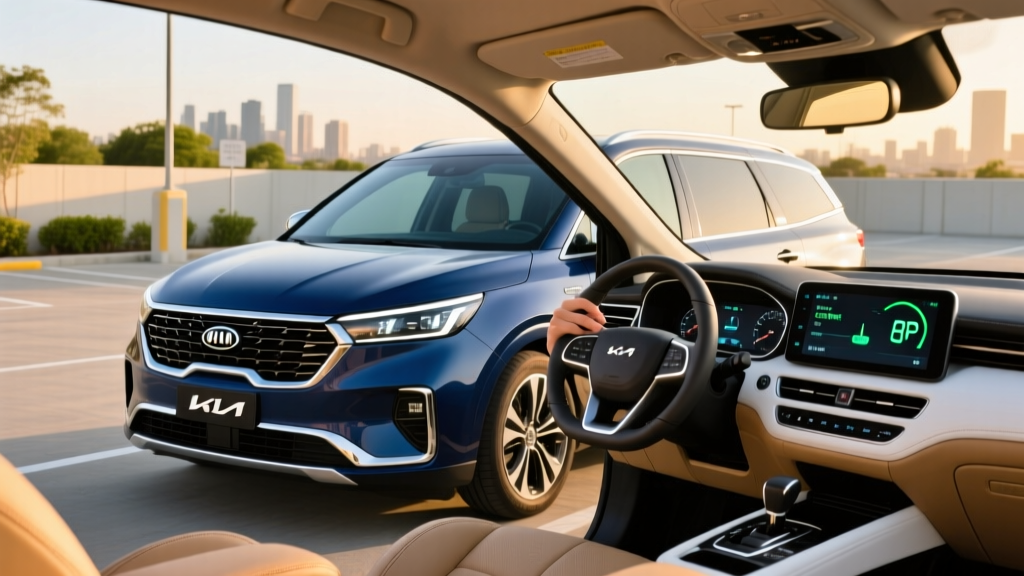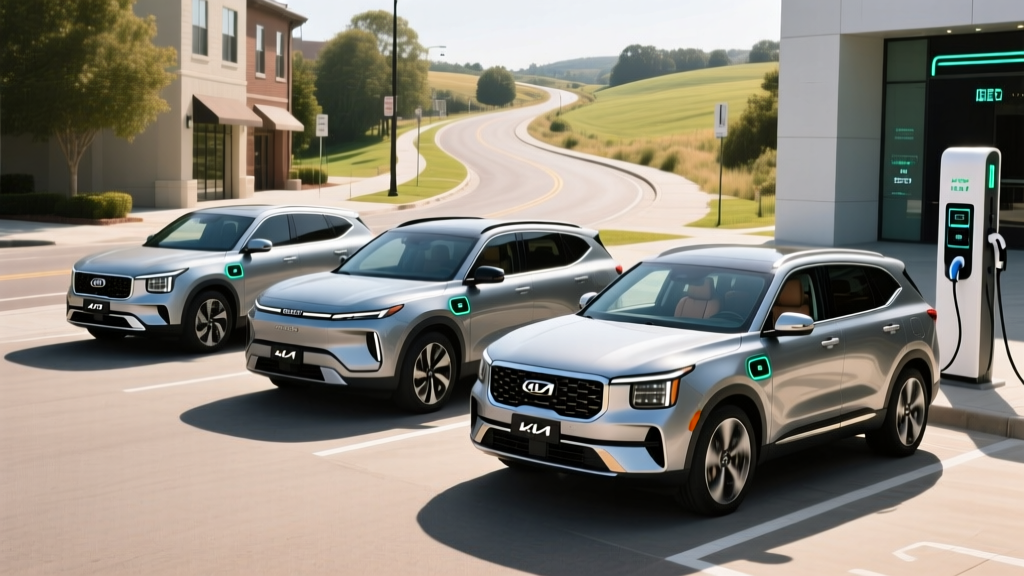
Kia offers one of the broadest hybrid lineups in the mainstream market for 2025, spanning a compact crossover (Niro), a compact SUV (Sportage), and a midsize three-row SUV (Sorento) — each available as a conventional hybrid (HEV), a plug-in hybrid (PHEV), or both. If you're searching for a 2025 Kia hybrid, the real question isn't whether Kia makes one — it's which powertrain type and which model actually fits your driving routine, charging access, and budget.
This guide breaks down every 2025 Kia hybrid and plug-in hybrid with exact EPA fuel economy, electric-only range, battery specs, pricing, and tax-credit eligibility so you can make a spec-driven decision.
HEV vs PHEV: What's the Difference in Kia's Lineup?
Before comparing models, it's critical to understand the two powertrain types Kia sells — they solve different problems and have different ownership requirements.
| Feature | Hybrid (HEV) | Plug-In Hybrid (PHEV) |
|---|---|---|
| Plug in to charge? | No — charges via regenerative braking and engine | Yes — plug in for electric-only driving |
| Electric-only range | ~1 mile at low speed (not usable) | 30–33 miles (model-dependent) |
| Battery size | 1.5–1.8 kWh (small, self-charging) | 13.8 kWh (larger, plug-in capable) |
| Fueling | Gas station only | Gas station + Level 1/Level 2 charging |
| Federal tax credit | None | Up to $7,500 (§30D, subject to eligibility) |
| Best for | No home charging, long highway commutes | Home charging access, short daily commutes |
The bottom line: a conventional HEV never needs a plug — it recovers energy during braking and deceleration to recharge its small battery. A PHEV has a much larger battery you charge from a wall outlet or charger, enabling 30+ miles of electric-only driving before the gas engine kicks in. If you can charge at home and your daily round trip is under 30 miles, a PHEV can run almost entirely on electricity most days while keeping a gas engine for road trips.
2025 Kia Niro Hybrid: The Efficiency Leader
The Niro is Kia's most fuel-efficient hybrid and one of the most efficient crossovers on the market. It's available as an HEV, a PHEV, and a full EV (the Niro EV is covered separately).
| Spec | Niro HEV | Niro PHEV |
|---|---|---|
| Powertrain | 1.6L I-4 + 32 kW electric motor | 1.6L I-4 + 62 kW electric motor |
| Combined HP | 139 hp | 180 hp |
| Transmission | 6-speed DCT | 6-speed DCT |
| EPA City / Hwy / Combined MPG | 53 / 54 / 53 | 49 / 52 / 50 (hybrid mode) |
| Electric-only range (PHEV) | N/A | 33 miles |
| Combined MPGe (PHEV) | N/A | 108 MPGe |
| Total range | ~590 miles | ~430 miles (gas) + 33 electric |
| Battery | 1.56 kWh lithium-ion | 13.8 kWh lithium-ion |
| Charge time (Level 2, 240V) | N/A | ~3 hours |
| DC fast charge capable | No | No |
| Base MSRP | $28,390 | $35,790 |
Real-world MPG note: The Niro HEV's 53 MPG combined EPA rating is one of the rare cases where real-world city driving can actually exceed the sticker — hybrids recapture more energy in stop-and-go traffic. Expect 50–56 MPG in city conditions and closer to 45–48 MPG on sustained highway trips at 70+ mph, where the electric motor assists less. According to fueleconomy.gov, the Niro HEV achieves its best efficiency in urban driving.
2025 Kia Sportage Hybrid: The Compact SUV Sweet Spot
The Sportage hybrid slots between the Niro and Sorento in size and offers the most balanced combination of space, power, and efficiency in Kia's lineup. It's available in both HEV and PHEV configurations.
| Spec | Sportage HEV | Sportage PHEV |
|---|---|---|
| Powertrain | 1.6L turbo I-4 + 44 kW electric motor | 1.6L turbo I-4 + 72 kW electric motor |
| Combined HP | 226 hp | 261 hp |
| Drivetrain | AWD standard | AWD standard |
| EPA City / Hwy / Combined MPG | 38 / 38 / 38 | 36 / 35 / 35 (hybrid mode) |
| Electric-only range (PHEV) | N/A | 34 miles |
| Combined MPGe (PHEV) | N/A | 84 MPGe |
| Total range | ~430 miles | ~390 miles (gas) + 34 electric |
| Battery | 1.77 kWh lithium-ion | 13.8 kWh lithium-ion |
| Charge time (Level 2, 240V) | N/A | ~3 hours |
| DC fast charge capable | No | No |
| Base MSRP | $30,490 | $40,590 |
Real-world MPG: The Sportage HEV's 38 MPG combined is realistic for mixed driving. In our experience with Kia's turbo-hybrid powertrain, expect 35–39 MPG in combined driving, with highway cruising at 75 mph yielding closer to 34–36 MPG. The AWD system adds some drivetrain loss compared to FWD-only competitors.
The Sportage PHEV's 34-mile electric-only range is enough for most daily commutes. On a full charge plus a full tank, you can cover roughly 420+ miles total — no range anxiety on road trips.
2025 Kia Sorento Hybrid: The Three-Row Option
The Sorento is the only three-row SUV in Kia's hybrid lineup, making it the default choice for families needing seating for six or seven. Both HEV and PHEV versions are offered.
| Spec | Sorento HEV | Sorento PHEV |
|---|---|---|
| Powertrain | 1.6L turbo I-4 + 44 kW electric motor | 1.6L turbo I-4 + 67 kW electric motor |
| Combined HP | 226 hp | 261 hp |
| Drivetrain | AWD standard | AWD standard |
| EPA City / Hwy / Combined MPG | 34 / 34 / 34 | 33 / 34 / 33 (hybrid mode) |
| Electric-only range (PHEV) | N/A | 32 miles |
| Combined MPGe (PHEV) | N/A | 79 MPGe |
| Total range | ~460 miles | ~420 miles (gas) + 32 electric |
| Battery | 1.77 kWh lithium-ion | 13.8 kWh lithium-ion |
| Charge time (Level 2, 240V) | N/A | ~3.5 hours |
| DC fast charge capable | No | No |
| Base MSRP | $38,690 | $51,590 |
Real-world MPG: The Sorento HEV's 34 MPG combined is respectable for a three-row AWD SUV. Real-world results typically land between 30–35 MPG depending on driving style and terrain. Highway-heavy commutes at 70+ mph may drop to 28–31 MPG — the boxy shape and 4,000+ lb curb weight work against it at speed.
Full Lineup MPG Comparison
| Model | Type | City MPG | Highway MPG | Combined MPG | EV Range (mi) | MPGe |
|---|---|---|---|---|---|---|
| Niro | HEV | 53 | 54 | 53 | — | — |
| Niro | PHEV | 49 | 52 | 50 | 33 | 108 |
| Sportage | HEV | 38 | 38 | 38 | — | — |
| Sportage | PHEV | 36 | 35 | 35 | 34 | 84 |
| Sorento | HEV | 34 | 34 | 34 | — | — |
| Sorento | PHEV | 33 | 34 | 33 | 32 | 79 |
Data sourced from fueleconomy.gov (EPA estimates). Your actual mileage will vary based on driving conditions, temperature, and terrain.
Tax Credits and Incentives: What Qualifies?
Here's where the HEV vs PHEV distinction matters most for your wallet.
Federal §30D Tax Credit for PHEVs (2025 rules):
- Credit amount: Up to $7,500 for eligible PHEVs — split between critical minerals ($3,750) and battery components ($3,750) requirements
- MSRP cap: SUVs/vans/pickups must be under $80,000; sedans under $55,000
- Buyer income cap: AGI ≤ $150,000 (single), $225,000 (head of household), $300,000 (joint)
- Battery sourcing: Must meet escalating critical-mineral and battery-component sourcing thresholds per IRS §30D rules
- Point-of-sale transfer: Eligible buyers can transfer the credit to the dealer for an upfront price reduction
- HEVs: Conventional hybrids do NOT qualify for the §30D federal EV tax credit
Kia PHEV eligibility caveat: As of 2025, the Kia Niro PHEV, Sportage PHEV, and Sorento PHEV all fall under the $80,000 SUV MSRP cap. However, whether you receive the full $7,500, a partial $3,750, or nothing depends on battery-component and critical-mineral sourcing requirements that tighten annually. Always verify current eligibility on the IRS clean vehicle credit page before purchasing — these rules change frequently.
State incentives: Many states offer additional rebates for PHEVs (typically $1,000–$4,000). HEVs generally do not qualify for state EV incentives. Check your state's energy or environmental agency for current programs.
Battery Warranty, Reliability, and Replacement Costs
Battery longevity is the top concern for hybrid buyers — and it's where Kia stands out.
- Duration: 10 years / 100,000 miles (whichever comes first)
- Coverage: Defects and capacity loss below a specified threshold (typically 70% of original capacity)
- Transferability: Warranty transfers to subsequent owners, though some states may reduce coverage to 5 years/60,000 miles for second owners
- Hybrid system warranty: Additional coverage on hybrid-specific components (inverter, electric motor, wiring)
Replacement cost if out of warranty: A Kia hybrid battery replacement (HEV) typically runs $2,000–$3,500 for the small 1.5–1.8 kWh pack. A PHEV battery replacement (13.8 kWh) is more expensive — expect $5,000–$8,000 including labor. However, hybrid battery failures before 150,000 miles are uncommon based on industry failure-rate data. Kia's 10-year/100,000-mile warranty covers most owners through the vehicle's primary ownership period.
Reliability: Kia's hybrid powertrains use a proven 1.6L turbocharged engine paired with a 6-speed dual-clutch transmission (DCT) rather than a CVT. The DCT provides a more natural driving feel but has drawn occasional complaints for low-speed hesitation in earlier model years. The hybrid system itself — battery, electric motor, inverter — has a strong reliability track record across the Hyundai/Kia platform, which shares powertrain architecture across multiple models.
Hybrid vs PHEV vs EV: Which Kia Fits You?
Choose a Kia HEV (Niro, Sportage, or Sorento) if:
- You cannot charge at home (apartment, street parking, no garage outlet)
- You want zero change to your fueling routine — just use gas stations
- Your driving is mostly highway, where PHEV electric-range advantage diminishes
- You want the lowest upfront price and don't need the tax credit
Choose a Kia PHEV if:
- You have home charging access (even a standard 120V outlet works overnight)
- Your daily round trip is under 30–34 miles (you'll rarely use gas on weekdays)
- You want to reduce fuel costs without committing to a full EV
- You qualify for the §30D federal tax credit, which can reduce the PHEV premium by up to $7,500
- You take regular road trips where EV charging infrastructure is still sparse
Choose a full EV (e.g., Kia EV6 or EV9) if:
- You have reliable Level 2 home charging
- Your daily driving is under 250 miles and you're comfortable planning DC fast-charge stops on road trips
- You want the lowest per-mile fuel cost and minimal maintenance
- You want to eliminate gasoline entirely
Pros and Cons: 2025 Kia Hybrid Lineup
Pros
- Niro HEV achieves 53 MPG combined — among the most efficient crossovers sold
- All three models offer AWD (standard on Sportage and Sorento hybrids)
- 10-year/100,000-mile hybrid battery warranty is best-in-class
- PHEV versions offer 32–34 miles of electric-only range — practical for daily commutes
- Sportage and Sorento PHEVs produce 261 hp — genuinely quick for the segment
- PHEVs eligible for up to $7,500 federal tax credit (subject to sourcing and income rules)
- Conventional HEVs require zero charging infrastructure
Cons
- No DC fast charging on any PHEV — Level 2 only (~3 hours)
- Sorento PHEV starts above $51,000 — steep for a mainstream SUV before incentives
- DCT transmission can feel hesitant at low speeds vs a traditional automatic
- PHEV battery takes up cargo space (reduced cargo volume vs HEV trims)
- HEV trims do not qualify for federal EV tax credits
- Real-world highway MPG drops noticeably on all three models at 75+ mph
- PHEV electric range drops 15–20% in cold weather
Frequently Asked Questions
How many MPG does the 2025 Kia hybrid get?
It depends on the model. The Niro HEV leads at 53 MPG combined (53 city / 54 highway). The Sportage HEV achieves 38 MPG combined, and the Sorento HEV gets 34 MPG combined. PHEV versions post slightly lower MPG in hybrid mode (33–50 combined depending on model) but compensate with 32–34 miles of electric-only driving before the engine starts.
How far can a Kia PHEV go on electric only?
The 2025 Niro PHEV delivers 33 miles of electric-only range, the Sportage PHEV offers 34 miles, and the Sorento PHEV provides 32 miles. In cold weather (below 40°F), expect a 15–20% reduction — roughly 25–28 miles for most models. All three use a 13.8 kWh lithium-ion battery pack and charge in about 3–3.5 hours on a Level 2 (240V) charger. None support DC fast charging.
Hybrid vs PHEV vs EV — which should I buy?
Choose an HEV if you have no home charging and want maximum simplicity. Choose a PHEV if you can charge at home, commute under 34 miles daily, and want a gas backup for road trips. Choose a full EV (like the Kia EV6) if you want the lowest running costs, have Level 2 home charging, and are comfortable with DC fast charging on road trips. The PHEV is the "bridge" option — it rewards home charging with low daily fuel costs while eliminating range anxiety.
Is the Kia hybrid reliable, and what does battery replacement cost?
Kia's hybrid system shares architecture with Hyundai's proven hybrid platform and carries a 10-year/100,000-mile battery warranty — one of the longest in the industry. Out-of-warranty HEV battery replacement typically costs $2,000–$3,500; PHEV battery replacement runs $5,000–$8,000. However, premature hybrid battery failure is rare — most packs last well beyond 150,000 miles based on industry data.
Does the 2025 Kia hybrid qualify for a tax credit?
Conventional Kia HEVs (Niro HEV, Sportage HEV, Sorento HEV) do not qualify for any federal EV tax credit. Kia PHEVs (Niro PHEV, Sportage PHEV, Sorento PHEV) may qualify for up to $7,500 under the IRS §30D clean vehicle credit, subject to buyer income limits, MSRP caps (under $80,000 for SUVs), and battery sourcing requirements that change annually. Always verify current eligibility at irs.gov before purchasing. Some states offer additional PHEV rebates — check your state energy office.
Do Kia hybrids need to be plugged in?
No — conventional Kia HEVs never need to be plugged in. They recharge their small battery through regenerative braking and the gas engine. Only the PHEV versions benefit from plugging in, which charges the larger 13.8 kWh battery for electric-only driving. If you buy a PHEV and never plug it in, it functions as a heavier, less efficient conventional hybrid.