Quick Verdict: The 2023 Ford Escape Hybrid at a Glance
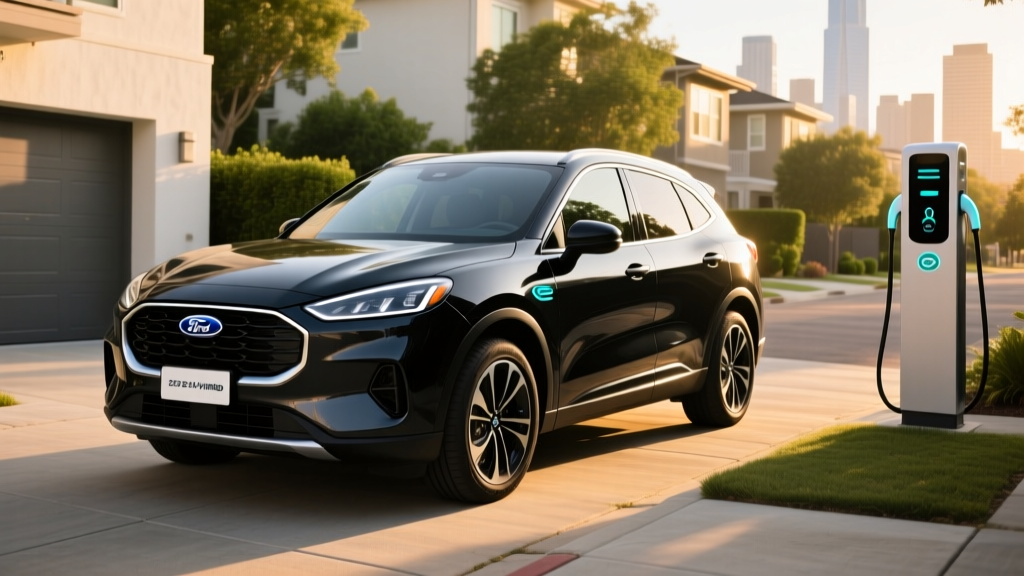
The 2023 Ford Escape Hybrid pairs a 2.5-liter Atkinson-cycle four-cylinder engine with an electric motor and a 1.1 kWh lithium-ion battery to deliver up to 41 MPG combined in front-wheel-drive form. It is a conventional hybrid (HEV) — meaning you never plug it in — and it remains one of the most fuel-efficient compact SUVs in its segment. For buyers who want electric-only commuting without range anxiety, Ford also offered the Escape PHEV variant with 37 miles of electric-only range. This guide breaks down every spec, real-world fuel economy expectation, warranty detail, and ownership cost you need before buying a used or certified-pre-owned 2023 Escape Hybrid in today's market.
| Spec | HEV (FWD) | HEV (AWD) | PHEV (FWD) |
|---|---|---|---|
| Combined Horsepower | 200 hp | 200 hp | 210 hp |
| Engine | 2.5L iVCT I4 + e-motor | 2.5L iVCT I4 + e-motor | 2.5L iVCT I4 + e-motor |
| Battery Capacity | 1.1 kWh Li-Ion | 1.1 kWh Li-Ion | 14.4 kWh Li-Ion |
| EPA Combined MPG / MPGe | 41 MPG | 37 MPG | 105 MPGe / 40 MPG (gas) |
| EPA City MPG | 44 MPG | 42 MPG | — |
| EPA Highway MPG | 37 MPG | 36 MPG | — |
| Electric-Only Range | N/A (HEV) | N/A (HEV) | 37 miles |
| Total Range | ~525 miles | ~475 miles | ~520 miles (EV + gas) |
| 0-60 mph (est.) | ~7.8 sec | ~8.1 sec | ~7.5 sec |
| Transmission | eCVT | eCVT | eCVT |
| Original Base MSRP | $33,340 (Base Hybrid) | $35,490 (AWD) | $39,895 (PHEV SE) |
HEV vs PHEV: Which 2023 Escape Hybrid Is Right for You?
The 2023 Escape lineup offered two distinct electrified variants. Understanding the difference is critical before you shop.
| Factor | Escape Hybrid (HEV) | Escape Plug-In Hybrid (PHEV) |
|---|---|---|
| Plug-In Required? | No — self-charging via regen & engine | Yes — plug in to access EV range |
| Electric-Only Driving | Brief low-speed EV assist only | 37 miles pure electric |
| Battery Size | 1.1 kWh | 14.4 kWh |
| Home Charging Needed? | No | Recommended (Level 2, ~3.5 hrs) |
| DC Fast Charging | N/A | Not supported |
| Federal Tax Credit (New) | Not eligible | Was eligible for up to ~$3,750 (expired) |
| Best For | Drivers without home charging access | Commuters with home/garage charging |
Key distinction: The conventional HEV recharges its small battery through regenerative braking and the gasoline engine. You fuel it like any other car. The PHEV has a much larger battery you charge via a standard 120V outlet (Level 1, ~10-11 hours) or a 240V Level 2 home charger (~3.5 hours). The PHEV does not support DC fast charging — a common limitation among plug-in hybrids.
Fuel Economy: EPA Ratings vs Real-World MPG
| Variant | City MPG | Highway MPG | Combined MPG |
|---|---|---|---|
| HEV FWD | 44 | 37 | 41 |
| HEV AWD | 42 | 36 | 37 |
| PHEV (gas-only after EV) | 40 (city) | 37 (hwy) | 40 combined |
Source: EPA Fuel Economy
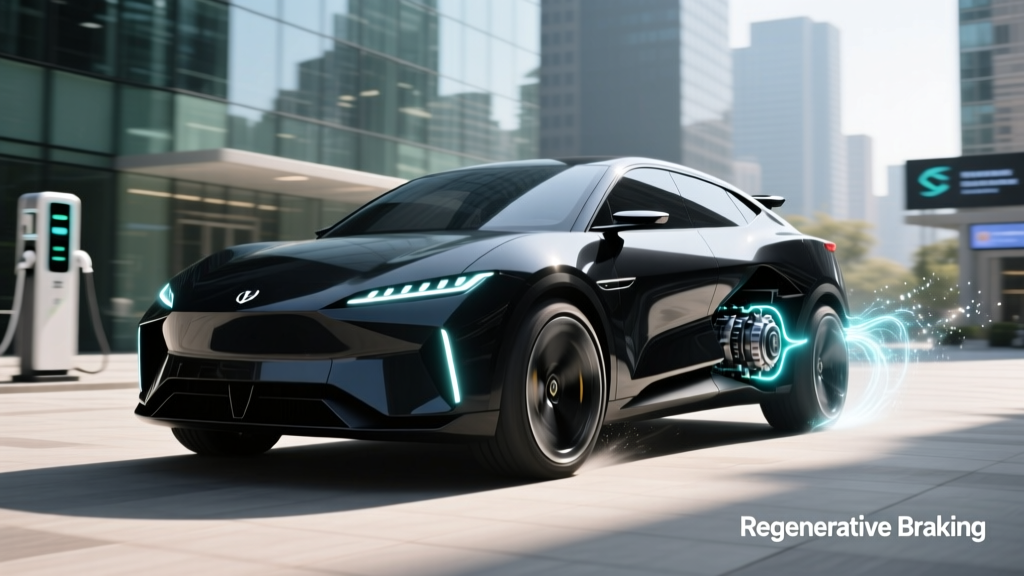
Real-world expectations: The Escape Hybrid's Atkinson-cycle engine and eCVT powertrain favor city and stop-and-go driving, where regenerative braking recaptures energy and the electric motor handles low-speed propulsion. In real-world mixed driving, owners commonly report 38-43 MPG in FWD form — often meeting or slightly exceeding the EPA combined rating in urban-heavy commutes.
On sustained highway trips at 75+ mph, expect 33-36 MPG in the FWD model. Cold weather (below 35°F) typically reduces hybrid fuel economy by 5-10% due to increased engine idle time for cabin heat and reduced battery efficiency. AWD models lose roughly 3-4 MPG across the board due to the added weight and mechanical drag of the rear motor.
The PHEV model, when charged nightly, can cover most commutes (under 37 miles) on electricity alone, yielding effectively infinite MPG for daily driving. Once the battery depletes, the 2.5L engine takes over at 40 MPG combined — still excellent for the segment.
Powertrain Deep Dive: Engine, Motor, and Battery
The 2023 Escape Hybrid uses Ford's fourth-generation hybrid powertrain, shared in concept with the Maverick Hybrid and Lincoln Corsair Grand Touring.
- Engine: 2.5-liter inline-4, Atkinson cycle, 163 hp / 155 lb-ft torque
- Electric Motor: Permanent-magnet synchronous, integrated into eCVT transaxle
- Combined System Output: 200 hp (HEV) / 210 hp (PHEV)
- Transmission: Electronic continuously variable transmission (eCVT) — not a belt-driven CVT; uses planetary gearsets for smooth, durable operation
- HEV Battery: 1.1 kWh lithium-ion, air-cooled, located under the rear cargo floor
- PHEV Battery: 14.4 kWh lithium-ion, liquid-cooled, mounted under the cargo area (slightly reduces cargo volume vs HEV)
The eCVT design eliminates traditional gear shifts and torque-converter losses, which is a major factor in the Escape Hybrid's strong city MPG. Unlike turbocharged competitors, the naturally aspirated 2.5L engine prioritizes efficiency over peak power — adequate for merging and passing, but not sporty.
Battery Warranty, Lifespan, and Replacement Cost
Ford Hybrid Battery Warranty: 8 years / 100,000 miles (whichever comes first) in most states. In California Air Resources Board (CARB) states — including CA, CT, ME, MA, MD, NJ, NY, OR, RI, VT, and WA — the hybrid battery is covered for 10 years / 150,000 miles under the California emissions warranty.
Warranty coverage threshold: Ford covers the hybrid battery if it falls below approximately 70% of original capacity during the warranty period.
Real-world longevity: Ford's hybrid battery packs in the Escape have demonstrated strong durability. The 1.1 kWh HEV battery undergoes relatively shallow charge/discharge cycles (the system keeps the battery between roughly 40-60% state of charge), which dramatically reduces degradation. Many Ford hybrid owners from the 2005-2012 era (first-gen Escape Hybrid) reported 150,000-200,000+ miles on the original battery pack.
Replacement cost if out of warranty: A replacement HEV battery pack for the 2023 Escape Hybrid typically runs $2,500-$4,000 including labor at a dealership. The PHEV's larger 14.4 kWh pack would be considerably more — estimated at $6,000-$9,000 if replacement is needed outside warranty. Third-party hybrid battery refurbishment services can sometimes reduce HEV replacement costs to $1,500-$2,500 by replacing individual modules rather than the full pack.
Pricing, Tax Credits, and Used Market Value
The 2023 Ford Escape Hybrid is no longer sold new, so buyers are looking at the used and certified pre-owned (CPO) market.
- Original MSRP (2023): HEV Base started at $33,340; HEV Platinum AWD reached ~$42,000. PHEV SE started at $39,895.
- Current used market (early 2026): Expect to pay roughly $24,000-$34,000 for a 2023 Escape Hybrid depending on mileage, trim, and condition.
- Federal tax credit — new: The Escape PHEV previously qualified for a partial federal credit under the old rules, but under current IRS §30D regulations, the PHEV's battery sourcing and MSRP disqualified it from the full $7,500 credit. The conventional HEV never qualified for any federal purchase credit.
- Federal tax credit — used: Under §25E, you may qualify for a used clean vehicle credit of up to $4,000 (30% of sale price, capped at $4,000) if you buy a qualifying used PHEV from a dealer for $25,000 or less, and your income is below $75,000 (single) / $150,000 (joint). The conventional HEV does not qualify for this credit. Verify eligibility at IRS.gov or with a tax professional.
Used EV/PHEV Credit (§25E) Requirements:
- Sale price must be $25,000 or less
- Buyer AGI: ≤$75,000 single / ≤$112,500 head of household / ≤$150,000 joint
- Vehicle must be at least 2 model years old (2023 qualifies in 2025+)
- Must purchase from a licensed dealer (private sales excluded)
- Vehicle battery must be ≥7 kWh (PHEV qualifies; HEV does not)
- Credit = 30% of sale price, max $4,000
- Can only be claimed once per vehicle (check VIN history)
Escape Hybrid vs PHEV vs Full EV: Which Fits Your Life?
Choose the Escape Hybrid (HEV) if:
- You don't have access to home or workplace charging
- You want maximum MPG without changing your fueling habits
- You frequently take long road trips and don't want to plan around chargers
- Upfront cost matters — the HEV is typically $3,000-$5,000 cheaper than the PHEV on the used market
Choose the Escape PHEV if:
- You have a garage or driveway where you can install a Level 2 charger (or use a standard 120V outlet overnight)
- Your daily commute is under 37 miles round-trip — you could drive months without using gasoline
- You want to reduce fuel costs significantly while keeping the gas engine for road trips
- You might qualify for the $4,000 used-clean-vehicle credit
Choose a full EV (e.g., Ford Mustang Mach-E, Hyundai Ioniq 5) if:
- You have reliable home Level 2 charging
- You want zero tailpipe emissions and minimal maintenance (no oil changes, no engine)
- Your typical trips are under 250 miles, or you're willing to plan DC fast-charging stops for road trips
- You want the strongest available federal tax credits ($7,500 for qualifying new EVs)
Reliability, Safety, and Ownership Costs
The 2023 Escape Hybrid benefits from Ford's extensive hybrid experience dating back to 2005. The eCVT transmission is one of the most reliable in the industry — it has no traditional clutches, belts, or fixed gears to wear out. The 2.5L Atkinson-cycle engine is naturally aspirated and under-stressed, contributing to long-term durability.
Safety: The 2023 Escape earned strong ratings from the NHTSA, including a 5-Star Overall Safety Rating. Standard driver-assistance features include Ford Co-Pilot360 with automatic emergency braking, lane-keeping assist, blind-spot monitoring, and rear cross-traffic alert.
Estimated 5-year ownership costs:
- Fuel (HEV FWD, 15,000 mi/yr, $3.40/gal avg): ~$6,220 over 5 years
- Fuel (comparable gas-only compact SUV at 28 MPG combined): ~$9,107 over 5 years
- Estimated fuel savings vs gas: ~$2,800-$3,000 over 5 years
- Maintenance: Lower than gas-only — regenerative braking extends brake pad life significantly; no transmission fluid changes on the eCVT under normal use
- Insurance: Comparable to gas Escape models; hybrids typically carry only a modest premium increase
Pros
- 41 MPG combined (FWD) — among the best in compact SUV segment
- No plug-in required; fuel it like a conventional car
- Strong city MPG (44) from regenerative braking
- Proven, durable eCVT powertrain with long track record
- Generous 8yr/100k-mi hybrid battery warranty (10yr/150k in CARB states)
- Spacious cargo area and comfortable ride quality
- Competitive used-market pricing with potential §25E credit on PHEV
Cons
- Highway MPG drops noticeably (37 FWD / 36 AWD)
- 200 hp is adequate but not quick — 0-60 in ~7.8 seconds
- AWD costs ~4 MPG combined vs FWD
- PHEV variant does not support DC fast charging
- Infotainment system is functional but trails competitors in polish
- No federal tax credit available for new HEV purchases
Frequently Asked Questions
How many MPG does the 2023 Ford Escape Hybrid get?
The FWD model achieves 44 city / 37 highway / 41 combined MPG per the EPA. The AWD model rates at 42 city / 36 highway / 37 combined. In real-world driving, city-heavy commutes often yield 40-44 MPG, while sustained highway driving at 75+ mph typically returns 33-36 MPG.
How far can the 2023 Escape PHEV go on electric only?
The 2023 Escape PHEV has an EPA-rated 37 miles of electric-only range. This covers most daily commutes. After the battery depletes, the 2.5L engine takes over and the vehicle operates as a conventional hybrid at 40 MPG combined. Total combined range (EV + gas) is approximately 520 miles.
Does the 2023 Escape Hybrid need to be plugged in?
The conventional Escape Hybrid (HEV) does not need to be plugged in. It charges its 1.1 kWh battery through regenerative braking and the gasoline engine. You simply fill up at a gas station. Only the Escape PHEV variant benefits from being plugged in to charge its larger 14.4 kWh battery.
Is the 2023 Ford Escape Hybrid reliable?
Yes. Ford's hybrid system is one of the most proven in the industry, with continuous production since 2005. The eCVT transmission uses a planetary gearset with no wearable clutches or belts. The 2.5L engine is naturally aspirated and conservatively tuned. The hybrid battery carries an 8-year/100,000-mile warranty (10 years/150,000 miles in CARB states), and real-world data shows these packs regularly lasting 150,000+ miles.
What does a replacement hybrid battery cost for the Escape?
Out of warranty, a dealership replacement for the HEV's 1.1 kWh battery pack typically costs $2,500-$4,000 including labor. The PHEV's 14.4 kWh pack would cost an estimated $6,000-$9,000. Independent hybrid specialists may offer module-level repairs for $1,500-$2,500 on the HEV pack.
Does the 2023 Escape Hybrid qualify for any tax credit?
The conventional HEV does not qualify for any federal tax credit. The PHEV variant may qualify for the used clean vehicle credit (§25E) of up to $4,000 if purchased from a dealer for $25,000 or less and the buyer meets income requirements. Neither variant qualifies for the new-vehicle §30D credit under current rules. Always verify with a tax professional or at IRS.gov.
How does the Escape Hybrid compare to a full EV?
The Escape Hybrid offers 41 MPG with zero lifestyle change — no charging infrastructure needed, no range planning for road trips. A full EV like the Ford Mustang Mach-E or Hyundai Ioniq 5 offers lower per-mile energy costs, zero tailpipe emissions, and stronger tax credits, but requires home charging access and planning for longer trips. The hybrid is the pragmatic bridge for drivers who aren't ready to go fully electric.