Quick Verdict: The Top-Trim Hybrid CR-V Worth Its Premium
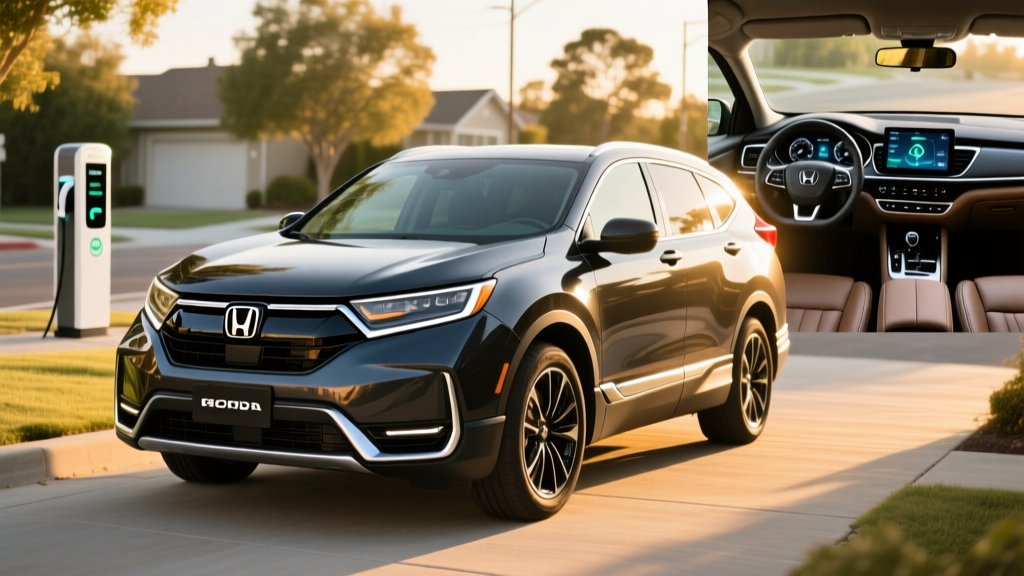
The 2025 Honda CR-V Sport Touring Hybrid sits at the apex of the CR-V lineup, pairing Honda's proven two-motor hybrid system with the most complete feature set in the compact SUV segment. At $40,850 MSRP (including destination), it commands a roughly $5,500 premium over the base EX-L, but the fuel economy payoff — EPA-rated 40 MPG combined — and standard all-wheel drive make it the version to buy if you plan to keep the vehicle past the five-year mark.
This is a conventional hybrid (HEV), not a plug-in. There is no charging port, no electric-only driving mode, and no federal tax credit. What you get instead is seamless regenerative braking, a smaller battery that never requires plug-in infrastructure, and real-world city fuel economy that routinely beats the EPA sticker. For buyers who want electrified efficiency without lifestyle changes, the Sport Touring Hybrid delivers exactly that.
HEV vs. PHEV: Where the CR-V Hybrid Fits
Conventional Hybrid (HEV) — CR-V Sport Touring Hybrid: No plug. The 1.1 kWh lithium-ion battery charges exclusively through regenerative braking and the gasoline engine. You refuel at any gas station. EPA: 40/34/37 MPG (city/highway/combined with AWD).
Plug-in Hybrid (PHEV) — not offered on CR-V: Honda does not currently sell a CR-V PHEV in the U.S. market. If you need electric-only commuting range, you would look at competitors like the Toyota RAV4 Prime (42 miles EV range) or Hyundai Tucson PHEV (33 miles EV range).
Full EV (BEV): Zero gasoline use, but requires home or public charging access. Models like the Hyundai Ioniq 5 or Tesla Model Y offer 260–320 miles of range but start at similar or higher price points.
The CR-V Sport Touring Hybrid occupies the middle ground: meaningful fuel savings over a gas-only compact SUV (the turbo 1.5T CR-V AWD is rated at 29 MPG combined) with zero behavioral change. You drive it exactly like a conventional car.
Fuel Economy: EPA Numbers and Real-World Results
| Metric | EPA Rating | Real-World Expectation |
|---|---|---|
| City MPG | 40 | 38–44 (hybrids often exceed EPA in stop-and-go) |
| Highway MPG | 34 | 30–34 (aerodynamic drag reduces hybrid advantage at speed) |
| Combined MPG | 37 | 34–39 depending on commute mix |
| Fuel Tank Capacity | 15.3 gallons | ~500–570 miles per tank |
| Annual Fuel Cost* | ~$1,550 | Varies by local gas price and mileage |
*Based on 15,000 miles/year and $3.40/gallon regular unleaded, per fueleconomy.gov.
Honda's two-motor hybrid system excels in city driving where the electric motor handles low-speed propulsion and the engine acts primarily as a generator. In mixed suburban and city testing, owners regularly report 38–42 MPG. Highway-heavy commutes at 75+ MPH bring the figure closer to 30–32 MPG, where the 1.5-liter turbocharged engine carries more of the load directly through the clutch lock-up mechanism.
Cold-weather fuel economy drops roughly 5–10% in freezing temperatures — less severe than EV range loss (which can hit 20–30%) but still worth noting for northern-climate buyers. The engine must run more frequently to provide cabin heat, reducing the electric motor's contribution.
Powertrain Specs: Two-Motor Hybrid System
| Specification | 2025 CR-V Sport Touring Hybrid |
|---|---|
| Engine | 2.0L naturally aspirated 4-cylinder (Atkinson cycle) |
| Electric Motors | Two-motor system (propulsion + generator) |
| Combined System Output | 204 hp / 247 lb-ft torque |
| Battery | 1.1 kWh lithium-ion (not plug-in) |
| Drivetrain | Standard AWD (rear-motor assisted) |
| 0–60 MPH | ~7.6 seconds (estimated) |
| Transmission | Direct-drive (no traditional transmission) |
| Towing Capacity | 1,000 lbs |
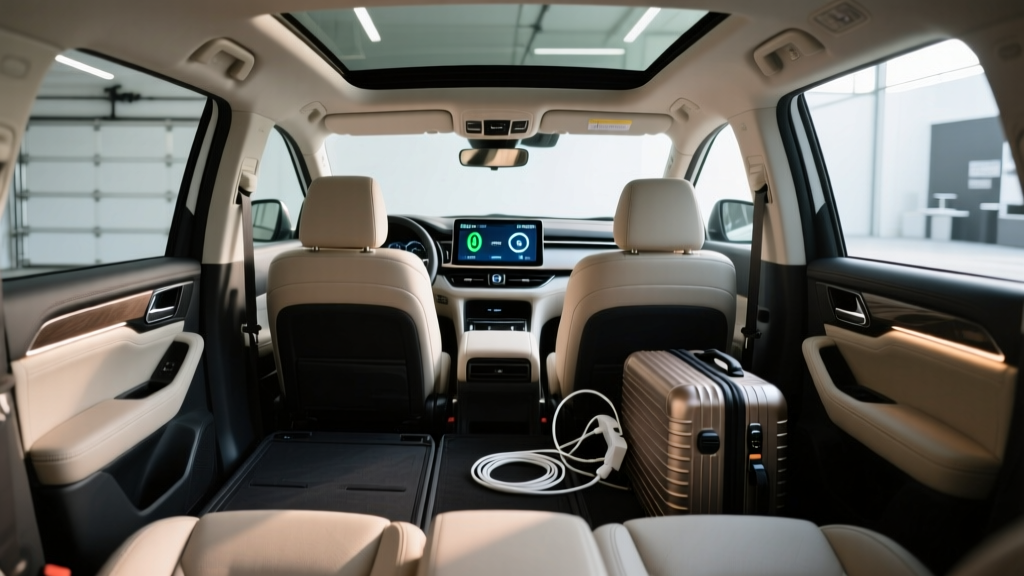
| Cargo Volume | 36.3 cu ft (rear seats up) / 76.5 cu ft (folded) |
Honda's hybrid powertrain uses a series-parallel architecture. Below roughly 45 MPH, the gasoline engine typically drives only the generator motor, which produces electricity to either power the propulsion motor or charge the battery. Above highway speeds, a lock-up clutch connects the engine directly to the front wheels for efficiency. The result is smooth, CVT-like acceleration without the rubber-band feel of conventional CVTs.
The 204 combined horsepower is competitive with the turbo 1.5T CR-V (190 hp), but the hybrid's 247 lb-ft of torque — available from the electric motor at low RPM — gives it noticeably stronger off-the-line response in city driving. The AWD system uses a rear-mounted electric motor rather than a mechanical driveshaft, engaging the rear axle only when slip is detected or during hard acceleration.
Pricing, Trims, and Tax Credit Eligibility
The 2025 CR-V Sport Touring Hybrid carries an MSRP of $40,850 (including $1,350 destination charge). It is the highest trim in the hybrid lineup:
- CR-V Sport Hybrid (FWD): $34,050
- CR-V Sport Hybrid (AWD): $35,550
- CR-V Sport-L Hybrid (AWD): $37,290
- CR-V Sport Touring Hybrid (AWD): $40,850
The Sport Touring adds a hands-free power tailgate, Bose 12-speaker audio, wireless Apple CarPlay/Android Auto, heated rear seats, a heated steering wheel, navigation, low-speed braking control, and traffic sign recognition over the Sport-L trim.
Federal Tax Credit: The CR-V Hybrid is a conventional HEV and does not qualify for the IRS §30D New Clean Vehicle Credit, which applies only to plug-in electric vehicles (BEVs and PHEVs) meeting battery sourcing and MSRP/income requirements. No federal purchase incentive is available for this vehicle.
State Incentives: A handful of states and local utilities offer small rebates ($250–$1,000) for hybrid purchases, but these vary widely by jurisdiction. Check your state energy office or utility provider for current programs. Always verify eligibility with a tax professional before relying on any incentive.
Battery Longevity, Warranty, and Replacement Cost
Hybrid Battery Warranty: 8 years / 100,000 miles (10 years / 150,000 miles in California Air Resources Board states including CA, CO, CT, MA, MD, ME, MN, NJ, NY, OR, RI, VA, VT, WA).
Powertrain Warranty: 5 years / 60,000 miles.
Battery Replacement Cost (out of warranty): $2,000–$4,000 for the hybrid battery pack, based on current Honda dealer pricing and aftermarket options. The 1.1 kWh pack is significantly smaller and cheaper to replace than a full EV battery ($10,000–$20,000+).
Honda's hybrid battery degradation is a minimal concern in practice. The 1.1 kWh pack operates within a narrow state-of-charge window (roughly 40–80% SoC), which dramatically reduces cycle wear compared to a full EV battery that regularly charges to 100%. Third-generation Honda hybrid systems, now in their fifth year of production in the CR-V, have demonstrated strong reliability records. Consumer Reports consistently rates the CR-V Hybrid at or above average for predicted reliability.
The hybrid battery is not a wear item in the same way a 12V starter battery is. Most hybrid battery failures occur outside the warranty window at 12–15+ years of age, and even then, individual cell replacement (rather than the full pack) is sometimes possible at independent hybrid specialists for $500–$1,500.
What the Sport Touring Trim Actually Gets You
The $3,560 step up from the Sport-L Hybrid to the Sport Touring Hybrid buys a meaningful feature upgrade, particularly for buyers in cold climates or those who prioritize audio and convenience:
- Bose premium 12-speaker audio system
- Heated rear outboard seats and heated steering wheel
- Hands-free power tailgate with walk-away close
- Wireless Apple CarPlay and Android Auto (Sport-L is USB-connected)
- Embedded Honda satellite-linked navigation
- Low-speed braking control (front and rear parking sensors with auto-brake)
- Traffic sign recognition integrated into the digital instrument cluster
- Rain-sensing variable intermittent wipers
The Honda Sensing ADAS suite is standard across all trims and includes adaptive cruise control with low-speed follow, lane-keeping assist, road departure mitigation, and collision mitigation braking. This is an SAE Level 2 driver-assistance system — it does not drive the vehicle autonomously and requires constant driver attention and hands-on-wheel engagement.
CR-V Hybrid vs. the Competition
Strengths
- 40 MPG EPA city — class-leading for AWD compact SUVs
- Strong low-end torque (247 lb-ft) from electric motor
- Spacious cargo area (36.3 cu ft) with no hybrid battery intrusion
- Comprehensive Honda Sensing safety suite standard
- Proven hybrid reliability with 8yr/100k-mi battery warranty
- Standard AWD on Sport Touring — no FWD penalty
Weaknesses
- $40,850 MSRP is steep for a compact SUV — near luxury territory
- No PHEV option for electric-only commuting
- 1,000-lb towing capacity trails some turbo competitors
- Highway MPG (34) less impressive than city (40)
- No federal tax credit to offset the hybrid premium
- Infotainment still uses a physical touchscreen (no gesture control)
Against the Toyota RAV4 Hybrid (EPA 41/38/39 MPG, starting ~$33,425), the CR-V Hybrid gives up 1 MPG combined but offers a more refined ride, a larger cargo area, and a notably quieter cabin at highway speeds. The RAV4 Prime PHEV (42 miles EV, ~$44,500) is the better choice if you have home charging and a short commute.
The Hyundai Tucson Hybrid (EPA 38/38/38 MPG, starting ~$34,460) matches the CR-V in features but trails in fuel economy, particularly in city driving where Honda's system excels.
Who Should Buy This Hybrid — and Who Shouldn't
Choose the CR-V Sport Touring Hybrid if:
- You drive 12,000+ miles/year and want to cut fuel costs without plugging in
- Your commute is city-heavy (the hybrid system's sweet spot)
- You live in an apartment or lack reliable home charging access
- You plan to own the vehicle 8+ years (warranty covers the battery)
- You want AWD capability without the fuel penalty of a conventional AWD SUV
Look elsewhere if:
- You have a short commute and home charging — a PHEV like the RAV4 Prime gives you 42 electric-only miles and qualifies for a $7,500 federal credit (subject to IRS §30D eligibility)
- You want zero gasoline use — consider a full BEV like the Ioniq 5 or Model Y
- You tow more than 1,000 lbs regularly — a turbo gas SUV or truck-based hybrid may serve better
- Budget is tight — the Sport Hybrid AWD at $35,550 delivers identical fuel economy without the luxury features
Frequently Asked Questions
How many MPG does the 2025 Honda CR-V Sport Touring Hybrid get?
The EPA rates it at 40 city / 34 highway / 37 combined MPG with standard AWD. Real-world results vary: city-heavy drivers often see 38–44 MPG, while highway-dominant commutes at 75+ MPH drop to 30–32 MPG. Cold weather reduces efficiency by roughly 5–10%.
Does the CR-V Hybrid need to be plugged in?
No. This is a conventional hybrid (HEV), not a plug-in. The 1.1 kWh battery charges entirely through regenerative braking and the gasoline engine. You refuel at any gas station — there is no charging port.
Does it qualify for any federal tax credit?
No. The IRS §30D New Clean Vehicle Credit applies only to plug-in vehicles (BEVs and PHEVs) that meet battery sourcing, MSRP, and buyer income requirements. The CR-V Hybrid is a conventional HEV and is not eligible. Some state or utility rebates may apply — check local programs.
How long will the hybrid battery last and what does replacement cost?
Honda warranties the hybrid battery for 8 years / 100,000 miles (10 years / 150,000 miles in CARB states). Out-of-warranty replacement runs $2,000–$4,000. The small 1.1 kWh pack operates in a narrow charge window, which minimizes degradation — most packs last well beyond the warranty period.
Is the Sport Touring worth the premium over the Sport Hybrid?
If you value heated rear seats, a heated steering wheel, Bose audio, hands-free tailgate, and wireless phone integration, the $5,300 premium (Sport AWD to Sport Touring AWD) is justifiable. If those features are optional for you, the Sport Hybrid AWD at $35,550 delivers identical fuel economy and powertrain performance at a significantly lower price.
How does the CR-V Hybrid compare to a full EV?
A BEV like the Hyundai Ioniq 5 eliminates fuel costs entirely (~$550/year electricity vs. ~$1,550/year gasoline) and qualifies for up to $7,500 in federal credits, but requires reliable home or public charging. If you cannot charge at home or regularly drive 300+ miles between stops, the CR-V Hybrid offers a practical compromise with no range or charging anxiety.