Quick Verdict: A Practical PHEV for North Texas Commuters
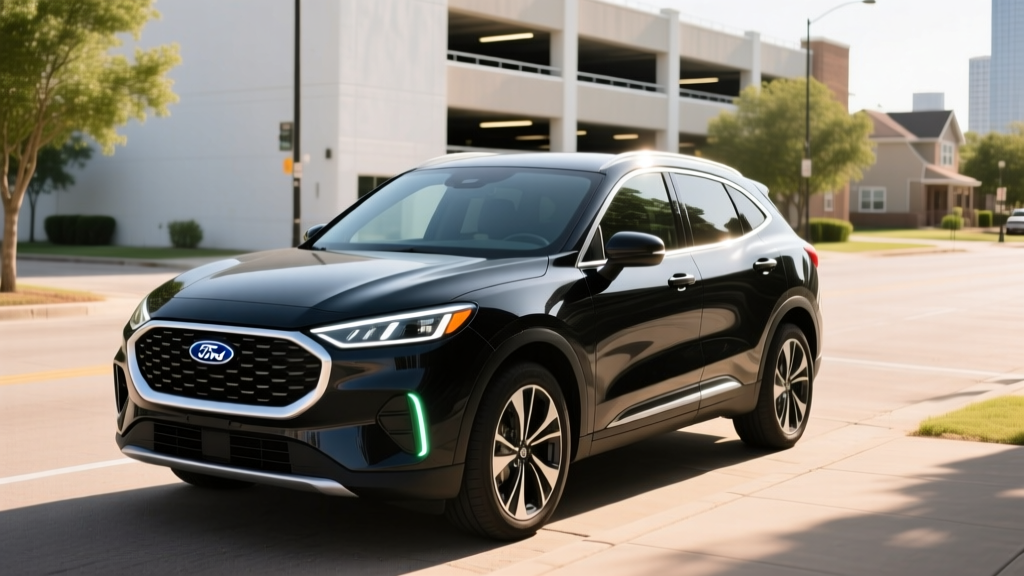
The 2024 Ford Escape Plug-In Hybrid occupies a specific niche: buyers who want meaningful electric-only commuting without committing to a full battery-electric vehicle. With an EPA-rated 37 miles of electric range and 105 MPGe combined, it covers most daily driving in the Fort Worth and DFW metro area on electrons alone before seamlessly switching to its 2.5-liter hybrid powertrain for longer trips.
For Fort Worth residents with home charging access and commutes under 35 miles, the Escape PHEV can slash fuel costs dramatically. But it's not without trade-offs — the lack of DC fast charging and a starting MSRP near $38,500 mean buyers should weigh it carefully against both the conventional Escape Hybrid and fully electric alternatives.
HEV vs PHEV: What's the Actual Difference?
Before diving into specs, it's critical to understand the distinction between the two electrified Escape variants Ford offers, because the buying calculus is very different.
| Feature | Escape Hybrid (HEV) | Escape Plug-In Hybrid (PHEV) |
|---|---|---|
| Battery Size | ~1.1 kWh | 14.4 kWh (usable) |
| Plugs In? | No — self-charging via regen | Yes — Level 1 & Level 2 |
| Electric-Only Range | Less than 1 mile at low speed | 37 miles (EPA) |
| EPA Combined MPG/MPGe | 39 MPG combined | 105 MPGe (electric) / 40 MPG (gas) |
| Starting MSRP (2024) | ~$33,385 | ~$38,500 |
| Federal Tax Credit (§30D) | Not eligible | Up to $3,750 (see eligibility below) |
The conventional HEV requires zero behavior change — you fuel it like any gas car, and the small battery assists the engine for better MPG. The PHEV demands access to a plug (ideally at home) to realize its efficiency advantage. If you can't charge regularly, you're carrying 500+ pounds of battery dead weight and the PHEV defaults to roughly 40 MPG as a hybrid — only marginally better than the HEV.
Fuel Economy and Electric Range: The Numbers That Matter
Here's the full EPA efficiency breakdown per fueleconomy.gov:
| Metric | Value |
|---|---|
| Electric-Only Range | 37 miles |
| Combined MPGe (electric mode) | 105 MPGe |
| Gas-Only MPG — City | 42 MPG |
| Gas-Only MPG — Highway | 36 MPG |
| Gas-Only MPG — Combined | 40 MPG |
| Total Combined Range (electric + gas) | ~520 miles |
| Fuel Tank Capacity | 11.1 gallons |
Real-World MPG vs. EPA Estimates
Ford's hybrid system uses an Atkinson-cycle 2.5L engine paired with an electric motor through an eCVT — a proven architecture shared with the Maverick Hybrid. In real-world driving, PHEVs and HEVs often exceed EPA city estimates because regenerative braking recovers more energy in stop-and-go traffic. Fort Worth drivers on I-35 or surface streets with frequent lights can expect 42-45 MPG in city driving once the battery is depleted.
Highway driving is a different story. At 75+ mph on I-20 or the Turnpike, expect the gas-mode efficiency to dip to 33-35 MPG — aerodynamic drag and the lack of regenerative opportunities at steady speed reduce the hybrid advantage. In cold weather (rare but real in North Texas winters), the engine runs more frequently for cabin heat, further reducing efficiency.
Real-World Electric Range Expectation: The EPA rates 37 electric miles. In practice, expect 32-35 miles in mild weather (spring/fall), 28-32 miles in summer with A/C, and 25-30 miles on the rare sub-40°F Fort Worth morning. Highway-speed electric driving depletes the battery fastest — the 37-mile rating assumes a mix of city and suburban driving under 55 mph.
Powertrain, Battery, and Charging Specs
| Specification | 2024 Escape PHEV |
|---|---|
| Engine | 2.5L Atkinson-cycle 4-cylinder |
| Electric Motor | Permanent-magnet synchronous (integrated in transaxle) |
| Combined Horsepower | 210 hp |
| Transmission | eCVT (planetary gearset, not a belt CVT) |
| Battery Chemistry | Lithium-ion (NMC) |
| Battery Capacity (Usable) | 14.4 kWh |
| Level 1 Charging (120V) | ~10-11 hours (0-100%) |
| Level 2 Charging (240V, 32A) | ~3.5 hours (0-100%) |
| DC Fast Charging | Not available |
| Charge Port | J1772 (Level 1 & 2 only) |
| 0-60 mph (est.) | ~8.5 seconds |
Charging Reality for Fort Worth Owners
The Escape PHEV's biggest limitation is the absence of DC fast charging. You cannot use Electrify America, EVgo, or Tesla Supercharger stations to top up the battery on the go. This is common among compact PHEVs — the Toyota RAV4 Prime and Hyundai Tucson PHEV also lack DCFC — but it means your home or workplace plug is your only refueling option for the electric portion.
For daily use, this is rarely a problem. A standard 120V outlet (Level 1) delivers roughly 1.4 kW, adding about 3-4 miles of range per hour. Plug in overnight for 10 hours and you'll wake up with a full battery. If you install a 240V Level 2 home charger — typical cost $500-$1,200 for equipment plus $300-$800 for electrician labor in the DFW area — a full charge takes about 3.5 hours, giving you flexibility for mid-day top-ups.
Electricity cost in Fort Worth (Oncor delivery, competitive retail providers) averages around $0.12-$0.15/kWh. Charging the 14.4 kWh battery from empty costs roughly $1.75-$2.15 — the equivalent of half a gallon of gas for 37 miles of driving.
Pricing, Trims, and Federal Tax Credit Eligibility
The 2024 Escape PHEV is offered in a single trim:
| Trim | MSRP | Key Features |
|---|---|---|
| PHEV (base) | $38,500 | 14.4 kWh battery, 105 MPGe, 8" SYNC 4, Co-Pilot360 Assist+ |
| PHEV + Premium Package | ~$41,000 | Adds panoramic roof, B&O audio, 360° camera, evasive steering |
Does It Qualify for the Federal §30D Tax Credit?
Under current IRS rules for the §30D New Clean Vehicle Credit, the 2024 Escape PHEV qualifies for up to $3,750 — not the full $7,500. Here's why:
- Battery sourcing requirement: The Escape PHEV meets the critical minerals threshold but does not fully satisfy the battery component manufacturing requirement, capping the credit at $3,750.
- MSRP cap: Must be under $80,000 for SUVs — the Escape PHEV passes easily at ~$38,500.
- Buyer income cap: AGI must not exceed $150,000 (single) / $300,000 (married filing jointly).
- Point-of-sale transfer: As of 2024, you can transfer the credit to the dealer at purchase for an immediate price reduction rather than waiting to claim it on your tax return.
Always confirm eligibility with a tax professional and check the latest IRS guidance, as battery sourcing rules tighten annually. Texas does not currently offer a state-level EV/PHEV purchase incentive, though some municipal utility programs (like Oncor's past rebates) have offered charging equipment rebates — check your local provider.
Battery Warranty, Reliability, and Replacement Cost
Ford PHEV Battery Warranty: 8 years / 100,000 miles (whichever comes first), covering defects and capacity loss below 70% of original capacity. The hybrid system components (motor, inverter, eCVT) are also covered under this warranty. This meets the CARB-mandated minimum and applies in all 50 states.
How Reliable Is the Escape PHEV?
Ford's 2.5L Atkinson-cycle hybrid powertrain has been in production since the previous-generation Escape and Fusion Hybrid, accumulating billions of real-world miles across Ford's hybrid fleet. The eCVT design — a planetary gearset with no belts, clutches, or friction bands — is mechanically simpler than a conventional automatic and has proven highly durable.
The high-voltage battery uses NMC (nickel-manganese-cobalt) lithium-ion cells. With a 14.4 kWh pack and daily cycling, degradation is typically modest: industry data suggests PHEV batteries lose roughly 1-2% of capacity per year under normal use. After 8 years, expect roughly 85-90% of original capacity — well above Ford's 70% warranty threshold.
Battery Replacement Cost
If the battery fails outside warranty, replacement costs for the Escape PHEV battery pack are estimated at $4,000-$6,000 for the part, plus $500-$1,000 in labor. This is significantly less than a full EV battery replacement ($10,000-$20,000+) because the pack is small. Third-party refurbishers and used-pack options may reduce costs further as the fleet ages. For context, very few Ford hybrid owners report out-of-warranty battery failures — the vast majority last the life of the vehicle.
Who Should Buy the Escape PHEV — And Who Shouldn't
Choose the Escape PHEV if:
- Your daily round-trip commute is under 35 miles and you can charge at home
- You want electric driving without range anxiety on road trips
- You need an SUV for cargo/family but want to minimize fuel costs
- You're not ready for a full EV due to apartment living, unreliable public charging, or frequent long trips to rural areas
Choose the conventional Escape Hybrid (HEV) instead if:
- You can't install or access a home charger
- Your budget is tighter (HEV starts ~$5,100 less)
- You don't care about electric-only driving and just want solid 39 MPG
Consider a full EV (e.g., Ford Mustang Mach-E, Hyundai Ioniq 5) if:
- You have reliable home Level 2 charging
- Most of your driving is under 250 miles round-trip
- You want zero tailpipe emissions and minimal maintenance
- You want to access DC fast charging for road trips
Pros
- 37 miles electric covers most DFW commutes gas-free
- 40 MPG hybrid mode is excellent for the class
- No range anxiety — 520+ total miles
- Qualifies for up to $3,750 federal credit
- Proven, durable hybrid powertrain
- Comfortable ride, spacious cargo area (60.8 cu ft max)
Cons
- No DC fast charging capability
- PHEV premium over HEV takes years to recoup at current gas prices
- Only one PHEV trim limits option flexibility
- 210 hp is adequate, not quick — 8.5s to 60 mph
- Level 1 charging is slow — Level 2 install recommended
- FWD only — no AWD option on the PHEV (AWD available on HEV)
Fort Worth Ownership: Practical Considerations
North Texas presents a specific ownership profile for the Escape PHEV. Summer temperatures regularly exceed 100°F, which affects battery efficiency and cabin cooling load. The PHEV's thermal management system keeps the battery within safe operating range, but expect electric range to drop to 30-32 miles on the hottest days with A/C running hard.
For charging infrastructure, Fort Worth and the broader DFW metro have growing public Level 2 networks (ChargePoint, EVgo), but remember — the Escape PHEV can only use Level 2, not DC fast chargers. The practical charging strategy is simple: plug in at home every night. If your home has a standard 120V outlet near where you park, you can begin immediately without any electrical upgrades. For faster turnaround, a licensed electrician can install a 240V NEMA 14-50 outlet for $300-$600 (assuming your panel has capacity), or a hardwired Level 2 station for $800-$1,500 total.
Insurance costs for the Escape PHEV in Tarrant County run roughly $1,400-$1,900 annually depending on coverage — comparable to the gas Escape and slightly less than full EVs, which carry higher repair-cost premiums.
Frequently Asked Questions
How many MPG does the 2024 Ford Escape Plug-In Hybrid get?
Once the battery is depleted, the Escape PHEV operates as a conventional hybrid rated at 42 MPG city / 36 MPG highway / 40 MPG combined. In real-world Fort Worth driving, city MPG often reaches 42-45 thanks to regenerative braking, while sustained highway driving at 75+ mph may yield 33-35 MPG.
How far can the Escape PHEV go on electric power only?
The EPA rates it at 37 miles of electric-only range. Real-world results vary: expect 32-35 miles in mild weather, 28-32 in hot summer conditions with A/C, and 25-30 on cold winter mornings. Highway-speed electric driving reduces range more than city driving.
Hybrid vs PHEV vs EV — which powertrain is right for me?
If you have home charging and a commute under 35 miles, the PHEV gives you the best of both worlds: electric daily driving with gas-engine freedom for road trips. If you can't charge at home, the conventional HEV (39 MPG combined) is simpler and cheaper. If you have reliable home charging and rarely drive over 250 miles in a day, a full EV like the Mustang Mach-E (312-mile range) eliminates gas entirely with lower maintenance costs.
Is the Escape PHEV reliable, and what does a battery replacement cost?
Ford's 2.5L hybrid powertrain is one of the most proven in the industry, with the eCVT design eliminating traditional transmission wear points. The battery is warranted for 8 years/100,000 miles. Out-of-warranty replacement is estimated at $4,000-$6,000 for the pack plus $500-$1,000 labor — far less than a full EV battery. Most hybrid batteries outlast the vehicle.
Does the 2024 Escape PHEV qualify for any tax credit?
Yes, it qualifies for up to $3,750 under the federal §30D New Clean Vehicle Credit, subject to buyer income limits ($150K single / $300K joint) and the point-of-sale transfer option. It does not qualify for the full $7,500 due to battery component sourcing requirements. Texas does not currently offer a state PHEV purchase incentive. Always verify with the IRS and a tax professional.
Can I DC fast charge the Escape PHEV on road trips?
No. The 2024 Escape PHEV supports only Level 1 (120V) and Level 2 (240V) AC charging via a J1772 connector. It cannot use DC fast chargers like Electrify America or EVgo. On road trips, the vehicle simply operates in hybrid mode at 40 MPG — the battery is small enough that DC fast charging would offer minimal benefit.
How long does it take to charge at home?
On a standard 120V household outlet (Level 1), a full charge takes approximately 10-11 hours. On a 240V Level 2 charger rated at 32 amps, a full charge takes about 3.5 hours. Most owners plug in overnight and wake up to a full battery every morning.