The Only Hybrid Minivan That Matters: 2023 Toyota Sienna Overview
Toyota made a bold call when it redesigned the Sienna for the 2021 model year: every single trim would be a hybrid. No gas-only option, no V6 nostalgia. By the 2023 model year, that decision had been vindicated by sales figures and owner satisfaction scores that left competitors scrambling. The 2023 Toyota Sienna hybrid remains the only minivan on the US market built exclusively around a hybrid powertrain, and it delivers fuel economy numbers that would have seemed impossible for a 4,600-pound family hauler just a decade ago.
If you're researching the 2023 Toyota Sienna hybrid — whether buying new-old-stock, certified pre-owned, or comparing it against newer models — this guide covers the exact EPA figures, real-world MPG data, powertrain specifications, battery longevity, and ownership economics you need to make an informed decision.
HEV vs PHEV: The Sienna Is a Conventional Hybrid
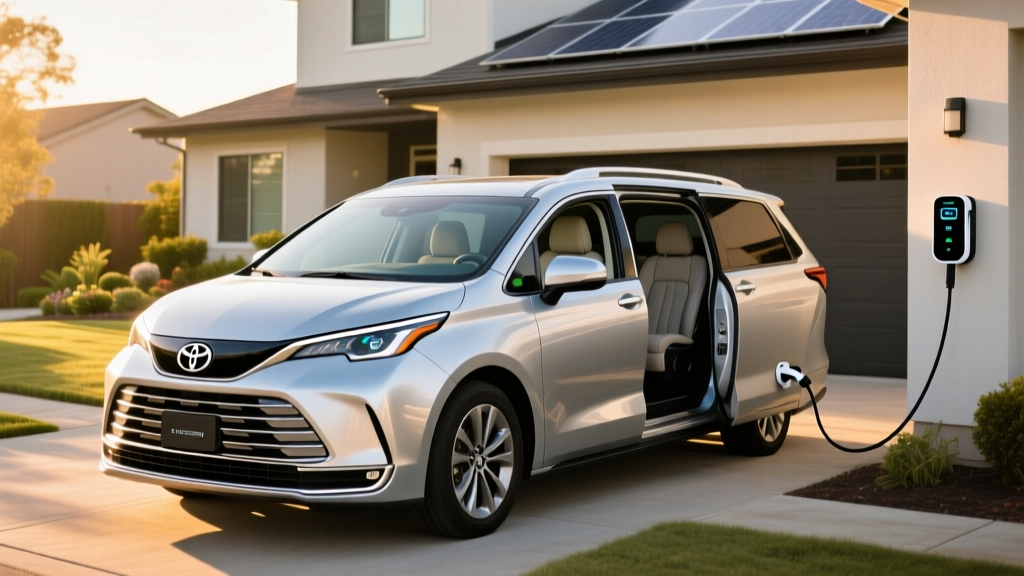
Important distinction: The 2023 Toyota Sienna is a conventional hybrid electric vehicle (HEV), not a plug-in hybrid (PHEV). It has no charging port, no electric-only driving mode of meaningful distance, and no battery large enough to plug into a wall outlet. It generates all its electricity internally through regenerative braking and the gasoline engine. You fuel it at a gas station exactly like any other car — the hybrid system simply makes it dramatically more efficient.
This is different from a PHEV like the Toyota RAV4 Prime or Chrysler Pacifica Hybrid, which carries a larger battery (typically 15–20 kWh), offers 25–40 miles of electric-only range, and must be plugged in to realize its full efficiency benefit. If you're looking for a plug-in hybrid minivan, the Pacifica Hybrid is currently the only option in that segment.
Fuel Economy: EPA Ratings and Real-World MPG
| Configuration | City MPG | Highway MPG | Combined MPG |
|---|---|---|---|
| FWD (LE, XLE, Limited, Platinum) | 36 | 36 | 36 |
| AWD (LE, XLE, Limited, Platinum, Woodland Edition) | 35 | 36 | 35 |
Source: EPA fueleconomy.gov
The 36 MPG combined figure for front-wheel-drive trims is remarkable for a vehicle with 8-passenger seating and over 100 cubic feet of cargo volume. But the real story is how the Sienna performs in practice.
Real-World MPG Expectations: Toyota's hybrid system excels in city driving, where regenerative braking recovers energy and the electric motor handles low-speed propulsion. Many Sienna owners report 38–42 MPG in suburban and city driving, exceeding the EPA city estimate. Highway driving at sustained 70–80 MPH speeds typically yields 30–34 MPG, slightly below the EPA highway figure — a common pattern for boxy, heavy vehicles where aerodynamic drag dominates. In cold weather (below 30°F), expect a 5–10% reduction as the engine runs more frequently for cabin heat and the battery operates less efficiently.
For context, a typical non-hybrid minivan from the previous generation (like the 2020 Sienna with the 3.5L V6) returned 19 city / 26 highway / 22 combined. The hybrid powertrain cuts fuel consumption by roughly 40% in mixed driving.
Powertrain Specs: How the Hybrid System Works
| Specification | Detail |
|---|---|
| Engine | 2.5L 4-cylinder Atkinson-cycle (189 HP) |
| Front Electric Motor | 134 HP (100 kW) |
| Rear Electric Motor (AWD only) | 54 HP (40 kW) |
| Combined System Output | 245 HP |
| Transmission | Continuously Variable (eCVT) |
| Hybrid Battery | 1.9 kWh, Nickel-Metal Hydride (NiMH) |
| Drivetrain | FWD standard; electronic AWD available |
| 0–60 MPH | ~7.1 seconds (FWD) |
| Towing Capacity | 3,500 lbs (when properly equipped) |
| Fuel Tank | 14.5 gallons |
| Total Driving Range | ~522 miles (FWD, EPA combined) |
The Sienna uses Toyota's fourth-generation hybrid system. The 2.5-liter Atkinson-cycle engine prioritizes thermal efficiency over peak power, while the front electric motor fills in torque instantly from a stop — eliminating the sluggish feeling traditionally associated with small displacement engines in heavy vehicles. The eCVT isn't a belt-and-cone CVT; it's a planetary gearset that seamlessly blends engine and motor power with no shift shock.
The AWD system deserves special note. There's no mechanical driveshaft to the rear wheels. Instead, a separate 54 HP electric motor powers the rear axle when the system detects slip or when additional traction is needed. This means AWD availability comes with only a 1 MPG combined penalty — a negligible trade-off for families in snow-belt states.
Hybrid Battery Longevity, Warranty, and Replacement Cost
Battery longevity is consistently the top concern among first-time hybrid buyers. Here's what the data shows for the 2023 Sienna:
Hybrid Battery Warranty: Toyota covers the 2023 Sienna's hybrid battery for 10 years or 150,000 miles (whichever comes first) under its Hybrid Battery Warranty. This applies in all 50 states. Additionally, all hybrid-system components (inverter, control module, battery ECU) carry an 8-year / 100,000-mile warranty.
The Sienna's 1.9 kWh NiMH battery is notably small compared to EV batteries (which typically range from 60–100+ kWh). This small size is actually an advantage for longevity: the battery never deeply discharges or charges to full capacity. The hybrid control system keeps the state of charge in a narrow band (roughly 40–80%), which dramatically reduces chemical degradation. Toyota's NiMH hybrid batteries have a well-documented track record spanning over two decades — the Prius taxi fleet in cities like New York routinely surpassed 300,000 miles on original hybrid batteries.
Replacement cost if out of warranty: A new OEM hybrid battery for the Sienna currently runs approximately $3,000–$4,500 including parts and labor. Third-party refurbished batteries are available in the $1,500–$2,500 range. Given the 10-year/150,000-mile warranty and the proven durability of Toyota's NiMH packs, most owners will never face this expense.
Pricing, Trims, and Tax Credit Eligibility
| Trim | FWD MSRP | AWD MSRP |
|---|---|---|
| LE | $35,385 | $36,135 |
| XLE | $40,135 | $40,885 |
| XSE | $40,635 | $41,385 |
| SE | $42,435 | $43,185 |
| Limited | $46,865 | $47,615 |
| Platinum | $51,345 | $52,095 |
| Woodland Edition | N/A | $46,350 |
MSRP figures reflect original 2023 pricing. Dealer-installed options and destination charges additional.
Federal Tax Credit: The 2023 Toyota Sienna hybrid does NOT qualify for the federal §30D clean vehicle tax credit (up to $7,500). That credit applies only to plug-in electric vehicles — battery electric vehicles (BEVs) and plug-in hybrids (PHEVs) with a minimum battery capacity of 7 kWh. As a conventional HEV with a 1.9 kWh battery and no plug, the Sienna falls outside the credit's scope. No federal purchase incentive currently applies to conventional hybrids.
Some states and utilities offer their own incentives for hybrid vehicles, though these are increasingly rare as incentive programs shift toward full EVs. Check your state energy office or utility provider for current programs. Always consult a tax professional for eligibility details per IRS guidelines.
Sienna Hybrid vs Pacifica PHEV vs Full EV: Which Fits Your Family?
The Sienna doesn't exist in a vacuum. Families cross-shopping this vehicle are typically weighing it against the Chrysler Pacifica Hybrid (a plug-in hybrid) or increasingly against three-row electric SUVs like the Kia EV9. Here's a decision framework:
Choose the 2023 Sienna Hybrid If:
- You cannot charge at home (apartment, street parking, no garage)
- You want zero behavior change — just fill up at any gas station
- You drive 15,000+ miles/year and want predictable 35–38 MPG everywhere
- You need minivan features: sliding doors, low load floor, 8 seats, stowable third row
- You want proven Toyota reliability with a 10-year hybrid battery warranty
Look at the Pacifica PHEV If:
- You can charge at home (Level 2) and most daily trips are under 32 miles
- You want electric-only commuting with the gas engine for road trips
- You qualify for the §30D tax credit (Pacifica Hybrid may qualify — verify current sourcing rules)
- You don't mind a higher starting price (~$50,000) offset by potential tax savings
Look at a Three-Row EV (e.g., Kia EV9) If:
- You have reliable home Level 2 charging
- Your daily driving is under 250 miles and you can plan around DC fast charging on road trips
- You want the lowest per-mile fuel cost (~$0.04–$0.06/mile on home electricity vs ~$0.10–$0.12/mile for the Sienna)
- You qualify for the full $7,500 federal tax credit and any state incentives
Stick With a Gas Minivan If:
- You're buying used on a tight budget (pre-2021 Siennas or Honda Odysseys are cheaper)
- You tow more than 3,500 lbs regularly (the Sienna's 3,500-lb limit trails gas competitors)
Ownership Costs: 5-Year Fuel Savings vs a Gas Minivan
| Cost Factor | 2023 Sienna Hybrid (36 MPG) | 2020 Sienna Gas (22 MPG) |
|---|---|---|
| Annual Fuel (15,000 mi @ $3.40/gal) | $1,417 | $2,318 |
| 5-Year Fuel Cost | $7,083 | $11,591 |
| 5-Year Fuel Savings | $4,508 saved with hybrid | |
| Estimated 5-Year Maintenance | ~$2,200 | ~$2,800 |
The Sienna hybrid saves roughly $900/year in fuel compared to a conventional V6 minivan at $3.40/gallon. Over a typical 5-year ownership period, that's over $4,500 in fuel savings alone. Maintenance costs are also lower: regenerative braking reduces brake pad wear (many owners report 60,000+ miles on original pads), there's no traditional starter motor or alternator to fail, and Toyota's eCVT has no belts or clutch packs to service.
Reliability Ratings and Safety
The 2023 Sienna carries strong reliability credentials. Toyota's hybrid powertrain has been iterated over four generations, and the 2.5L four-cylinder engine is one of the most widely deployed powerplants in Toyota's lineup. NHTSA awarded the 2023 Sienna a 5-Star Overall Safety Rating. The IIHS named it a Top Safety Pick+ when equipped with specific headlights.
All trims include Toyota Safety Sense 2.5+ (TSS 2.5+), which provides pre-collision braking with pedestrian detection, full-speed adaptive cruise control, lane departure alert with steering assist, lane tracing assist, and automatic high beams. This is a Level 2 driver-assistance suite — the driver must remain fully engaged at all times.
Frequently Asked Questions
How many MPG does the 2023 Toyota Sienna hybrid get?
The FWD Sienna is EPA-rated at 36 city / 36 highway / 36 combined. AWD trims are rated at 35 city / 36 highway / 35 combined. In real-world city and suburban driving, many owners report 38–42 MPG. Highway driving at sustained speeds above 70 MPH typically yields 30–34 MPG.
Does the 2023 Sienna need to be plugged in?
No. The Sienna is a conventional hybrid (HEV), not a plug-in hybrid. It charges its small battery through regenerative braking and the gasoline engine. You never plug it in — just refuel at any gas station.
How far can the Sienna go on a full tank?
With a 14.5-gallon fuel tank and 36 MPG combined, the FWD Sienna delivers approximately 522 miles of total range. Careful drivers on highway trips have reported stretching this past 550 miles before the low-fuel warning.
Is the Sienna hybrid battery expensive to replace?
A new OEM hybrid battery costs approximately $3,000–$4,500 including labor. However, the battery is covered by Toyota's 10-year / 150,000-mile hybrid battery warranty, and real-world data from Toyota's hybrid fleet suggests most batteries last well beyond 200,000 miles with normal use.
Does the 2023 Sienna qualify for any federal tax credit?
No. The federal §30D clean vehicle tax credit applies only to plug-in vehicles (BEVs and PHEVs with at least 7 kWh of battery). The Sienna's 1.9 kWh battery and lack of a charging port disqualify it. Check your state and local utility for any hybrid-specific incentives, though these are increasingly uncommon.
Can the Sienna tow a trailer?
Yes. When properly equipped with the factory tow package, the 2023 Sienna hybrid can tow up to 3,500 pounds. This is sufficient for a small boat, utility trailer, or lightweight camper, though it trails the 3,500–3,600 lb ratings of some gas-powered minivan competitors.
Is AWD worth it on the Sienna hybrid?
If you live in an area with regular snow, rain, or unpaved roads, the electronic AWD system is a worthwhile upgrade for just $750 and a 1 MPG combined penalty. The rear electric motor engages automatically when slip is detected — there's no driver input needed. For dry-climate drivers, FWD is perfectly adequate and maximizes fuel economy.