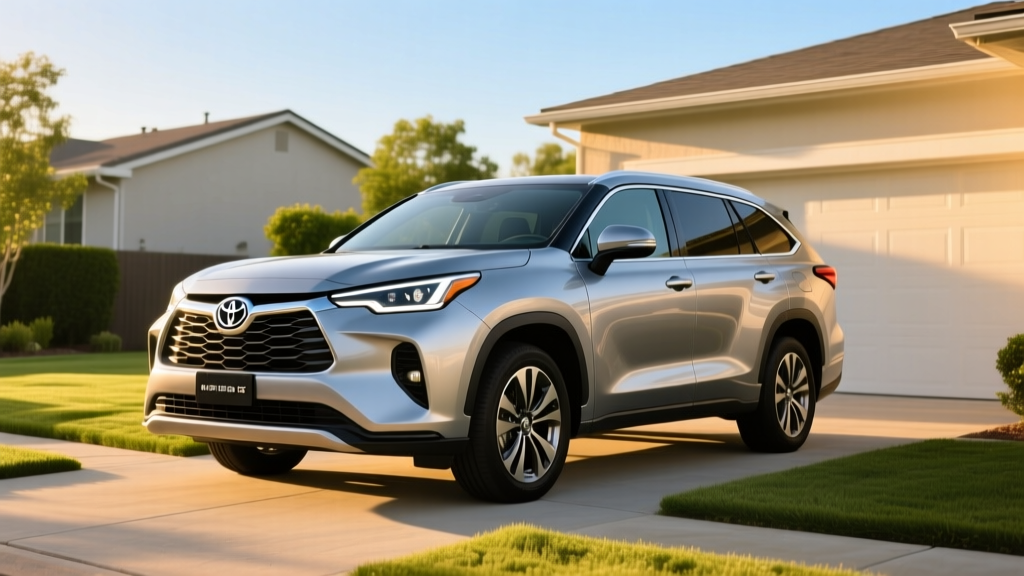
Quick Verdict: The 2022 Toyota Highlander Hybrid XLE at a Glance
The 2022 Toyota Highlander Hybrid XLE occupies a specific niche: a three-row family hauler that sips fuel without requiring a plug, a charging routine, or any change in driving habits. With an EPA-estimated 36 MPG combined, Toyota's fourth-generation hybrid powertrain delivers real-world efficiency that often exceeds its sticker numbers in city driving — a hallmark of Toyota's series-parallel hybrid system. For buyers researching the 2022 Toyota Highlander Hybrid XLE on the used market or comparing it against newer models, this guide covers every number that matters.
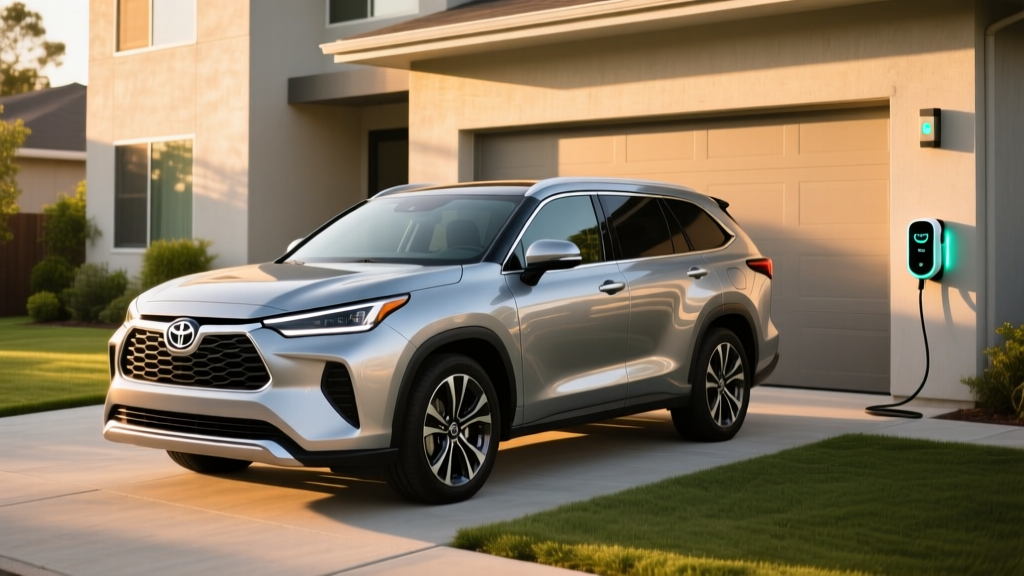
This is a conventional hybrid (HEV), not a plug-in hybrid (PHEV). You never plug it in. The 1.6 kWh nickel-metal hydride (NiMH) battery charges exclusively through regenerative braking and the gasoline engine. That distinction matters because it affects everything from your daily routine to your tax-credit eligibility.
| Specification | Value |
|---|---|
| Powertrain | 2.5L 4-cyl + 2 electric motors (AWD: 3 motors) |
| Combined Horsepower | 243 hp (net system) |
| Engine Output | 186 hp @ 6,000 rpm / 175 lb-ft torque |
| Front Motor | 134 kW (180 hp) |
| Rear Motor (AWD) | 40 kW (54 hp) |
| Transmission | eCVT (planetary gearset) |
| Battery | 1.6 kWh NiMH (sealed) |
| EPA MPG (FWD) | 36 city / 35 highway / 36 combined |
| EPA MPG (AWD) | 35 city / 35 highway / 35 combined |
| Fuel Tank | 17.9 gallons |
| Total Range (FWD) | ~644 miles |
| 0–60 mph | ~7.8 seconds (est.) |
| Towing Capacity | 3,500 lbs |
| Cargo (behind 3rd row) | 16.1 cu ft |
| Original MSRP (XLE FWD) | $41,070 |
| Original MSRP (XLE AWD) | $42,470 |
HEV vs PHEV: Why the Highlander Hybrid Doesn't Need a Plug
Toyota offers the Highlander as a conventional hybrid only — there is no plug-in hybrid (PHEV) variant of the Highlander in the US market. This is a deliberate product decision, and understanding the difference helps frame whether this SUV fits your needs.
Conventional Hybrid (HEV) — Highlander Hybrid
- Battery: Small (~1.6 kWh), self-charging via regen and engine
- Plug-in required: No — fuel it like any gas car
- Electric-only driving: Brief low-speed EV mode (~1 mile at low speed)
- Fuel economy gain: 30–50% better than gas equivalent
- Price premium over gas: ~$1,400–$2,000
- Federal tax credit: None (does not qualify under IRS §30D)
Plug-In Hybrid (PHEV) — e.g., Toyota RAV4 Prime
- Battery: Larger (18.1 kWh RAV4 Prime), requires plug-in charging
- Plug-in required: Yes — Level 1 or Level 2 home charging
- Electric-only driving: 25–42 miles (model dependent)
- Fuel economy gain: Massive if charged daily; gas-only MPG similar to HEV
- Price premium: $5,000–$10,000+ over gas equivalent
- Federal tax credit: Up to $7,500 (subject to IRS §30D sourcing, income, and MSRP rules)
The Highlander Hybrid's advantage is simplicity. You gain roughly 15 MPG over the gas-only Highlander (rated at 21 city / 29 highway / 24 combined for AWD) without altering your fueling routine. For families without access to home charging — apartment dwellers, street parkers — the HEV is the practical electrification path.
Fuel Economy: EPA Ratings vs Real-World MPG
The EPA rates the 2022 Highlander Hybrid at 36 city / 35 highway / 36 combined for FWD and 35/35/35 for AWD (fueleconomy.gov). These numbers deserve unpacking because Toyota's hybrid system behaves differently than most buyers expect.
| Drivetrain | City | Highway | Combined | Real-World Expectation |
|---|---|---|---|---|
| FWD | 36 | 35 | 36 | 33–38 combined (city-biased driving can exceed EPA) |
| AWD (XLE) | 35 | 35 | 35 | 32–37 combined |
| Gas AWD (baseline) | 21 | 29 | 24 | 20–26 combined |
Why city MPG can exceed the EPA sticker: Toyota's hybrid system recovers kinetic energy during braking and low-speed driving, running the electric motor extensively in stop-and-go traffic. Owners who drive predominantly in urban environments frequently report 37–40 MPG in warm weather. This is the inverse of most gas cars, where city driving is the worst-case scenario.
Highway reality check: At sustained 70–80 mph speeds, the gasoline engine does most of the work. Expect 32–34 MPG on flat highway in the AWD XLE. Cold weather (below 35°F) reduces efficiency by 5–10% due to cabin heating demands and increased engine runtime for warm-up.
Annual fuel cost estimate: At 15,000 miles/year and $3.50/gallon regular unleaded, the Highlander Hybrid AWD costs roughly $1,500/year in fuel. The gas-only Highlander AWD costs approximately $2,188/year — a savings of about $688 annually for the hybrid.
Powertrain Deep Dive: How 243 HP Moves 4,500 Pounds
The 2022 Highlander Hybrid pairs a 2.5-liter Atkinson-cycle four-cylinder engine with Toyota's Hybrid Synergy Drive system. In the XLE AWD, three electric motors work in concert: a primary front motor (134 kW), a secondary front motor/generator, and a 40 kW rear motor that provides electronic on-demand AWD without a mechanical driveshaft.
The net system output of 243 horsepower is not the sum of all components — it's the maximum combined output the powertrain can deliver at any given moment, limited by the battery's discharge rate and the engine's contribution at that RPM. The eCVT is not a traditional continuously variable transmission with a belt; it uses a planetary gearset that seamlessly blends engine and motor power. There are no rubber-band rev sensations typical of older CVTs.
Acceleration to 60 mph takes approximately 7.8 seconds — adequate for highway merging but not sporty. The electric motor's instant torque (available from 0 rpm) makes the Highlander Hybrid feel more responsive from a stoplight than the 0–60 time suggests. At highway speeds above 60 mph, passing power is moderate; the engine must downshift and rev to deliver its peak output.
The 1.6 kWh NiMH battery pack is small by EV standards — it stores roughly the energy needed to drive 2–3 miles. However, it's sized for frequent shallow charge-discharge cycles rather than deep cycling, which is key to its longevity (more on this below).
Hybrid Battery Warranty, Lifespan, and Replacement Cost
Toyota Hybrid Battery Coverage
- Warranty: 10 years / 150,000 miles (whichever comes first) for 2020+ models — transferable to subsequent owners
- Coverage threshold: Battery must retain sufficient capacity to function within normal parameters
- Hybrid system warranty: 8 years / 100,000 miles on all hybrid components (inverter, motors, control module)
- California/PZEV states: 10 years / 150,000 miles on all hybrid components
The question every hybrid buyer asks: how long will the battery last, and what does replacement cost?
Toyota's NiMH hybrid batteries have an exceptional track record. Data from fleet operators and long-term owners shows that the Highlander Hybrid's battery pack typically lasts 150,000–200,000+ miles before significant degradation. Unlike EV batteries that undergo deep discharge cycles (100% to 10% SoC), the Highlander's hybrid system keeps the battery in a narrow state-of-charge window — roughly 40% to 80% — which dramatically reduces cell stress.
Replacement cost if out of warranty:
- New OEM battery pack: $2,500–$3,500 (parts) + $500–$800 (labor) = $3,000–$4,300 total
- Refurbished/reconditioned pack: $1,500–$2,200 installed
- Individual cell module replacement: $500–$1,200 (only the failed modules are swapped — a common repair at independent hybrid specialists)
For context, a conventional gas Highlander's transmission replacement runs $3,500–$5,000. The hybrid battery replacement cost is comparable to a major gas-car repair — and far less likely to be needed within the first 150,000 miles.
Toyota's 10-year/150,000-mile hybrid battery warranty (effective for 2020 and newer models) is among the best in the industry. For a 2022 model, this warranty extends through approximately 2032 or 150,000 miles, and it transfers to subsequent owners — a meaningful factor for used-car buyers.
Pricing, Trim Value, and Tax Credit Eligibility
The 2022 Highlander Hybrid XLE originally carried an MSRP of $41,070 (FWD) and $42,470 (AWD), including destination. As of 2026, used-market pricing for the XLE Hybrid typically ranges from $30,000–$37,000 depending on mileage, condition, and region.
Federal tax credit status: The 2022 Toyota Highlander Hybrid does not qualify for the IRS §30D Clean Vehicle Credit. This credit applies only to plug-in electric vehicles (BEVs and PHEVs) with a minimum battery capacity of 7 kWh and external charging capability. Conventional hybrids like the Highlander Hybrid are excluded regardless of price or buyer income. For current §30D rules, consult the IRS Clean Vehicle Credit page.
Used hybrid tax credit: The IRS §25E Previously-Owned Clean Vehicle Credit (up to $4,000 / 30% of sale price) also applies only to plug-in vehicles. The Highlander Hybrid does not qualify.
State incentives: Some states offer rebates or HOV-lane access for hybrids, but these vary widely and change frequently. Check your state's energy office or DMV for current programs.
Value proposition of the XLE trim: The XLE sits in the middle of the Highlander Hybrid lineup and includes SofTex-trimmed heated front seats, a power liftgate, 8-inch touchscreen with wireless Apple CarPlay/Android Auto, Toyota Safety Sense 2.5+ (adaptive cruise, lane-keeping, automatic emergency braking with pedestrian detection), and a 7-inch multi-information display. It's the trim most buyers target for its balance of features and price.
Who Should Choose the Highlander Hybrid vs an EV or Gas SUV?
Decision Framework: Is the Highlander Hybrid Right for You?
Choose the 2022 Highlander Hybrid XLE if:
- You need three rows and AWD but want to minimize fuel costs
- You lack home charging access (apartment, street parking, no garage outlet)
- You take frequent long road trips and don't want to plan charging stops
- You want Toyota's reliability reputation and strong resale value
- You prefer a straightforward ownership experience — no charging apps, no plug-in routines
- Your annual mileage is high (15,000+ miles), making fuel savings significant
Consider a PHEV (like the Toyota RAV4 Prime or Kia Sorento PHEV) if:
- You have home Level 2 charging and a commute under 30 miles
- You want electric-only daily driving with gas backup for road trips
- You want to qualify for the §30D federal tax credit (up to $7,500)
- You can accept a smaller third row or two-row layout
Consider a full EV (like the Kia EV9 or Tesla Model X) if:
- You have reliable home charging and your trips are mostly under 250 miles
- You want zero tailpipe emissions and minimal maintenance
- You want the strongest acceleration and lowest per-mile energy cost
- You can accept the higher purchase price and charging-time trade-offs on road trips
Stick with the gas-only Highlander if:
- Your annual mileage is low (under 8,000 miles) — fuel savings won't offset the hybrid premium
- You tow near the 5,000-lb maximum (the gas Highlander tows 5,000 lbs vs the hybrid's 3,500 lbs)
- You prioritize the lowest upfront purchase price on the used market
Real-World Ownership Insights
After analyzing owner reports and long-term test data, several patterns emerge for the 2022 Highlander Hybrid XLE:
Maintenance costs are lower than the gas version. The hybrid system eliminates the conventional starter motor and alternator (the hybrid motors handle both functions). Brake pad life is extended significantly — regenerative braking handles most deceleration, and many owners report 60,000–80,000+ miles on original brake pads. Oil changes are still required at 10,000-mile intervals using 0W-16 synthetic.
Towing reduces fuel economy substantially. The hybrid's 3,500-lb towing capacity is lower than the gas model's 5,000 lbs. When towing near capacity, expect fuel economy to drop to 18–22 MPG. If you tow frequently, the gas model's higher capacity and similar loaded MPG may be more practical.
Cold-weather performance is strong. The gasoline engine provides cabin heat quickly, unlike EVs that rely on energy-intensive heat pumps or resistive heaters. However, in sub-freezing temperatures, the engine runs more often to maintain cabin temperature and battery warmth, reducing fuel economy by 5–10%. Owners in northern climates typically see 31–33 MPG combined in winter.
Toyota Safety Sense 2.5+ is effective but not autonomous. The suite includes full-speed adaptive cruise control, lane-tracing assist, and automatic emergency braking. This is SAE Level 1–2 driver assistance — you must keep your hands on the wheel and remain fully engaged. It reduces highway fatigue but does not drive the vehicle for you.
For reliability data, the 2022 Highlander Hybrid earned a Top Safety Pick+ rating from the IIHS and 5 stars overall from NHTSA, with standard automatic emergency braking contributing to strong crash-avoidance scores.
Pros
- 36 MPG combined — exceptional for a 3-row AWD SUV
- No plug-in required; zero lifestyle change from gas
- 10-year/150,000-mile hybrid battery warranty
- Strong safety ratings (IIHS TSP+, NHTSA 5-star)
- Low maintenance costs (extended brake life, no starter/alternator)
- Excellent resale value and Toyota reliability reputation
- Smooth, quiet powertrain with adequate acceleration
Cons
- No federal or state EV/PHEV tax credits
- Towing limited to 3,500 lbs (gas model: 5,000 lbs)
- Third row is tight for adults on longer trips
- Infotainment system (2022) is a generation behind newer Toyotas
- No DC fast charging capability (it's an HEV — not applicable)
- Highway MPG drops noticeably when towing or carrying heavy loads
- XLE trim lacks ventilated seats and premium audio (Limited/Platinum only)
Frequently Asked Questions
How many MPG does the 2022 Toyota Highlander Hybrid XLE get?
The EPA rates the FWD model at 36 city / 35 highway / 36 combined and the AWD at 35/35/35. In real-world driving, city-biased commuters often achieve 37–40 MPG in warm weather, while highway-heavy driving yields 32–34 MPG. Cold weather reduces efficiency by 5–10%.
Does the Highlander Hybrid need to be plugged in?
No. The 2022 Highlander Hybrid is a conventional hybrid (HEV). Its 1.6 kWh battery charges exclusively through regenerative braking and the gasoline engine. You fuel it exactly like a gas car — there is no plug, no charging cable, and no charging routine.
Can the 2022 Highlander Hybrid drive on electric power alone?
Only briefly. At very low speeds (under ~25 mph) with light throttle input, the system can operate in EV mode for roughly one mile or less. This is useful for creeping through a parking lot or residential street, but it is not a practical electric-only commute mode. For substantial electric-only range, you need a PHEV.
Is the 2022 Highlander Hybrid reliable, and what does battery replacement cost?
Toyota's hybrid powertrain is among the most reliable in the industry. The NiMH battery pack is designed to last 150,000–200,000+ miles, and it's covered by a 10-year/150,000-mile warranty. If replacement is needed out of warranty, expect $3,000–$4,300 for a new OEM pack installed, or $1,500–$2,200 for a refurbished unit. Individual module replacement (common at hybrid specialists) runs $500–$1,200.
Does the 2022 Toyota Highlander Hybrid qualify for any tax credit?
No. The IRS §30D Clean Vehicle Credit and §25E Used Clean Vehicle Credit apply only to plug-in electric vehicles (BEVs and PHEVs) with batteries of 7 kWh or larger. The Highlander Hybrid's 1.6 kWh battery and lack of plug-in capability disqualify it from federal tax credits. Some states may offer minor incentives for hybrids — check your state energy office.
Hybrid vs PHEV vs EV — which is right for a three-row family SUV?
If you lack home charging or take frequent 300+ mile road trips, the Highlander Hybrid (HEV) is the most practical electrified three-row option. If you have home charging and want electric-only commuting with gas backup, consider PHEVs like the Kia Sorento PHEV (32 miles electric) or the Chrysler Pacifica PHEV minivan (32 miles electric). If your trips are mostly under 250 miles and you have reliable home charging, full EVs like the Kia EV9 (300+ mile range) eliminate fuel stops entirely but require charging planning on longer trips.
How does the Highlander Hybrid compare to the gas-only Highlander in real costs?
At 15,000 miles/year and $3.50/gallon, the hybrid AWD saves roughly $688/year in fuel versus the gas AWD. Over a 5-year ownership period, that's approximately $3,440 in fuel savings. The hybrid also benefits from extended brake pad life (saving $200–$400 per brake job) and lower long-term maintenance. The original ~$1,400 hybrid premium over the gas XLE is typically recouped within 2–3 years of average driving.
What is the towing capacity, and does towing affect the hybrid system?
The 2022 Highlander Hybrid is rated for 3,500 lbs — 1,500 lbs less than the gas-only model's 5,000-lb rating. Towing near capacity reduces fuel economy to approximately 18–22 MPG and increases engine runtime. The hybrid system is not damaged by towing within its rated capacity, but frequent heavy towing may accelerate battery and brake wear.