Quick Verdict: The Highlander Hybrid in 2026
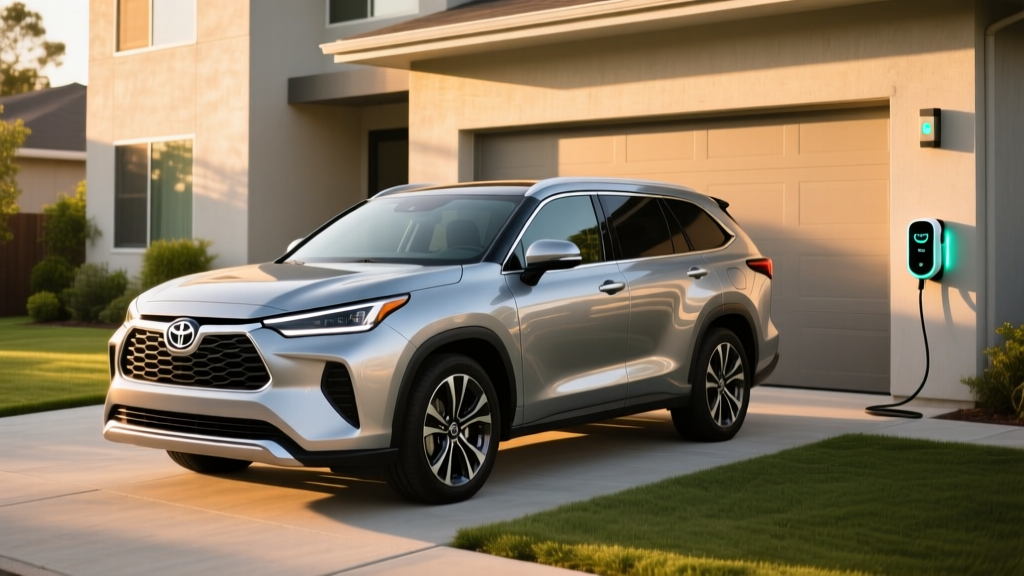
Toyota Highlander hybrid vehicles remain one of the most fuel-efficient three-row SUVs you can buy without plugging in. The 2026 Highlander Hybrid pairs a 2.5-liter four-cylinder engine with Toyota's fourth-generation hybrid system to deliver an EPA-estimated 35 MPG combined — a remarkable figure for a 4,600-pound family hauler. If you need three rows, want to avoid range anxiety entirely, and aren't ready for a full battery-electric vehicle, the Highlander Hybrid occupies a practical sweet spot that few competitors can match.
However, it's worth noting what the Highlander Hybrid is not: Toyota does not currently offer a plug-in hybrid (PHEV) version of the Highlander in the U.S. market. If you're looking for electric-only commuting in a Toyota three-row SUV, you'll need to look at the Grand Highlander Hybrid (which also lacks a PHEV variant stateside) or consider competitors like the Kia Sorento PHEV. This guide covers the conventional hybrid (HEV) Highlander in detail and explains where it fits in the broader hybrid-PHEV-EV landscape.
HEV vs. PHEV: What the Highlander Hybrid Actually Is
| Feature | HEV (Highlander Hybrid) | PHEV (e.g., Sorento PHEV) | BEV (e.g., Tesla Model X) |
|---|---|---|---|
| Plugs in? | No | Yes (Level 1/2) | Yes (Level 1/2/DC) |
| Electric-only range | ~1 mi (low-speed creep) | 25–35 mi typical | 250–350 mi |
| Battery size | ~1.6 kWh (NiMH/Li-ion) | 13–18 kWh | 75–100+ kWh |
| Fuel/energy cost per mile | ~$0.10 (gas) | ~$0.04 (electric) / ~$0.10 (gas) | ~$0.04 (electric) |
| Home charging needed? | No | Recommended for full benefit | Essential |
| Federal tax credit (§30D) | No | Up to $7,500 (if eligible) | Up to $7,500 (if eligible) |
Fuel Economy: EPA Ratings and Real-World MPG
The 2026 Toyota Highlander Hybrid carries forward the powertrain architecture that has proven efficient since its introduction. Here are the official EPA figures and what you can expect in practice.
| Drivetrain | City MPG | Highway MPG | Combined MPG |
|---|---|---|---|
| FWD (LE trim) | 36 | 35 | 36 |
| AWD (all other trims) | 35 | 34 | 35 |
Source: fueleconomy.gov — EPA estimates. Your mileage will vary based on driving conditions, climate, and habits.
Powertrain Specs: What's Under the Hood
| Specification | Detail |
|---|---|
| Engine | 2.5L DOHC 4-cylinder (Atkinson cycle) |
| Electric motors | Front motor + rear motor (AWD models) |
| Combined system horsepower | 243 hp |
| Transmission | eCVT (electronically controlled continuously variable) |
| Hybrid battery | ~1.6 kWh lithium-ion (sealed, not user-serviceable) |
| Drivetrain | FWD (LE) or electronic AWD (XLE and above) |
| 0–60 mph (est.) | ~7.6 seconds |
| Towing capacity | 3,500 lbs (with towing prep) |
| Fuel tank | 17.1 gallons |
| Total driving range (est.) | ~595–615 miles |
The Highlander Hybrid uses Toyota's series-parallel hybrid architecture. At low speeds and light loads, the front electric motor can propel the vehicle briefly without the engine. Under acceleration, both the engine and motor work together through the eCVT, which provides seamless power delivery without the shift-shock of a traditional automatic. On AWD models, a separate rear-mounted electric motor provides all-wheel traction without a mechanical driveshaft — this is sometimes called "e-AWD" or "AWD-i."
Pricing, Trims, and Tax Credit Eligibility
The 2026 Highlander Hybrid is available across multiple trim levels. Pricing below reflects estimated MSRP before destination charges.
| Trim | Drivetrain | Est. MSRP |
|---|---|---|
| LE | FWD | $42,000 |
| XLE | AWD | $46,500 |
| Limited | AWD | $50,500 |
| Platinum | AWD | $54,000 |
Reliability, Battery Warranty, and Replacement Costs
Hybrid battery longevity is the top concern for buyers considering a Highlander Hybrid. Here's what the data shows.
• Hybrid battery: 10 years / 150,000 miles (whichever comes first) in most states. In California and states adopting CARB emissions standards, coverage extends to 10 years / 150,000 miles as well.
• Hybrid system components (inverter, control module, etc.): 8 years / 100,000 miles.
• Basic vehicle warranty: 3 years / 36,000 miles.
• Powertrain warranty: 5 years / 60,000 miles.
Toyota's hybrid systems have an excellent long-term reliability record. The Prius, which shares hybrid architecture DNA with the Highlander, has demonstrated batteries lasting well beyond 200,000 miles in taxi and fleet use. The Highlander Hybrid's battery is relatively small (~1.6 kWh) and operates within a narrow state-of-charge window (roughly 40–80%), which reduces stress and degradation compared to a full EV battery that cycles through a wider range.
If the battery does need replacement out of warranty: A new OEM hybrid battery from Toyota typically costs between $2,000 and $4,000 installed at a dealership. Third-party refurbished batteries are available for $1,000–$2,000. This is a fraction of a full EV battery replacement (which can exceed $10,000–$20,000), because the Highlander's hybrid battery is small and less complex.
Who Should Buy the Highlander Hybrid (and Who Shouldn't)
✓ Choose the Highlander Hybrid If:
- You need three rows and want 35+ MPG without plugging in
- You lack access to home or workplace charging
- You take frequent long road trips and don't want to plan around chargers
- You want Toyota's reliability reputation and low maintenance costs
- You live in a cold climate where EV range loss is a concern
✗ Look Elsewhere If:
- You want electric-only commuting (consider a PHEV like the Sorento PHEV)
- You want the lowest possible per-mile fuel cost (a BEV at $0.04/mi beats $0.10/mi)
- You need to tow more than 3,500 lbs (the Grand Highlander Hybrid tows up to 5,000 lbs)
- You want the $7,500 federal tax credit (only PHEVs and BEVs qualify)
- You prioritize brisk acceleration (243 hp is adequate, not quick, for this weight class)
Highlander Hybrid vs. Alternatives
| Model | Combined MPG | HP | Starting MSRP |
|---|---|---|---|
| Toyota Highlander Hybrid | 35–36 | 243 | ~$42,000 |
| Toyota Grand Highlander Hybrid | 34–36 | 245 / 362 (MAX) | ~$46,000 |
| Kia Sorento Hybrid | 34–37 | 227 | ~$39,000 |
| Hyundai Santa Fe Hybrid | 34–36 | 230 | ~$41,000 |
| Mazda CX-90 PHEV | 25 MPG + 26 mi EV | 323 | ~$51,000 |
The Highlander Hybrid leads in proven reliability and resale value. The Grand Highlander offers more third-row space and cargo room. The Sorento Hybrid undercuts on price. The CX-90 PHEV offers electric-only commuting and a tax credit but at a significant price premium and lower gas-only fuel economy.
Frequently Asked Questions
How many MPG does the Toyota Highlander Hybrid get?
The EPA rates the 2026 Highlander Hybrid at 36 city / 35 highway / 36 combined (FWD) or 35/34/35 (AWD). In real-world city driving, many owners report 37–40 MPG thanks to aggressive regenerative braking. Highway cruising at 70+ mph typically yields 32–34 MPG.
Does the Highlander Hybrid need to be plugged in?
No. The Highlander Hybrid is a conventional HEV. Its small battery recharges automatically through regenerative braking and the gasoline engine. You fuel it exactly like a standard gas vehicle — just less often.
Is there a plug-in hybrid (PHEV) Highlander?
As of the 2026 model year, Toyota does not offer a PHEV Highlander in the U.S. market. Toyota sells PHEV versions of the RAV4 (RAV4 Prime) and Prius (Prius Prime), but the Highlander lineup is HEV-only. If you want a Toyota PHEV with three rows, no current option exists — you'd need to look at the Mazda CX-90 PHEV or Mitsubishi Outlander PHEV (which has a cramped third row).
How long will the Highlander Hybrid battery last?
Toyota's hybrid batteries are engineered for the life of the vehicle. Data from Prius fleets shows batteries regularly lasting 200,000+ miles. The Highlander Hybrid's battery is covered by a 10-year/150,000-mile warranty. Out-of-warranty replacement costs $2,000–$4,000 for an OEM unit — far less than a full EV battery swap.
Does the Highlander Hybrid qualify for any tax credit?
No federal tax credit applies to conventional hybrids under current IRS §30D rules. The Clean Vehicle Credit is limited to plug-in vehicles (BEVs and PHEVs) that meet battery-sourcing, MSRP caps ($80,000 for SUVs), and buyer income limits. Some states offer small hybrid rebates — check your local incentives.
How does the Highlander Hybrid perform in cold weather?
Unlike full EVs, which can lose 20–30% of range in sub-freezing temperatures, the Highlander Hybrid's fuel economy drops only modestly in cold weather — typically 2–4 MPG below the EPA combined rating. The gasoline engine runs more frequently to provide cabin heat, which slightly reduces efficiency, but you'll never face range anxiety or wait for a cold battery to warm up at a charger.
What's the total cost of ownership compared to a gas Highlander?
The gas-only 2026 Highlander (2.4L turbo) gets roughly 24 MPG combined. At $3.50/gallon and 15,000 miles/year, the gas model costs about $2,188/year in fuel. The Hybrid at 35 MPG combined costs roughly $1,500/year — a savings of ~$688/year, or ~$3,440 over five years. The Hybrid trim premium over the gas LE is roughly $2,000–$3,000, so fuel savings typically pay back the price difference within 3–5 years, depending on your mileage and local gas prices.