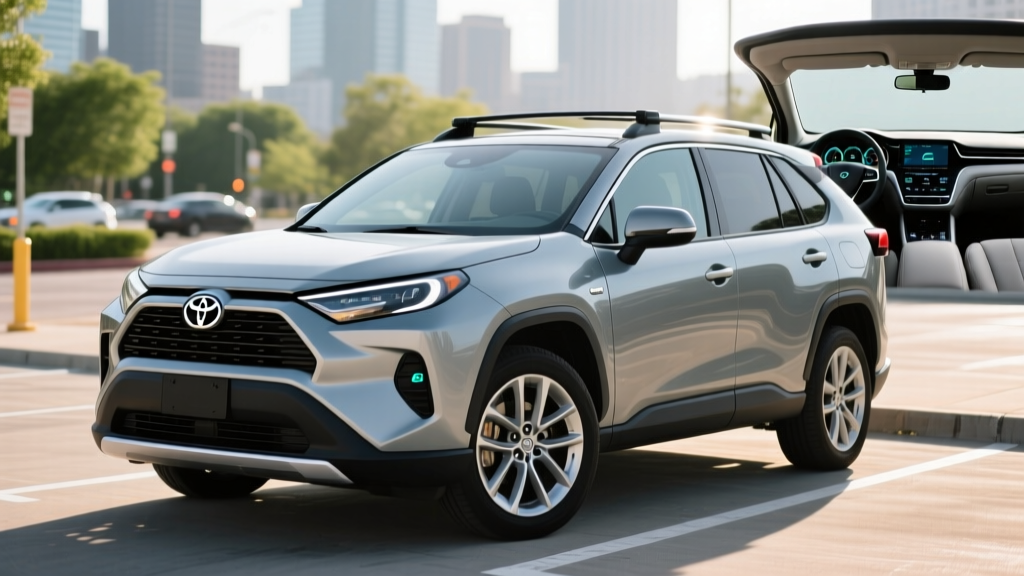
The 2021 Toyota RAV4 Hybrid remains one of the most sought-after used compact SUVs in 2026, and for good reason: it pairs a proven 219-horsepower hybrid powertrain with standard all-wheel drive and EPA-rated 40 MPG combined. For buyers weighing a used hybrid against a new EV or gas-only crossover, the RAV4 Hybrid occupies a practical sweet spot — no charging required, minimal range anxiety, and Toyota's long-standing hybrid reliability record.
This guide covers everything a 2026 used-car buyer needs to know: exact EPA and real-world fuel economy, the difference between the standard hybrid (HEV) and the plug-in RAV4 Prime (PHEV), battery warranty and replacement costs, tax credit eligibility, and who should choose this vehicle over a full EV or conventional gas model.
HEV vs PHEV: Which RAV4 Hybrid Are We Talking About?
Toyota sold two electrified RAV4 variants for the 2021 model year, and confusing them is the most common buyer mistake. Here's the distinction:
2021 RAV4 Hybrid (HEV)
- Type: Conventional (self-charging) hybrid — no plug, no external charging
- Battery: 1.6 kWh nickel-metal hydride (NiMH) traction battery
- Electric-only driving: Very short low-speed bursts only (under ~1 mile)
- How it charges: Regenerative braking and the gasoline engine
- EPA Combined: 40 MPG
2021 RAV4 Prime (PHEV)
- Type: Plug-in hybrid — has a charge port and larger battery
- Battery: 18.1 kWh lithium-ion traction battery
- Electric-only range: 42 miles (EPA)
- How it charges: Plug in at home (Level 1 or Level 2); regenerative braking
- EPA Combined: 94 MPGe (electric+gas), 38 MPG (gas-only after battery depletes)
The rest of this article focuses primarily on the 2021 RAV4 Hybrid (HEV), with RAV4 Prime (PHEV) comparisons where relevant. If you're specifically shopping for the plug-in Prime, note the key differences in battery size, electric range, and charging requirements below.
Fuel Economy: EPA Ratings vs Real-World MPG
The EPA rates the 2021 RAV4 Hybrid with AWD at the following figures, consistent across all trims (LE, XLE, XLE Premium, SE, XSE, Limited):
| Driving Condition | EPA Rating | Real-World Expectation |
|---|---|---|
| City | 41 MPG | 38–44 MPG |
| Highway | 38 MPG | 34–39 MPG |
| Combined | 40 MPG | 37–42 MPG |
Source: EPA Fuel Economy.
Why Hybrids Often Beat EPA in the City
Unlike gas-only vehicles, hybrids recapture energy through regenerative braking during stop-and-go driving. Many RAV4 Hybrid owners report exceeding the 41 MPG city estimate on commutes with frequent stops, especially in mild weather. Highway driving, where the gas engine runs more continuously and aerodynamic drag increases, tends to pull the combined figure toward the lower end.
Real-World Variables That Reduce MPG
- Cold weather (below 30°F): Expect a 10–15% fuel economy drop as the engine runs more frequently to heat the cabin and warm the battery.
- High-speed highway driving (75+ mph): Aerodynamic drag pushes consumption higher; 34–36 MPG is common at sustained 80 mph.
- Heavy cargo or towing: The RAV4 Hybrid is rated for 1,750 lbs towing. Near-max loads will reduce economy by 5–8 MPG.
- Tire pressure and condition: Under-inflated or worn tires can cost 1–2 MPG.
For comparison, the gas-only 2021 RAV4 AWD achieves 28 MPG combined — meaning the hybrid saves roughly 3.2 gallons per 100 miles, or about $450–$600 per year in fuel at 15,000 miles driven and $3.50/gallon.
Powertrain and Performance Specs
| Specification | 2021 RAV4 Hybrid (HEV) | 2021 RAV4 Prime (PHEV) |
|---|---|---|
| Engine | 2.5L 4-cylinder Atkinson cycle | 2.5L 4-cylinder Atkinson cycle |
| Combined Horsepower | 219 HP | 302 HP |
| Front Motor | 88 kW (118 HP) | 134 kW (180 HP) |
| Rear Motor (AWD) | 40 kW (54 HP) | 40 kW (54 HP) |
| Drivetrain | AWD (electronic on-demand rear) | AWD (electronic on-demand rear) |
| 0–60 mph | 7.8 seconds | 5.7 seconds |
| Transmission | eCVT (planetary gearset) | eCVT (planetary gearset) |
| Traction Battery | 1.6 kWh NiMH | 18.1 kWh Lithium-ion |
| Fuel Tank | 14.5 gallons | 14.5 gallons |
| Total Range (est.) | ~580 miles | ~600 miles (42 EV + 558 gas) |
The RAV4 Hybrid's electronic AWD system (Toyota calls it AWD-i) uses a dedicated rear electric motor that engages automatically when front-wheel slip is detected or during hard acceleration. It's not a traditional mechanical AWD with a driveshaft, but it provides confident traction in rain and light snow.
RAV4 Prime PHEV: Electric Range and Charging Details
If you're considering the plug-in RAV4 Prime variant, here are the specifics that matter for daily driving:
Electric-Only Range: 42 Miles EPA
The 2021 RAV4 Prime delivers 42 miles of electric-only range on a full charge (EPA rated). In real-world conditions:
- Mild weather, city driving: 40–45 miles achievable
- Highway at 70 mph: ~33–36 miles
- Cold weather (below freezing): ~28–32 miles due to cabin heating and battery efficiency loss
After the battery depletes, the Prime operates as a conventional hybrid at 38 MPG combined.
Charging the RAV4 Prime
| Charging Method | Power | 0–100% Time | Notes |
|---|---|---|---|
| Level 1 (120V household outlet) | ~1.4 kW | ~12 hours | Comes with vehicle; adequate for overnight |
| Level 2 (240V, SE/XSE trim) | 3.3 kW | ~4.5 hours | Standard on SE and XSE trims |
| Level 2 (240V, XSE Premium pkg) | 6.6 kW | ~2.5 hours | Only with Premium Package upgrade |
| DC Fast Charging | N/A | N/A | Not supported — no DC fast charge port |
The RAV4 Prime does not support DC fast charging. For a PHEV with a relatively small battery, Level 2 overnight charging is the intended use case. The 6.6 kW onboard charger (Premium Package only) is a significant upgrade if you plan to charge mid-day.
Battery Warranty, Lifespan, and Replacement Cost
Hybrid battery longevity is the number-one concern for used hybrid buyers. Here's what Toyota provides and what real-world data shows:
Toyota Hybrid Battery Warranty
- 2021 model year coverage: 10 years / 150,000 miles (whichever comes first)
- What's covered: Hybrid traction battery and related components
- Transferability: Yes — warranty transfers to subsequent owners automatically
- Capacity threshold: Toyota covers the battery if it falls below approximately 60–70% of original capacity or fails to hold a charge sufficient for normal hybrid operation
For a 2021 model in 2026, the factory warranty still has ~5 years or ~100,000+ miles remaining for most used examples — a significant advantage.
Real-World Battery Lifespan
Toyota's NiMH hybrid batteries (used in the standard RAV4 Hybrid) have a strong track record. Based on data from Prius and Camry Hybrid fleets:
- Typical lifespan: 15–20 years or 200,000+ miles before significant degradation
- Failure rate: Well under 5% within the first 10 years for Toyota hybrids
- Degradation pattern: Gradual capacity loss (~1–2% per year), not sudden failure
The RAV4 Prime's larger lithium-ion battery follows a similar warranty schedule but may show slightly different long-term degradation patterns. Toyota's thermal management system (liquid cooling) helps preserve battery health.
Replacement Cost If Out of Warranty
- RAV4 Hybrid (HEV) NiMH battery: $2,500–$4,000 for a new OEM replacement; $1,500–$2,500 for a refurbished unit
- RAV4 Prime (PHEV) lithium-ion battery: $6,000–$9,000+ for a new OEM replacement (larger, more complex pack)
Given the 10-year warranty and Toyota's reliability record, most owners will never face a battery replacement. For used buyers in 2026, verifying remaining warranty coverage through a Toyota dealer (using the VIN) is a critical pre-purchase step.
Pricing, Tax Credits, and Ownership Economics
2021 RAV4 Hybrid: Original MSRP and 2026 Used Pricing
| Trim Level | 2021 Original MSRP | 2026 Estimated Used Price (60K mi) |
|---|---|---|
| LE | $29,470 | $22,000–$25,000 |
| XLE | $30,770 | $23,500–$27,000 |
| XLE Premium | $33,575 | $26,000–$30,000 |
| XSE | $33,220 | $25,500–$29,000 |
| Limited | $36,070 | $28,000–$32,000 |
Used RAV4 Hybrids hold value exceptionally well. Expect to pay a $1,500–$3,000 premium over an equivalent gas-only 2021 RAV4 on the used market, which typically pays back in fuel savings within 3–4 years at 15,000 miles/year.
Federal Tax Credit Eligibility
2021 RAV4 Hybrid (HEV): Does not qualify for the federal §30D new clean vehicle credit. This credit applies only to plug-in vehicles (BEVs and PHEVs) with sufficient battery capacity. Conventional hybrids are ineligible.
2021 RAV4 Prime (PHEV) — purchased new: Originally eligible for up to $7,500 under the pre-2023 rules, but the Inflation Reduction Act (effective 2023) changed sourcing and MSRP requirements retroactively for new purchases. The RAV4 Prime is assembled in Japan and does not meet current North American assembly requirements, making it ineligible for the §30D credit on any new purchase from 2023 onward.
Used purchase (either HEV or PHEV): The §25E used clean vehicle credit (up to $4,000 or 30% of sale price, whichever is less) may apply to a used RAV4 Prime purchased from a dealer for $25,000 or less, subject to buyer income caps ($75K single / $150K joint). The conventional RAV4 Hybrid (HEV) does not qualify for §25E — it requires the vehicle to have been a qualifying plug-in when new. Consult a tax professional and review current IRS §25E guidance before filing.
5-Year Cost of Ownership Snapshot
| Cost Category | 2021 RAV4 Hybrid (HEV) | 2021 RAV4 Gas AWD |
|---|---|---|
| Fuel (75,000 mi @ $3.50/gal) | $6,560 | $9,375 |
| Maintenance (5 years) | $2,800 | $3,200 |
| Insurance (avg.) | $7,500 | $7,200 |
| Depreciation (est.) | $9,000 | $10,500 |
| 5-Year Total | ~$25,860 | ~$30,275 |
The hybrid saves an estimated $4,000–$4,500 over five years despite a slightly higher purchase price, driven by fuel savings and stronger resale value. Data adapted from fueleconomy.gov and industry depreciation averages.
Pros and Cons for 2026 Used Buyers
Pros
- 40 MPG combined with standard AWD — no range anxiety, no plug needed
- Remaining factory hybrid battery warranty (~5 years / 100K+ miles left in 2026)
- 219 HP provides confident highway merging and passing
- Excellent cargo space (37.6 cu ft behind rear seats, 69.8 cu ft folded)
- Strong resale value — holds premium over gas-only RAV4
- Toyota Safety Sense 2.0 standard (AEB, lane-keep, adaptive cruise, road sign assist)
- Proven eCVT transmission — no traditional gearbox to fail
Cons
- No electric-only driving capability (unlike PHEV or BEV)
- Engine noise under hard acceleration (CVT drone)
- Infotainment feels dated vs. 2024+ competitors (small 7"/8" screen, no wireless CarPlay on lower trims)
- Rear seat space is adequate but not class-leading
- Not eligible for federal EV/PHEV tax credits
- 1,750-lb tow rating limits utility for boat/trailer owners
- Used pricing remains elevated due to high demand
Hybrid vs PHEV vs EV: Which Is Right for You?
Choose the RAV4 Hybrid (HEV) if:
- You don't have reliable access to home or workplace charging
- You want maximum simplicity — no plugs, no charging apps, no route planning
- Your daily driving is a mix of city and highway with no single pattern
- You want a lower used purchase price than a PHEV or EV
- You drive 15,000+ miles per year and want consistent fuel savings everywhere
Choose the RAV4 Prime (PHEV) if:
- You can install a Level 2 charger at home and your commute is under 40 miles round-trip
- You want to drive mostly on electricity daily but need gas-engine flexibility for road trips
- You're willing to pay a $4,000–$7,000 used-market premium over the HEV
- You want the 302 HP performance upgrade (5.7-second 0–60)
Choose a Full EV (e.g., Tesla Model Y, Hyundai Ioniq 5) if:
- You have reliable home Level 2 charging
- Your daily driving is under 250 miles and you road-trip infrequently (or are comfortable with DC fast charging stops)
- You want zero tailpipe emissions and the lowest per-mile "fuel" cost
- You're eligible for the $7,500 §30D federal credit on a new EV purchase
Frequently Asked Questions
How many MPG does the 2021 Toyota RAV4 Hybrid actually get?
The EPA rates it at 41 city / 38 highway / 40 combined MPG. In real-world driving, most owners see 37–42 MPG combined. City-heavy commutes with frequent stops can push above 41 MPG thanks to regenerative braking, while sustained highway driving at 75+ mph typically yields 34–37 MPG.
Does the 2021 RAV4 Hybrid need to be plugged in?
No. The standard RAV4 Hybrid (HEV) is a self-charging hybrid. It charges its small 1.6 kWh battery through regenerative braking and the gasoline engine. You never plug it in. Only the RAV4 Prime (PHEV) variant has a charge port and requires plugging in to access its 42-mile electric range.
How far can the RAV4 Prime go on electric only?
The 2021 RAV4 Prime achieves 42 miles of EPA-rated electric-only range. Real-world results range from about 28 miles in freezing weather to 45 miles in mild conditions with city-speed driving. Once the battery depletes, it seamlessly transitions to hybrid mode at 38 MPG combined.
Is the 2021 RAV4 Hybrid reliable? What about battery replacement cost?
Toyota's hybrid system is among the most reliable in the industry, with NiMH batteries commonly lasting 200,000+ miles. The 2021 model carries a 10-year/150,000-mile hybrid battery warranty, meaning most examples in 2026 still have significant coverage remaining. If replacement is eventually needed out of warranty, expect $2,500–$4,000 for an OEM NiMH battery in the HEV, or $6,000–$9,000 for the Prime's lithium-ion pack.
Does the 2021 RAV4 Hybrid qualify for any tax credit?
The conventional RAV4 Hybrid (HEV) does not qualify for any federal tax credit — it lacks plug-in capability. The RAV4 Prime (PHEV) also does not qualify for the current §30D new vehicle credit due to the North American assembly requirement enacted in 2023. A used RAV4 Prime purchased for $25,000 or less from a dealer may qualify for the §25E used clean vehicle credit (up to $4,000), subject to buyer income limits. Verify eligibility with a tax professional and the IRS guidelines.
What's the difference between the RAV4 Hybrid and the gas-only RAV4?
The gas-only 2021 RAV4 AWD gets 28 MPG combined (vs. 40 MPG for the hybrid), produces 203 HP (vs. 219 HP), and uses a traditional 8-speed automatic transmission. The hybrid costs roughly $1,500–$2,500 more on the used market but saves $500–$600 annually in fuel, typically paying back the premium within 3–4 years.
Is the RAV4 Hybrid good in snow and winter conditions?
Yes. The AWD-i system provides electronic all-wheel drive with a dedicated rear motor that engages in low-traction conditions. Combined with standard traction control and Toyota Safety Sense, the RAV4 Hybrid performs well in moderate snow. Winter fuel economy typically drops 10–15% due to increased engine operation for cabin heating.