Quick Verdict: The 2020 Toyota Corolla Hybrid at a Glance
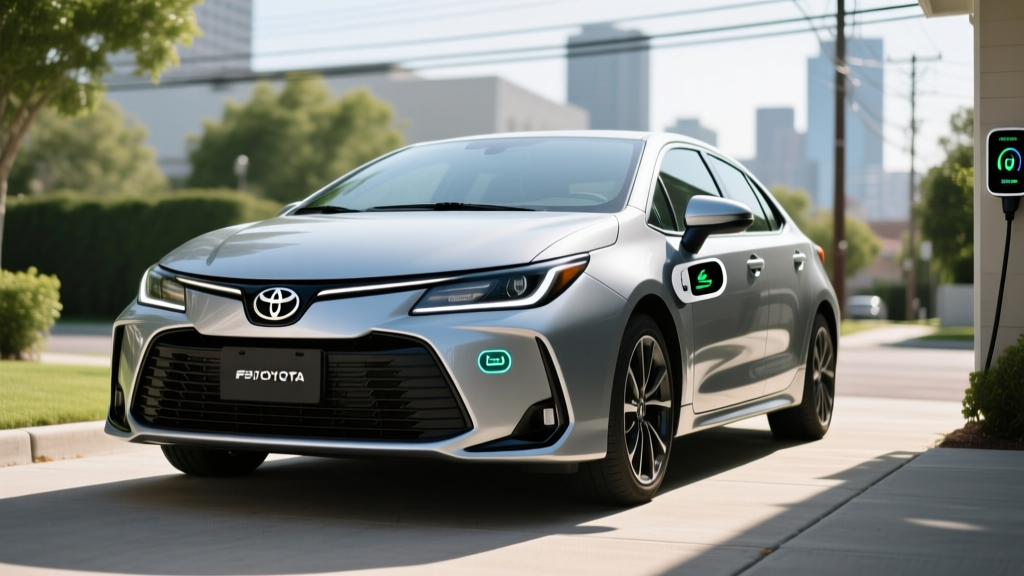
The 2020 Toyota Corolla Hybrid is a conventional hybrid electric vehicle (HEV) — not a plug-in. It pairs a 1.8-liter four-cylinder engine with a dual-motor hybrid system to deliver an EPA-estimated 52 MPG combined. With no plug required, a proven powertrain shared with the Prius, and a used-market price that has settled into the $16,000–$22,000 range as of early 2026, it remains one of the most accessible fuel-sipping sedans available. This guide breaks down every number that matters for buyers evaluating one on the used market today.
| Spec | 2020 Toyota Corolla Hybrid (LE) |
|---|---|
| EPA MPG (City / Hwy / Combined) | 53 / 46 / 52 |
| Powertrain | 1.8L I4 + 2 electric motors (eCVT) |
| Combined Horsepower | 121 hp |
| Hybrid Battery | ~1.31 kWh, Nickel-Metal Hydride (NiMH) |
| 0–60 mph | ~9.0 seconds |
| Drivetrain | AWD (standard) |
| Fuel Tank | 11.4 gallons |
| Total Range | ~593 miles (EPA est.) |
| Original MSRP (2020) | $23,100 (LE, single trim) |
| Typical Used Price (2026) | $16,000–$22,000 |
| Hybrid Battery Warranty | 10 years / 150,000 miles |
HEV vs. PHEV: What the Corolla Hybrid Actually Is
A common source of confusion is the difference between a conventional hybrid (HEV) and a plug-in hybrid (PHEV). The 2020 Corolla Hybrid is an HEV. Here is what that means in practice:
| Feature | HEV (Corolla Hybrid) | PHEV (e.g., Prius Prime) |
|---|---|---|
| Plug-in charging required? | No — refuels with gasoline only | Yes — plugs in for electric-only miles |
| Electric-only range | Less than 1 mile at low speed | 25–44 miles (model-dependent) |
| Battery size | ~1.3 kWh (small buffer) | 8.8–13.6 kWh usable |
| Federal tax credit (§30D) | Not eligible | Up to $3,750 (if sourcing/income rules met) |
| Best for | No home charging access, want simplicity | Short commutes, home charging available |
The Corolla Hybrid recovers energy through regenerative braking and engine-driven generation. You never plug it in. You simply fill it with regular unleaded gasoline and drive.
Fuel Economy: EPA Numbers and Real-World MPG
The EPA rates the 2020 Corolla Hybrid at 53 city / 46 highway / 52 combined MPG, according to fueleconomy.gov. That city-dominant split is a hallmark of Toyota's Hybrid Synergy Drive: the electric motor handles low-speed driving and launch, where gasoline engines are least efficient.
| Driving Scenario | Expected MPG |
|---|---|
| EPA Combined (sticker) | 52 MPG |
| Real-world city / suburban | 50–56 MPG (hybrids often exceed EPA in stop-and-go) |
| Real-world highway (70–80 mph) | 42–47 MPG (aerodynamic drag reduces hybrid advantage) |
| Cold weather (below 30°F, short trips) | 38–44 MPG (engine runs more for cabin heat) |
| Mixed real-world average (owner-reported) | 48–52 MPG |
Why city MPG beats highway in a hybrid: The electric motor absorbs braking energy (regeneration) and propels the car from stops. On the highway, the gasoline engine does most of the work and the hybrid system contributes less. Expect your real-world average to track close to the EPA combined figure, with city-heavy commuters sometimes exceeding it and highway-heavy drivers falling a few MPG short.
Cold-weather note: In winter, the gasoline engine must run more frequently to generate cabin heat (the Corolla Hybrid lacks a heat pump, which is a BEV feature). Short-trip winter driving can drop observed fuel economy into the high 30s. This is normal for all hybrids and recovers in spring.
Powertrain and Driving Impressions
The 2020 Corolla Hybrid uses a 1.8-liter Atkinson-cycle four-cylinder engine producing 98 hp on its own, paired with two motor-generators routed through Toyota's planetary-gear eCVT. Combined system output is 121 horsepower. Standard all-wheel drive (AWD) uses a separate rear-mounted electric motor — there is no mechanical driveshaft to the rear wheels.
The 0–60 mph time of approximately 9.0 seconds is leisurely by modern standards. This is not a performance car. The eCVT eliminates shift shock and provides smooth, linear acceleration from stops, but highway merging requires planning. The AWD system engages automatically in low-traction conditions and operates up to about 43 mph before disengaging the rear motor.
Ride quality is compliant and quiet for the class. The Corolla Hybrid sits on Toyota's TNGA-C platform, which provides a lower center of gravity and more rigid chassis than the prior-generation Corolla. Road noise is well-managed, though the engine drone under hard acceleration (a CVT trait) is noticeable.
Battery, Warranty, and Long-Term Reliability
Hybrid battery warranty: Toyota covers the 2020 Corolla Hybrid's battery pack for 10 years or 150,000 miles, whichever comes first. This was an upgrade from the prior 8-year/100,000-mile coverage and applies to all 2020+ Toyota hybrids sold in the United States.
Battery chemistry: The Corolla Hybrid uses a Nickel-Metal Hydride (NiMH) pack, not lithium-ion. NiMH is less energy-dense but has a long track record of durability in Toyota hybrids — the Prius has used similar chemistry for over two decades with well-documented longevity.
How Long Do Toyota Hybrid Batteries Last?
Real-world data from Toyota Prius fleets and owner surveys suggest NiMH hybrid batteries routinely last 150,000–200,000+ miles before meaningful degradation. Failures before 100,000 miles are uncommon. The 2020 Corolla Hybrid's battery is relatively small (~1.31 kWh), meaning it undergoes shallow charge/discharge cycles — never fully depleted, never fully charged — which is gentle on cell longevity.
Battery Replacement Cost
If the hybrid battery does eventually need replacement out of warranty:
- New OEM Toyota battery: $2,000–$3,500 (parts + labor at a dealer)
- Refurbished/remanufactured battery: $1,000–$2,000
- Individual module replacement: $500–$1,200 (a failing pack often has only 1–2 bad modules out of 28)
These costs are modest compared to EV battery replacements, which can exceed $10,000. The Corolla Hybrid's small NiMH pack is one of the least expensive hybrid batteries to service.
Overall Reliability
The 2020 Corolla Hybrid benefits from Toyota's extensive hybrid production history. The 1.8L 2ZR-FXE engine and eCVT transaxle are shared with the Prius and have been in continuous production since 2009 with iterative improvements. Common maintenance items are limited to standard gasoline-engine service: oil changes (0W-16 synthetic, every 10,000 miles), brake pad replacement (regenerative braking reduces wear — many owners report 80,000+ miles on original pads), and coolant service. The hybrid system itself requires no scheduled maintenance.
According to NHTSA, the 2020 Corolla Hybrid has no major pattern failures or widespread recalls specific to the hybrid system. Always check the specific VIN on NHTSA's site for open recalls before purchasing used.
Tax Credits and Incentives: What Applies in 2026?
The 2020 Toyota Corolla Hybrid is a conventional HEV. Under IRS §30D rules, conventional hybrids do not qualify for the federal plug-in vehicle tax credit. Only battery electric vehicles (BEVs) and plug-in hybrids (PHEVs) with a minimum battery capacity of 7 kWh are eligible.
Federal tax credit eligibility for the 2020 Corolla Hybrid:
- §30D New Clean Vehicle Credit: ❌ Not eligible (HEV, not a plug-in)
- §25E Used Clean Vehicle Credit: ❌ Not eligible (HEV, not a plug-in)
- Alternative Fuel Vehicle Refueling Property Credit: ❌ Not applicable
State and local incentives: A handful of states offer rebates or HOV-lane access for conventional hybrids, but these programs are increasingly focused on plug-in vehicles. Check your state's energy office or DMV for current programs. Some states (e.g., Colorado, California) have periodic utility or air-district rebates that may apply to high-MPG vehicles, but availability varies by jurisdiction and changes frequently.
Bottom line: Do not buy the Corolla Hybrid expecting a tax credit. Its value proposition is fuel savings, not incentive subsidies.
Ownership Costs: Fuel Savings vs. a Gas-Only Corolla
With the 2020 Corolla Hybrid settling at $16,000–$22,000 on the used market, let's compare annual fuel costs to the gas-only 2020 Corolla LE (30 city / 38 highway / 33 combined EPA, per fueleconomy.gov):
| Cost Factor | Corolla Hybrid (52 MPG) | Corolla Gas (33 MPG) |
|---|---|---|
| Annual fuel (12,000 mi/yr, $3.30/gal avg) | ~$762 | ~$1,200 |
| Annual fuel savings (hybrid) | ~$438/year | |
| 5-year fuel savings | ~$2,190 | |
| Insurance (avg annual) | ~$1,400–$1,700 | ~$1,300–$1,600 |
| Maintenance (annual avg) | ~$350–$450 | ~$400–$500 |
The hybrid's fuel advantage is meaningful but not transformative at current gas prices. If you drive more than 12,000 miles per year or live in a state with higher fuel costs (California, Washington, New York), the annual savings grow proportionally. At 20,000 miles/year and $4.50/gallon, the hybrid saves roughly $900 annually.
Who Should Choose the Corolla Hybrid vs. an EV or Gas Car?
Choose the 2020 Corolla Hybrid if:
- You want maximum MPG without changing your refueling habits
- You lack access to home or workplace charging (apartment, street parking)
- You regularly drive long distances where charging infrastructure is sparse
- You want a low-risk, proven powertrain with a strong reliability record
- Your budget is under $22,000 and you want a relatively recent vehicle
Choose a plug-in hybrid (PHEV) instead if:
- You have home charging and a short daily commute (under 30 miles)
- You want some electric-only driving without full range commitment
- You want to qualify for the §30D used-EV credit (up to $4,000 on eligible used PHEVs)
Choose a full EV (BEV) instead if:
- You have reliable home Level 2 charging
- Your daily driving is under 200 miles and you rarely take road trips beyond charger coverage
- You want zero tailpipe emissions and the lowest per-mile "fuel" cost
- You're eligible for the full §30D credit ($7,500 new or $4,000 used) and want maximum incentive value
Pros
- 52 MPG combined EPA — among the highest of any non-plug-in sedan
- No plug-in charging required — gas and go
- Standard AWD (rare in this class and price range)
- 10-year / 150,000-mile hybrid battery warranty
- Toyota Safety Sense 2.0 standard (adaptive cruise, lane keeping, auto emergency braking)
- Low maintenance costs — regenerative braking extends brake life significantly
- Proven powertrain shared with Prius — abundant parts and service knowledge
Cons
- Only 121 hp — slow acceleration, especially for highway merging
- Single trim level (LE) — no premium options available for 2020
- Small trunk (13.1 cu ft) due to hybrid battery placement
- Rear seats do not fold flat (battery partition), limiting cargo flexibility
- No Apple CarPlay for 2020 model year (added for 2021)
- Cabin and road noise noticeable at highway speeds
- No federal tax credit eligibility
Frequently Asked Questions
How many MPG does the 2020 Toyota Corolla Hybrid get?
The EPA rates it at 53 city / 46 highway / 52 combined MPG. In real-world driving, most owners report 48–52 MPG on average. City-heavy drivers sometimes exceed 52 MPG thanks to the hybrid system's regenerative braking advantage. Highway-heavy driving at 75+ mph will typically yield 42–47 MPG.
Does the 2020 Corolla Hybrid need to be plugged in?
No. The Corolla Hybrid is a conventional hybrid (HEV), not a plug-in hybrid (PHEV). It charges its small battery through regenerative braking and the gasoline engine. You refuel it with regular unleaded gasoline like any other car.
How far can the Corolla Hybrid drive on electric power alone?
Less than one mile, and only at very low speeds (under 25 mph). The hybrid battery is approximately 1.31 kWh — far too small for meaningful electric-only driving. The electric motor assists the gasoline engine continuously but does not replace it for sustained travel.
Is the 2020 Corolla Hybrid reliable?
Yes. The powertrain is derived from Toyota's Prius hybrid system, which has been in production since 1997 with well-documented longevity. The 1.8L engine and eCVT have no known systemic failure patterns. The hybrid battery is covered for 10 years / 150,000 miles and typically lasts well beyond that in normal use.
What does it cost to replace the hybrid battery?
A new OEM replacement runs $2,000–$3,500 installed at a Toyota dealer. Refurbished packs cost $1,000–$2,000. In many cases, only individual modules within the pack have failed, and a specialist can replace just those for $500–$1,200. Given the pack's longevity, most owners will never need a replacement.
Does the 2020 Corolla Hybrid qualify for any tax credit?
No. Federal tax credits under IRS §30D and §25E apply only to plug-in vehicles (BEVs and PHEVs). The Corolla Hybrid is a conventional HEV and is not eligible for any federal purchase incentive. Check your state's energy office for any local programs, though most state incentives also target plug-in vehicles.
What is the difference between the Corolla Hybrid and the Prius?
Both use Toyota's 1.8L hybrid powertrain, but the Prius is a dedicated hybrid platform with slightly better aerodynamics and a marginally higher EPA rating (up to 58 MPG combined for the Prius Eco). The Corolla Hybrid offers a more conventional sedan design, standard AWD (the Prius offers AWD as an option on some trims), and a lower entry price on the used market. The Prius has a hatchback cargo area; the Corolla Hybrid has a traditional trunk.
Is the 2020 Corolla Hybrid a good used buy in 2026?
For buyers seeking a fuel-efficient, reliable, no-plug-required sedan under $22,000, it is one of the strongest options available. The 10-year hybrid battery warranty means a 2020 model purchased in 2026 still has up to four years of factory battery coverage remaining. The main compromises are modest acceleration, a small trunk, and the lack of Apple CarPlay on the 2020 model year.