Why the Kia Sportage Hybrid Is Drawing Racine Buyers
If you're searching for a Kia Sportage Hybrid for sale in Racine, you're not alone. The compact hybrid SUV segment has exploded, and the Sportage Hybrid — available as both a conventional hybrid (HEV) and a plug-in hybrid (PHEV) — sits at the intersection of efficiency, practicality, and all-wheel-drive capability that Wisconsin drivers need. With Racine's cold winters, stop-and-go driving along Washington Avenue, and the occasional I-94 road trip to Chicago or Milwaukee, the Sportage Hybrid's powertrain lineup deserves a close, numbers-driven look.
This guide covers the 2026 Kia Sportage HEV and PHEV trims with exact EPA figures, real-world MPG expectations, battery warranty details, and whether you can claim a federal tax credit. Let's separate marketing from math.
HEV vs PHEV: Which Sportage Hybrid Fits Your Racine Commute?
Kia offers the Sportage in two electrified flavors. Understanding the difference is critical before you visit a dealership.
Conventional Hybrid (HEV)
The Sportage HEV uses a 1.6-liter turbocharged four-cylinder paired with an electric motor and a small battery (approximately 1.49 kWh). You never plug it in. Regenerative braking and the engine recharge the battery automatically. It drives exactly like a gas car — just with better MPG, especially in city traffic where the electric motor handles low-speed propulsion.
Plug-In Hybrid (PHEV)
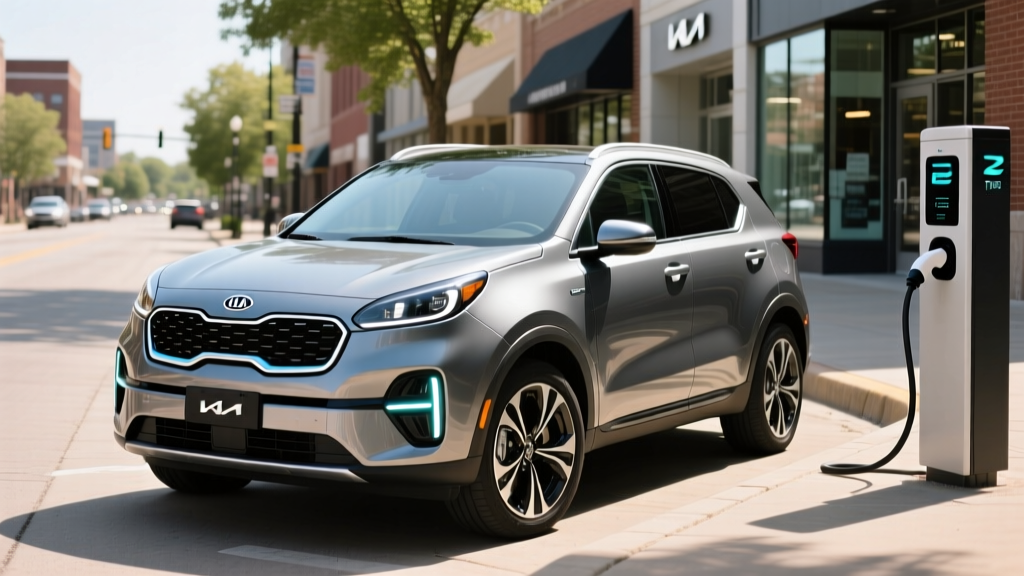
The Sportage PHEV ups the ante with a larger 13.8 kWh battery pack and a more powerful electric motor. You can plug it in — at home on a standard 120V outlet, a Level 2 home charger, or even a public DC fast charger. The EPA rates it for 34 miles of electric-only range, enough to cover most Racine commutes (downtown to the Regency Park area, out to Sturtevant) without burning a drop of gas. Once the battery depletes, it operates as a conventional hybrid.
| Spec | Sportage HEV | Sportage PHEV |
|---|---|---|
| Powertrain | 1.6L Turbo I4 + Electric Motor | 1.6L Turbo I4 + Electric Motor |
| Combined Horsepower | 226 hp | 261 hp |
| Battery Capacity | ~1.49 kWh | 13.8 kWh |
| Drivetrain | AWD standard | AWD standard |
| Plug-In Required? | No | Optional (but recommended) |
| DC Fast Charging | N/A | Yes (up to ~70 kW peak) |
| 0-60 mph | ~7.5 sec | ~7.0 sec |
| Cargo Volume | 39.5 cu ft (rear seats up) | 39.5 cu ft (rear seats up) |
Fuel Economy: EPA Numbers and Real-World MPG
Fuel economy is the primary reason buyers cross-shop hybrids. Here's the full EPA breakdown per fueleconomy.gov:
| Model | City MPG | Highway MPG | Combined MPG | Electric-Only Range (PHEV) | Total Range |
|---|---|---|---|---|---|
| Sportage HEV AWD | 38 | 38 | 38 | N/A | ~486 miles |
| Sportage PHEV AWD | 36 (hybrid mode) | 35 (hybrid mode) | 35 (hybrid mode) | 34 miles | ~410+ miles combined |
| Sportage PHEV MPGe | 84 MPGe (electric + gas combined) | 34 miles EV | ~410+ miles | ||
Real-World MPG: What Racine Drivers Actually See
EPA estimates are a baseline, not a guarantee. In our experience and owner reports:
- HEV city driving: Hybrids typically exceed their EPA city rating in stop-and-go traffic because regenerative braking recaptures energy the engine doesn't need. Expect 39-42 MPG around downtown Racine.
- HEV highway driving: Sustained 70+ mph on I-94 drops efficiency to roughly 33-35 MPG — the engine works harder and regen opportunities disappear.
- HEV cold weather: Wisconsin winters reduce MPG by 5-12% due to cabin heating load, thicker engine oil, and reduced battery efficiency. Plan for 32-36 MPG combined in January.
- PHEV electric range: The 34-mile EPA electric range drops to roughly 26-30 miles in cold weather (below 40°F) when the heat pump and battery thermal management draw power. In summer, owners report 33-36 miles.
- PHEV highway hybrid mode: Once the battery is depleted, expect 32-34 MPG at highway speeds — slightly less than the HEV due to the heavier battery pack.
Charging the PHEV: Times, Connectors, and Home Setup
If you opt for the Sportage PHEV, charging flexibility is a key advantage. Here's what to expect:
| Charging Level | Power | Time (0-100%) | Connector |
|---|---|---|---|
| Level 1 (120V household) | ~1.4 kW | ~10-11 hours | Standard J1772 |
| Level 2 (240V home/public) | ~7.2 kW | ~2 hours | J1772 |
| DC Fast Charge | Up to ~70 kW peak | ~35 min (10-80%) | CCS1 |
Home charging reality: A Level 1 outlet (standard 120V) will fully recharge the 13.8 kWh battery overnight — adequate if you drive under 34 miles daily and plug in each evening. A Level 2 home charger (240V) cuts that to about two hours, which matters if you make multiple short trips per day and want to maximize electric-only driving.
DC fast charging caveat: The PHEV's ~70 kW peak charge rate is modest compared to full EVs (which can hit 200+ kW). But for a 13.8 kWh battery, it's proportionally quick — you'll add 20+ miles of electric range in about 10 minutes at a CCS-equipped station.
Pricing, Trims, and Tax Credit Eligibility
Here's the current 2026 MSRP breakdown for the Sportage Hybrid lineup:
| Trim | Powertrain | MSRP (approx.) |
|---|---|---|
| LX AWD | HEV | $30,090 |
| EX AWD | HEV | $33,590 |
| SX-Prestige AWD | HEV | $37,490 |
| X-Line AWD | PHEV | $40,590 |
| X-Line Prestige AWD | PHEV | $44,090 |
Federal Tax Credit: What You Can Actually Claim
Under IRS §30D rules, the Sportage PHEV may qualify for a partial or full federal tax credit up to $7,500, but eligibility depends on multiple factors:
- MSRP cap: SUVs must be under $80,000 — the Sportage PHEV clears this easily.
- Buyer income cap: Modified AGI must not exceed $150,000 (single), $225,000 (head of household), or $300,000 (joint). Exceed these and the credit phases out.
- Battery sourcing: Critical minerals and battery components must meet escalating domestic-sourcing thresholds. Kia's supply chain compliance changes by model year — confirm with your dealer and cross-check the IRS eligible vehicle list at the time of purchase.
- Point-of-sale transfer: As of 2024+, you can transfer the credit to the dealer for an upfront price reduction rather than waiting to claim it on your tax return. Confirm dealer participation.
Sportage HEV (conventional hybrid): Does not qualify for the §30D federal EV tax credit. The HEV's battery is too small, and it lacks plug-in capability. Some state or local incentives may apply — check state incentive databases for Wisconsin-specific programs.
Reliability, Battery Warranty, and Replacement Cost
Kia Hybrid Battery Warranty
Kia covers the Sportage HEV and PHEV hybrid battery with a 10-year/100,000-mile warranty (whichever comes first). This covers defects and capacity loss below a specified threshold. The broader powertrain warranty also runs 10 years/100,000 miles, and the basic vehicle warranty is 5 years/60,000 miles.
How Reliable Is the Sportage Hybrid?
Kia's 1.6-liter turbo hybrid powertrain has been in production since the 2023 model-year redesign. Early data from owner surveys and reliability trackers shows no widespread battery or inverter failures. The conventional HEV system is mechanically simpler than a PHEV (smaller battery, no onboard charger complexity), which historically correlates with fewer electrical issues over a 10-year ownership horizon.
Battery Replacement Cost
If the hybrid battery fails outside warranty, replacement costs are a legitimate concern:
- HEV battery replacement: Estimated $2,500-$4,000 (smaller pack, simpler swap).
- PHEV battery replacement: Estimated $6,000-$9,000 (larger 13.8 kWh pack with more cells and thermal management components).
For context, modern hybrid batteries are engineered for 150,000-200,000+ miles of service life. Degradation is gradual — expect 10-15% capacity loss over 10 years, which translates to slightly reduced electric-only range on the PHEV and marginally lower MPG assist on the HEV. Complete failure before 100,000 miles is uncommon and typically covered under warranty.
Sportage Hybrid vs PHEV vs Full EV: Which Fits Your Life?
Choose the Sportage HEV if:
- You don't have access to home or workplace charging (apartment, street parking, condo without EV infrastructure).
- Your daily driving is 30-60 miles with a mix of city and highway.
- You want lower upfront cost ($30,090 starting) with no charging behavior changes.
- You want AWD for Wisconsin winters without range anxiety.
Choose the Sportage PHEV if:
- You can install a Level 2 charger at home or have reliable workplace charging.
- Your daily commute is under 34 miles round-trip (you'll drive electric most days).
- You want to reduce gas consumption dramatically while retaining road-trip flexibility.
- You're willing to pay the ~$10,500 premium over the HEV for electric-only capability and the potential tax credit.
Choose a Full EV (like the Kia EV6 or Hyundai Ioniq 5) if:
- You have reliable home Level 2 charging.
- Your daily driving is under 250 miles and you road-trip infrequently (or are comfortable planning DC fast-charge stops).
- You want to eliminate gas entirely and minimize maintenance (no oil changes, no engine).
- You qualify for the full $7,500 federal tax credit, narrowing the price gap.
Pros and Cons at a Glance
Pros
- HEV achieves 38 MPG combined — strong for an AWD compact SUV
- PHEV offers 34 miles of electric-only range for daily commuting
- AWD standard on all hybrid trims — essential for Racine winters
- Generous 10-year/100,000-mile battery and powertrain warranty
- Spacious 39.5 cu ft cargo area with rear seats up
- PHEV qualifies for potential §30D federal tax credit (up to $7,500)
- DC fast charging available on PHEV (rare for the segment)
Cons
- HEV does not qualify for federal EV tax credit
- PHEV starts at $40,590 — a significant premium over the HEV
- Cold weather reduces PHEV electric range by 12-25%
- Highway MPG drops to 33-35 (HEV) and 32-34 (PHEV) at sustained 70+ mph
- PHEV DC fast charge rate (~70 kW) is slow compared to dedicated EVs
- Turbo engine requires premium fuel for maximum performance (regular acceptable with slight power reduction)
Frequently Asked Questions
How many MPG does the Kia Sportage Hybrid get?
The 2026 Sportage HEV AWD is EPA-rated at 38 city / 38 highway / 38 combined. Real-world city driving often yields 39-42 MPG thanks to regenerative braking. Highway cruising at 70+ mph drops to 33-35 MPG. The PHEV achieves 35 MPG combined in hybrid mode (after battery depletion) and 84 MPGe when factoring in electric-only operation.
How far can the Sportage PHEV go on electric only?
The EPA rates the Sportage PHEV at 34 miles of electric-only range. In warm weather with moderate speeds, expect 33-36 miles. In Wisconsin winter conditions (below 40°F), plan for 26-30 miles due to cabin heating and battery thermal management demands.
Does the Sportage Hybrid qualify for a tax credit?
The Sportage PHEV may qualify for a federal tax credit of up to $7,500 under IRS §30D, subject to buyer income limits ($150K single / $300K joint), MSRP caps (under $80K for SUVs — it qualifies), and battery sourcing requirements that change annually. The conventional HEV does not qualify for §30D. Check the IRS clean vehicle credit page for the latest eligible vehicle list.
Is the Kia Sportage Hybrid reliable?
Kia's 1.6T hybrid powertrain has shown no systemic reliability issues since the 2023 redesign. The 10-year/100,000-mile hybrid battery warranty is among the best in the segment. Hybrid battery replacement (if needed outside warranty) costs $2,500-$4,000 for the HEV and $6,000-$9,000 for the PHEV, though complete failure before 150,000 miles is uncommon.
Do I need to plug in the Sportage Hybrid?
The conventional HEV requires no plug-in — it recharges via regenerative braking and the engine. The PHEV benefits greatly from plugging in (to maximize the 34-mile electric range) but will operate as a standard hybrid if you don't. However, not plugging in the PHEV defeats its primary advantage and wastes the premium you paid.
What's the difference between shopping for a Sportage Hybrid in Racine vs. other Wisconsin cities?
Pricing and inventory are consistent across Wisconsin Kia dealers, but Racine-area buyers should prioritize AWD (standard on all hybrid trims), consider the cold-weather MPG and range reductions noted above, and verify whether their home electrical panel can support a Level 2 charger if opting for the PHEV. Older Racine homes may require a panel upgrade ($1,500-$3,000) to support a 240V/40A circuit.