Quick Verdict: The 2019 RAV4 Hybrid Delivers Where It Counts
If you're researching the 2019 RAV4 Hybrid MPG figures, the short answer is excellent for its class: the EPA rates it at 41 city / 38 highway / 40 combined. That's a meaningful improvement over the non-hybrid 2019 RAV4's 26/35/30 MPG (AWD), and it positions the hybrid as one of the most fuel-efficient compact SUVs available on the used market.
The 2019 model year was the first of the fifth-generation RAV4, built on Toyota's TNGA-K platform. It introduced a significantly upgraded hybrid powertrain that paired a 2.5-liter Dynamic Force engine with a more powerful electric motor system. For used-car shoppers in 2026, the 2019 RAV4 Hybrid remains a strong buy — but understanding its real-world efficiency, battery longevity, and how it compares to the newer RAV4 Prime PHEV is essential before signing on the dotted line.
2019 RAV4 Hybrid MPG: EPA Estimates vs. Real-World Results
| Driving Cycle | EPA Estimate | Real-World Expectation |
|---|---|---|
| City | 41 MPG | 38–44 MPG (hybrids often exceed EPA in stop-and-go) |
| Highway | 38 MPG | 34–37 MPG (sustained 70+ mph driving) |
| Combined | 40 MPG | 36–41 MPG depending on commute mix |
Source: EPA Fuel Economy Guide — 2019 Toyota RAV4 Hybrid AWD
Hybrids have an inherent advantage in city driving. The electric motor handles low-speed acceleration — the least efficient operating range for a gasoline engine — and regenerative braking recaptures energy that would otherwise be lost as heat. Many RAV4 Hybrid owners report exceeding the 41 MPG city estimate in moderate-temperature urban commuting. Highway driving is a different story: at sustained speeds above 70 mph, aerodynamic drag dominates and the hybrid system provides less benefit. Expect highway numbers to fall 2–4 MPG below the sticker.
Powertrain Specs: What Moves the 2019 RAV4 Hybrid
| Engine | 2.5L 4-cylinder Dynamic Force (A25A-FXS) |
| Engine Output | 176 hp @ 5,700 rpm / 163 lb-ft torque |
| Front Electric Motor | 88 kW (118 hp) / 149 lb-ft |
| Rear Electric Motor (AWD-i) | 40 kW (54 hp) / 89 lb-ft |
| Net Combined System Power | 219 hp |
| Transmission | eCVT (planetary gearset, no belt) |
| Drivetrain | Electronic AWD (AWD-i) — standard on all trims |
| Hybrid Battery | 1.6 kWh nickel-metal hydride (NiMH) |
| 0–60 mph | ~7.8 seconds |
The 2019 RAV4 Hybrid uses Toyota's fourth-generation hybrid system. The 2.5-liter Dynamic Force engine runs on the Atkinson cycle, sacrificing peak power for thermal efficiency — Toyota claims approximately 41% thermal efficiency, among the highest for any mass-production gasoline engine. The rear axle is driven entirely by an electric motor (AWD-i), eliminating the mechanical driveshaft found in the gas-only AWD model. This reduces weight and drivetrain losses.
With 219 combined horsepower, the hybrid is actually quicker than the gas-only 2019 RAV4 AWD (203 hp, ~8.1 seconds to 60). The electric motor's instant torque fills in the low-RPM range where the Atkinson-cycle engine is weakest, giving confident acceleration from stops and during highway merging.
HEV vs. PHEV: Understanding the 2019 RAV4 Hybrid vs. RAV4 Prime
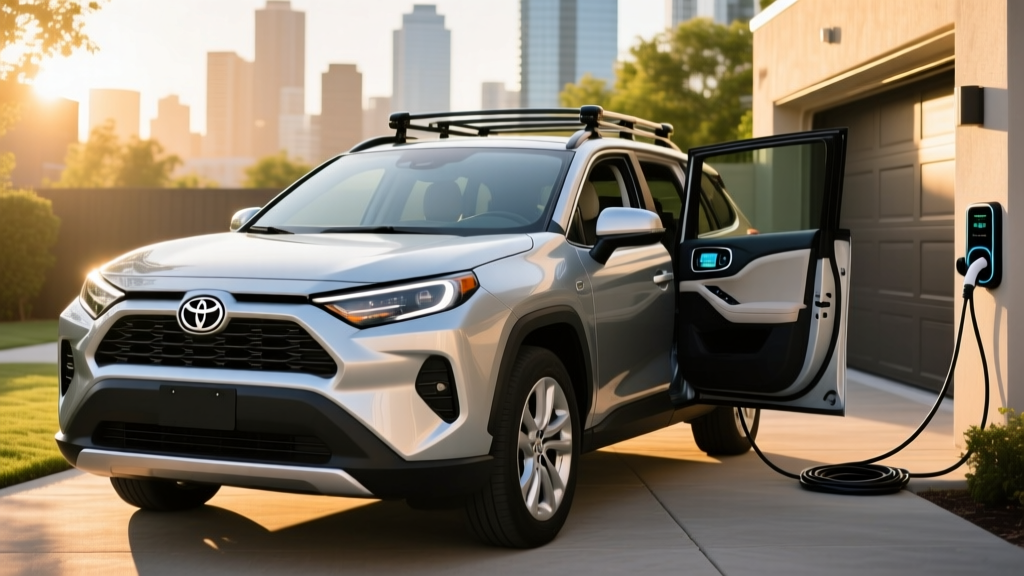
A critical distinction for buyers: the 2019 RAV4 Hybrid is a conventional hybrid (HEV). It does not plug in. It has no electric-only driving range to speak of (the small 1.6 kWh battery enables low-speed electric assist for roughly 0.5–1 mile, not meaningful EV commuting). All energy comes from gasoline, recovered via regenerative braking and engine-generated electricity.
The RAV4 Prime (PHEV) was not introduced until the 2021 model year — there is no 2019 RAV4 Prime. If you need plug-in capability and electric-only range, you'll need to look at 2021+ model years. Here's how the two powertrains compare:
| Attribute | 2019 RAV4 Hybrid (HEV) | 2021+ RAV4 Prime (PHEV) |
|---|---|---|
| Powertrain Type | Conventional hybrid — no plug | Plug-in hybrid — charges via outlet/charger |
| Battery Capacity | 1.6 kWh (NiMH) | 18.1 kWh (lithium-ion) |
| Electric-Only Range | N/A (~0.5 mi low-speed assist) | 42 miles EPA (2021–2025 models) |
| Combined System Power | 219 hp | 302 hp |
| Combined MPG (gas) | 40 MPG | 38 MPG (after battery depleted) / 94 MPGe (with charge) |
| Plugs In? | No | Yes — Level 1 (120V) ~12 hrs, Level 2 (240V) ~2.5 hrs |
| DC Fast Charge? | N/A | No (Level 2 max) |
| Federal Tax Credit | None | Up to $7,500 (subject to §30D rules & phase-out) |
The RAV4 Prime offers a compelling package — 42 miles of electric commuting covers most daily driving, and 302 hp makes it the quickest RAV4 variant. But it commands a significant price premium, even on the used market. For buyers who lack home charging access or who primarily drive highway miles, the 2019 RAV4 Hybrid's simplicity and proven efficiency may be the smarter choice.
Hybrid Battery Warranty, Lifespan & Replacement Cost
Toyota's hybrid battery longevity is one of the strongest arguments for buying a used RAV4 Hybrid. The NiMH battery in the 2019 model is a mature, well-understood technology. Unlike lithium-ion packs in full EVs, NiMH cells degrade slowly and predictably. Toyota's hybrid system also maintains a tight state-of-charge window (roughly 40–80%), which significantly reduces stress on the cells.
Real-world lifespan data: Based on fleet data and owner reports from earlier-generation Toyota hybrids (Prius, Camry Hybrid, prior-gen RAV4 Hybrid), the hybrid battery commonly lasts 150,000–200,000+ miles before capacity loss becomes noticeable. Many first-generation Prius vehicles exceeded 200,000 miles on the original battery. The 2019 RAV4 Hybrid's fourth-gen system benefits from improved thermal management and more conservative charge cycling.
Battery replacement cost: If the hybrid battery does fail outside of warranty, a new OEM replacement from Toyota runs approximately $3,000–$4,500 (parts and labor) at a dealership. Third-party refurbished or reconditioned NiMH modules are available for $1,500–$2,500 installed at independent hybrid specialists. Some shops offer individual module replacement (only swapping the degraded cells) for under $1,000.
For a 2019 model purchased in 2026, the vehicle is approximately 7 years old. Most examples will still be within the 10-year/150,000-mile hybrid battery warranty window — but verify mileage and confirm the warranty hasn't been voided by accident damage or improper service.
Pricing, Tax Credits & Used Market Value
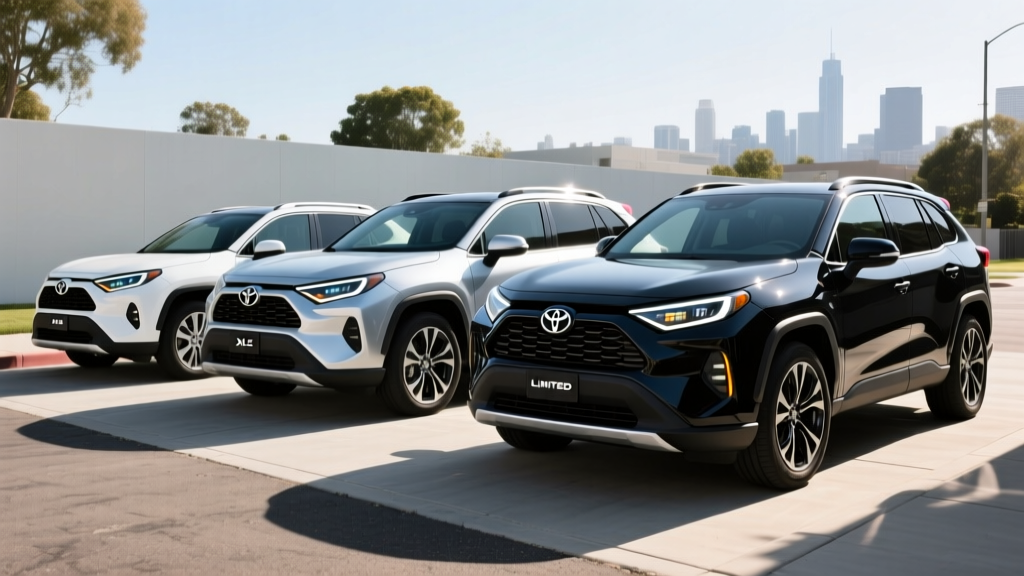
The 2019 RAV4 Hybrid was offered in four trims:
- LE: Original MSRP ~$29,470 (including destination)
- XLE: Original MSRP ~$31,070
- XSE: Original MSRP ~$33,070
- Limited: Original MSRP ~$36,470
As of early 2026, used-market pricing for a 2019 RAV4 Hybrid typically ranges from $20,000 to $28,000 depending on mileage, trim, condition, and region. Lower-mileage Limited trims in good condition command the top of that range.
Tax credit eligibility: The 2019 RAV4 Hybrid, as a conventional HEV, does not qualify for the federal §30D clean vehicle tax credit (that credit applies only to plug-in vehicles — BEVs and PHEVs). However, if you purchase a used RAV4 Prime (PHEV, 2021+) from a dealer, you may be eligible for the Used Clean Vehicle Credit under IRC §25E — up to $4,000 or 30% of the sale price (whichever is less), subject to income caps ($75,000 single / $150,000 joint) and a sale price cap of $25,000. See the IRS Used Clean Vehicle Credit page for current rules. Note that the used-vehicle credit price cap of $25,000 makes it difficult to apply to most RAV4 Prime listings, which typically sell above that threshold.
- Federal §30D new vehicle credit: Not eligible (HEV, not plug-in)
- Federal §25E used vehicle credit: Not eligible (HEV, not plug-in)
- State incentives: Some states offer rebates for used hybrids — check your state's energy office or AFDC state incentive database
- Insurance discounts: Some carriers offer green-vehicle discounts for hybrids
Reliability, Safety & Ownership Costs
Toyota's hybrid systems are among the most reliable powertrains in the automotive industry. The eCVT transmission is a planetary gearset with no belts, clutches, or traditional friction components — it's mechanically simple and rarely fails. The 2019 RAV4 Hybrid carries strong reliability scores from both Consumer Reports and J.D. Power, consistent with Toyota's hybrid track record.
Safety: The 2019 RAV4 earned the IIHS Top Safety Pick designation (with specific headlight configurations). It comes standard with Toyota Safety Sense 2.0, which includes:
- Pre-Collision System with Pedestrian Detection
- Full-Speed Range Dynamic Radar Cruise Control
- Lane Departure Alert with Steering Assist
- Lane Tracing Assist
- Automatic High Beams
- Road Sign Assist
For full crash-test data, see the IIHS 2019 RAV4 ratings page.
Ownership cost advantage: At 40 MPG combined and $3.25/gallon regular unleaded (a reasonable 2026 national average), the 2019 RAV4 Hybrid costs approximately $0.081 per mile in fuel. The gas-only 2019 RAV4 AWD (30 MPG combined) costs $0.108 per mile. Over 15,000 annual miles, that's a fuel savings of roughly $405 per year, or $2,025 over five years. The hybrid also benefits from reduced brake wear — regenerative braking extends pad life significantly, often pushing brake service intervals to 80,000–100,000 miles.
Who Should Choose the 2019 RAV4 Hybrid?
- You want excellent fuel economy without changing your habits — no plugs, no charging apps, no range planning
- You lack access to home or workplace charging (apartment dwellers, street parkers)
- Your commute is primarily city/suburban stop-and-go driving where the hybrid excels
- You want a proven, low-risk used vehicle with strong resale value and reliability data
- Your budget is $20,000–$28,000 for a used compact SUV
- You have reliable Level 2 home charging and a commute under 42 miles
- You want electric-only daily driving with gas-engine backup for road trips
- You value the 302 hp performance upgrade
- You're willing to pay a significant premium ($35,000+ used) for the PHEV powertrain
- You have home Level 2 charging and rarely drive beyond 250 miles without stopping
- You want zero tailpipe emissions and the lowest per-mile fuel cost (~$0.04/mi on home electricity)
- You're eligible for the full $7,500 §30D federal tax credit on a new EV purchase
- 40 MPG combined — class-leading for a compact AWD SUV
- Standard AWD on all trims (AWD-i electric rear axle)
- Proven Toyota hybrid reliability; 10-yr/150k-mi battery warranty
- 219 hp — quicker than the gas-only model
- No plug required — zero lifestyle change from a gas car
- Strong resale value and low depreciation
- No electric-only driving range (HEV, not PHEV)
- Highway MPG drops to ~34–37 at sustained high speeds
- No federal tax credit eligibility (HEV)
- Infotainment system feels dated by 2026 standards (no wireless CarPlay on most trims)
- Road noise at highway speeds is noticeable
- Cargo area slightly reduced vs. gas model due to hybrid battery placement
Frequently Asked Questions
How many MPG does the 2019 RAV4 Hybrid get?
The EPA rates the 2019 Toyota RAV4 Hybrid AWD at 41 city / 38 highway / 40 combined MPG. In real-world driving, most owners see 36–44 MPG depending on driving conditions. City driving often exceeds the EPA estimate thanks to regenerative braking and electric motor assist at low speeds. Highway driving at 70+ mph typically yields 34–37 MPG.
Does the 2019 RAV4 Hybrid need to be plugged in?
No. The 2019 RAV4 Hybrid is a conventional hybrid (HEV). It charges its small 1.6 kWh battery through regenerative braking and the gasoline engine. You never plug it in. If you want a plug-in RAV4 with electric-only range, you need the RAV4 Prime, which debuted for the 2021 model year.
Is the 2019 RAV4 Hybrid reliable? What about the hybrid battery?
Yes — Toyota's hybrid systems have an exceptional reliability track record spanning two decades. The 2019 RAV4 Hybrid's NiMH battery is covered by a 10-year/150,000-mile warranty (in California-emissions states) or 8-year/100,000-mile warranty (federal states). Real-world data from Toyota hybrids shows batteries commonly lasting 150,000–200,000+ miles. Replacement cost, if needed out of warranty, is approximately $3,000–$4,500 for a new OEM battery.
Does the 2019 RAV4 Hybrid qualify for any tax credit?
No. The federal §30D clean vehicle tax credit and §25E used vehicle credit apply only to plug-in vehicles (BEVs and PHEVs). The 2019 RAV4 Hybrid is a conventional HEV and does not qualify for federal tax credits. Some states may offer incentives for used hybrid purchases — check the AFDC state incentive database for your location.
How does the 2019 RAV4 Hybrid compare to the gas-only 2019 RAV4?
The hybrid delivers 40 MPG combined versus the gas AWD model's 30 MPG — a 33% improvement. It also produces 219 hp versus the gas model's 203 hp, resulting in quicker acceleration (~7.8 sec vs. ~8.1 sec to 60 mph). The trade-off is a modest price premium on the used market and slightly less cargo space due to the hybrid battery. For most buyers, the fuel savings and performance advantage make the hybrid the better value.
Is the 2019 RAV4 Hybrid a good buy in 2026?
Yes, for the right buyer. At $20,000–$28,000 on the used market, it offers excellent fuel economy, standard AWD, Toyota reliability, and remaining hybrid battery warranty coverage. It's ideal for buyers who want efficiency without plug-in infrastructure. If you have home charging and want electric-only commuting, look at a used RAV4 Prime (2021+) or a full EV instead.