Quick Verdict: Is a Kia Niro Hybrid Lease Worth It in 2026?
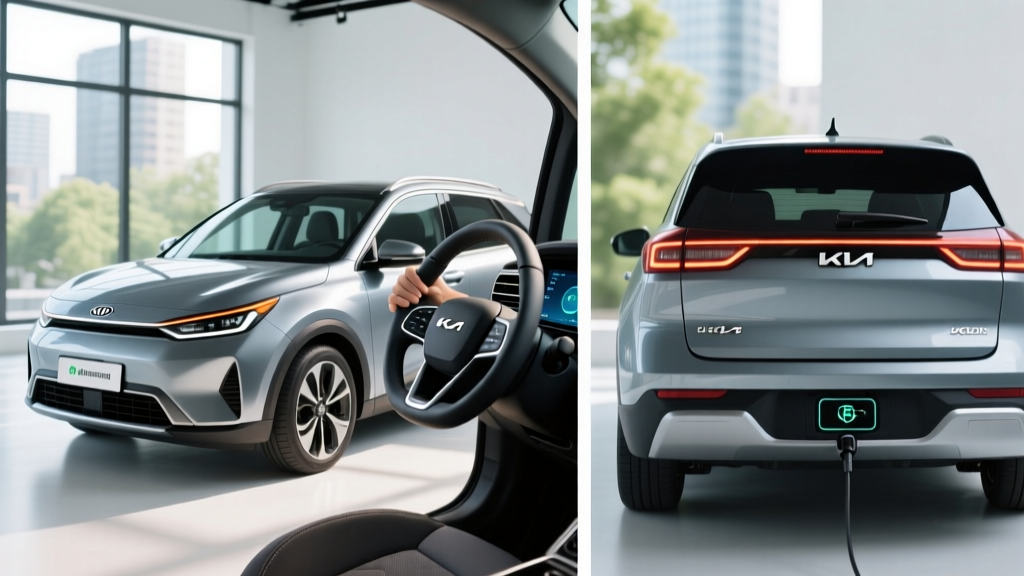
The Kia Niro remains one of the most practical compact crossovers for buyers who want electrified efficiency without committing to a full battery-electric vehicle. For 2026, the Niro lineup splits into two distinct flavors: the conventional Kia Niro Hybrid (HEV), which requires no plug and delivers an EPA-estimated 53 MPG combined, and the Kia Niro Plug-In Hybrid (PHEV), which offers roughly 33 miles of electric-only driving before its gasoline engine kicks in. If you're researching a Kia Niro hybrid lease, the decision between HEV and PHEV hinges on your daily commute distance, home charging access, and whether you want to capture a federal tax credit through a lease structure.
This guide breaks down every number that matters — EPA fuel economy, battery specs, powertrain output, real-world efficiency, warranty coverage, lease pricing, and tax-credit mechanics — so you can sign a lease with confidence, not guesswork.
HEV vs PHEV: Understanding the Two Niro Variants
Before comparing lease deals, it's essential to understand what separates a conventional hybrid from a plug-in hybrid. The distinction affects your fuel costs, charging habits, and incentive eligibility.
| Attribute | Kia Niro Hybrid (HEV) | Kia Niro Plug-In Hybrid (PHEV) |
|---|---|---|
| Needs to be plugged in? | No — self-charging via regenerative braking and engine | Yes — plug in to access electric-only range |
| Battery capacity | ~1.56 kWh (small, buffer-style) | 11.1 kWh usable (lithium-ion polymer) |
| Electric-only range | Not applicable (EV assist only at low speeds) | EPA-est. 33 miles |
| DC fast charging | Not applicable | No — Level 1/Level 2 AC only |
| Federal tax credit (purchase) | None | Up to $7,500 via §30D (subject to eligibility) |
| Best for | Drivers without home/workplace charging | Drivers with home charging and <33-mile commutes |
Neither variant is "better" universally. The HEV is a fuel-sipping set-it-and-forget-it proposition. The PHEV rewards drivers who can charge regularly with dramatically lower fuel consumption on short trips, while still carrying a gasoline engine for longer road trips.
Fuel Economy & Real-World MPG
Fuel economy is the headline reason most buyers consider a Niro. Here's the EPA data, broken down by driving condition, alongside what you can realistically expect.
| Model | EPA City | EPA Highway | EPA Combined | Real-World Expectation |
|---|---|---|---|---|
| Niro Hybrid (HEV) — FE trim | 53 MPG | 54 MPG | 53 MPG | 48–56 MPG (city-favorable; hybrids often beat EPA in stop-and-go) |
| Niro Hybrid (HEV) — EX/Touring | 49 MPG | 52 MPG | 50 MPG | 45–53 MPG |
| Niro PHEV — charge-depleting (EV mode) | 108 MPGe | — | 108 MPGe | Varies with temperature; expect 90–110 MPGe equivalent |
| Niro PHEV — charge-sustaining (gas only) | 48 MPG | 45 MPG | 46 MPG | 42–48 MPG |
Real-world note: Conventional hybrids like the Niro HEV tend to exceed their EPA city estimates in genuine stop-and-go traffic because regenerative braking recaptures energy that a gas car wastes as heat. On sustained highway drives at 75+ MPH, expect a slight dip below the EPA highway figure due to aerodynamic drag. In cold weather (below 30°F), fuel economy drops 10–15% as the engine runs more frequently for cabin heat and battery conditioning.
For the PHEV, the 33-mile electric-only range is the critical figure. If your round-trip commute is under 30 miles and you charge nightly, you may visit a gas station only a handful of times per year. Data from fueleconomy.gov confirms the PHEV's combined 108 MPGe in electric mode, making it one of the most efficient plug-in crossovers available.
Powertrain Specs: Engine, Motor, and Combined Output
| Specification | Niro Hybrid (HEV) | Niro Plug-In Hybrid (PHEV) |
|---|---|---|
| Engine | 1.6L GDI 4-cylinder | 1.6L GDI 4-cylinder |
| Engine horsepower | 104 hp | 104 hp |
| Electric motor output | 43 hp (32 kW) | 83 hp (62 kW) |
| Combined system output | 139 hp | 180 hp |
| Combined torque | 195 lb-ft | 195 lb-ft |
| Transmission | 6-speed dual-clutch automatic (DCT) | 6-speed dual-clutch automatic (DCT) |
| Drivetrain | FWD | FWD |
| 0–60 MPH (est.) | ~9.6 seconds | ~7.2 seconds |
| Total range (gas + electric) | ~550 miles | ~510 miles (33 EV + ~477 gas) |
The PHEV's larger electric motor gives it a meaningful acceleration advantage — roughly 2.4 seconds quicker to 60 MPH. That extra punch is noticeable in highway merging and passing situations. Both models use Kia's 6-speed dual-clutch transmission rather than a CVT, which provides a more natural, stepped gear feel that many drivers prefer over the rubber-band sensation of a continuously variable unit.
PHEV Charging: What You Need to Know
If you're leaning toward the Niro PHEV, charging logistics are the make-or-break factor. Here's the full picture:
- Battery capacity: 11.1 kWh usable (lithium-ion polymer)
- Level 1 charging (120V household outlet): ~9 hours from empty to full. This is viable for overnight charging if your daily drive is under 33 miles.
- Level 2 charging (240V, home wallbox or public station): ~2 hours 45 minutes from empty to full using a standard 3.3 kW onboard charger.
- DC fast charging: Not available. The Niro PHEV does not support DC fast charging — a common limitation among plug-in hybrids in this segment.
- Charging connector: Standard J1772 (compatible with all public Level 2 stations in the US).
Practical tip: Most PHEV owners find that Level 1 charging from a standard 120V outlet is sufficient for daily top-ups. If you drive 30 miles per day and plug in when you get home, you'll recover roughly 33 miles of range in 9 hours — meaning you wake up with a full battery every morning without investing in a Level 2 installation.
Lease Pricing & Tax Credit Strategy
Leasing a Kia Niro in 2026 involves several variables: MSRP by trim, negotiated capitalized cost, money factor, residual value, and — for the PHEV — potential federal tax credit application.
2026 Kia Niro Pricing by Trim (MSRP)
| Trim | HEV MSRP | PHEV MSRP |
|---|---|---|
| LX (base) | ~$28,415 | Not available |
| EX | ~$30,015 | ~$35,415 |
| SX / SX Touring | ~$33,215 | ~$38,215 |
Prices are approximate MSRP including destination. Actual dealer pricing may vary.
How the Federal Tax Credit Works with Leasing
The Kia Niro HEV does not qualify for the federal §30D clean vehicle credit — it's a conventional hybrid without sufficient plug-in electric range.
The Niro PHEV may qualify for up to $7,500 under IRS §30D rules, but eligibility depends on several factors that change frequently:
- MSRP cap: Vans, SUVs, and pickup trucks must have an MSRP at or below $80,000. The Niro PHEV clears this easily.
- Buyer income cap: Modified adjusted gross income must not exceed $150,000 (single), $225,000 (head of household), or $300,000 (joint filing).
- Battery sourcing requirements: A percentage of critical minerals and battery components must be sourced from the US or free-trade-agreement countries. These percentages increase annually — verify current-year compliance on the DOE/Fuel Economy website.
- Point-of-sale transfer: As of 2024, eligible buyers can transfer the credit to the dealer at point of sale, reducing the purchase price directly. This applies to purchases, not leases directly.
Lease-specific note: Under current IRS guidance, the §30D credit technically belongs to the lessor (the financing company) in a lease arrangement, not the lessee. However, many lessors pass the credit's value through as a capitalized cost reduction, effectively lowering your monthly payment. This is sometimes called the "lease loophole" — it can allow buyers who exceed the income cap to benefit indirectly. Always confirm with the dealer whether the lease quote reflects any passed-through credit value.
Estimated Lease Payments (Illustrative)
| Scenario | Est. Monthly Payment | Assumptions |
|---|---|---|
| Niro HEV EX — 36 months | $350–$420 | 12K mi/yr, $2,500 due at signing, tier-1 credit |
| Niro PHEV EX — 36 months | $400–$480 | 12K mi/yr, $2,500 due at signing, tier-1 credit |
| Niro PHEV EX — 36 months (with credit pass-through) | $330–$400 | Same as above, lessor applies $7,500 as cap reduction |
Lease payments vary by region, dealer, credit tier, and current Kia Motors Finance incentives. These figures are illustrative ranges based on typical market conditions — always get a written quote.
Battery Warranty, Reliability & Replacement Cost
Kia Hybrid/PHEV Battery Warranty: 10 years / 100,000 miles (whichever comes first) for the high-voltage hybrid battery. This is one of the strongest battery warranties in the industry and applies to the original owner. For subsequent owners, coverage typically drops to a shorter term — check your specific warranty booklet.
Powertrain warranty: 10 years / 100,000 miles (original owner).
Basic vehicle warranty: 5 years / 60,000 miles.
Reliability: The Niro's hybrid powertrain uses a naturally aspirated 1.6L engine paired with a relatively simple DCT — no turbocharger, no CVT belt, and no high-stress components. Kia's hybrid system has proven durable across multiple model years. The 1.56 kWh battery in the HEV is small and operates within a narrow state-of-charge window, reducing degradation stress. The PHEV's 11.1 kWh pack is larger but still modestly sized and liquid-cooled for thermal management.
Battery replacement cost: If the hybrid battery fails outside warranty, replacement costs typically range from $2,500 to $4,500 for the HEV and $5,000 to $8,000 for the PHEV, including parts and labor. However, with Kia's 10-year/100,000-mile coverage and the fact that most lease terms are 36 months, battery replacement during a lease is virtually unheard of. For long-term owners, real-world data shows hybrid batteries routinely lasting 150,000+ miles with minimal capacity loss.
Who Should Lease the Niro Hybrid vs PHEV vs a Full EV?
Choose the Niro HEV lease if:
- You don't have reliable access to home or workplace charging
- You want maximum fuel efficiency with zero behavioral change
- Your budget is tighter and you want the lower monthly payment
- You frequently take long road trips and don't want to plan around charging stops
Choose the Niro PHEV lease if:
- You can charge at home (even a standard 120V outlet works for daily needs)
- Your daily commute is under 33 miles round-trip
- You want EV-like daily driving with gas-engine flexibility for longer trips
- The lease deal passes through the federal tax credit value, narrowing the price gap with the HEV
Consider a full EV (like the Kia EV6 or Hyundai Ioniq 5) if:
- You have reliable Level 2 home charging
- You want zero tailpipe emissions and minimal maintenance
- Your typical daily driving is under 250 miles
- You want the strongest available federal and state incentives
Niro HEV — Pros
- 53 MPG combined — best-in-class for compact hybrid crossovers
- No plug-in charging required
- Lowest lease payments in the Niro lineup
- 10-year/100,000-mile battery and powertrain warranty
- Practical cargo space (22.8 cu ft behind rear seats)
Niro HEV — Cons
- No federal tax credit eligibility
- Modest 139 hp — adequate but not quick
- FWD only — no AWD option
- Smaller battery means less electric assist at highway speeds
Niro PHEV — Pros
- 33 miles electric-only covers most commutes gas-free
- 180 hp combined — noticeably quicker than the HEV
- Potential $7,500 federal credit (via lease pass-through or purchase)
- 46 MPG combined after battery is depleted
- Level 1 charging sufficient for daily top-ups
Niro PHEV — Cons
- Higher MSRP and lease payments than the HEV
- No DC fast charging
- Requires regular plug-in access to realize fuel savings
- Tax credit eligibility depends on evolving sourcing rules
Frequently Asked Questions
How many MPG does the Kia Niro Hybrid get?
The most efficient Niro HEV (FE trim) achieves an EPA-estimated 53 MPG city, 54 highway, and 53 combined. Higher trims with larger wheels drop slightly to 49 city / 52 highway / 50 combined. In real-world city driving with frequent stops, many owners report exceeding EPA estimates thanks to aggressive regenerative braking.
How far can the Niro PHEV go on electric only?
The EPA rates the Niro PHEV at 33 miles of electric-only range. In warm weather with moderate speeds, expect 30–35 miles. In cold weather (below freezing), expect 24–28 miles due to battery chemistry limitations and cabin heating demands. Once the battery is depleted, the PHEV operates as a conventional hybrid at 46 MPG combined.
Does the Kia Niro Hybrid qualify for a tax credit?
The conventional Niro HEV does not qualify for any federal tax credit — it lacks the plug-in electric capability required by §30D. The Niro PHEV may qualify for up to $7,500, subject to buyer income limits, battery sourcing requirements, and MSRP caps. In a lease, the credit belongs to the lessor but is often passed through as a capitalized cost reduction. Verify current eligibility on irs.gov before signing.
Is the Kia Niro Hybrid reliable?
Kia's hybrid powertrain has a strong reliability track record. The naturally aspirated 1.6L engine and dual-clutch transmission are mechanically straightforward. The high-voltage battery carries a 10-year/100,000-mile warranty, and real-world data shows hybrid batteries commonly lasting well beyond 150,000 miles. For lessees on a 36-month term, long-term reliability is essentially a non-issue.
What does it cost to replace the Niro hybrid battery?
Out-of-warranty replacement runs approximately $2,500–$4,500 for the HEV and $5,000–$8,000 for the PHEV. However, Kia's 10-year/100,000-mile hybrid battery warranty covers defects and excessive capacity loss during that period. Battery failures within the first 100,000 miles are rare based on field data.
Should I lease or buy the Kia Niro?
Leasing makes sense if you want lower monthly payments, plan to upgrade every 3 years, and want to avoid long-term battery depreciation risk. Buying (especially the PHEV) makes more sense if you qualify for the $7,500 federal tax credit, plan to keep the vehicle 5+ years, and want to build equity. For the PHEV specifically, compare the total lease cost over 36 months against the purchase price minus the tax credit to determine which path costs less per month.
Does the Niro PHEV need to be plugged in every night?
No — the Niro PHEV will operate perfectly as a conventional hybrid if you never plug it in, delivering 46 MPG combined. However, you'll forfeit the 33-mile electric-only range that makes the PHEV worthwhile. To maximize value, plug in whenever possible, even if just using a standard 120V outlet overnight.