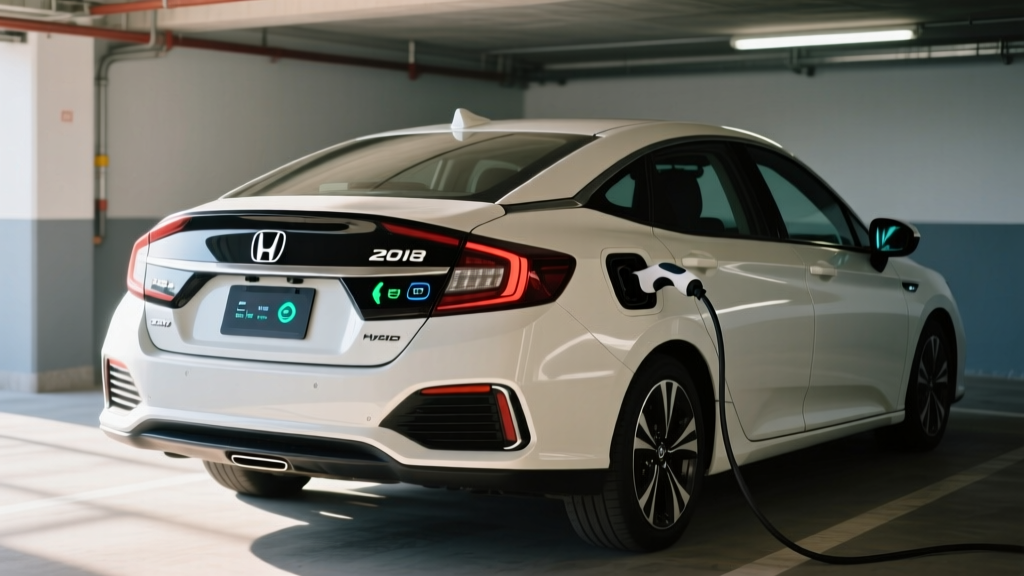
If you're browsing used-car listings and the 2018 Honda Clarity Plug-In Hybrid catches your eye, you're looking at one of the most efficient PHEVs Honda ever built — and one of the most confusing. Discontinued after the 2021 model year, the Clarity PHEV combined a 47-mile EPA electric-only range with a gasoline backup, making it a compelling used option in 2026. But with these vehicles now 7–8 years old, potential buyers need a clear-eyed look at documented problems, battery health, and whether the math still works.
This guide covers every major issue owners and mechanics have reported, pairs them with the Clarity PHEV's real specs, and helps you decide whether a used Clarity is a smart buy or a money pit.
2018 Honda Clarity PHEV: Core Specs at a Glance
| Specification | 2018 Clarity Plug-In Hybrid |
|---|---|
| Powertrain | 1.5L Atkinson-cycle 4-cyl + 181-hp electric motor |
| Combined System Output | 212 hp |
| Battery (usable) | 17.0 kWh lithium-ion (NMC chemistry) |
| EPA Electric-Only Range | 47 miles |
| EPA Total Range (EV + Gas) | 340 miles |
| MPGe (electric + gas combined) | 110 MPGe |
| Gas-Only MPG (combined) | 44 MPG (44 city / 40 hwy / 42 combined per fueleconomy.gov) |
| Level 1 Charging (120V) | ~12 hours (0–100%) |
| Level 2 Charging (240V, 3.3 kW onboard) | ~2.5 hours (0–100%) |
| DC Fast Charging | Not supported |
| 0–60 mph | ~7.7 seconds |
| Original MSRP (Base) | $33,400 |
| Battery Warranty (original) | 8 years / 100,000 miles (10 yr/150k in CARB states) |
Most Reported 2018 Honda Clarity Plug-In Hybrid Problems
The Clarity PHEV shares its powertrain architecture with no other Honda — it's a unique platform. That uniqueness means some issues are specific to this model. Here's what used buyers need to watch for, ranked roughly by frequency and severity.
1. High-Voltage Battery Degradation and Capacity Loss
The most significant concern for any 2018 Clarity PHEV in 2026 is battery state of health (SoH). After 7–8 years of charge cycles, the 17.0 kWh NMC pack will have degraded. Honda's battery management system includes a substantial buffer (roughly 2–3 kWh reserved at the top and bottom), which protects long-term health but means your usable capacity was never the full 17.0 kWh to begin with.
Owners on forums and in NHTSA complaints have reported electric-only range dropping to 35–38 miles by year 5–6. A 2018 model with high mileage or frequent DC-adjacent Level 2 charging in hot climates may show more loss. Request a battery health diagnostic from a Honda dealer before purchase — they can pull SoH data via the HDS (Honda Diagnostic System) tool.
2. Infotainment and Honda Sensing Glitches
The 2018 Clarity's 8-inch touchscreen runs Honda's older-generation infotainment, which is sluggish by 2026 standards and prone to freezing, particularly when using Apple CarPlay or Android Auto wirelessly (note: the 2018 model supports wired CarPlay/Android Auto only — wireless was added in later model years). The Honda Sensing suite (adaptive cruise, lane-keeping) can throw error codes in heavy rain or when the windshield-mounted camera gets obstructed. Some owners report the system disabling itself intermittently.
3. Transmission Shudder and Engine Drone
The Clarity PHEV uses Honda's E-CVT (an electronic continuously variable transmission with no traditional gears). Some owners report a low-speed shudder when transitioning between EV and hybrid mode, particularly when the 1.5L engine engages under load. This is often related to the lock-up clutch in the E-CVT and can sometimes be resolved with a software update or fluid change, but in higher-mileage examples it may indicate wear. The engine also drones noticeably under hard acceleration due to the Atkinson-cycle design and CVT holding high RPMs.
4. Climate Control and Heat Pump Issues
The Clarity PHEV uses an electric compressor for cabin cooling and a combination of engine waste heat and an electric heater for warmth. In EV mode during winter, the electric resistance heater draws heavily from the battery — this is the primary reason electric range collapses in cold weather. Some owners report the HVAC system blowing lukewarm air in EV mode during sub-freezing temperatures, which is a known limitation of the system's design rather than a defect per se, but it affects livability in cold climates.
5. 12V Auxiliary Battery Failures
Like many PHEVs and EVs, the Clarity relies on a conventional 12V lead-acid battery to boot the vehicle's computers and close the high-voltage contactors. If the 12V dies, the car won't start — even if the main traction battery is fully charged. The 12V battery in the 2018 Clarity is located in the trunk area and tends to last 3–5 years. A used 2018 model may be on its second or third 12V battery by now. Budget ~$200 for a replacement AGM 12V if the current one is aging.
6. Paint and Build Quality
Honda's paint on the 2018-era Clarity is thin, particularly on the hood and front bumper. Stone chips and clear-coat wear are common on high-mileage examples. This isn't a mechanical problem, but it affects resale value and may signal how carefully the car was maintained overall.
Fuel Economy: EPA vs. Real-World MPG
| Driving Scenario | EPA Rating | Real-World Expectation |
|---|---|---|
| City (gas-only, battery depleted) | 44 MPG | 46–52 MPG (regenerative braking excels in stop-and-go) |
| Highway (gas-only, battery depleted) | 40 MPG | 36–40 MPG (aerodynamic drag, less regen benefit) |
| Combined (gas-only) | 42 MPG | 40–45 MPG |
| Combined (EV + gas, MPGe) | 110 MPGe | 95–110 MPGe (highly dependent on charging frequency) |
| Electric-Only Range | 47 miles | 35–45 miles (see climate/terrain notes above) |
The Clarity PHEV is one of those rare hybrids that often exceeds its EPA city rating in real-world urban driving. Regenerative braking recaptures energy in stop-and-go traffic, and the electric motor handles low-speed loads efficiently. Highway driving is where the 1.5L engine works harder, and real-world numbers tend to match or fall slightly below the EPA estimate.
The critical variable is how often you charge. If you plug in nightly and your commute is under 40 miles round-trip, you may go months without buying gas. If you never plug in, you're driving a 42-MPG conventional hybrid — still excellent, but you're leaving the PHEV advantage on the table.
Battery Warranty Status in 2026: Are You Still Covered?
- Standard states: 8 years / 100,000 miles from original in-service date. A 2018 model's warranty likely expired in 2026 or will expire soon depending on the exact sale date.
- CARB states (CA, CT, ME, MD, MA, NJ, NY, OR, RI, VT, WA, CO, and others adopting California emissions standards): 10 years / 150,000 miles. If the car was originally sold and titled in a CARB state, coverage may extend to 2028.
- Warranty threshold: Honda covers the battery if it falls below approximately 70% of original capacity (state of health). A dealer diagnostic is required to confirm.
Before purchasing, confirm the original in-service date and state of first registration. This determines which warranty timeline applies.
If the battery warranty has expired and the pack needs replacement, expect a dealer quote in the range of $4,000–$7,000 for the high-voltage battery assembly, including labor. Independent hybrid battery specialists may offer refurbished packs for $2,500–$4,000. This is a significant cost and should be factored into any used-purchase negotiation.
HEV vs. PHEV vs. Full EV: Which Is Right for You?
The 2018 Clarity only comes as a PHEV in its most common used-market form (Honda also sold a fuel-cell Clarity and a full-electric Clarity EV with just 89 miles of range, both extremely rare). But the broader question for buyers is whether a PHEV like the Clarity fits your life better than a conventional hybrid or a full battery-electric vehicle.
| Factor | Conventional Hybrid (HEV) | Plug-In Hybrid (PHEV) | Full EV (BEV) |
|---|---|---|---|
| Plug in required? | No | Optional (but unlocks savings) | Yes, mandatory |
| Electric-only range | 0–2 miles at low speed | 20–50 miles typical | 200–400+ miles |
| Gas engine? | Yes | Yes (backup) | No |
| Best for | No home charging, long highway commutes | Home charging + sub-50-mile commute + occasional road trips | Home charging + willingness to plan road-trip charging |
| Maintenance | Low (no plug, small battery) | Moderate (two powertrains) | Lowest (no engine, no oil changes) |
| Fuel cost (per mile) | ~$0.10–0.12 | ~$0.04–0.05 (electric) / $0.10 (gas) | ~$0.03–0.05 (home charging) |
- You have access to Level 1 or Level 2 home charging (a standard 120V outlet is sufficient overnight)
- Your daily round-trip commute is under 45 miles
- You take road trips 3+ times per year and don't want to plan around DC fast chargers
- You want EV-like daily driving with zero range anxiety
- You want the lowest possible per-mile cost and zero engine maintenance
- Your commute is longer than 45 miles and you can charge at home and work
- You want access to the used-EV federal tax credit (§25E, up to $4,000 for qualifying used EVs — not PHEVs with degraded batteries outside specific criteria)
- You cannot charge at home or work
- You want simpler ownership with no plug-in behavior changes
Tax Credit Eligibility for a Used 2018 Clarity PHEV
Here's where the news is mixed. The federal §30D new clean vehicle credit (up to $7,500) does not apply to used purchases. The §25E previously owned clean vehicle credit offers up to $4,000 (or 30% of the sale price, whichever is less) for qualifying used EVs and PHEVs — but there are strict requirements:
- Sale price cap: The used vehicle must sell for $25,000 or less
- Buyer income limits: AGI must not exceed $75,000 (single), $112,500 (head of household), or $150,000 (married filing jointly)
- Vehicle age: Must be at least 2 model years old (2018 qualifies)
- Battery capacity: Must have at least 7 kWh (the Clarity PHEV's 17.0 kWh qualifies)
- Dealer requirement: Must be purchased from a licensed dealer (private-party sales don't qualify)
- First-time transfer: The credit can only be claimed once per vehicle VIN after August 16, 2022 — if a prior owner already claimed §25E on this VIN, it's ineligible
Given these constraints, a used 2018 Clarity PHEV selling for $15,000–$20,000 from a dealer could qualify the buyer for up to $4,000 off, reducing effective cost significantly. However, you must verify the VIN hasn't previously been claimed under §25E and confirm your income eligibility. Consult IRS guidance on the used clean vehicle credit and consider speaking with a tax professional before relying on this credit.
Also note: the Clarity PHEV does not qualify for the §30D new-vehicle credit even if one were somehow still new, as it was discontinued and the credit's battery-sourcing and critical-mineral requirements (as of 2024–2026 rules) would almost certainly disqualify it.
What to Inspect Before Buying a Used 2018 Clarity PHEV
Beyond a standard pre-purchase inspection, here's a Clarity-specific checklist:
- Battery State of Health (SoH): Have a Honda dealer pull the HDS battery report. Look for SoH above 80%. Below 75%, negotiate the price down by the cost of eventual replacement ($4,000–$7,000).
- Charging port and cable: Test both Level 1 and Level 2 charging. Inspect the J1772 port for corrosion, loose pins, or a damaged latch.
- E-CVT behavior: Drive in hybrid mode at low speeds (20–35 mph) and feel for shudder or hesitation during engine engagement. A smooth transition is normal; a jolt or vibration is not.
- Honda Sensing calibration: Test adaptive cruise control and lane-keeping on a marked highway. If the system throws errors on a clear day, the camera or radar may need recalibration ($300–$600).
- 12V battery age: Check the date sticker. If it's over 3 years old, plan to replace it proactively.
- Service records: Confirm the E-CVT fluid was changed (Honda recommends inspection at regular intervals; many owners change it at 60,000–90,000 miles).
- Tires: The Clarity PHEV is heavier than a comparable Accord due to the battery pack. Check for uneven wear, which may indicate alignment issues from the extra weight.
Pros and Cons of the Used 2018 Clarity PHEV in 2026
Pros
- 47-mile EPA electric range covers most daily commutes gas-free
- 110 MPGe combined when charged regularly — among the best PHEVs of its era
- Spacious interior with comfortable ride quality
- 42 MPG gas-only means no penalty on road trips
- May qualify for up to $4,000 used-EV tax credit (§25E)
- Smooth, quiet EV-mode driving with 181-hp electric motor
- Honda Sensing safety suite included on all trims
Cons
- Discontinued platform — long-term parts availability is a concern
- 3.3 kW onboard charger means slow Level 2 charging (~2.5 hours)
- No DC fast charging capability
- Battery warranty expiring or expired on most 2018 examples
- Infotainment is dated and sluggish by 2026 standards
- Only 15.5 cu-ft trunk (battery intrusion reduces cargo space)
- Thin paint and some build-quality quirks
- Unique powertrain means fewer independent shops can service it
Frequently Asked Questions
How many MPG does the 2018 Honda Clarity Plug-In Hybrid get?
The EPA rates it at 44 city / 40 highway / 42 combined MPG when running on gasoline alone (battery depleted). In real-world city driving, many owners report 46–52 MPG thanks to strong regenerative braking. Combined with its 47-mile electric range, the overall MPGe rating is 110.
How far can the 2018 Clarity PHEV go on electric only?
The EPA rates it at 47 miles electric-only. Real-world range is typically 40–45 miles in moderate weather and 30–35 miles in freezing temperatures. On a 2018 model with battery degradation, expect 35–42 miles depending on battery state of health.
Is the 2018 Honda Clarity PHEV reliable?
The powertrain is generally robust — Honda's E-CVT and electric motor have few wear items. The primary reliability concern in 2026 is high-voltage battery degradation, which is a function of age and use rather than a defect. Infotainment glitches and 12V battery failures are the most common non-powertrain complaints. Overall, it rates as average-to-above-average for a 7–8-year-old PHEV, provided the battery is healthy.
What does a replacement battery cost for the 2018 Clarity PHEV?
A new high-voltage battery from Honda typically costs $4,000–$7,000 installed. Refurbished or reconditioned packs from independent hybrid specialists run $2,500–$4,000. The original warranty (8yr/100k or 10yr/150k in CARB states) is expiring or expired on most 2018 examples, so this cost falls on the owner.
Does the 2018 Clarity PHEV qualify for any tax credit?
Not the $7,500 new-vehicle credit (§30D). However, it may qualify for the §25E used clean vehicle credit — up to $4,000 or 30% of the sale price — if purchased from a dealer for $25,000 or less, the buyer meets income limits, and the VIN hasn't previously been claimed. Verify eligibility with the IRS used vehicle credit page and a tax professional.
Can the 2018 Clarity PHEV use DC fast chargers?
No. The Clarity PHEV only supports Level 1 (120V AC) and Level 2 (240V AC via J1772 connector) charging. Its onboard charger is limited to 3.3 kW, meaning a full Level 2 charge takes approximately 2.5 hours. DC fast charging is not available on this model.
Is the Clarity PHEV a good choice if I can't charge at home?
It's functional but not ideal. Without regular plug-in charging, you're driving a 42-MPG hybrid — which is still efficient, but you're paying a weight and complexity premium for a battery you're not using. If you can't charge at home or work, a conventional hybrid like the Toyota Prius or Honda Accord Hybrid may be a simpler, lighter, and equally efficient choice.
What's the difference between the Clarity PHEV and the Clarity EV?
Honda sold three Clarity variants: the PHEV (plug-in hybrid, most common), the EV (full electric, 89-mile EPA range, discontinued after 2019), and the Fuel Cell (hydrogen, lease-only in California). The PHEV is the only one with a gasoline engine and the longest total range. The Clarity EV's 89-mile range makes it impractical for most buyers in 2026.
Bottom Line: Is a Used 2018 Clarity PHEV Worth It?
The 2018 Honda Clarity Plug-In Hybrid remains one of the most capable used PHEVs on the market in 2026 — its 47-mile electric range still holds up against newer PHEVs, and its 42-MPG gas-only efficiency means you're never stranded. The main risks are battery degradation (check SoH before buying), the expiring warranty, and Honda's decision to discontinue the platform, which could affect parts availability long-term.
If you find a well-maintained example with a healthy battery, a clean Carfax, and a price in the $14,000–$19,000 range (potentially dropping to $10,000–$15,000 after the §25E credit), the Clarity PHEV is a compelling daily driver that bridges the gap between hybrid simplicity and EV efficiency. Just go in with eyes open about the battery, the slow 3.3 kW charging, and the reality that this is a discontinued model entering its senior years.