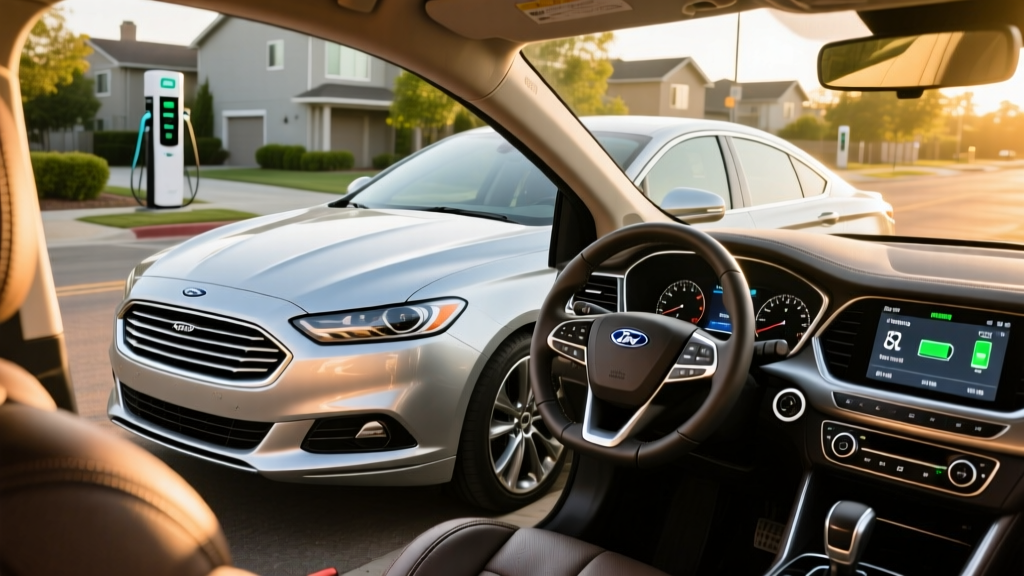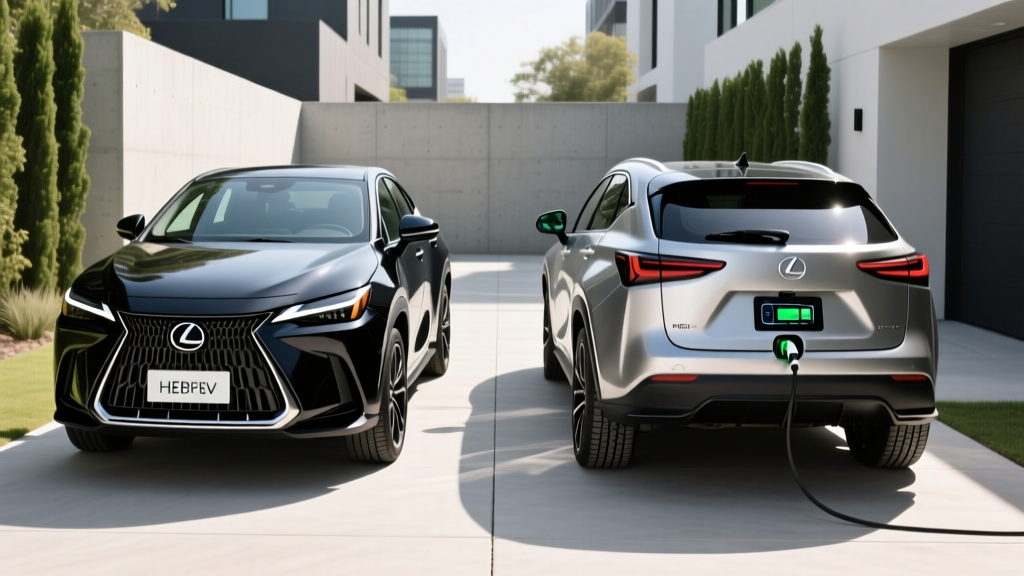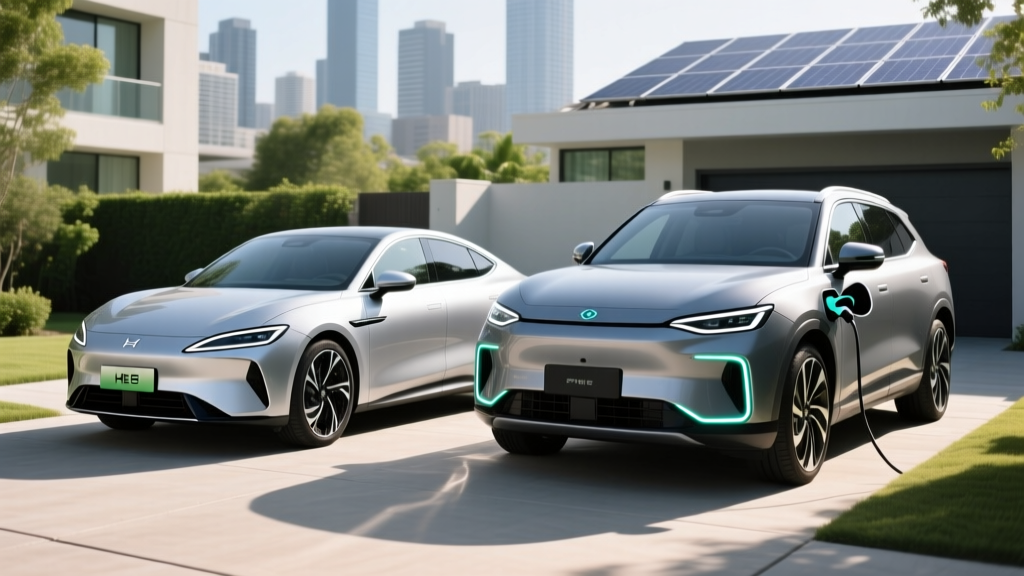
With EV prices softening, charging infrastructure still maturing, and gas prices unpredictable, the question many buyers keep asking is straightforward: is it worth it to buy a hybrid car? The answer depends less on the technology and more on your daily mileage, home charging access, and how long you plan to keep the vehicle. This guide cuts through the marketing to give you exact MPG figures, battery costs, tax-credit eligibility, and a practical framework to decide between a conventional hybrid (HEV), a plug-in hybrid (PHEV), or a full battery-electric vehicle (BEV).
HEV vs PHEV: The Critical Distinction
Before crunching numbers, you need to know which type of hybrid you're evaluating. The two categories operate very differently and serve different buyers.
| Feature | Conventional Hybrid (HEV) | Plug-in Hybrid (PHEV) |
|---|---|---|
| Battery Size | 1.0–2.5 kWh (small, self-charging) | 10–25 kWh (larger, plug-in capable) |
| Plug-in Required? | No — charges via regen & engine | Yes, for electric-only range |
| Electric-Only Range | Less than 1 mile at low speed | 25–50 miles typical (EPA) |
| Fueling | Gasoline only | Gasoline + electricity |
| Federal Tax Credit | None | Up to $7,500 (if §30D eligible) |
| Best For | No home charging, high-mileage commuters | Home chargers, short daily commutes |
A conventional hybrid like the Toyota RAV4 Hybrid uses a small battery and electric motor to assist the gas engine. You never plug it in. It captures energy through regenerative braking and the engine itself, delivering significantly better MPG than a gas-only car without any change in your fueling routine.
A plug-in hybrid like the Toyota RAV4 Prime or Jeep Wrangler 4xe has a much larger battery you can charge from a wall outlet or public charger. It drives on electricity alone for 25–50 miles, then seamlessly switches to hybrid mode once the battery depletes. Think of it as an EV for your commute and a hybrid for road trips.
How Many MPG Does a Hybrid Actually Get?
Fuel economy is where hybrids justify their purchase premium. Here are EPA figures for some of the most popular 2026-model-year hybrids, pulled from fueleconomy.gov:
| Vehicle | Type | City MPG | Highway MPG | Combined MPG | Combined HP |
|---|---|---|---|---|---|
| Toyota Prius | HEV | 57 | 56 | 57 | 196 |
| Toyota RAV4 Hybrid | HEV | 41 | 38 | 40 | 219 |
| Honda CR-V Hybrid | HEV | 43 | 36 | 40 | 204 |
| Toyota RAV4 Prime | PHEV | 40 (hybrid) | 36 (hybrid) | 38 (hybrid) / 94 MPGe | 302 |
| Jeep Wrangler 4xe | PHEV | 20 (hybrid) | 20 (hybrid) | 20 (hybrid) / 49 MPGe | 375 |
| Hyundai Tucson PHEV | PHEV | 37 (hybrid) | 35 (hybrid) | 36 (hybrid) / 80 MPGe | 261 |
Real-world MPG vs. EPA: Hybrids tend to exceed their EPA city estimates because regenerative braking is most effective in stop-and-go traffic. In our experience, a Prius easily returns 60+ MPG in urban driving. Highway mileage, however, often falls 2–5 MPG below the sticker because the electric motor contributes less at sustained high speeds. Expect the combined EPA figure to be accurate within ±3 MPG for mixed driving.
PHEV Electric-Only Range: How Far Can You Go Without Gas?
For PHEV buyers, electric-only range determines how much of your daily driving is gas-free. Here's what current models deliver on a full charge:
| PHEV Model | Battery (kWh) | EPA Electric Range | Total Range (Electric + Gas) | Level 2 Charge Time | DC Fast Charge? |
|---|---|---|---|---|---|
| Toyota RAV4 Prime | 18.1 kWh | 42 miles | ~600 miles | ~2.5 hours | No |
| Jeep Wrangler 4xe | 17.3 kWh | 21 miles | ~370 miles | ~2.5 hours | No |
| Hyundai Tucson PHEV | 13.8 kWh | 33 miles | ~440 miles | ~2 hours | No |
| Chrysler Pacifica PHEV | 16.0 kWh | 32 miles | ~520 miles | ~2 hours | No |
Key realities: Electric-only range drops 15–25% in cold weather (below 40°F) because the battery is less efficient and cabin heating draws energy. Highway-speed electric driving also reduces range versus the EPA's mixed-cycle test. If your commute is 30 miles round-trip, a RAV4 Prime will cover it on electricity most days — but a Wrangler 4xe will need the engine to kick in. Most PHEVs do not support DC fast charging; Level 2 (240V) overnight charging at home is the standard refueling method.
Powertrain Performance: Hybrids Aren't Slow
The outdated image of a sluggish hybrid is gone. Electric motors provide instant torque, and many hybrids now outperform their gas-only counterparts in acceleration:
- Toyota Prius: 196 combined HP, 0–60 mph in ~7.0 seconds — a dramatic improvement from prior generations
- Toyota RAV4 Prime: 302 combined HP, 0–60 mph in 5.7 seconds — the quickest RAV4 you can buy
- Jeep Wrangler 4xe: 375 combined HP, 470 lb-ft torque — more low-end grunt than the V6 gas model
- Honda CR-V Hybrid: 204 combined HP, 0–60 mph in ~7.6 seconds
Most hybrids use a continuously variable transmission (CVT) or an e-CVT power-split device, which prioritizes efficiency over sporty shift feel. If you enjoy the sensation of stepped gear changes, some PHEVs like the Jeep 4xe use a conventional 8-speed automatic, which feels more familiar.
Pricing and Tax Credit Eligibility
Here's where the math gets interesting. Conventional hybrids carry a modest price premium over gas-only models. PHEVs cost significantly more upfront but may qualify for federal tax credits that narrow the gap.
| Vehicle | Base MSRP (2026) | Federal Tax Credit | Effective Price After Credit |
|---|---|---|---|
| Toyota Prius (HEV) | ~$29,500 | None | $29,500 |
| Toyota RAV4 Hybrid (HEV) | ~$33,500 | None | $33,500 |
| Toyota RAV4 Prime (PHEV) | ~$46,000 | Up to $7,500* | ~$38,500* |
| Jeep Wrangler 4xe (PHEV) | ~$51,500 | Up to $7,500* | ~$44,000* |
| Hyundai Tucson PHEV | ~$40,500 | Up to $7,500* | ~$33,000* |
*Federal §30D tax credit rules (2026): PHEVs may qualify for up to $7,500 under IRS §30D clean vehicle rules. Eligibility depends on:
- Battery sourcing: Critical minerals and battery components must meet phased-in domestic/FtA-country thresholds
- MSRP caps: SUVs/vans/pickups must be under $80,000; sedans under $55,000
- Buyer income caps: AGI must not exceed $150K single / $300K joint
- Point-of-sale transfer: You can apply the credit at purchase to reduce the sale price
Conventional hybrids (HEVs) do not qualify for §30D. Always verify current eligibility on the IRS website or with a tax professional before purchasing — sourcing requirements tighten annually.
Battery Reliability and Replacement Costs
Hybrid battery longevity is consistently the top concern we hear from buyers. Here's what the data shows:
Hybrid Battery Warranty (Federal Minimum):
- Duration: 8 years / 100,000 miles (10 years / 150,000 miles in CARB states like California, New York, Massachusetts)
- Coverage: Defects and capacity loss below a manufacturer-defined threshold (typically 60–70% of original capacity)
- Toyota additionally covers the hybrid battery on many models for 10 years / 150,000 miles nationwide
Real-world lifespan: Modern hybrid batteries (primarily nickel-metal hydride in Toyota HEVs and lithium-ion in most PHEVs) routinely last 150,000–200,000+ miles with normal use. The Prius, now in its fifth generation, has a decades-long track record — taxi fleets have logged 300,000+ miles on original hybrid batteries. PHEV batteries face heavier cycling due to daily charge/discharge, but larger thermal management systems have kept degradation low.
Replacement cost if out of warranty:
- HEV battery (e.g., Prius, RAV4 Hybrid): $2,000–$4,000 including labor
- PHEV battery (e.g., RAV4 Prime, Wrangler 4xe): $6,000–$12,000 including labor
For context, a full BEV battery replacement runs $10,000–$20,000+. Hybrid battery replacement is a real cost but one that most owners will never face within the vehicle's typical ownership period. According to Consumer Reports reliability data, Toyota and Lexus hybrids consistently rank among the most reliable vehicles across all powertrains.
Hybrid vs PHEV vs EV: Which Fits You?
Choose a conventional hybrid (HEV) if:
- You don't have access to home or workplace charging
- You want maximum MPG with zero change to your fueling routine
- You drive 15,000+ miles/year and want low per-mile fuel costs
- You want the lowest upfront price among electrified options
- Example: Toyota Prius at 57 MPG combined saves ~$900/year vs. a 28 MPG gas car (at $3.50/gal, 15K miles/year)
Choose a plug-in hybrid (PHEV) if:
- You can install a Level 2 charger at home (a standard 120V outlet works but is slow)
- Your daily round-trip commute is under 40 miles (covering most US commutes)
- You want electric daily driving but gas flexibility for road trips
- You qualify for the §30D tax credit, narrowing the price gap
- Example: RAV4 Prime covers a 30-mile commute on $1.20 of electricity vs. $3.50 of gasoline
Choose a full EV (BEV) if:
- You have reliable home charging and your daily driving is under 250 miles
- You want the lowest fuel and maintenance cost (no oil changes, fewer moving parts)
- You want the maximum federal tax credit and state incentives
- You're comfortable planning longer road trips around DC fast-charging stops
The Math: Is a Hybrid Worth the Premium?
Let's run a simple 5-year comparison for a midsize SUV buyer driving 15,000 miles/year at $3.50/gallon and $0.14/kWh electricity:
| Vehicle | MSRP | 5-Year Fuel Cost | Tax Credit | 5-Year Net Cost |
|---|---|---|---|---|
| Gas SUV (25 MPG combined) | $32,000 | $10,500 | $0 | $42,500 |
| Toyota RAV4 Hybrid (40 MPG) | $33,500 | $6,563 | $0 | $40,063 |
| Toyota RAV4 Prime (PHEV, 80% electric miles) | $46,000 | $2,750 | -$7,500 | $41,250 |
The HEV saves ~$2,400 over gas in 5 years. The PHEV, after the tax credit, comes in close to the gas SUV's net cost while delivering electric daily driving and dramatically lower fuel spend. If gas prices rise above $4.00/gallon — a realistic scenario — both hybrids widen their advantage substantially.
Why a Hybrid Is Worth It
- Proven reliability with decades of real-world data
- 30–50% fuel savings vs. gas equivalents
- No charging infrastructure needed (HEV)
- Long battery warranties (8–10 years)
- Strong resale value, especially Toyota/Lexus
- Instant torque improves acceleration feel
Where Hybrids Fall Short
- HEVs don't qualify for federal tax credits
- PHEVs carry a $7,000–$15,000 price premium over gas models
- Highway MPG advantage is smaller than city MPG
- PHEV electric range is limited (21–42 miles typical)
- More complex powertrain = two systems to maintain
- PHEV cargo space sometimes reduced by larger battery
Frequently Asked Questions
How many MPG does a hybrid get compared to a regular gas car?
A typical hybrid delivers 40–57 MPG combined versus 22–30 MPG for a comparable gas-only vehicle. City driving shows the biggest gap — the Toyota Prius achieves 57 MPG city versus roughly 25 MPG for a similar gas compact. Highway MPG differences are smaller because regenerative braking contributes less at constant speed.
For a PHEV, how far can it go on electric only?
Current PHEVs offer 21–42 miles of EPA-rated electric-only range. The Toyota RAV4 Prime leads at 42 miles; the Jeep Wrangler 4xe provides 21 miles. Real-world electric range drops 15–25% in cold weather and at sustained highway speeds above 65 mph.
Is a hybrid reliable and what does battery replacement cost?
Hybrids, particularly from Toyota and Lexus, rank among the most reliable vehicles on the road. Hybrid batteries are warranted for 8–10 years / 100,000–150,000 miles and commonly last well beyond that. Out-of-warranty replacement runs $2,000–$4,000 for an HEV and $6,000–$12,000 for a PHEV. See IIHS and Consumer Reports for model-specific reliability scores.
Does a hybrid qualify for any tax credit?
Conventional hybrids (HEVs) do not qualify for the federal §30D clean vehicle credit. Plug-in hybrids (PHEVs) may qualify for up to $7,500, subject to battery-sourcing requirements, MSRP caps ($80K for SUVs, $55K for sedans), and buyer income limits. Some states offer additional rebates for PHEVs. Check current rules at IRS.gov.
Do I need to plug in a hybrid?
No — only plug-in hybrids (PHEVs) benefit from being plugged in. A conventional hybrid (HEV) charges its small battery entirely through regenerative braking and the gas engine. You fuel it exactly like a regular car. If you buy a PHEV and never plug it in, it still operates as a hybrid but you lose the electric-only range benefit and the fuel-cost advantage.
Hybrid vs full EV — which should I choose?
If you have home charging, drive under 250 miles daily, and want the lowest running costs, a full EV is the better long-term bet. If you lack reliable charging, frequently drive long distances, or want zero behavioral change, a hybrid (HEV or PHEV) removes the range and charging anxiety while still cutting fuel costs significantly.