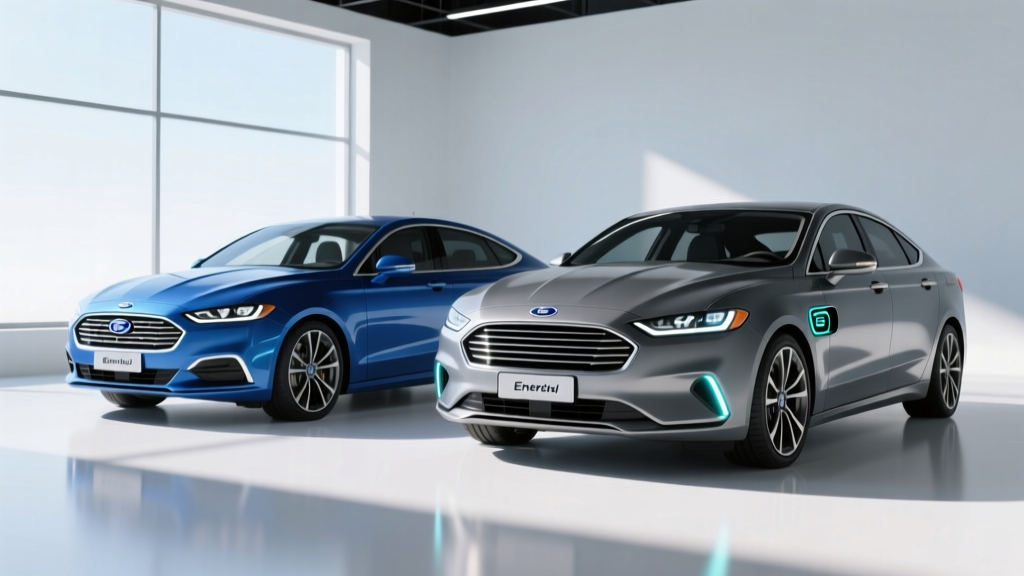
The midsize hybrid sedan segment was fiercely competitive in 2018, and Ford's answer was twofold: the conventional 2018 Fusion Hybrid (HEV) and the plug-in Fusion Energi (PHEV). Both are now strictly used-car purchases, but they remain compelling for budget-conscious buyers who want electrified efficiency without range anxiety. This guide breaks down every number that matters — EPA MPG, real-world fuel economy, battery health, warranty coverage, and whether either model still qualifies for any tax incentives in 2026.
HEV vs PHEV: Which 2018 Fusion Is Which?
Ford sold two electrified Fusions in 2018, and confusing them is the most common buyer mistake. Here is the fundamental difference:
2018 Fusion Hybrid (HEV)
A self-charging conventional hybrid. It uses regenerative braking and the gasoline engine to keep its small battery charged. You never plug it in. It operates as a seamless blend of electric motor and 2.0L engine, optimizing for fuel economy at every speed.
2018 Fusion Energi (PHEV)
A plug-in hybrid with a larger battery you charge from a wall outlet or public charger. It drives on electricity alone for a short distance, then transitions to hybrid mode. You can plug it in, but you don't have to — it functions as a regular hybrid if you never charge.
Fuel Economy: EPA MPG and Real-World Numbers
The headline reason to buy a 2018 Fusion Hybrid is fuel economy. According to EPA data on fueleconomy.gov, here is how both models break down:
| Model | City MPG | Highway MPG | Combined MPG | Combined MPGe (PHEV) |
|---|---|---|---|---|
| 2018 Fusion Hybrid (HEV) | 43 | 41 | 42 | — |
| 2018 Fusion Energi (PHEV, hybrid mode) | 43 | 41 | 42 | — |
| 2018 Fusion Energi (PHEV, EV + hybrid) | — | 97 MPGe | ||
Real-World MPG: What Owners Actually Report
Hybrids typically exceed their EPA city estimate because regenerative braking recovers more energy in stop-and-go traffic. Many 2018 Fusion Hybrid owners report 44–47 MPG on city-heavy commutes. Highway driving is a different story: at sustained 70–75 mph speeds, expect 37–39 MPG as the gasoline engine does more of the work and aerodynamic drag rises.
For the Energi in hybrid-only mode (battery depleted), real-world figures track closely with the standard Hybrid — around 40–42 MPG combined. In cold weather (below 35°F), both models lose roughly 10–15% efficiency as the engine runs more frequently for cabin heat and the battery's chemical reactions slow.
Fusion Energi Electric-Only Range and Charging
The 2018 Fusion Energi carries a 7.6 kWh lithium-ion battery pack (usable capacity approximately 5.8 kWh after the system's protective buffer). The EPA rates its electric-only range at 21 miles, which covers most short commutes and errand runs without burning a drop of gasoline.
| Spec | 2018 Fusion Energi (PHEV) |
|---|---|
| Battery Capacity | 7.6 kWh total / ~5.8 kWh usable |
| EPA Electric-Only Range | 21 miles |
| Total Range (EV + Gas) | ~610 miles |
| Level 1 Charging (120V) | ~7 hours (0–100%) |
| Level 2 Charging (240V) | ~2.5 hours (0–100%) |
| DC Fast Charging | Not supported |
| Charge Port | SAE J1772 |
A critical note: the Fusion Energi does not support DC fast charging. This is standard for PHEVs of this era — the battery is small enough that Level 2 charging fills it quickly, and the added cost/weight of DC hardware wasn't justified. If you need fast public charging, a full BEV is the better choice.
The 2018 model year was significant because Ford increased the Energi's battery capacity from the prior 6.5 kWh to 7.6 kWh, boosting electric range from 19 to 21 miles. If shopping used, verify the model year to ensure you're getting the larger pack.
Powertrain and Performance
Both the Hybrid and Energi share Ford's 2.0-liter Atkinson-cycle inline-four paired with an electric motor through a planetary gearset (eCVT). The combined system output is 188 horsepower — adequate for daily driving but not sporty.
| Spec | 2018 Fusion Hybrid | 2018 Fusion Energi |
|---|---|---|
| Engine | 2.0L I4 Atkinson | 2.0L I4 Atkinson |
| Electric Motor | 88 kW (118 hp) | 88 kW (118 hp) |
| Combined System HP | 188 hp | 188 hp |
| Transmission | eCVT | eCVT |
| 0–60 mph | ~8.4 sec | ~8.8 sec |
| Curb Weight | ~3,630 lbs | ~3,930 lbs |
| Drivetrain | FWD | FWD |
The Energi's extra 300 pounds (from the larger battery) slightly dulls acceleration and reduces trunk space — the Energi's cargo area drops to 8.2 cu ft versus the Hybrid's 12.0 cu ft, because the battery occupies space behind the rear seats. This is the primary practical trade-off for electric-only driving capability.
Battery Health, Warranty, and Replacement Cost
Ford Hybrid Battery Warranty (Original)
Ford warranted the high-voltage battery in both the 2018 Fusion Hybrid and Energi for 8 years / 100,000 miles (whichever comes first), covering defects and capacity loss below a defined threshold. In California Air Resources Board (CARB) states, coverage extends to 10 years / 150,000 miles.
What This Means for Used Buyers in 2026
An 8-year-old 2018 Fusion Hybrid is at the tail end of its original federal warranty window. If the vehicle has under 100,000 miles, some battery coverage may still apply — verify with a Ford dealer using the VIN. In CARB states (California, New York, Massachusetts, and others), you may still have coverage through 2028.
Ford's hybrid batteries have proven durable. Lithium-ion degradation in HEVs is generally mild because the system keeps the battery in a narrow state-of-charge window (roughly 40–60%), avoiding the deep cycles that accelerate wear. Most owners report minimal MPG loss even past 150,000 miles.
Battery Replacement Cost
If the high-voltage battery does fail out of warranty, a replacement for the 2018 Fusion Hybrid runs approximately $2,500–$4,000 (parts and labor at a dealership). The Energi's larger pack costs more — roughly $5,000–$7,000. Third-party hybrid battery rebuilders offer refurbished units for $1,500–$2,500. Independent hybrid specialists can often replace individual failed cells for $500–$1,200, extending battery life at a fraction of full replacement cost.
The 12V auxiliary battery (a standard lead-agunit that powers accessories) typically needs replacement every 4–5 years at $150–$250 — a routine maintenance item unrelated to the hybrid system.
Pricing, Tax Credits, and Used-Car Incentives
When new, the 2018 Fusion Hybrid started at roughly $25,995 MSRP (S trim) and the Energi at approximately $33,995 MSRP. As a used vehicle in 2026, market prices vary widely based on mileage, condition, and trim:
- 2018 Fusion Hybrid (used): $10,000–$16,000 depending on mileage (60K–120K mi range)
- 2018 Fusion Energi (used): $11,000–$17,000 depending on mileage and battery condition
Tax Credit Eligibility in 2026
The 2018 Fusion Energi no longer qualifies for the federal §30D new-vehicle tax credit — that credit applies only to new purchases, and the Energi was discontinued after 2020. The conventional Hybrid never qualified for the full $7,500 credit as a new vehicle.
However, the Used Clean Vehicle Credit (§25E) may apply. Under current IRS guidelines, qualifying used PHEVs and EVs can receive a credit of 30% of the sale price, up to $4,000, subject to these requirements:
- Sale price must be $25,000 or less (most used Fusion Energi models qualify)
- Buyer income limits: $75,000 single / $112,500 head of household / $150,000 joint
- Vehicle must be at least 2 model years old (2018 qualifies)
- Must purchase from a licensed dealer (private-party sales excluded)
- Buyer must not have claimed the used-EV credit in the prior 3 years
The conventional Fusion Hybrid does not qualify for the used clean vehicle credit — that credit requires a plug-in vehicle with at least 7 kWh of battery capacity. Only the Energi is eligible. Consult a tax professional to confirm your personal eligibility.
Reliability and Ownership Costs
The 2018 Fusion Hybrid has a strong reliability reputation. The 2.0L Atkinson-cycle engine is lightly stressed (it runs only part of the time), and the eCVT has no traditional transmission bands or clutches to wear out. NHTSA gave the Fusion a 5-Star Overall Safety Rating, and the IIHS named it a Top Safety Pick when equipped with optional forward collision warning.
Pros
- 42 MPG combined — real-world city driving often exceeds 44 MPG
- Smooth, quiet ride with strong highway stability
- Proven hybrid powertrain with low maintenance costs
- Spacious cabin with comfortable seating for five
- Energi offers 21 mi electric-only for short commutes
- Strong safety ratings (5-star NHTSA)
Cons
- Energi's trunk is severely compromised (8.2 cu ft)
- No DC fast charging on Energi
- Accelerating to highway speed feels leisurely (8.4 sec 0–60)
- Ford discontinued the Fusion after 2020 — limited dealer support long-term
- Infotainment (SYNC 3) feels dated versus modern systems
- FWD only — no AWD option for snow-belt buyers
Who Should Buy the 2018 Fusion Hybrid vs an EV or Gas Car?
Choose the 2018 Fusion Hybrid (HEV) If:
- You want maximum MPG with zero lifestyle change — no plugging in, no range planning
- Your commute is city-heavy with frequent stops (where hybrids shine brightest)
- You're on a $12K–$16K budget and want low running costs
- You drive 15,000+ miles/year and fuel savings compound quickly
Choose the 2018 Fusion Energi (PHEV) If:
- Your daily commute is under 20 miles round-trip and you can charge at home
- You want electric-only driving for errands but gas flexibility for road trips
- You qualify for the up-to-$4,000 used clean vehicle credit
- You're not ready for a full EV but want to reduce gasoline consumption
Choose a Full EV Instead If:
- You have reliable home Level 2 charging and rarely drive over 250 miles in a day
- You want near-zero maintenance (no oil changes, no engine, fewer moving parts)
- You're buying new and can access the full §30D credit ($7,500) on a modern BEV
Stick With a Gas Car If:
- You regularly tow or haul heavy loads (the Fusion Hybrid isn't rated for towing)
- You live in an extreme-cold climate where hybrid efficiency drops significantly
- You drive fewer than 8,000 miles/year — the fuel savings won't offset any price premium
Frequently Asked Questions
How many MPG does the 2018 Fusion Hybrid get?
The EPA rates the 2018 Fusion Hybrid at 43 city / 41 highway / 42 combined MPG. In real-world city driving, many owners see 44–47 MPG thanks to regenerative braking. Highway-only driving at 70+ mph typically drops to 37–39 MPG.
How far can the 2018 Fusion Energi go on electric only?
The EPA rates the Fusion Energi at 21 miles of electric-only range on a full charge. Real-world results vary from 18–23 miles depending on temperature, terrain, and driving style. After the battery depletes, it operates as a conventional hybrid at 42 MPG combined.
Is the 2018 Fusion Hybrid reliable, and what does a battery replacement cost?
Yes — the Fusion Hybrid powertrain is among Ford's most reliable. The hybrid battery is warranted for 8 years/100,000 miles (10 years/150,000 in CARB states). Out-of-warranty replacement costs $2,500–$4,000 for the Hybrid and $5,000–$7,000 for the Energi, though refurbished options and cell-level repairs can reduce this to $500–$2,500.
Does the 2018 Fusion Hybrid or Energi qualify for a tax credit?
Neither qualifies for the new-vehicle §30D credit. However, the Fusion Energi may qualify for the Used Clean Vehicle Credit (§25E) — up to $4,000 or 30% of the sale price — if you meet income limits ($75K single / $150K joint), buy from a licensed dealer, and the sale price is under $25,000. The conventional Hybrid does not qualify for any federal credit.
Do I need to plug in the Fusion Hybrid?
No. The conventional Fusion Hybrid (HEV) charges its battery through regenerative braking and the gasoline engine. You never plug it in. Only the Fusion Energi (PHEV) benefits from plug-in charging — and even then, it functions as a regular hybrid if you skip charging.
How does the Fusion Hybrid compare to a Toyota Camry Hybrid?
The 2018 Camry Hybrid achieves 52 MPG combined (LE trim) versus the Fusion's 42 MPG — a significant 10 MPG advantage. However, the Fusion offers a more refined ride, a quieter cabin at highway speeds, and the Energi PHEV option that Toyota didn't offer in the Camry until the Prius Prime. If pure MPG is your priority, the Camry Hybrid wins. If you want plug-in capability in a midsize sedan, the Fusion Energi was one of few options in its class.