Quick Verdict: The 2018 Camry Hybrid Still Delivers Class-Leading MPG
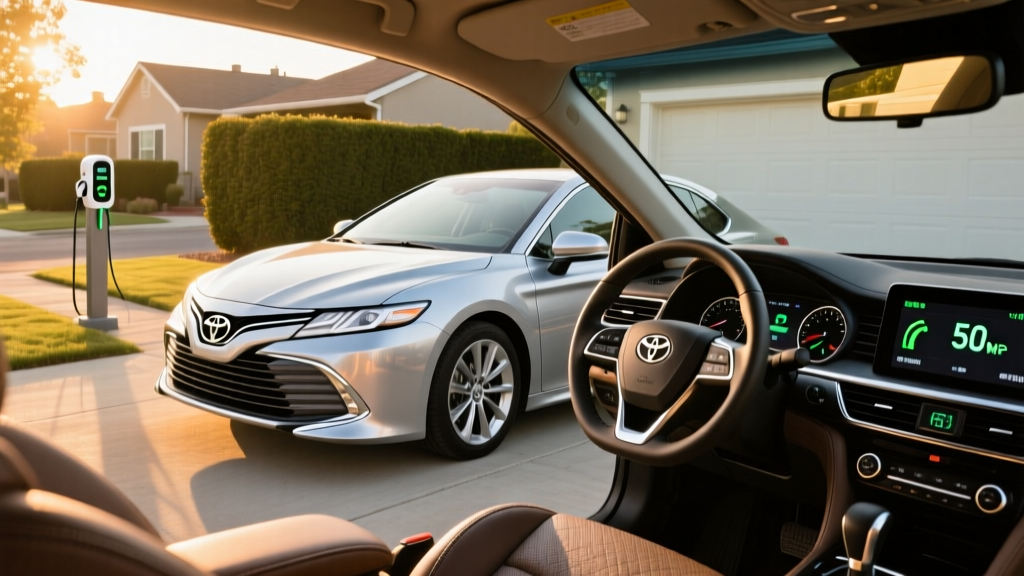
The 2018 Toyota Camry Hybrid remains one of the most fuel-efficient midsize sedans you can buy on the used market in 2026. With an EPA-estimated 51 mpg city, 53 mpg highway, and 52 mpg combined in its LE trim, it outperforms nearly every competitor in its class — including newer models. For buyers who want maximum fuel savings without plugging in, this conventional hybrid (HEV) is a compelling, proven choice. But how does that EPA sticker translate to real-world driving, and what should you know about the hybrid battery before buying a used 2018 Camry Hybrid today?
2018 Camry Hybrid MPG: EPA Numbers by Trim
The 2018 Camry Hybrid comes in three trims, and the EPA fuel economy varies slightly between them due to wheel size and weight differences. Here's the official breakdown from fueleconomy.gov:
| Trim | City MPG | Highway MPG | Combined MPG | Fuel Tank (gal) | Total Range (mi) |
|---|---|---|---|---|---|
| Hybrid LE | 51 | 53 | 52 | 13.2 | ~686 |
| Hybrid SE | 44 | 47 | 46 | 13.2 | ~607 |
| Hybrid XLE | 44 | 47 | 46 | 13.2 | ~607 |
Why the LE gets more: The LE trim rides on lighter 16-inch steel wheels with low-rolling-resistance tires and lacks some of the heavier features standard on the SE and XLE (leather, larger infotainment, sport-tuned suspension). That ~6 mpg gap is meaningful — roughly $150–$200 per year in fuel savings at 15,000 miles driven annually.
Real-World MPG: What Owners Actually Report
EPA numbers are a starting point. Toyota's hybrid synergy drive system excels in stop-and-go city traffic, where the electric motor handles low-speed propulsion and regenerative braking recaptures energy constantly. Here's what real-world data shows:
- City driving (LE): Owners frequently report 48–55 mpg. In warm weather with moderate traffic, exceeding the 51 mpg EPA city estimate is common. The hybrid system is at its best here.
- Highway driving (LE): Expect 45–52 mpg. At sustained 70–80 mph, the gas engine does most of the work. The 53 mpg EPA highway figure is achievable at 60–65 mph; push it to 80 mph and you'll see the low-to-mid 40s.
- Cold weather penalty: In sub-40°F conditions, expect a 5–10% drop. The engine runs more often to heat the cabin and keep the catalytic converter warm, reducing electric-motor assist time. Winter MPG of 42–47 (LE) is typical in northern climates.
- SE/XLE real-world: Owners report 40–48 mpg combined. The larger 18-inch wheels and stickier tires on the SE increase rolling resistance noticeably.
Powertrain Specs: How the Hybrid System Works
The 2018 Camry Hybrid uses Toyota's fourth-generation Hybrid Synergy Drive. Here's the complete powertrain breakdown:
| Specification | Detail |
|---|---|
| Gas Engine | 2.5L 4-cylinder Dynamic Force (A25A-FXS), Atkinson cycle |
| Engine Power | 176 hp @ 5,700 rpm / 163 lb-ft torque |
| Electric Motor | Permanent-magnet synchronous (eCVT integrated) |
| Motor Power | 118 hp / 149 lb-ft torque |
| Net Combined Output | 208 hp |
| Transmission | eCVT (planetary gearset, not a belt-driven CVT) |
| Hybrid Battery | Nickel-metal hydride (NiMH), ~1.6 kWh (self-charging, not plug-in) |
| Drivetrain | Front-wheel drive |
| 0–60 mph | ~7.5 seconds |
| Curb Weight | 3,472–3,572 lbs (varies by trim) |
Important distinction: The 208 hp combined figure is not simply 176 + 118. The gas engine and electric motor peak at different RPMs, so net system output is lower than the sum. Still, 208 hp is ample for highway merging and passing — this is no sluggish eco-box. The eCVT uses a planetary gearset to seamlessly blend power sources, and it avoids the rubber-band feel of traditional belt-driven CVTs.
Hybrid Battery Warranty, Lifespan, and Replacement Cost
The hybrid battery is the single biggest concern for used hybrid buyers. Here's what you need to know:
Real-world battery longevity: Toyota's NiMH hybrid batteries have an excellent track record. Data from fleet operators and long-term owners shows that Camry and Prius hybrid batteries routinely last 150,000–200,000+ miles with gradual capacity loss. Unlike full EV batteries, the hybrid system keeps the NiMH pack in a narrow state-of-charge window (roughly 40–80%), which dramatically reduces degradation. You're not cycling the battery from full to empty — the car's computer prevents that.
Replacement cost if the battery fails out of warranty:
- New OEM Toyota battery: $2,500–$4,000 installed at a dealership
- Refurbished/remanufactured battery: $1,000–$2,000 installed at an independent hybrid specialist
- Individual module replacement: Some shops can replace just the failed cells within the pack for $500–$1,000, though this is a temporary fix if other modules are aging
Pro tip for used buyers: Before purchasing, have a hybrid-qualified mechanic run a hybrid battery health check using Toyota's Techstream diagnostic tool or an OBD-II scanner with hybrid battery monitoring (like Dr. Prius app with a compatible dongle). This shows individual module voltages and internal resistance — the real indicators of battery health.
2018 Camry Hybrid Pricing and Tax Credit Eligibility
The 2018 Camry Hybrid is only available on the used market in 2026. Here's what pricing looks like:
| Trim | Original MSRP | Used Price Range (2026) |
|---|---|---|
| Hybrid LE | $27,800 | $16,000–$21,000 |
| Hybrid SE | $29,200 | $17,000–$22,000 |
| Hybrid XLE | $32,250 | $18,500–$24,000 |
Tax credit situation: The 2018 Camry Hybrid does not qualify for the federal §30D new clean vehicle credit (that credit is for new EVs and PHEVs only, and conventional HEVs have never qualified). However, if you purchase one from a dealer for under $25,000, it may qualify for the Used Clean Vehicle Credit under IRS §25E — but only if it's classified as a qualified plug-in electric or fuel cell vehicle. Conventional hybrids like the Camry Hybrid do not meet the §25E definition. Check current IRS rules to confirm, as eligibility criteria are specific. In short: expect no federal tax credit for this vehicle.
State incentives: A handful of states offer rebates or HOV lane access for hybrids, but most have shifted incentives toward full EVs and PHEVs. Check your state's energy office or DMV for any remaining hybrid-specific perks.
Camry Hybrid vs PHEV vs Full EV: Which Is Right for You?
Choose the Camry Hybrid (HEV) If:
- You have no access to home or workplace charging
- You want maximum MPG with zero behavior change
- Your budget is $16K–$24K (used market)
- You drive 15,000+ miles/year and want low fuel cost
- You want Toyota's proven hybrid reliability
Choose a PHEV (e.g., Prius Prime) If:
- You can charge at home (Level 1 or 2)
- Most daily driving is under 40 miles (electric-only covers it)
- You want some EV driving without range anxiety
- You qualify for the §30D credit on a new PHEV
- You take occasional long road trips
Choose a Full EV (e.g., Model 3, Ioniq 6) If:
- You have reliable home Level 2 charging
- You want zero tailpipe emissions and lowest fuel cost
- You can access the $7,500 federal credit on a new EV
- Your daily driving is predictable and within range
- You want minimal maintenance (no oil, spark plugs, etc.)
The 2018 Camry Hybrid's sweet spot is buyers who want EV-like fuel savings in the city without any charging infrastructure. If you live in an apartment without charging access or frequently drive 400+ mile routes through rural areas with sparse charging, the Camry Hybrid eliminates every pain point a full EV might create.
Pros and Cons of the 2018 Camry Hybrid
Pros
- Best-in-class 52 mpg combined (LE trim)
- 208 hp — peppy for a hybrid sedan
- No plug-in required; zero behavior change
- Proven Toyota hybrid reliability (150K–200K+ mi battery life)
- 686-mile total range — fewer fill-ups
- Spacious cabin, large trunk (15.1 cu ft)
- Strong resale value; affordable on used market
- Toyota Safety Sense-P standard (AEB, lane keep, adaptive cruise)
Cons
- SE/XLE trims drop to 46 mpg combined (still good, but notably less)
- No electric-only driving mode (not a PHEV)
- No all-wheel-drive option (AWD-e came in 2020+)
- NiMH battery is older tech vs lithium-ion in newer hybrids
- Infotainment feels dated by 2026 standards (no wireless CarPlay)
- No federal tax credit available
- 8-year battery warranty has expired for most 2018 models
Frequently Asked Questions
How many MPG does the 2018 Camry Hybrid actually get?
The EPA rates the LE trim at 51 city / 53 highway / 52 combined. The SE and XLE trims are rated at 44 city / 47 highway / 46 combined. In real-world driving, many owners match or slightly exceed EPA city numbers in warm weather, while highway driving at 75+ mph and cold weather will drop figures by 5–10%. Expect 45–52 mpg combined in typical mixed driving for the LE.
Does the 2018 Camry Hybrid need to be plugged in?
No. This is a conventional hybrid (HEV), not a plug-in hybrid. The 1.6 kWh NiMH battery charges itself through regenerative braking and the gas engine. You simply fill it with gas like any other car. There is no charging port, no electric-only range, and no need for any electrical infrastructure.
Is the 2018 Camry Hybrid reliable, and what does a battery replacement cost?
Yes — the 2018 Camry Hybrid has strong reliability ratings. Toyota's hybrid system is one of the most proven in the industry, with millions of units on the road. The hybrid battery typically lasts 150,000–200,000+ miles. If replacement is needed out of warranty, expect $2,500–$4,000 for a new OEM battery at a dealer, or $1,000–$2,000 for a refurbished unit at an independent shop. The eCVT transmission is a simple planetary gearset with no belts or clutches to wear out, contributing to long-term durability.
Does the 2018 Camry Hybrid qualify for any tax credit?
No federal tax credit is available. The §30D new clean vehicle credit applies only to new EVs and qualifying PHEVs, and the §25E used clean vehicle credit requires a plug-in electric or fuel cell vehicle. Conventional hybrids have never qualified for federal purchase credits. Some states may have offered incentives when the car was new, but most have expired. Check your state's current programs for any remaining hybrid benefits.
How does the 2018 Camry Hybrid compare to the 2026 Camry Hybrid?
The current-generation Camry Hybrid (2025+ redesign) uses a fifth-generation hybrid system with a lithium-ion battery, offers available AWD-e, and achieves up to 53 mpg combined. It also features updated infotainment with wireless Apple CarPlay and Android Auto. However, a new 2026 Camry Hybrid LE starts around $30,000+, while a used 2018 LE can be had for $16,000–$21,000 — a substantial savings for only a slight MPG difference. If you prioritize value and proven tech, the 2018 is a smart buy. If you want the latest tech, AWD, and a full warranty, the new model is worth the premium.
What's the annual fuel cost for the 2018 Camry Hybrid?
At 15,000 miles per year, 52 mpg combined, and $3.20 per gallon (2026 national average for regular unleaded), annual fuel cost is approximately $923. Compare that to a comparable 2018 Camry gas model (29 mpg combined) at roughly $1,655 per year — a savings of about $730 annually, or $3,650 over five years. That nearly covers the premium you'd have paid for the hybrid when new.