Quick Verdict: The 2017 Lexus Hybrid Hatchback Still Holds Up
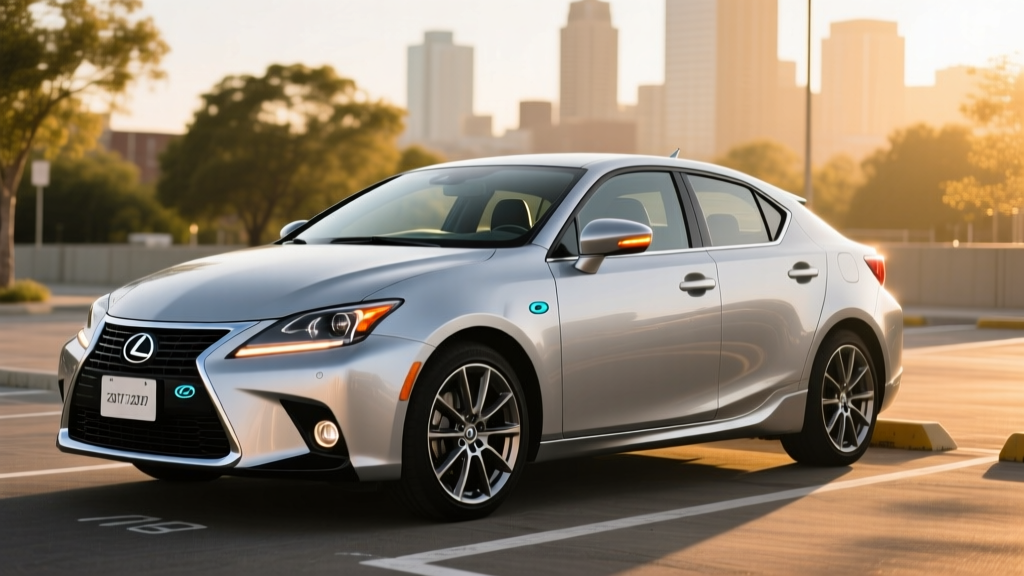
The 2017 Lexus CT 200h occupies a specific niche in the used-hybrid market: a premium compact hatchback that sips fuel, carries the Lexus reliability reputation, and costs far less on the pre-owned market than a comparable Toyota Prius Prime or newer hybrid. For buyers searching for a "2017 Lexus hybrid hatchback," the CT 200h is the only model that fits — it was the sole hatchback in the Lexus lineup that year and the final model year before Lexus discontinued it in the United States.
Underneath the Lexus badge sits the proven fourth-generation Toyota Prius powertrain, retuned for a more engaging (if still modest) driving experience. The result is a vehicle that delivers 40 MPG combined on the EPA cycle, requires no plug-in charging, and benefits from one of the most durable hybrid battery packs ever put into mass production.
This guide covers everything a prospective used buyer or current owner needs to know: exact fuel economy figures, powertrain specifications, battery longevity data, real-world MPG expectations, tax-credit eligibility (or lack thereof), and how the CT 200h stacks up against modern PHEVs and full EVs in 2026.
HEV vs. PHEV: What the CT 200h Actually Is
Conventional Hybrid (HEV) — This is the CT 200h: The gasoline engine and electric motor work together, with the battery recharged solely through regenerative braking and the engine. You never plug it in. The battery is small (1.3 kWh usable), and electric-only driving is limited to brief low-speed maneuvers under ~25 mph for roughly 1 mile.
Plug-in Hybrid (PHEV) — The CT 200h is NOT this: A PHEV like the Toyota Prius Prime has a larger battery (13.6 kWh in current models), can be plugged into a wall outlet or public charger, and delivers 25–44 miles of true electric-only range before the gas engine kicks in. Lexus did not offer a plug-in version of the CT in the U.S. market.
This distinction matters for buyers cross-shopping used hybrids. If you want electric-only commuting without using gasoline, the CT 200h cannot do that in any meaningful way. If you want a car that never requires plugging in yet still returns 40+ MPG, the CT 200h is purpose-built for that role.
Fuel Economy: EPA Numbers and Real-World MPG
The EPA rates the 2017 Lexus CT 200h as follows, per fueleconomy.gov:
| Metric | Value |
|---|---|
| City MPG | 43 MPG |
| Highway MPG | 40 MPG |
| Combined MPG | 42 MPG |
| Fuel Tank Capacity | 10.6 gallons |
| Total Range (est.) | ~445 miles |
| Annual Fuel Cost (EPA est.) | ~$1,250 (at $3.50/gal) |
Real-World MPG vs. EPA Sticker: The CT 200h's hybrid system rewards city and stop-and-go driving, where regenerative braking constantly replenishes the small battery. Owners consistently report 42–48 MPG in mixed city driving, often exceeding the EPA city figure. Highway driving at 75+ mph drops economy to 36–39 MPG because the Atkinson-cycle 1.8L engine operates less efficiently under sustained high-speed load. In cold weather (below 32°F), expect a 5–10% reduction as the engine runs more frequently to provide cabin heat.
For context, a 2026 Toyota Prius LE achieves 57 MPG combined — a significant generational improvement. But the CT 200h's 42 MPG combined still beats most non-hybrid compact cars by 10–15 MPG and remains competitive with many current-model conventional hybrids.
Powertrain Specs: Engine, Motor, and Combined Output
| Component | Specification |
|---|---|
| Gasoline Engine | 1.8L 4-cylinder Atkinson-cycle (2ZR-FXE) |
| Engine Horsepower | 98 HP @ 5,200 RPM |
| Engine Torque | 105 lb-ft @ 4,000 RPM |
| Electric Motor | Permanent-magnet synchronous (front axle) |
| Motor Output | 80 HP / 153 lb-ft |
| Combined Net Horsepower | 134 HP |
| Transmission | ECVT (planetary gearset, not a belt CVT) |
| Drivetrain | Front-wheel drive |
| 0–60 MPH | ~9.8 seconds |
| Hybrid Battery (NiMH) | 1.3 kWh usable, 201.6V nominal |
| Drive Modes | EV / Eco / Normal / Sport |
The 134 HP combined output makes the CT 200h adequate for commuting and highway merging but not quick. The 9.8-second 0–60 time trails the current Prius (7.2 seconds) and feels noticeably leisurely when entering fast-moving freeway traffic. Sport mode sharpens throttle response and steering weight but cannot overcome the physics of a 3,200-lb car with modest power.
The ECVT (electronically controlled continuously variable transmission) uses a planetary gearset rather than the rubber-belt design found in some competitors. This is significant for long-term reliability — Toyota/Lexus planetary ECVTs have proven nearly bulletproof, with no belt to wear or fluid to change at short intervals.
Battery Longevity, Warranty, and Replacement Cost
Original Hybrid Battery Warranty: 8 years / 100,000 miles (10 years / 150,000 miles in California and states adopting CARB emissions standards). This covers capacity loss below a defined threshold and defects.
2026 Status: The original 8-year/100k federal warranty has expired for all 2017 models. However, 2017 CT 200h examples registered in CARB states (CA, CT, ME, MA, NJ, NY, OR, RI, VT, WA, and others) may still carry residual coverage under the 10-year/150k provision if under 150,000 miles.
The CT 200h uses a nickel-metal hydride (NiMH) battery pack manufactured by Panasonic. This is the same chemistry and supplier used in millions of Prius vehicles. Real-world longevity data is extensive:
- Typical lifespan: 150,000–200,000+ miles with normal use. Many Prius-family NiMH packs exceed 200,000 miles.
- Degradation pattern: NiMH batteries lose capacity gradually rather than failing suddenly. You'll notice slightly reduced electric-only assist and marginally lower MPG before a failure code appears.
- Common failure trigger: Individual cell imbalance within the pack, often preceded by a P0A80 or P0A7F diagnostic code.
| Option | Cost Range | Warranty |
|---|---|---|
| New OEM Lexus pack (dealer) | $3,500–$4,500 (parts + labor) | 3 yr / 36,000 mi |
| Refurbished/reconditioned pack | $1,200–$2,200 (parts + labor) | 1–3 yr (varies by shop) |
| Individual cell/module replacement | $400–$900 | Limited / none |
| Used pack from salvage yard | $600–$1,200 (parts + labor) | 30–90 days |
Because the CT 200h shares its hybrid battery architecture with the Prius, replacement options are abundant and relatively affordable compared to full EV battery replacements ($8,000–$20,000+). Independent hybrid specialists in most metro areas can perform refurbished-pack swaps in 2–3 hours.
Used Pricing and Tax Credit Eligibility
The 2017 Lexus CT 200h was originally priced at $31,250 MSRP (base) to approximately $38,000 fully loaded with the Premium package, Navigation, and Mark Levinson audio.
As of early 2026, used-market pricing for the 2017 CT 200h typically falls in these ranges:
- 60,000–80,000 miles, good condition: $14,000–$17,000
- 80,000–120,000 miles, good condition: $11,000–$14,000
- 120,000+ miles or salvage title: $7,000–$10,000
Federal Tax Credit Status: The 2017 CT 200h does not qualify for the federal §30D new clean vehicle credit — that credit applies only to new plug-in vehicles (PHEVs and BEVs) meeting battery-sourcing and MSRP requirements. Conventional hybrids (HEVs) have never qualified for §30D.
The Used Clean Vehicle Credit (up to $4,000 or 30% of sale price, whichever is less) under §25E also does not apply, because the CT 200h is a conventional hybrid without plug-in capability. Per IRS guidelines, the used-vehicle credit requires the vehicle to have a battery capacity of at least 7 kWh and be a plug-in electric vehicle.
State incentives: A handful of states have offered rebates for conventional hybrids in the past, but most have shifted focus exclusively to PHEVs and BEVs. Check your state's energy office for current programs.
Who Should Choose the CT 200h vs. a PHEV or Full EV
Choose the 2017 Lexus CT 200h (HEV) if:
- You cannot charge at home (apartment, street parking, no garage outlet)
- You want zero behavior change — drive it exactly like a gas car, just fill up less
- Your budget is $10,000–$17,000 and you want premium-badge build quality
- You drive 10,000–15,000 miles/year in mixed city/highway conditions
- You prioritize long-term reliability and low maintenance costs over acceleration
Choose a used PHEV (e.g., 2019+ Prius Prime, 2020+ RAV4 Prime) if:
- You have home Level 1 or Level 2 charging access
- Your daily commute is under 25–44 miles (covering most trips on electricity alone)
- You want to reduce gasoline consumption to near zero on weekdays
Choose a full EV (e.g., used Chevrolet Bolt, Hyundai Kona Electric, Tesla Model 3) if:
- You have reliable home Level 2 charging
- You want the lowest per-mile fuel cost (~$0.03–$0.05/mi on home electricity vs. ~$0.08–$0.10/mi for the CT 200h)
- You want stronger acceleration and a quieter, smoother powertrain
- Your typical daily driving is under 200 miles and you can plan road-trip charging stops
Pros
- 42 MPG combined EPA; 44–48 MPG real-world city
- Proven Prius-derived powertrain with massive service network
- Lexus build quality, quiet cabin, premium materials
- No plug-in required — zero infrastructure dependency
- NiMH battery replacement widely available for $1,200–$2,200
- Strong IIHS safety ratings (Top Safety Pick for 2017)
- Hatchback practicality: 14.3 cu ft cargo (37.4 cu ft with seats folded)
Cons
- 9.8-second 0–60 time — noticeably slow for highway merging
- No plug-in or electric-only range to speak of
- Outdated infotainment (no Apple CarPlay or Android Auto in 2017)
- Rear seat space is tight for adults over 5'10"
- No federal tax credit eligibility (new or used)
- Discontinued after 2017 — limited dealer familiarity as it ages
- Firm ride on 17-inch wheels compared to standard Prius
Reliability Track Record and What to Inspect
The 2017 CT 200h inherits one of the strongest reliability records in the automotive industry. The 2ZR-FXE engine and Toyota hybrid synergy drive system have been in continuous production since 2009 with incremental refinements. Key reliability notes:
- Engine: The Atkinson-cycle 1.8L is under-stressed and rarely experiences internal failures. Timing chain (not belt) requires no scheduled replacement.
- ECVT: Planetary gearset has no wear items analogous to a conventional automatic's clutch packs or a belt-CVT's push belt. Fluid changes every 60,000 miles are recommended but often neglected without consequence.
- Hybrid battery: As noted above, NiMH packs commonly last 150,000–200,000+ miles. Heat is the primary enemy — vehicles in Arizona, Texas, and Southern California see slightly shorter battery life.
- Brakes: Regenerative braking significantly reduces pad wear. Original brake pads often last 80,000–100,000 miles.
- 12V auxiliary battery: Located in the rear cargo area, this conventional 12V battery typically lasts 4–6 years and costs ~$200 to replace. A dead 12V battery will prevent the car from starting even if the hybrid battery is full.
Pre-purchase inspection checklist for a used 2017 CT 200h:
- Request a hybrid battery health check (many dealers and hybrid specialists can read State of Health via OBD-II)
- Verify no stored hybrid-system diagnostic codes (P0A80, P0A7F, P0A09)
- Check for inverter coolant pump operation (listen for pump hum when car is READY)
- Inspect brake actuator recall status — some 2016–2017 Prius-family vehicles had brake-booster recalls per NHTSA
- Confirm maintenance records for engine coolant and inverter coolant changes
Frequently Asked Questions
How many MPG does the 2017 Lexus CT 200h hybrid hatchback get?
The EPA rates it at 43 city / 40 highway / 42 combined MPG. In real-world city and suburban driving, owners commonly report 44–48 MPG thanks to frequent regenerative braking. Sustained highway driving above 70 mph drops economy to 36–39 MPG.
Can the 2017 CT 200h drive on electric power only?
Only in very limited circumstances. The EV mode allows roughly 0.5–1 mile at speeds under 25 mph on a fully charged hybrid battery. This is useful for creeping through a parking garage or residential street, but it is not a viable electric-commute vehicle. There is no plug and no meaningful electric-only range.
Is the 2017 Lexus CT 200h reliable, and what does a hybrid battery replacement cost?
Yes — the CT 200h shares the Prius powertrain, which is among the most reliable mass-produced drivetrains ever built. NiMH hybrid battery packs typically last 150,000–200,000+ miles. If replacement is needed, a refurbished pack costs $1,200–$2,200 installed; a new OEM pack runs $3,500–$4,500 at a Lexus dealer.
Does the 2017 Lexus CT 200h qualify for any federal tax credit?
No. The CT 200h is a conventional hybrid (HEV), not a plug-in vehicle. Neither the §30D new clean vehicle credit nor the §25E used clean vehicle credit applies to conventional hybrids. The used clean vehicle credit requires a plug-in vehicle with at least 7 kWh of battery capacity. Check your state's energy office for any local hybrid incentives, though most states have discontinued them.
How does the CT 200h compare to a 2026 Toyota Prius?
The current-generation Prius delivers 57 MPG combined (vs. 42), 194 HP (vs. 134), and 0–60 in 7.2 seconds (vs. 9.8). It also offers available all-wheel drive, modern infotainment with wireless CarPlay, and Toyota Safety Sense 3.0. However, a new 2026 Prius starts around $29,000, while a used 2017 CT 200h runs $11,000–$17,000 with Lexus-grade interior materials. The value proposition depends on your budget and how much you value premium cabin quality versus cutting-edge efficiency.
Does the CT 200h require premium gasoline?
Lexus recommends premium unleaded (91 octane or higher) for the 2017 CT 200h. Using regular (87 octane) will not damage the engine — the ECU retards timing to compensate — but you may lose a small amount of power and fuel efficiency. Most owners report negligible real-world difference using 87 octane.
What is the cargo capacity of the CT 200h hatchback?
The CT 200h offers 14.3 cubic feet of cargo space behind the rear seats and 37.4 cubic feet with the 60/40 rear seats folded. The hatchback opening is relatively narrow compared to a Prius or a compact SUV, which limits its ability to swallow large items like bicycles or furniture.
Final Assessment: Is the 2017 Lexus Hybrid Hatchback Worth It in 2026?
The 2017 Lexus CT 200h is a rational used-car buy for a specific buyer: someone who wants a fuel-efficient, no-plug-required daily driver with premium build quality and a proven reliability record, all for under $17,000. Its 42 MPG combined remains competitive, its NiMH battery is cheap and easy to replace, and its Lexus interior is a step above any Prius.
The trade-offs are real. It is slow by modern standards, the infotainment is dated, and it offers no electric-only capability or tax-credit benefit. If you have home charging access and can stretch your budget to $22,000–$30,000, a used PHEV like the RAV4 Prime or a full EV like the Chevrolet Bolt will deliver lower operating costs and a more modern driving experience.
But for apartment dwellers, high-mile commuters who want simplicity, or anyone who values the "fill it up at any gas station and never think about it" lifestyle, the 2017 CT 200h remains a compelling and underappreciated option in the used-hybrid market. It is, in many ways, the most affordable entry into the Lexus ownership experience — and one of the lowest-risk used hybrid purchases available.