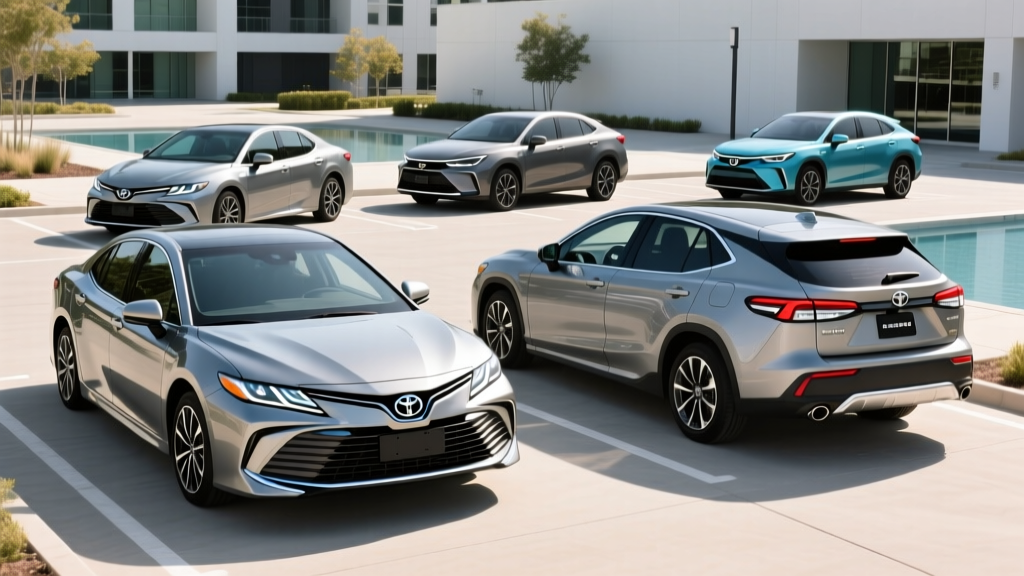
Toyota sells more hybrid vehicles than any other automaker in the United States, and the 2026 lineup is the broadest yet. From the redesigned Prius to the RAV4 Plug-In Hybrid and the newly hybrid-only Camry sedan, Toyota now offers electrified powertrains across nearly every body style. But with conventional hybrids (HEVs) and plug-in hybrids (PHEVs) sitting side by side on the same showroom floor, buyers need a clear map of what each delivers — and what it costs to own.
This guide covers every current Toyota hybrid and PHEV with exact EPA fuel economy, powertrain output, battery warranty terms, real-world efficiency observations, and federal tax credit eligibility under current IRS §30D rules. Whether you are cross-shopping a Prius against a RAV4 Hybrid or deciding between a plug-in and a conventional setup, the data below gives you the numbers to decide.
HEV vs PHEV: How Toyota's Two Hybrid Types Differ
Before diving into individual models, the single most important distinction is between a conventional hybrid (HEV) and a plug-in hybrid (PHEV). They share some hardware but serve very different use cases.
| Feature | Conventional Hybrid (HEV) | Plug-In Hybrid (PHEV) |
|---|---|---|
| Plug-in charging required? | No — refuels with gasoline only | Yes — plug in to access electric-only range |
| Battery size | ~0.9–1.6 kWh (small buffer) | ~13.6–18.1 kWh usable |
| Electric-only driving | Very limited (under 1 mile at low speed) | 25–42 miles EPA-rated |
| Primary fuel | Gasoline (motor assists efficiency) | Electricity first, then gasoline |
| Federal tax credit (§30D) | Not eligible | Up to $7,500 if eligibility criteria met |
| Best for | Drivers without home/workplace charging | Drivers who can charge daily and want EV-like commutes |
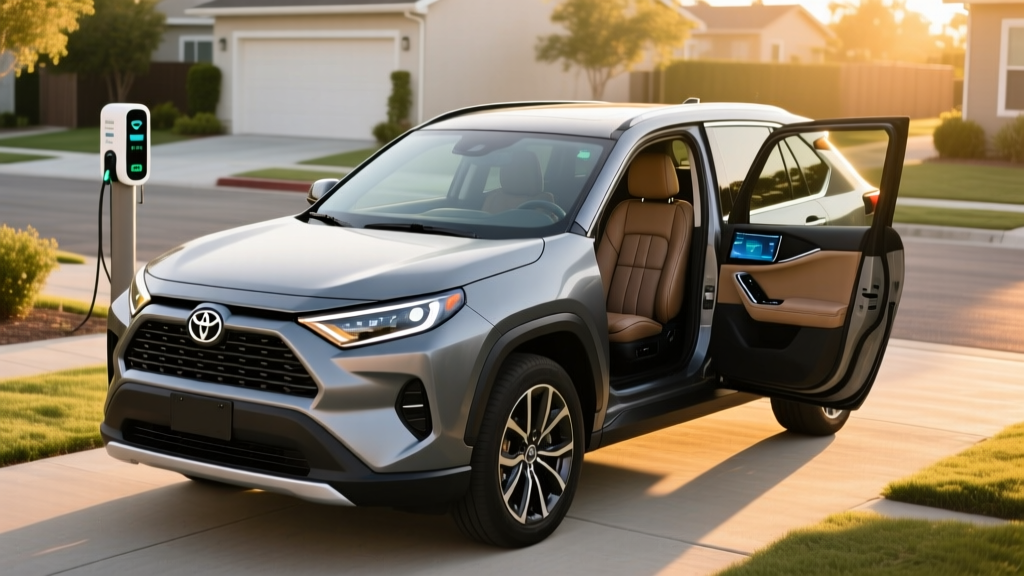
A conventional Toyota HEV like the Camry Hybrid uses regenerative braking and the gasoline engine to keep a small battery charged. You never plug it in. A Toyota PHEV like the RAV4 Prime has a much larger battery that you charge from a wall outlet or public station, giving you a meaningful electric-only commute before the gasoline engine takes over.
2026 Toyota Hybrid Lineup: EPA MPG and Powertrain Specs
The table below covers every Toyota hybrid currently on sale for the 2026 model year. Figures are drawn from fueleconomy.gov (EPA) and Toyota's official specifications.
| Model | Type | Combined HP | EPA City | EPA Hwy | EPA Combined | PHEV EV Range | Base MSRP |
|---|---|---|---|---|---|---|---|
| Prius (LE) | HEV | 196 hp | 57 mpg | 56 mpg | 57 mpg | — | $29,445 |
| Prius Prime (SE) | PHEV | 220 hp | 52 mpg* | 48 mpg* | 50 mpg* | 44 mi | $34,595 |
| Camry Hybrid (LE) | HEV | 225 hp | 53 mpg | 50 mpg | 51 mpg | — | $30,490 |
| Corolla Hybrid (LE) | HEV | 138 hp | 53 mpg | 46 mpg | 50 mpg | — | $25,295 |
| Crown (XLE) | HEV | 236 hp | 42 mpg | 41 mpg | 41 mpg | — | $42,390 |
| RAV4 Hybrid (LE) | HEV | 219 hp | 41 mpg | 38 mpg | 39 mpg | — | $33,425 |
| RAV4 Plug-In Hybrid (SE) | PHEV | 302 hp | 40 mpg* | 36 mpg* | 38 mpg* | 42 mi | $45,250 |
| Highlander Hybrid (LE) | HEV | 243 hp | 36 mpg | 35 mpg | 35 mpg | — | $42,820 |
| Grand Highlander Hybrid | HEV | 245 hp | 36 mpg | 32 mpg | 34 mpg | — | $47,170 |
| Venza (LE) | HEV | 219 hp | 40 mpg | 37 mpg | 39 mpg | — | $36,520 |
| Sienna (LE) | HEV | 245 hp | 36 mpg | 36 mpg | 36 mpg | — | $39,485 |
| Tundra i-FORCE MAX | HEV | 437 hp | 20 mpg | 24 mpg | 22 mpg | — | $59,055 |
*MPG figures for PHEVs represent charge-sustaining (hybrid) mode after the electric range is depleted. MPGe ratings for electric mode are higher; see individual model sections below.
Real-World MPG: How Toyota Hybrids Perform Beyond the Sticker
EPA estimates are standardized, but real-world results vary by driving pattern. Toyota hybrids have a well-documented tendency to exceed their EPA city ratings in stop-and-go traffic, where regenerative braking recaptures the most energy. Highway driving, by contrast, relies more on the gasoline engine at sustained speeds, so highway numbers often land slightly below the sticker.
Real-World MPG Expectations:
- Prius LE (EPA 57 combined): Expect 54–60 mpg in mixed driving; owners frequently report 60+ mpg on city-heavy commutes. Highway-only trips at 75+ mph typically yield 48–52 mpg.
- Camry Hybrid LE (EPA 51 combined): Real-world mixed driving clusters around 48–54 mpg. Cold-weather short trips can drop this to the low 40s until the engine warms up.
- RAV4 Hybrid (EPA 39 combined): Typical owner reports fall between 36–42 mpg. All-wheel-drive models in winter conditions may see 33–36 mpg.
- RAV4 Plug-In Hybrid (EPA 42 mi EV): Real-world EV range is 36–44 miles depending on temperature and speed. Below freezing, expect 30–35 miles before the engine engages.
- Prius Prime (EPA 44 mi EV): Owners report 38–47 miles on battery alone in mild weather, dropping to 32–38 miles in winter.
The key takeaway: if your commute is predominantly city and suburban driving under 45 mph, a Toyota HEV will likely match or beat its EPA combined rating. If you spend most of your time at highway speeds, plan for a 5–10% reduction from the combined figure.
PHEV Deep Dive: Prius Prime and RAV4 Plug-In Hybrid
Toyota currently sells two plug-in hybrids, and they serve distinct buyer profiles. Both use lithium-ion battery packs and support Level 2 AC charging, but neither supports DC fast charging — a deliberate engineering trade-off that keeps weight and cost down at the expense of rapid public charging capability.
| Spec | Prius Prime (2026) | RAV4 Plug-In Hybrid (2026) |
|---|---|---|
| Battery capacity (usable) | 13.6 kWh | 18.1 kWh |
| EPA electric-only range | 44 miles | 42 miles |
| Combined system output | 220 hp | 302 hp |
| 0–60 mph | 6.6 sec | 5.7 sec |
| Level 1 charge (120V, 12A) | ~11 hours (0–100%) | ~12 hours (0–100%) |
| Level 2 charge (240V, 32A) | ~4 hours (0–100%) | ~2.5 hours (0–100%) |
| DC fast charging | Not supported | Not supported |
| MPGe (electric mode) | 127 MPGe | 94 MPGe |
| Charge-sustaining MPG | 50 combined | 38 combined |
Neither PHEV offers DC fast charging. For most PHEV owners, this is not a practical limitation: the use case is overnight Level 2 charging at home, which fully replenishes the battery by morning. If your daily commute is under 40 miles round-trip and you can install a Level 2 charger at home, you may go weeks without visiting a gas station.
The RAV4 Plug-In Hybrid's 302 hp makes it the quickest RAV4 Toyota sells, and its electronic on-demand AWD provides confident traction. The Prius Prime prioritizes efficiency, delivering 127 MPGe in electric mode — among the highest of any PHEV on the market.
Battery Warranty, Reliability, and Replacement Costs
Hybrid battery longevity remains one of the top concerns for first-time hybrid buyers. Toyota's track record here is among the best in the industry, with Prius taxis routinely surpassing 300,000 miles on original hybrid batteries.
Toyota Hybrid Battery Warranty (2026 Models):
- Hybrid battery: 10 years / 150,000 miles (whichever comes first) on all 2020+ model-year Toyota hybrids and PHEVs
- Hybrid system components (inverter, transaxle, control module): 8 years / 100,000 miles
- Transferable: Yes — warranty transfers to subsequent owners at no cost
For context, the federal government mandates a minimum hybrid battery warranty of 8 years / 80,000 miles. Toyota exceeds this with its 10-year/150,000-mile coverage, which applies in all 50 states (not just CARB states, as was the case with older models).
Replacement cost if out of warranty:
- Prius / Prius Prime hybrid battery: $2,500–$3,500 (OEM), $1,500–$2,200 (remanufactured)
- Camry Hybrid battery: $3,000–$4,500 (OEM)
- RAV4 Hybrid battery: $3,500–$5,000 (OEM)
- RAV4 Plug-In Hybrid battery: $8,000–$12,000 (OEM — larger pack)
- Highlander / Sienna Hybrid battery: $3,500–$5,500 (OEM)
Third-party remanufactured batteries and individual cell-module replacement services are increasingly available and can reduce out-of-pocket cost by 40–60%. Toyota's hybrid batteries use nickel-metal hydride (NiMH) in most HEVs and lithium-ion in PHEVs. NiMH packs have an exceptionally well-understood degradation profile, which contributes to their longevity.
Federal Tax Credits and Incentives for Toyota PHEVs
Under the current IRS §30D Clean Vehicle Credit rules, only Toyota's plug-in hybrids — the Prius Prime and RAV4 Plug-In Hybrid — are potentially eligible for a federal tax credit. Conventional Toyota HEVs (Prius, Camry Hybrid, RAV4 Hybrid, etc.) do not qualify for the §30D credit.
§30D Credit Eligibility for Toyota PHEVs (2026):
- Vehicle must be new (used PHEVs may qualify under a separate §25E credit of up to $4,000)
- MSRP cap: Vans, SUVs, and pickups — up to $80,000; sedans — up to $55,000 (Prius Prime qualifies; RAV4 PHEV qualifies)
- Buyer income cap (modified AGI): $300,000 joint / $225,000 head of household / $150,000 single
- Battery sourcing: Critical minerals and battery component requirements phase in annually — check IRS.gov for current-year compliance lists before purchasing
- Point-of-sale transfer: Eligible buyers can transfer the credit to the dealer at purchase, reducing the upfront price rather than waiting for a tax refund
- Credit amount: Up to $7,500, split into $3,750 for critical minerals + $3,750 for battery components — a vehicle meeting only one requirement receives $3,750
Important caveat: Battery sourcing requirements tighten each year under the Inflation Reduction Act. A PHEV that qualifies for the full $7,500 in one model year may qualify for only $3,750 (or none) in the next if supply chains shift. Always verify current eligibility on fueleconomy.gov's tax credit page before signing a purchase agreement.
State incentives may also apply. California, Colorado, New York, and several other states offer additional rebates for PHEVs. Check your state energy office or AFDC state law database for current programs.
Toyota Hybrid vs PHEV vs Full EV: Which Fits Your Life?
Choosing between a Toyota HEV, a Toyota PHEV, and a full battery-electric vehicle (BEV) comes down to three questions: Can you charge at home? How far is your daily commute? And how often do you take long road trips?
Choose a Toyota HEV (Prius, Camry Hybrid, RAV4 Hybrid) if:
- You cannot install a home charger (apartment, street parking, no garage)
- You want maximum simplicity — no plugs, no apps, no charging planning
- Your priority is reducing fuel cost without changing any habits
- You regularly take 400+ mile road trips and don't want to plan charging stops
Choose a Toyota PHEV (Prius Prime, RAV4 Plug-In Hybrid) if:
- You can install a Level 2 charger at home or have reliable workplace charging
- Your daily commute is under 40 miles round-trip (you'll rarely use gas)
- You want EV-like daily driving but need gasoline flexibility for weekend trips
- You want to capture the federal tax credit without committing to a full EV
Choose a full BEV (e.g., Tesla Model Y, Hyundai Ioniq 5) if:
- You have home charging and your daily driving is under 250 miles
- You want zero tailpipe emissions and the lowest per-mile fuel cost
- You're willing to plan DC fast-charging stops on road trips
- You want the full $7,500 federal credit with a wider selection of qualifying vehicles
Pricing and Value: Where Toyota Hybrids Land in 2026
Toyota has positioned its hybrid lineup so that the hybrid premium over a comparable gas-only model (where one exists) is typically $1,500–$3,000. In several cases — notably the Camry and Sienna — Toyota has made hybrid the only powertrain, eliminating the gas vs. hybrid decision entirely.
Here's how the value math works for three high-volume models:
| Model | Base MSRP | Est. Annual Fuel Cost* | 5-Year Fuel Cost | After $7,500 Credit |
|---|---|---|---|---|
| Prius LE (HEV) | $29,445 | $900 | $4,500 | $29,445 (no credit) |
| Prius Prime SE (PHEV) | $34,595 | $550** | $2,750 | ~$27,095 (if eligible) |
| RAV4 Hybrid LE | $33,425 | $1,250 | $6,250 | $33,425 (no credit) |
| RAV4 PHEV SE | $45,250 | $800** | $4,000 | ~$37,750 (if eligible) |
| Camry Hybrid LE | $30,490 | $1,050 | $5,250 | $30,490 (no credit) |
*Based on 15,000 miles/year, $3.40/gal regular unleaded, and PHEV electricity at $0.16/kWh. **PHEV fuel cost assumes 70% of driving is within EV range on electric power.
The Prius Prime stands out: after the potential $7,500 federal credit, its effective price drops below the conventional Prius, while offering more horsepower, electric-only commuting, and lower running costs. This is the strongest value proposition in the current Toyota hybrid lineup — if you can charge at home and meet the income/sourcing requirements.
Frequently Asked Questions
How many MPG does the most efficient Toyota hybrid get?
The 2026 Toyota Prius LE achieves an EPA-rated 57 mpg combined (57 city / 56 highway), making it the most fuel-efficient non-plug-in vehicle Toyota sells. In real-world city-heavy driving, many owners report 58–62 mpg thanks to aggressive regenerative braking in stop-and-go traffic.
How far can the Toyota RAV4 Plug-In Hybrid go on electric only?
The EPA rates the 2026 RAV4 Plug-In Hybrid at 42 miles of electric-only range. In mild weather (55–75°F) at moderate speeds, expect 40–44 miles. In freezing temperatures or at sustained highway speeds, plan for 30–36 miles before the gasoline engine activates.
Do Toyota hybrids need to be plugged in?
No. Conventional Toyota hybrids (HEVs) — including the Prius, Camry Hybrid, RAV4 Hybrid, Highlander Hybrid, Sienna, and Corolla Hybrid — never need to be plugged in. They recharge their small batteries through regenerative braking and the gasoline engine. Only the Prius Prime and RAV4 Plug-In Hybrid (PHEVs) benefit from plug-in charging.
How long do Toyota hybrid batteries last?
Toyota warranties its hybrid batteries for 10 years or 150,000 miles on all 2020+ models. In practice, many Toyota hybrid batteries last 200,000+ miles before significant degradation. The NiMH chemistry used in most Toyota HEVs has an exceptionally well-documented longevity profile, and Toyota's battery management system maintains a generous state-of-charge buffer to prevent deep cycling.
What does it cost to replace a Toyota hybrid battery?
Out-of-warranty OEM replacement ranges from $2,500 (Prius) to $12,000 (RAV4 Plug-In Hybrid). Remanufactured batteries and individual cell-module repairs are available from third-party specialists for 40–60% less. Given the 10-year/150,000-mile warranty and the typical lifespan of these packs, most original owners will never face a replacement cost.
Does the Toyota RAV4 Hybrid qualify for a federal tax credit?
No. The conventional RAV4 Hybrid (HEV) does not qualify for the IRS §30D Clean Vehicle Credit. Only the RAV4 Plug-In Hybrid (PHEV) is potentially eligible, for up to $7,500, subject to buyer income limits, MSRP caps, and battery sourcing requirements. Verify current eligibility at IRS.gov.
Is a Toyota hybrid better than a full electric vehicle?
It depends on your charging access and driving patterns. A Toyota HEV is better if you lack home charging or take frequent long road trips. A full EV offers lower per-mile fuel costs, zero tailpipe emissions, and stronger tax incentives — but requires charging infrastructure. A Toyota PHEV splits the difference, offering electric commuting with gasoline backup.
Which Toyota hybrid is best for a family?
The Highlander Hybrid (35 mpg combined, three rows, up to 7 passengers) and Sienna Hybrid (36 mpg combined, minivan practicality) are Toyota's top family haulers. The Grand Highlander Hybrid adds third-row cargo space at a slight MPG penalty (34 combined). All three come standard with all-wheel drive availability and Toyota Safety Sense 3.0.
Toyota Hybrid Lineup Pros
- Class-leading fuel economy across most segments (Prius at 57 mpg)
- 10-year/150,000-mile hybrid battery warranty — industry-leading
- No charging required for HEVs — zero lifestyle change
- Prius Prime offers exceptional value after potential $7,500 credit
- Proven long-term reliability with 25+ years of hybrid production
- Strong resale values, especially for RAV4 Hybrid and Sienna
Toyota Hybrid Lineup Cons
- No DC fast charging on PHEVs — limits public charging utility
- RAV4 PHEV carries a $45,250 starting price — premium over HEV trim
- Conventional HEVs don't qualify for federal tax credits
- Some models (Sienna, Crown) have long dealer wait times
- PHEV electric range (42–44 mi) trails some competitors (e.g., Chrysler Pacifica PHEV at 32 mi but larger vehicle)
- Infotainment and software lag behind competitors in responsiveness