Quick Verdict: The 2016 Toyota RAV4 Hybrid SUV in 2026
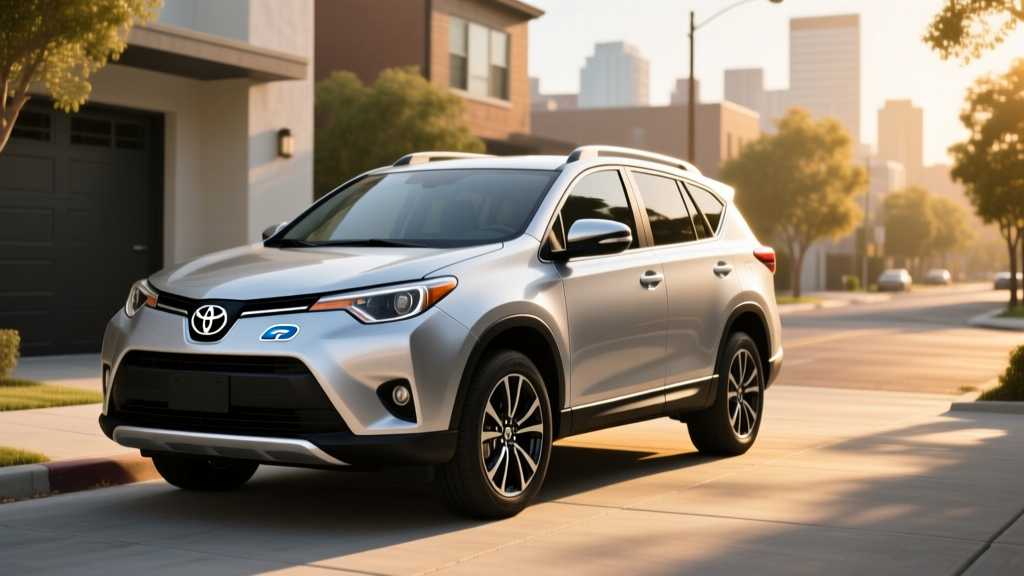
Ten years after it debuted as Toyota's first hybrid compact crossover, the 2016 Toyota RAV4 Hybrid SUV remains one of the smartest used-hybrid purchases on the market. With an EPA-rated 32 MPG combined, standard all-wheel drive, and Toyota's proven hybrid synergy drive system, this generation offers near-bulletproof reliability at used prices that have settled into the $14,000–$20,000 range depending on mileage and condition.
This is a conventional hybrid (HEV), not a plug-in. You never plug it in — the 1.6 kWh nickel-metal hydride battery charges through regenerative braking and the gasoline engine. If you need electric-only driving, you'll want the newer RAV4 Prime PHEV instead. We cover that distinction below.
2016 RAV4 Hybrid Fuel Economy: EPA vs. Real World
| Metric | EPA Rating | Real-World Expectation |
|---|---|---|
| City MPG | 34 MPG | 33–36 MPG (hybrids often exceed EPA city) |
| Highway MPG | 31 MPG | 28–31 MPG (less electric assist at sustained speed) |
| Combined MPG | 32 MPG | 30–33 MPG |
According to fueleconomy.gov, the 2016 RAV4 Hybrid achieves 34 city / 31 highway / 32 combined. The city-heavy advantage is typical of Toyota's hybrid system: at low speeds, the electric motor does most of the work, and regenerative braking recaptures energy that a gas-only car wastes as heat.
Real-world note: Owners who drive predominantly in stop-and-go city traffic often report 34–36 MPG. Highway-dominant commuters may see 28–30 MPG, especially above 70 mph where aerodynamic drag and the 2.5-liter engine's workload increase. In cold weather (below 30°F), expect a 2–4 MPG drop because the engine runs more frequently to provide cabin heat and maintain battery temperature.
HEV vs. PHEV: What's the Difference?
| Feature | 2016 RAV4 Hybrid (HEV) | 2025 RAV4 Prime (PHEV) |
|---|---|---|
| Plug-in charging | No — self-charging via regen + engine | Yes — 2.5 hours on Level 2 (240V) |
| Battery capacity | 1.6 kWh (NiMH) | 18.1 kWh (lithium-ion) |
| Electric-only range | ~0.5 miles at very low speed | 42 miles EPA |
| Combined horsepower | 194 hp | 302 hp |
| Federal tax credit (new) | None | Up to $7,500 (§30D, subject to eligibility) |
| Used price range (2026) | $14,000–$20,000 | $30,000–$40,000 |
Powertrain and Performance Specs
| Engine | 2.5L Atkinson-cycle 4-cylinder |
| Engine output | 150 hp / 135 lb-ft torque |
| Front electric motor | 105 kW (141 hp) |
| Rear electric motor | 50 kW (67 hp) — provides AWD |
| Combined system output | 194 hp |
| Transmission | eCVT (planetary gearset, no traditional belt) |
| Drivetrain | Electronic AWD (AWD-i) |
| 0–60 mph | 7.8 seconds |
| Hybrid battery | 1.6 kWh, Nickel-Metal Hydride (NiMH) |
| Curb weight | ~3,950 lbs |
The AWD-i system is worth understanding: there is no mechanical driveshaft connecting the front and rear axles. Instead, the rear electric motor engages independently when the system detects slip or during hard acceleration from a stop. This means the rear wheels only receive power when needed, reducing parasitic losses and contributing to the strong fuel economy. The trade-off is that this system is designed for light-duty traction (rain, light snow, gravel), not serious off-road use.
The eCVT is not a belt-and-pulley CVT like those in some competitors. Toyota uses a planetary gearset that blends engine and motor power seamlessly. This design has far fewer wear components than a conventional automatic or belt CVT, which is a key reason for the model's long-term reliability.
Battery Warranty, Lifespan, and Replacement Cost
Hybrid Battery Warranty (Original)
- Standard coverage: 8 years / 100,000 miles (whichever comes first)
- CARB-state coverage: 10 years / 150,000 miles in states that follow California Air Resources Board emissions rules (CA, CT, ME, MA, NJ, NY, OR, RI, VT, WA, and others adopting CARB standards)
- What's covered: Battery capacity falling below a defined threshold (typically ~60–70% of original capacity) or complete failure
For a 2016 model in 2026, the original 8-year / 100,000-mile warranty has expired for most vehicles unless the car was purchased late in the model year and is in a CARB state. This is the single most important factor when buying a used 2016 RAV4 Hybrid: budget for potential battery replacement.
How long do these batteries actually last? Toyota's NiMH hybrid batteries have an exceptional track record. Data from owner surveys and repair databases suggest most RAV4 Hybrid batteries last 150,000–200,000+ miles before significant degradation. The NiMH chemistry is less energy-dense than modern lithium-ion but is extremely tolerant of the shallow charge-discharge cycles that hybrids use (the system keeps the battery between roughly 40–80% state of charge, which dramatically extends cycle life).
Replacement cost (2026 estimates):
- Toyota dealership (new OEM battery): $3,000–$4,500 installed
- Independent hybrid specialist (reconditioned/remanufactured): $1,500–$2,500 installed
- Individual module replacement: $300–$800 if only 1–2 of the 28 modules have failed (a common repair at hybrid specialists)
Before buying, request a hybrid battery health check. Many Toyota dealerships and hybrid specialists can read the battery's internal resistance and voltage delta across modules, giving you a clear picture of remaining life.
Pricing, Tax Credits, and Total Cost of Ownership
Original MSRP (2016): The RAV4 Hybrid launched in two trims:
- XLE: ~$29,270
- Limited: ~$34,510
Used market pricing (2026): Expect to pay $14,000–$20,000 for a 2016 RAV4 Hybrid with 80,000–130,000 miles. Lower-mileage examples (under 60,000 miles) may command $20,000–$23,000. Certified Pre-Owned examples from Toyota dealerships sit at the top of this range but include an extended powertrain warranty.
Federal tax credit: The 2016 RAV4 Hybrid does not qualify for the federal §30D new clean vehicle credit (that credit applies to PHEVs and BEVs only, and only at new purchase). On the used market, the IRS Used Clean Vehicle Credit offers up to $4,000 or 30% of the sale price (whichever is lower) — but only for plug-in electric vehicles and fuel cell vehicles. Conventional hybrids like this RAV4 are excluded from both new and used federal tax credits.
Some states offer their own hybrid or efficiency incentives, but these vary widely and change frequently. Check your state's energy or DMV website for current programs.
| Purchase price | $17,000 |
| Fuel (32 MPG avg, $3.40/gal) | $6,375 |
| Insurance (avg) | $6,500 |
| Maintenance (hybrid-specific + standard) | $2,500 |
| Potential battery replacement | $0–$3,500 (budget for risk) |
| 5-year total (without battery) | ~$32,375 |
| 5-year total (with battery) | ~$35,875 |
Reliability and Known Issues
The 2016 RAV4 Hybrid is one of the most reliable vehicles in its class. Toyota's hybrid system has been refined over two decades (since the 1997 Prius in Japan), and the components are over-engineered for the loads they experience.
Key reliability strengths:
- The eCVT planetary gearset has no belts, clutches, or torque converter to wear out — failures are extremely rare
- Regenerative braking reduces wear on the friction brake pads — many owners report 80,000+ miles on original pads
- The 2.5L Atkinson-cycle engine runs under less stress than a conventional engine due to electric motor assist
- NiMH battery chemistry is proven over billions of miles of Toyota hybrid fleet data
Known issues to watch for:
- 12V auxiliary battery: Like all hybrids, the RAV4 has a standard 12V battery that powers electronics. If it dies, the car won't start even though the hybrid battery is full. Replace every 4–5 years proactively.
- Inverter coolant pump: Some owners report failures around 120,000–150,000 miles. Replacement runs $500–$900. Listen for unusual whining from the engine bay.
- Rear differential seal leaks: On AWD-i models, the rear electric motor/differential may develop minor seepage at high mileage. Check during pre-purchase inspection.
For safety data, the 2016 RAV4 earned a 5-star overall rating from NHTSA and was an IIHS Top Safety Pick+ when equipped with the optional front crash prevention package.
Who Should Choose This Hybrid vs. a PHEV or Full EV?
Decision Framework
Choose the 2016 RAV4 Hybrid (HEV) if:
- You cannot charge at home (apartment, street parking, no garage)
- Your budget is under $20,000
- You want maximum simplicity — no plug, no charging apps, no range planning
- You drive a mix of city and highway and want consistent 30+ MPG without behavior changes
- You want AWD for snow/rain but don't need serious off-road capability
Choose a RAV4 Prime (PHEV) if:
- You can install a Level 2 charger at home and your daily commute is under 42 miles
- You want electric-only driving for most trips with gas backup for road trips
- You want 302 hp and a more modern interior (2020+ generation)
- Budget allows $30,000–$40,000 on the used market
Choose a full EV (e.g., Tesla Model Y, Hyundai Ioniq 5) if:
- You have reliable home charging and your daily driving is under 250 miles
- You want zero tailpipe emissions and minimal maintenance (no oil changes, no engine)
- You're eligible for the §30D federal tax credit (up to $7,500 for qualifying new EVs, subject to MSRP caps, income limits, and battery sourcing requirements)
- You accept higher upfront cost for lower per-mile operating cost
Pros
- 32 MPG combined with no plug-in requirement
- Proven long-term reliability with 150K+ mile battery life
- Standard AWD at no fuel-economy penalty vs. FWD competitors
- Strong cargo space: 38.4 cu ft behind rear seats
- Low maintenance costs (no timing belt, reduced brake wear)
- Used price has depreciated to an accessible range
Cons
- No electric-only driving range (less than 1 mile at low speed)
- Hybrid battery warranty has expired on most 2016 examples
- Dated infotainment (no Apple CarPlay/Android Auto on 2016 models)
- Highway MPG drops to ~28–30 at sustained 75+ mph
- No federal tax credit available for conventional hybrids
- Rear visibility is limited; consider models with backup camera
Frequently Asked Questions
How many MPG does the 2016 Toyota RAV4 Hybrid get?
The EPA rates it at 34 city / 31 highway / 32 combined MPG. In real-world driving, city-dominant drivers often see 33–36 MPG, while highway-dominant driving yields 28–31 MPG. Cold weather reduces efficiency by roughly 2–4 MPG due to increased engine runtime for cabin heating.
Do I need to plug in the 2016 RAV4 Hybrid?
No. This is a conventional hybrid (HEV), not a plug-in hybrid (PHEV). The battery charges through regenerative braking and the gasoline engine. You fuel it like any other car — just less often thanks to the 32 MPG combined rating and 15.9-gallon tank (~500+ miles per fill-up).
Is the hybrid battery reliable, and what does replacement cost?
Toyota's NiMH hybrid batteries are among the most reliable in the industry, with many lasting 150,000–200,000+ miles. If replacement is needed, expect $3,000–$4,500 for a new OEM battery at a dealership, or $1,500–$2,500 for a reconditioned unit at a hybrid specialist. Individual module repairs can cost as little as $300–$800.
Does the 2016 RAV4 Hybrid qualify for any tax credit?
No federal tax credit is available. The §30D credit applies only to plug-in electric vehicles (PHEVs and BEVs), not conventional hybrids. The IRS Used Clean Vehicle Credit (up to $4,000) also excludes conventional hybrids. Check your state for any local efficiency incentives.
Hybrid vs. PHEV vs. EV — which should I choose?
If you can't charge at home and want a budget-friendly, reliable crossover with strong MPG and zero behavior change, the 2016 RAV4 Hybrid is an excellent choice. If you have home charging and want electric-only commuting with gas flexibility, look at a used RAV4 Prime PHEV. If you want the lowest operating cost and have charging access, a full EV like the Model Y or Ioniq 5 makes sense — especially if you qualify for the $7,500 federal credit on a new purchase.
What should I check before buying a used 2016 RAV4 Hybrid?
Request a hybrid battery health report (voltage delta and internal resistance across modules). Check the 12V battery age. Inspect the inverter coolant pump and rear differential seals. Verify maintenance records, especially engine oil changes and transmission fluid service. A pre-purchase inspection at a Toyota dealership or hybrid specialist is strongly recommended.