Quick Verdict: The 2016 RAV4 Hybrid AWD a Decade Later
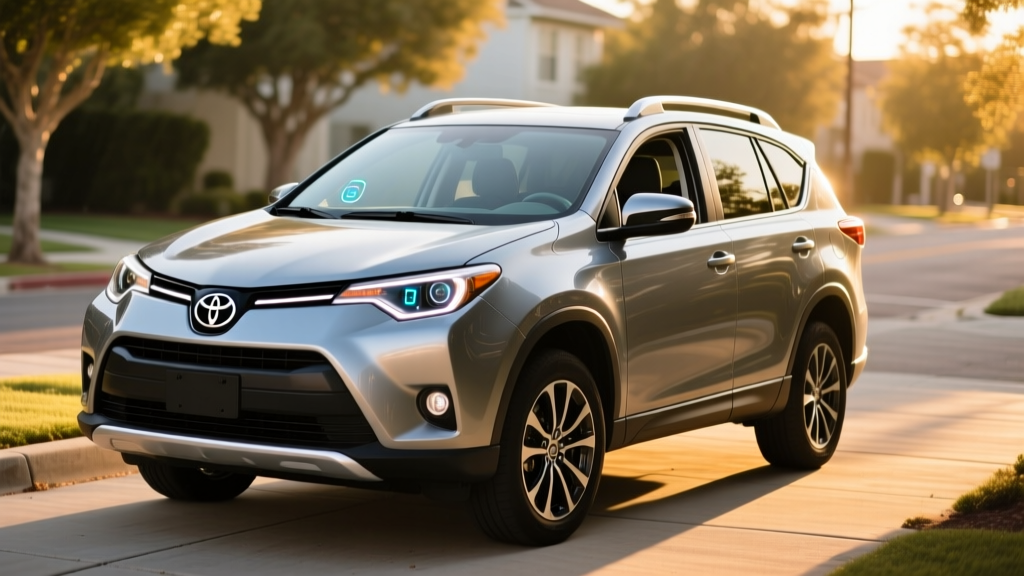
The 2016 Toyota RAV4 Hybrid AWD was Toyota's first all-wheel-drive hybrid compact SUV, and nearly a decade after its debut, it remains one of the most dependable used hybrid vehicles on the market. With an EPA-rated 34 city / 31 highway / 32 combined MPG, a proven 2.5-liter Atkinson-cycle powertrain, and Toyota's legendary hybrid battery longevity, this model is a compelling choice for budget-conscious buyers who want hybrid efficiency without plug-in complexity.
As of 2026, well-maintained examples trade between $14,000 and $20,000 depending on mileage and condition. The hybrid battery — the single biggest concern for any used hybrid buyer — is typically still within or just past its 8-year/100,000-mile warranty window, making battery health verification essential before purchase.
HEV vs PHEV vs EV: Where the 2016 RAV4 Hybrid Fits
The 2016 RAV4 Hybrid is a conventional hybrid electric vehicle (HEV). It does not plug in. It has no electric-only driving mode of any meaningful distance. The small nickel-metal hydride (NiMH) battery recharges through regenerative braking and the gasoline engine. If you're looking for plug-in capability, you'd need the RAV4 Prime (PHEV), which Toyota didn't introduce until the 2021 model year, or a full battery-electric vehicle like the bZ4X.
| Feature | HEV (2016 RAV4 Hybrid) | PHEV (RAV4 Prime, 2021+) | BEV (bZ4X, 2023+) |
|---|---|---|---|
| Plug-in required? | No | Yes (Level 1/2) | Yes (Level 1/2/DC) |
| Electric-only range | None (motor assists engine) | 42 miles EPA | 222–252 miles EPA |
| Fuel/energy | Gasoline only | Gasoline + electricity | Electricity only |
| Federal tax credit (new) | None | Up to $7,500 (§30D)* | Up to $7,500 (§30D)* |
| Home charging needed? | No | Recommended | Essential |
| Used price range (2026) | $14,000–$20,000 | $32,000–$40,000 | $25,000–$35,000 |
*§30D credits apply only to new purchases with income, MSRP, and battery-sourcing requirements per IRS rules. Not available on used HEVs.
Fuel Economy: EPA Ratings and Real-World MPG
The EPA rates the 2016 RAV4 Hybrid AWD at 34 MPG city / 31 MPG highway / 32 MPG combined, according to fueleconomy.gov. That city-heavy advantage is characteristic of Toyota's Hybrid Synergy Drive: the electric motor handles low-speed driving and stop-and-go traffic, where gasoline engines are least efficient.
| Driving Cycle | EPA MPG | Real-World Expectation |
|---|---|---|
| City | 34 MPG | 33–36 MPG (hybrids often beat EPA in city) |
| Highway | 31 MPG | 28–31 MPG (less regen benefit at steady speed) |
| Combined | 32 MPG | 30–33 MPG |
Real-world note: Owner-reported data on Fuelly and similar tracking platforms consistently shows combined averages between 30 and 34 MPG, with some drivers exceeding the EPA city estimate in warm-weather urban commuting. Cold weather (below freezing) typically drops efficiency by 2–4 MPG due to increased engine idle time for cabin heat and reduced battery efficiency. Highway driving at 75+ MPH also reduces MPG to the high 20s due to aerodynamic drag — a factor the EPA highway cycle doesn't fully capture.
Compared to the 2016 RAV4 gas AWD (22 city / 29 highway / 25 combined), the hybrid delivers roughly a 28% improvement in combined fuel economy, translating to about $400–$600 in annual fuel savings at 15,000 miles per year and $3.50/gallon regular unleaded.
Powertrain and Performance Specs
The 2016 RAV4 Hybrid pairs a 2.5-liter 2AR-FXE Atkinson-cycle four-cylinder engine with Toyota's Hybrid Synergy Drive system. A rear-mounted electric motor provides electronic on-demand AWD — there is no mechanical driveshaft connecting the front and rear axles.
| Engine | 2.5L 2AR-FXE Atkinson-cycle I4 |
| Engine output | 150 HP / 152 lb-ft torque |
| Front electric motor | 105 kW (141 HP) |
| Rear electric motor | 50 kW (67 HP) |
| Net combined system output | 194 HP |
| Transmission | eCVT (planetary gearset) |
| Drivetrain | Electronic on-demand AWD (AWD-i) |
| 0–60 MPH | 7.8 seconds (est.) |
| Hybrid battery | 1.6 kWh NiMH (sealed, not plug-in) |
| Curb weight | ~3,950 lbs |
| Towing capacity | 1,750 lbs |
| Cargo volume | 38.4 cu ft (rear seats up) / 73.4 cu ft (folded) |
The 194 combined horsepower makes the RAV4 Hybrid noticeably quicker than its gas-only AWD sibling (176 HP), particularly in the 0–30 MPH range where electric torque fills in before the engine reaches peak output. The eCVT is smooth and avoids the rubber-band feel of belt-driven CVTs, as it uses a planetary gearset rather than a belt-and-pulley system.
Hybrid Battery Health, Warranty, and Replacement Cost
This is the number-one concern for any used hybrid buyer, and it deserves detailed attention. The 2016 RAV4 Hybrid uses a 1.6 kWh nickel-metal hydride (NiMH) battery pack located under the rear seat. NiMH chemistry is less energy-dense than modern lithium-ion but is exceptionally well-proven for longevity in Toyota's hybrid applications.
Battery Warranty & Lifespan
- Original warranty: 8 years / 100,000 miles (10 years / 150,000 miles in CARB states including CA, CT, ME, MA, NJ, NY, OR, RI, VT, WA)
- Warranty threshold: Toyota covers the battery if capacity drops below ~60% of original
- Typical real-world lifespan: 150,000–200,000+ miles before significant degradation, based on fleet and owner data
- Replacement cost (2026): $2,000–$3,500 for a new OEM battery from a Toyota dealer; $1,200–$2,000 for a refurbished unit from independent hybrid specialists
By 2026, a 2016 model is 10 years old, meaning most examples have just exited the standard 8-year warranty window. However, CARB-state vehicles may still carry coverage through the 10-year provision. Always check the vehicle's original sale state and current mileage against these thresholds.
Battery health check before buying: Use an OBD-II scanner with hybrid-specific software (such as Dr. Prius or Toyota's own Techstream) to read the battery's State of Health (SoH) and individual module voltage deltas. A healthy pack should show module voltages within 0.2V of each other under load. Any single module deviating by 0.3V or more indicates a weak cell that will accelerate degradation. A professional hybrid battery health test typically costs $50–$100 at an independent shop and is strongly recommended before purchase.
Reliability and Long-Term Ownership Costs
The 2016 RAV4 Hybrid benefits from one of the most thoroughly validated hybrid powertrains in automotive history. Toyota's Hybrid Synergy Drive, in various iterations, has accumulated billions of real-world miles across the Prius, Camry Hybrid, Highlander Hybrid, and RAV4 Hybrid lineages.
Key reliability factors:
- eCVT transmission: The planetary gearset has no belts, clutches, or torque converter to wear out. Failures are extremely rare and typically tied to coolant system neglect rather than inherent design weakness.
- Brake wear: Regenerative braking handles the majority of deceleration, so brake pads routinely last 80,000–120,000 miles — significantly longer than gas-only vehicles.
- AWD-i rear motor: The rear electric motor is a simple, sealed unit with no mechanical linkage. Failures are uncommon but can cost $800–$1,500 to replace if they occur.
- 12V auxiliary battery: Like any vehicle, the 12V lead-acillary battery will need replacement every 4–6 years ($150–$250). This is separate from the hybrid traction battery.
According to IIHS, the 2016 RAV4 earned a Top Safety Pick designation when equipped with the optional front crash prevention package. The NHTSA awarded it a 4-star overall safety rating. Toyota Safety Sense-P (TSS-P), including pre-collision warning with pedestrian detection, lane departure alert, automatic high beams, and dynamic radar cruise control, became standard on the RAV4 Hybrid for the 2017 model year — so 2016 models may or may not have it depending on trim and option packages.
Pricing, Trims, and Tax Credit Eligibility in 2026
The 2016 RAV4 Hybrid was offered in two trims: XLE and Limited. Original MSRPs were approximately $29,270 (XLE) and $34,510 (Limited), including destination. As of early 2026, used-market pricing breaks down as follows:
| Trim | Mileage Range | Typical Used Price |
|---|---|---|
| XLE | 80,000–120,000 mi | $14,000–$17,500 |
| XLE | 50,000–80,000 mi | $17,000–$19,500 |
| Limited | 80,000–120,000 mi | $16,000–$19,000 |
| Limited | 50,000–80,000 mi | $19,000–$22,000 |
Tax credit note: The 2016 RAV4 Hybrid does not qualify for the federal §30D new clean vehicle credit — that credit applies only to new plug-in vehicles (PHEVs and BEVs) meeting battery sourcing, MSRP, and buyer income requirements. There is also no federal used-EV credit (§25E) available for conventional hybrids; that credit applies only to used BEVs and PHEVs priced under $25,000. Some states offer modest incentives for used hybrids, but these vary widely and change frequently — check your state's energy or environmental agency for current programs.
Who Should Buy the 2016 RAV4 Hybrid AWD?
Pros
- Proven 32 MPG combined with no plug-in requirement
- 194 HP — quicker than the gas RAV4 AWD
- Exceptional powertrain reliability track record
- Low running costs: extended brake life, no plug-in infrastructure needed
- Electronic AWD handles light snow and rain confidently
- Strong resale value retention for a 10-year-old vehicle
Cons
- Hybrid battery approaching or past warranty age — health check essential
- 1.6 kWh NiMH battery not replaceable with modern Li-ion upgrade
- No electric-only driving mode — purely engine-assist hybrid
- 2016 model predates standard Toyota Safety Sense-P (check individual vehicle)
- Towing limited to 1,750 lbs (lower than some competitors)
- Infotainment system is dated by 2026 standards (no wireless CarPlay/Android Auto)
Choose the 2016 RAV4 Hybrid AWD if:
- You want hybrid fuel savings without installing a home charger or changing your fueling habits
- Your budget is $15,000–$20,000 and you prioritize reliability over the latest tech
- You drive primarily in city or suburban conditions where the hybrid system excels
- You live in a region with moderate winters and need AWD but not serious off-road capability
Look elsewhere if:
- You want electric-only commuting — consider a used RAV4 Prime (PHEV, 2021+) or a BEV like the Chevy Bolt EUV
- You need a third row — the Highlander Hybrid is Toyota's three-row option
- You tow more than 1,750 lbs regularly
- You want current-model-year ADAS features like lane-centering assist and traffic sign recognition
Frequently Asked Questions
How many MPG does the 2016 Toyota RAV4 Hybrid AWD get?
The EPA rates it at 34 city / 31 highway / 32 combined MPG. In real-world driving, most owners report 30–34 MPG combined, with city driving often exceeding the EPA estimate thanks to regenerative braking. Cold weather and sustained high-speed highway driving can reduce efficiency to the high 20s.
Does the 2016 RAV4 Hybrid need to be plugged in?
No. This is a conventional hybrid (HEV), not a plug-in hybrid (PHEV). The 1.6 kWh battery charges exclusively through regenerative braking and the gasoline engine. You fuel it exactly like a gas car — there is no charging port.
How far can the 2016 RAV4 Hybrid drive on electric power alone?
Effectively zero miles. The electric motor assists the gasoline engine and can propel the vehicle at very low speeds (under ~25 MPH) for brief distances on flat ground, but the engine is nearly always running. If electric-only range matters to you, you need a PHEV like the RAV4 Prime (42 miles EPA electric-only) or a full BEV.
Is the 2016 RAV4 Hybrid reliable?
Yes. Toyota's Hybrid Synergy Drive is among the most proven powertrains in production. The eCVT uses a planetary gearset with no wearable belts or clutches. Regenerative braking extends pad life to 80,000+ miles. The primary reliability risk at this vehicle's age is hybrid battery degradation — get a pre-purchase SoH test via OBD-II before buying.
What does a replacement hybrid battery cost?
A new OEM NiMH battery from Toyota costs approximately $2,000–$3,500 installed. Refurbished batteries from independent hybrid specialists run $1,200–$2,000 installed. Individual module replacement (if only one or two cells are weak) can cost $300–$600. Most 2016 RAV4 Hybrid batteries are lasting 150,000–200,000+ miles based on available fleet data.
Does the 2016 RAV4 Hybrid qualify for any tax credit?
No federal tax credit is available. The §30D new clean vehicle credit and the §25E used clean vehicle credit apply only to plug-in vehicles (PHEVs and BEVs), not conventional hybrids. Some states may offer small rebates for used hybrids, but programs vary by jurisdiction and change frequently.
How does the 2016 RAV4 Hybrid compare to the 2016 gas RAV4 AWD?
The hybrid delivers 32 MPG combined vs. 25 MPG combined for the gas AWD — a 28% efficiency improvement. It also produces 194 HP vs. 176 HP, making it quicker off the line. The trade-off is a slightly higher purchase price (even on the used market) and the long-term battery replacement consideration. For most owners, the fuel savings offset the price premium within 3–5 years of average driving.
Sources: U.S. EPA / fueleconomy.gov, IIHS, IRS §30D Clean Vehicle Credits