Quick Verdict: A Performance PHEV Pioneer Showing Its Age
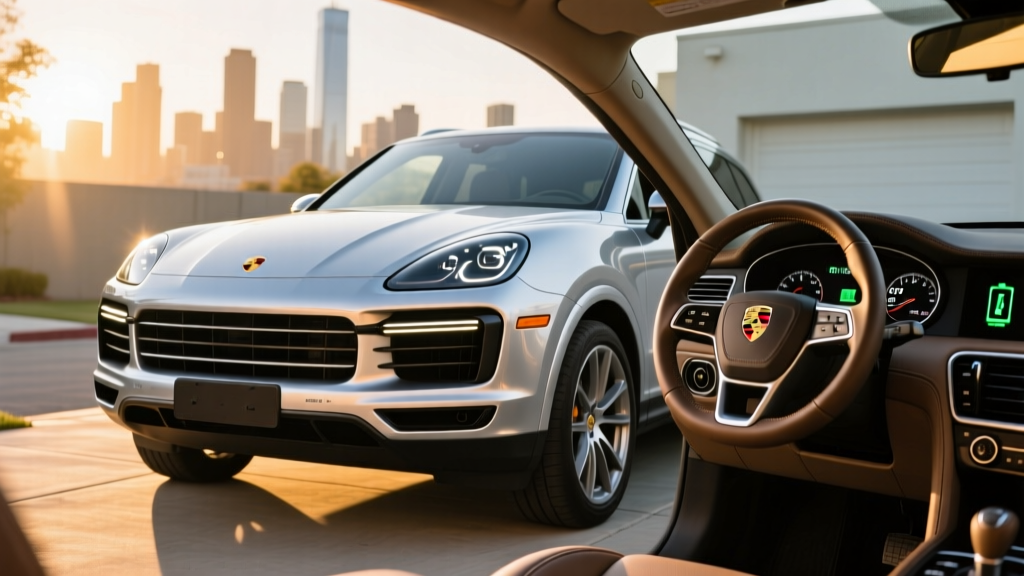
The 2016 Porsche Cayenne S E-Hybrid was one of the first luxury plug-in hybrid SUVs to blend serious performance with a meaningful — if modest — electric-only commute. With 416 combined horsepower, a supercharged V6, and roughly 14 miles of EV range, it was ahead of its time. But in 2026, nearly a decade after it left the showroom, buying one on the used market requires careful scrutiny of battery health, maintenance records, and ownership costs that can surprise unprepared shoppers.
This guide covers everything you need to know: real-world MPG, electric range, battery longevity, reliability data, and whether this early PHEV still makes sense compared to a modern hybrid, a newer PHEV, or a full battery-electric vehicle.
HEV vs PHEV: Where the Cayenne S E-Hybrid Fits
Before diving into specs, it's essential to distinguish between the two hybrid architectures relevant to buyers:
Conventional Hybrid (HEV)
A standard hybrid like the Toyota RAV4 Hybrid uses a small battery recharged entirely by regenerative braking and the gas engine. You never plug it in. Electric-only driving is limited to brief, low-speed moments. Fuel economy gains come from engine assist and stop-start, typically yielding 35–45 MPG combined in mainstream models.
Plug-In Hybrid (PHEV)
The 2016 Cayenne S E-Hybrid is a PHEV. It carries a larger battery (10.8 kWh gross) that you charge by plugging into a wall outlet or Level 2 charger. This enables a meaningful electric-only range (EPA-rated 14 miles) before the gasoline engine takes over. Once the battery is depleted, it operates as a conventional hybrid.
Porsche also sold a non-plug-in Cayenne Hybrid in earlier model years, but by 2016, the only electrified Cayenne in the U.S. lineup was this PHEV — badged the Cayenne S E-Hybrid. Don't confuse it with the later Cayenne E-Hybrid (2019+), which uses a completely different powertrain with significantly more electric range.
Powertrain, Performance, and Specifications
The 2016 Cayenne S E-Hybrid pairs a 3.0-liter supercharged V6 with an electric motor integrated into the 8-speed Tiptronic automatic transmission. The result is a powertrain that feels more like a performance SUV than an efficiency appliance.
| Specification | 2016 Cayenne S E-Hybrid |
|---|---|
| Gas Engine | 3.0L Supercharged V6, 333 HP / 325 lb-ft |
| Electric Motor | 95 HP (70 kW), 230 lb-ft |
| Combined System Output | 416 HP / 435 lb-ft |
| Transmission | 8-speed Tiptronic automatic, AWD |
| 0–60 mph | 5.4 seconds (Porsche estimate) |
| Battery (Gross / Usable) | 10.8 kWh / ~7.0 kWh usable |
| Battery Chemistry | Lithium-ion (NMC) |
| EPA Electric Range | 14 miles |
| EPA MPGe (EV + Gas Combined) | 46 MPGe |
| EPA MPG (Gas Only, Charge-Depleted) | 20 city / 24 hwy / 22 combined |
| Fuel Tank | 22.5 gallons |
| Total Combined Range (Est.) | ~500–540 miles |
| DC Fast Charging | No — AC only |
| Level 2 Charge Time (240V) | ~2.5 hours (0–100%) |
| Level 1 Charge Time (120V) | ~7 hours (0–100%) |
| Charge Port | J1772 (AC) |
| Curb Weight | 5,181 lbs |
| Towing Capacity | 7,716 lbs (braked) |
A few notes for real-world ownership: the usable battery capacity of roughly 7 kWh is what delivers the 14-mile EPA electric range. Porsche conservatively buffers the pack to protect longevity, meaning you'll never see the full 10.8 kWh available. On a 240-volt Level 2 home charger (3.6 kW onboard charger), a full charge takes about 2.5 hours. There is no DC fast-charging capability — this is strictly a home-and-destination charging vehicle.
Fuel Economy: EPA Ratings vs Real-World MPG
The EPA rates the 2016 Cayenne S E-Hybrid at 46 MPGe when factoring in electric driving and 22 MPG combined once the battery is depleted and you're running on gasoline alone. Here's the full breakdown from fueleconomy.gov:
| Driving Mode | City | Highway | Combined |
|---|---|---|---|
| Charge-depleted (gas only) | 20 MPG | 24 MPG | 22 MPG |
| Blended (EV + gas, MPGe) | 46 MPGe | ||
Real-World Expectations
In practice, owners who plug in nightly and drive short commutes (under 15 miles) can see effective fuel consumption well below the gas-only rating, since most daily miles are covered on electricity. However, if you rarely charge, expect 19–21 MPG in mixed driving — the supercharged V6 and 5,100+ lb curb weight work against efficiency.
Highway-heavy driving at 75+ mph typically yields 22–24 MPG in gas-only mode. In cold weather (below 35°F), the engine will fire up sooner to provide cabin heat, reducing electric-only range to roughly 10–11 miles. Unlike newer PHEVs, this generation lacks a dedicated heat pump for cabin heating, so winter EV range loss is significant.
Battery Health, Warranty, and Replacement Cost
For a 2016 model-year vehicle approaching its tenth birthday in 2026, battery condition is the single most important factor in a used purchase. Here's what you need to know:
Original Battery Warranty
Porsche originally warranted the Cayenne S E-Hybrid's high-voltage battery for 8 years or 100,000 miles (whichever came first), covering defects and capacity loss below a specified threshold (typically 70% of original capacity). For a 2016 model, this factory warranty expired in 2024 at the latest. Any battery failure in 2026 is an out-of-pocket expense unless covered by an extended warranty or certified pre-owned (CPO) program.
Degradation and Lifespan
The 10.8 kWh lithium-ion pack in this Cayenne uses NMC (nickel-manganese-cobalt) chemistry, which is energy-dense but more susceptible to calendar degradation than LFP. Real-world data from owner forums and Porsche specialists suggests that well-maintained examples retain roughly 75–85% of original capacity after 8–10 years, translating to 10–12 miles of electric range instead of 14.
Key degradation accelerators for this model:
- Heat exposure: Vehicles in hot climates (Arizona, Texas, Southern California) show faster capacity loss.
- High state-of-charge storage: Routinely parking at 100% SoC for extended periods stresses NMC cells.
- Infrequent use: Batteries that sit unused for weeks degrade faster than those cycled regularly.
Battery Replacement Cost
A new OEM high-voltage battery from Porsche for this generation runs approximately $12,000–$18,000 including parts and labor at a dealership. Independent EV shops specializing in Porsche and VW Group vehicles may offer refurbished or re-celled packs for $7,000–$10,000. Before purchasing any used 2016 Cayenne S E-Hybrid, insist on a pre-purchase battery health inspection — either through a Porsche dealer's PIWIS diagnostic tool or a qualified independent shop that can read individual cell voltages and overall State of Health (SoH).
Reliability and Common Issues
The 2016 Cayenne S E-Hybrid carries the general reliability profile of the Porsche 958.2-generation Cayenne, which is considered one of the better years for this platform. However, the added complexity of the hybrid system introduces specific failure points:
- Coolant system: The hybrid system has dedicated cooling circuits. Coolant leaks from the electric motor housing or power electronics can be expensive ($2,000–$4,000 to repair).
- Transfer case: A known wear item on all Cayenne models of this era. Symptoms include binding or clunking during tight turns. Replacement: $2,500–$4,000.
- Air suspension: Air struts typically last 80,000–120,000 miles before leaking. Replacement runs $1,500–$2,500 per corner.
- Supercharger isolator: A rattling noise at idle may indicate a worn supercharger isolator coupling ($800–$1,500 repair).
- Onboard charger: The 3.6 kW onboard AC charger can fail, preventing Level 2 charging. Replacement: $1,500–$2,500.
For reliability context, consult NHTSA recall and complaint data for this specific model. Check for open recalls — particularly related to the high-voltage system and brake vacuum pump — before purchasing.
Pricing and Tax Credit Eligibility in 2026
Used Market Pricing
As of early 2026, the 2016 Porsche Cayenne S E-Hybrid trades on the used market in the following ranges (based on mileage, condition, and battery health):
| Condition / Mileage | Approximate Price Range |
|---|---|
| Excellent, under 60k miles, strong battery | $28,000–$35,000 |
| Good, 60k–100k miles, moderate degradation | $20,000–$28,000 |
| High mileage or battery issues | $14,000–$20,000 |
Federal Tax Credits
The 2016 Cayenne S E-Hybrid does not qualify for the federal §30D new clean vehicle credit — that credit applies only to new vehicle purchases. However, it may qualify for the Used Clean Vehicle Credit under IRS §25E, which provides up to $4,000 (30% of the sale price, capped at $4,000) for eligible used EVs and PHEVs purchased from a dealer. Key requirements per IRS guidelines:
- Sale price must be $25,000 or less
- Buyer income limits: $75,000 single / $112,500 head of household / $150,000 joint
- Vehicle must be purchased from a licensed dealer (private sales excluded)
- Vehicle must have a battery capacity of at least 7 kWh (the Cayenne's 10.8 kWh qualifies)
- Credit can only be claimed once per vehicle (check if a prior owner already claimed it)
- Credit is non-refundable — you must have tax liability to benefit
Given the pricing above, only examples in the lower price tiers (under $25,000) are eligible, and only if all income and dealer-purchase requirements are met. Consult a tax professional to confirm eligibility.
Who Should Buy This PHEV — And Who Shouldn't
The 2016 Cayenne S E-Hybrid occupies a narrow niche in 2026. Here's a decision framework:
Choose the 2016 Cayenne S E-Hybrid if:
- You want a luxury performance SUV with a short electric commute (10–14 miles covers most school runs and errands)
- You have Level 2 home charging and a commute under 15 miles round-trip
- You value Porsche build quality, towing capacity (7,716 lbs), and all-weather AWD
- You're comfortable budgeting $2,000–$4,000/year for maintenance and potential hybrid-system repairs
- You want PHEV flexibility: electric for daily driving, gas for road trips with no range anxiety
Choose a modern full EV instead if:
- You want 250+ miles of range and DC fast charging for road trips
- You want minimal maintenance (no supercharger, no transmission fluid, no air suspension on most models)
- You qualify for the full $7,500 federal credit on a new EV or can access a newer used EV with warranty remaining
Choose a newer PHEV instead if:
- You want 30+ miles of electric range (the 2025+ Cayenne E-Hybrid offers ~27 miles; rivals like the RAV4 Prime offer 42 miles)
- You want remaining factory battery warranty coverage
- You want modern driver-assist features (the 2016 Cayenne lacks adaptive cruise and lane-centering)
Pros
- 416 HP delivers genuine performance-SUV acceleration (5.4s to 60)
- Premium interior with high-quality materials
- 7,716-lb towing capacity exceeds most PHEV crossovers
- Short daily commutes can be nearly gas-free
- Porsche badge and driving dynamics
Cons
- Only 14 miles EPA electric range — minimal by 2026 standards
- No DC fast charging
- Factory battery warranty has expired
- Expensive repairs outside warranty (air suspension, hybrid cooling, transfer case)
- 22 MPG gas-only is unimpressive for a hybrid
- No modern ADAS (no lane-centering, limited adaptive cruise)
Frequently Asked Questions
How many MPG does the 2016 Porsche Cayenne S E-Hybrid get?
The EPA rates it at 22 MPG combined (20 city / 24 highway) when running on gasoline alone after the battery is depleted. When factoring in electric driving, it earns a 46 MPGe combined rating. Real-world gas-only MPG typically falls between 19–24 depending on driving style and conditions.
How far can the 2016 Cayenne S E-Hybrid go on electric only?
The EPA rates it at 14 miles of electric-only range. In mild weather with gentle driving, expect 12–14 miles. In freezing temperatures or aggressive driving, that drops to 9–10 miles. The total combined range (electric + a full 22.5-gallon gas tank) is approximately 500–540 miles.
Is the 2016 Cayenne S E-Hybrid reliable?
The 958.2-generation Cayenne is one of Porsche's more reliable platforms, but the hybrid system adds complexity. Common issues include coolant leaks in the hybrid cooling circuit, transfer case wear, air suspension failure, and onboard charger failure. Budget $2,000–$4,000 annually for maintenance and repairs on a 10-year-old example. A pre-purchase inspection by a Porsche specialist is strongly recommended.
What does it cost to replace the hybrid battery?
An OEM replacement battery from a Porsche dealer costs approximately $12,000–$18,000. Independent shops may offer refurbished packs for $7,000–$10,000. Given the vehicle's age, battery replacement cost should be factored into any purchase decision.
Does the 2016 Cayenne S E-Hybrid qualify for any tax credit?
Not the new-vehicle §30D credit. However, if purchased from a dealer for $25,000 or less, and the buyer meets IRS income limits, the Used Clean Vehicle Credit (§25E) may provide up to $4,000. Confirm eligibility with a tax professional and verify the credit hasn't already been claimed on that specific VIN.
Hybrid vs PHEV vs EV — which is right for me?
If you have home charging and a short commute, a PHEV like this Cayenne lets you drive electric daily while keeping gas flexibility for road trips. If your commute is longer or you want zero tailpipe emissions, a full EV (like a used Tesla Model X or Rivian R1S) offers more range and lower running costs. If you can't charge at home, a conventional HEV (like a Lexus RX Hybrid) avoids the hassle of plug-in ownership while still delivering better MPG than a gas-only SUV.
Can the 2016 Cayenne S E-Hybrid DC fast charge?
No. It only supports AC charging via a J1772 connector. Level 2 (240V) charging fills the battery in about 2.5 hours. Level 1 (120V) takes approximately 7 hours. There is no CCS or CHAdeMO port.