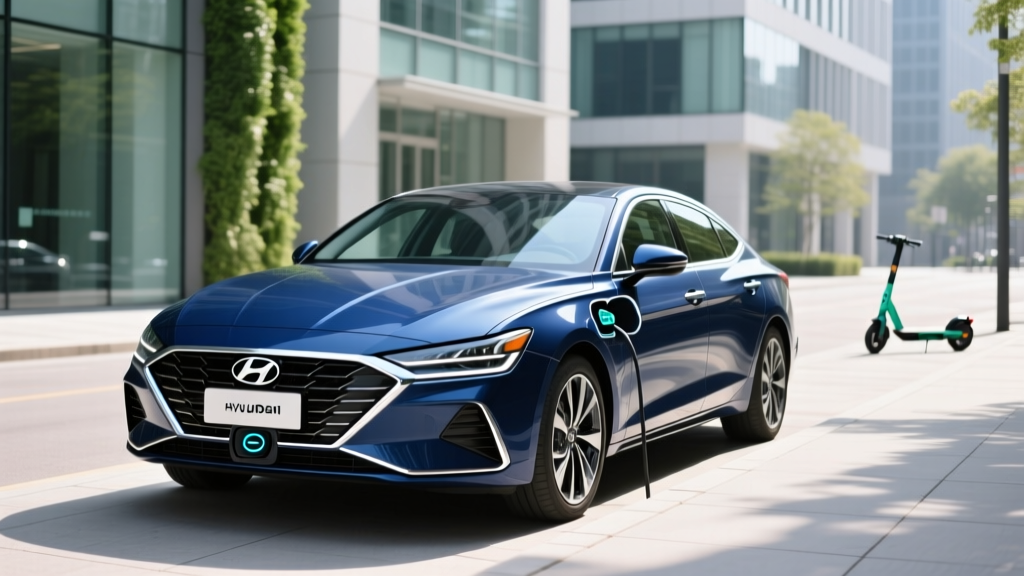
The Hyundai Sonata Plug-In Hybrid occupies a specific niche: it gives daily commuters genuine electric-only driving for short trips while eliminating range anxiety on longer drives. For 2026, Hyundai continues the Sonata PHEV with a 13.8 kWh battery, an EPA-rated 32 miles of electric range, and a combined 44 MPGe/42 MPG rating. If your commute falls under 30 miles round-trip and you have access to Level 2 charging at home or work, this midsize sedan can operate as an EV most days — and as a 500+ mile gas-electric hybrid on road trips.
But the Sonata PHEV isn't for everyone. Its $36,000+ starting price, modest DC fast-charging capability, and complex powertrain demand a clear-eyed look at who benefits most. Below, we break down every spec that matters.
Hyundai Sonata Plug-In Hybrid: Key Specifications
| Specification | 2026 Sonata PHEV |
|---|---|
| EPA Electric-Only Range | 32 miles |
| Total Combined Range | ~520 miles (electric + gas) |
| EPA MPGe (Electric + Gas) | 44 MPGe combined |
| EPA MPG (Gas-Only / Charge-Sustaining) | 42 MPG combined (44 city / 40 highway) |
| Battery Capacity | 13.8 kWh (lithium-ion polymer) |
| Combined System Horsepower | 192 hp (engine + motor) |
| Engine | 2.0L inline-4 (154 hp) + 50 kW electric motor |
| Transmission | 6-speed automatic |
| Max AC Charge Rate (Level 2) | 7.2 kW (J1772 connector) |
| DC Fast Charging | Not available |
| Level 2 Charge Time (0–100%) | ~2 hours 45 minutes |
| Level 1 Charge Time (120V, 0–100%) | ~11 hours |
| 0–60 mph | ~7.5 seconds (est.) |
| Base MSRP | $36,425 (SEL trim) |
| Federal Tax Credit (§30D) | Up to $3,751 (see eligibility below) |
| Hybrid Battery Warranty | 10 years / 100,000 miles |
HEV vs. PHEV: Understanding the Sonata's Two Hybrid Options
Hyundai sells the Sonata in both a conventional hybrid (HEV) and a plug-in hybrid (PHEV) variant. The distinction matters for your wallet and your daily routine.
Conventional Sonata Hybrid (HEV)
- No plug required — the battery recharges through regenerative braking and the gas engine.
- EPA: 47 MPG combined (50 city / 44 highway) per fueleconomy.gov.
- Battery: ~1.6 kWh — far too small for meaningful electric-only driving.
- Lower MSRP — typically $2,000–$4,000 less than the PHEV.
- No federal tax credit for conventional hybrids under current §30D rules.
Sonata Plug-In Hybrid (PHEV)
- Requires plugging in to access the 32-mile electric-only range — without charging, it operates as a heavier, less efficient hybrid.
- EPA: 44 MPGe combined (electric + gas); 42 MPG combined in gas-only charge-sustaining mode.
- Battery: 13.8 kWh — enough for ~32 miles of EV driving at speeds up to ~75 mph.
- Eligible for partial §30D federal tax credit (up to $3,751 based on current critical-mineral and battery-component sourcing rules).
- Higher MSRP but potential credit offset.
Bottom line: If you can't charge at home or work, the conventional Sonata HEV at 47 MPG is the smarter buy. The PHEV only delivers value when you plug it in regularly.
Fuel Economy: Real-World MPG vs. EPA Sticker
| Driving Scenario | EPA Rating | Real-World Expectation |
|---|---|---|
| Combined (charge-sustaining, gas only) | 42 MPG | 40–44 MPG |
| City (gas only) | 44 MPG | 43–48 MPG (regen-heavy routes can exceed EPA) |
| Highway (gas only, 70–80 mph) | 40 MPG | 36–39 MPG |
| Electric-only (mixed) | 32 miles range | 26–30 miles (highway); 30–34 miles (city, mild weather) |
| Electric-only (cold weather, 30°F) | — | 20–25 miles (battery chemistry + cabin heating) |
Hybrids consistently outperform their EPA city ratings in stop-and-go traffic because regenerative braking recaptures energy that gas-only cars waste as heat. Highway driving is the opposite — the Sonata PHEV's gasoline engine operates at a fixed load with less regen benefit, so expect 36–39 MPG at sustained 75 mph.
The electric-only range is highly variable. On a mild spring day at 45 mph through the suburbs, owners report squeezing 33–34 miles from a full charge. At 70 mph on the interstate in January, that same battery may deliver only 20–22 miles before the gas engine fires up. This isn't a defect — it's battery chemistry. Lithium-ion cells lose capacity and increase internal resistance in cold temperatures, and cabin heating draws heavily from the traction battery.
Charging the Sonata PHEV: What You Need to Know
The Sonata PHEV uses a standard J1772 connector for AC charging and accepts up to 7.2 kW on Level 2. It does not support DC fast charging — a limitation shared with most PHEVs due to their small battery packs.
| Charging Level | Power | Time (0–100%) | Practical Notes |
|---|---|---|---|
| Level 1 (120V household outlet) | ~1.4 kW | ~11 hours | Sufficient for overnight if you drive <32 miles/day |
| Level 2 (240V, 32A home charger) | 7.2 kW | ~2 hr 45 min | Recommended; full refill during workday or overnight |
| DC Fast Charge | N/A | N/A | Not supported on this vehicle |
A 240V Level 2 home charger is the practical standard for PHEV ownership. At 7.2 kW, you'll replenish the entire 13.8 kWh battery in under three hours — meaning even a short stop at home between errands can restore meaningful electric range. Professional installation of a Level 2 charger typically costs $500–$1,500 depending on your electrical panel's proximity to the parking spot and whether a panel upgrade is needed.
Because the Sonata PHEV cannot DC fast charge, road trips rely entirely on the gasoline engine once the battery is depleted. That's fine — 42 MPG combined means roughly 13 gallons to cover 500+ miles — but don't expect to top up the battery at an Electrify America or Tesla Supercharger station.
Powertrain and Driving Experience
The Sonata PHEV pairs a 2.0-liter naturally aspirated four-cylinder engine (154 hp, 140 lb-ft) with a 50 kW (67 hp) electric motor integrated into the transmission. Combined system output is 192 horsepower, routed through a 6-speed automatic to the front wheels.
The result is adequate, not thrilling. The 0–60 mph sprint takes approximately 7.5 seconds — competitive with a Toyota Camry Hybrid but noticeably slower than a Hyundai Ioniq 6 or Tesla Model 3. Where the PHEV shines is low-speed electric driving: the motor delivers instant torque from a stop, making city acceleration smooth and silent.
Hyundai's drive modes let you prioritize EV-only operation, blend gas and electric automatically, or force the engine to run (useful for saving battery for a later city segment). The regenerative braking system offers adjustable levels via steering-wheel paddles, though it doesn't achieve true one-pedal driving like a full BEV.
Pricing, Trims, and Federal Tax Credit Eligibility
The 2026 Sonata Plug-In Hybrid starts at $36,425 (SEL trim, including destination). A Limited trim adds premium features and pushes the MSRP above $40,000.
Regarding the federal §30D tax credit: the Sonata PHEV qualifies for a partial credit of up to $3,751 under current IRS rules. This is determined by two independent components:
- Critical Minerals Requirement ($3,750): The Sonata PHEV's battery sourcing may partially or fully meet the 2026 critical-minerals threshold, which requires a percentage of minerals to be sourced from the U.S. or free-trade-agreement countries. Check the latest IRS eligible vehicle list for current-year qualification.
- Battery Component Requirement ($3,750): Battery components must be manufactured or assembled in North America. Hyundai's battery supply chain for the Sonata PHEV currently does not fully meet this threshold, which is why the credit is typically $3,751 (minerals portion) rather than the full $7,500.
- Buyer Income Caps: Modified adjusted gross income must not exceed $150,000 (single), $225,000 (head of household), or $300,000 (joint filing).
- MSRP Cap: The vehicle MSRP must not exceed $55,000 for sedans (both Sonata PHEV trims qualify).
- Point-of-Sale Transfer: As of 2024, eligible buyers can transfer the credit to the dealer at purchase, reducing the purchase price directly rather than waiting for a tax refund.
Important: Tax credit rules and eligible-vehicle lists change frequently. Consult a tax professional and verify on IRS.gov before purchasing. State incentives (such as California's CVRP or Colorado's innovative motor vehicle credit) may stack on top of federal credits but vary by jurisdiction.
Battery Longevity, Warranty, and Replacement Cost
Hyundai Hybrid/PHEV Battery Warranty
Coverage: 10 years / 100,000 miles (whichever comes first) for the original owner. In CARB states (California, New York, and others adopting California emissions standards), the warranty extends to 10 years / 150,000 miles.
Capacity threshold: Hyundai typically covers the battery if capacity drops below ~70% of original during the warranty period.
Hyundai's hybrid battery warranty is among the best in the industry. The 13.8 kWh lithium-ion polymer pack is liquid-cooled, which significantly slows degradation compared to passively cooled batteries. Real-world data from Sonata PHEV owners suggests typical degradation of 5–8% over 5 years — meaning a battery that originally delivered 32 electric miles might deliver 29–30 miles after half a decade.
If replacement is needed out of warranty, expect a cost of $3,000–$5,000 for the battery pack plus labor, based on current Hyundai parts pricing. However, PHEV batteries are smaller and less expensive to replace than full BEV packs ($10,000–$20,000+), and most PHEV batteries outlast the vehicle itself given their modest cycle depth.
The conventional hybrid components (inverter, electric motor, transmission) carry the same 10-year/100,000-mile powertrain warranty.
Who Should Buy the Sonata Plug-In Hybrid?
Pros
- 32-mile electric range covers most daily commutes without gas
- 500+ mile total range eliminates road-trip anxiety
- 44/42 MPG city/highway in gas-only mode is genuinely efficient
- Industry-leading 10-year/100,000-mile hybrid battery warranty
- Partial federal tax credit ($3,751) reduces effective price
- Spacious midsize sedan interior with full trunk (unlike some PHEVs with battery intrusion)
- Comprehensive Hyundai SmartSense ADAS suite standard
Cons
- $36,425+ MSRP is $4,000–$6,000 more than a Sonata HEV or gas variant
- No DC fast charging — road trips are gas-only
- Electric range drops to 20–25 miles in cold weather
- Only $3,751 of the potential $7,500 federal credit (battery component sourcing)
- Modest 192 hp — not a performance-oriented sedan
- If you can't charge daily, you're carrying dead battery weight for no benefit
Choose the Sonata PHEV If:
- Your daily round-trip commute is under 30 miles and you can charge at home or work.
- You want electric daily driving but take regular road trips where BEV charging logistics are impractical.
- You live in a region with extreme cold that significantly reduces BEV range.
- You value a traditional sedan form factor over a crossover.
Choose the Sonata HEV (Conventional Hybrid) If:
- You cannot install a home charger or reliably charge at work.
- Your commute exceeds 40 miles round-trip (the PHEV's electric benefit diminishes).
- You want maximum MPG simplicity at a lower price.
Choose a Full BEV (e.g., Hyundai Ioniq 6, Tesla Model 3) If:
- You want zero gasoline use and access to DC fast charging for road trips.
- Your budget allows $40,000–$50,000+ and you qualify for the full $7,500 federal credit.
- You have reliable home Level 2 charging and your daily driving is under 250 miles.
Frequently Asked Questions
How many MPG does the Hyundai Sonata Plug-In Hybrid get?
The EPA rates the Sonata PHEV at 44 MPG combined (44 city / 40 highway) when operating in charge-sustaining (gas-only) mode after the battery is depleted. When factoring in electric-only driving, the combined rating is 44 MPGe. Real-world city driving with frequent stops often yields 43–48 MPG thanks to regenerative braking, while sustained highway driving at 75 mph typically returns 36–39 MPG.
How far can the Sonata PHEV go on electric only?
The EPA rates the Sonata PHEV at 32 miles of electric-only range. In real-world conditions, expect 26–30 miles on mixed driving, up to 34 miles in mild-weather city conditions, and as low as 20–25 miles in cold weather (below freezing) due to battery chemistry limitations and cabin heating draw.
Does the Hyundai Sonata Plug-In Hybrid qualify for a tax credit?
Yes, partially. Under current IRS §30D rules, the Sonata PHEV qualifies for up to $3,751 of the maximum $7,500 federal tax credit, based on critical-minerals sourcing. The battery-component portion of the credit is not met. Buyer income caps ($150K single / $300K joint) and the $55,000 sedan MSRP cap also apply. The credit can be transferred at point of sale. Always verify current eligibility on fueleconomy.gov and consult a tax professional.
Is the Sonata PHEV reliable and what does battery replacement cost?
Hyundai's hybrid powertrains have a strong reliability track record, and the Sonata PHEV battery is covered by a 10-year / 100,000-mile warranty (150,000 miles in CARB states). Real-world degradation is typically 5–8% over five years. Out-of-warranty battery replacement costs approximately $3,000–$5,000. The liquid-cooled battery design and relatively shallow daily cycle depth (you're using about 13 kWh, not the deep cycles of a BEV) contribute to long battery life.
Can the Sonata PHEV use DC fast chargers?
No. The Sonata Plug-In Hybrid does not support DC fast charging. It charges exclusively via AC: Level 1 (120V, ~11 hours for a full charge) or Level 2 (240V at 7.2 kW, ~2 hours 45 minutes). This is standard for most PHEVs — the 13.8 kWh battery is too small to justify the cost and weight of DC fast-charge hardware.
What happens if I never plug in the Sonata PHEV?
The car will operate as a conventional hybrid, relying on the gas engine and regenerative braking. However, you'll get slightly worse fuel economy than the dedicated Sonata HEV (42 MPG vs. 47 MPG) because you're carrying ~300 lbs of battery and motor hardware that isn't being utilized. If you can't plug in regularly, the conventional Sonata Hybrid is the better purchase.