Quick Verdict: Still a Smart Used-Hybrid Pick in 2026
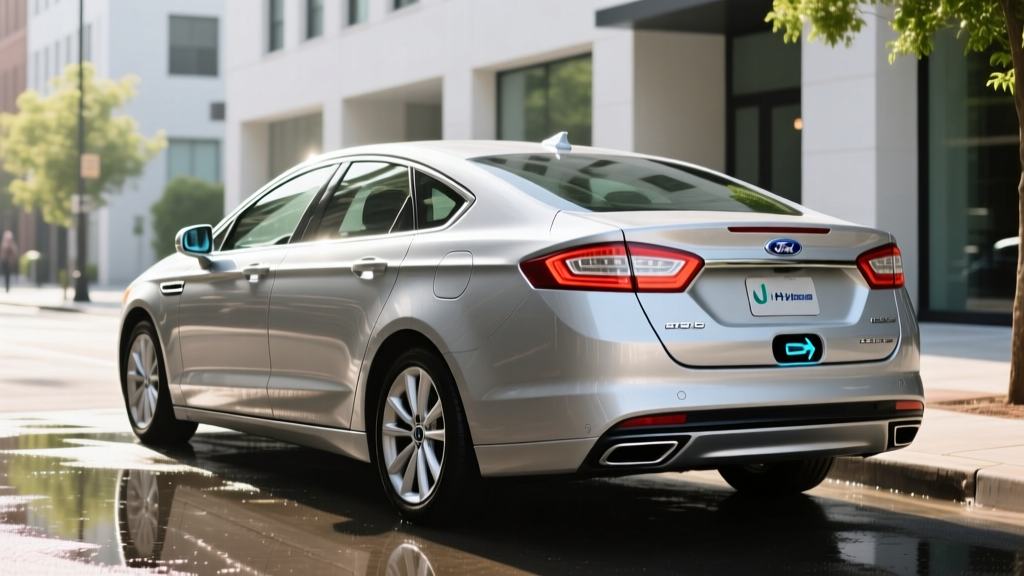
The 2015 Ford Fusion Hybrid is a conventional hybrid electric vehicle (HEV) — not a plug-in. It pairs a 2.0-liter Atkinson-cycle four-cylinder engine with an electric motor and a 1.4 kWh lithium-ion battery to deliver an EPA-rated 42 MPG city, 41 highway, and 42 combined. Over a decade after its release, it remains one of the most fuel-efficient midsize sedans on the used market, with strong reliability data and a battery that routinely outlasts its 8-year/80,000-mile warranty.
If you're shopping for a used hybrid in 2026 and don't need plug-in capability, the Fusion Hybrid offers compelling economics: low fuel costs, no charging infrastructure required, and a total cost of ownership that undercuts most gas-only midsize sedans from the same era. But there are important caveats around battery age, replacement cost, and how it compares to modern hybrids and PHEVs.
HEV vs PHEV: What the 2015 Fusion Hybrid Actually Is
The 2015 Fusion Hybrid is a conventional hybrid (HEV). It charges its small battery through regenerative braking and the gasoline engine — you never plug it in. Ford also sold a plug-in variant that year called the Fusion Energi (a PHEV), which is a fundamentally different vehicle with a larger 7.6 kWh battery, an EPA-rated 19 miles of electric-only range, and the ability to charge from a wall outlet. These two models are frequently confused in used listings.
2015 Fusion Hybrid (HEV) vs 2015 Fusion Energi (PHEV)
| Spec | Fusion Hybrid (HEV) | Fusion Energi (PHEV) |
|---|---|---|
| Powertrain type | Conventional hybrid | Plug-in hybrid |
| Battery capacity | 1.4 kWh (Li-ion) | 7.6 kWh (Li-ion) |
| Plugs in? | No | Yes (Level 1/Level 2) |
| Electric-only range | N/A | 19 miles (EPA) |
| EPA combined MPG/MPGe | 42 MPG | 38 MPG (gas) / 88 MPGe (electric) |
| Combined horsepower | 188 hp | 195 hp |
| DC fast charging | N/A | No (AC only) |
| Trunk space | 12.0 cu ft | 8.2 cu ft (battery intrudes) |
Source: fueleconomy.gov
This guide focuses on the HEV. If you're looking at a listing that mentions "plugging in" or "electric range," you're likely looking at an Energi — verify by checking for a charge port on the front fender.
Fuel Economy: EPA Numbers vs Real-World MPG
The EPA rates the 2015 Fusion Hybrid at 42 MPG city, 41 highway, and 42 combined. These numbers hold up well in practice, and many owners report matching or even exceeding the city figure thanks to the way hybrid systems capitalize on stop-and-go driving — the electric motor handles low-speed propulsion while regenerative braking recaptures energy that a gas car would waste as heat.
| Driving Scenario | EPA Estimate | Real-World Expectation |
|---|---|---|
| City | 42 MPG | 40–45 MPG |
| Highway (70 mph) | 41 MPG | 36–40 MPG |
| Combined | 42 MPG | 38–43 MPG |
| Cold weather (below 32°F) | N/A | 34–38 MPG |
Why highway MPG dips: Hybrids excel in the city because the engine shuts off frequently and regen braking recovers kinetic energy. At sustained highway speeds, the gasoline engine runs continuously and aerodynamic drag dominates — the hybrid advantage shrinks. Expect 36–40 MPG on long interstate trips, which still beats most gas-only midsize sedans from 2015 by 8–12 MPG.
Cold-weather impact: In freezing temperatures, the engine runs more often to provide cabin heat (there's no heat pump on this generation), and battery efficiency drops. Owners in northern climates typically report a 10–15% MPG reduction in winter — figure 34–38 MPG combined. This is less severe than the 20–30% range loss a full EV experiences in cold weather, but it's measurable.
According to data aggregated on fueleconomy.gov, user-reported fuel economy for the 2015 Fusion Hybrid averages approximately 39.5 MPG — close to the EPA combined figure and a strong indicator that the sticker numbers are achievable in mixed driving.
Powertrain and Performance Specs
| Specification | Value |
|---|---|
| Engine | 2.0L Atkinson-cycle I4 |
| Engine horsepower | 141 hp @ 6,000 rpm |
| Electric motor output | 118 hp (88 kW) |
| Net system horsepower | 188 hp |
| Transmission | eCVT (planetary gearset) |
| Drivetrain | Front-wheel drive |
| 0–60 mph | ~8.1 seconds |
| Battery capacity | 1.4 kWh (lithium-ion) |
| Fuel tank | 13.5 gallons |
| Total driving range | ~567 miles |
The eCVT is not a belt-driven CVT like those found in some competitors — it's a planetary gearset (Ford calls it the HF35) that seamlessly blends engine and motor power. This design has proven extremely durable, with no belt to wear or slip, and is shared with other Ford/Lincoln hybrids of the era.
Battery Health, Warranty, and Replacement Cost
Hybrid Battery Warranty (Original)
Coverage: 8 years / 80,000 miles (10 years / 150,000 miles in CARB states including CA, NY, MA, and others)
What's covered: Battery capacity loss below a functional threshold, cell/module failure, hybrid system components
2026 status: Original 8-year/80,000-mile warranties have expired for all 2015 models. The 10-year/150,000-mile CARB-state warranty may still apply to low-mileage examples registered in qualifying states — verify with a Ford dealer using the VIN.
The 1.4 kWh lithium-ion battery in the Fusion Hybrid is small by EV standards, but it operates in a narrow state-of-charge window (roughly 40–60% SoC) managed by the vehicle's battery management system. This shallow-cycling strategy is one of the main reasons hybrid batteries outlast their warranty periods — the battery is never deeply discharged or fully saturated, which are the conditions that accelerate degradation.
Real-world longevity data: Owner forums and repair databases show the Fusion Hybrid battery routinely lasting 150,000–200,000+ miles with minimal capacity loss. Failures before 100,000 miles are uncommon and typically covered under the original warranty. At 11 years old in 2026, battery condition is the single most important factor in a used purchase.
Replacement cost: If the battery does fail out of warranty, expect to pay:
- New OEM battery (Ford dealer): $2,500–$4,000 including labor
- Refurbished/remanufactured battery: $1,200–$2,200 including labor
- Individual cell/module replacement (specialist shop): $500–$1,200
Before purchasing, request a hybrid system diagnostic report from a Ford dealer or qualified hybrid technician. This will show battery voltage balance across modules and overall state of health (SoH) — critical data that a standard pre-purchase inspection won't capture.
Pricing, Tax Credits, and Ownership Cost
As a used vehicle in 2026, the 2015 Fusion Hybrid carries no federal tax credit eligibility. The IRS §30D new clean vehicle credit applies only to new EVs and PHEVs meeting current battery-sourcing and MSRP requirements — conventional hybrids have never qualified for the federal purchase credit, and the used-EV credit (§25E, up to $4,000) applies only to used battery-electric vehicles and PHEVs, not HEVs.
| Cost Factor | 2015 Fusion Hybrid (Used, 2026) |
|---|---|
| Typical used price (80K–120K mi) | $8,000–$13,000 |
| Federal tax credit | None (HEV ineligible) |
| Annual fuel cost (15K mi, $3.30/gal) | ~$1,179 |
| Comparable gas sedan fuel cost | ~$1,838 (at 27 MPG combined) |
| Annual fuel savings vs gas | ~$659 |
Fuel cost calculated using the EPA's fuel economy data at 15,000 miles/year and a national average gas price of $3.30/gallon (early 2026 estimate). Actual savings vary with local fuel prices and driving patterns — city-heavy drivers save more.
Hybrid vs PHEV vs EV: Which Should You Choose?
Reasons to Choose the Fusion Hybrid
- No charging access needed — works with any gas station
- Proven reliability with 10+ years of real-world data
- Low used purchase price ($8K–$13K)
- Strong city MPG (42 EPA) for commuters
- No range anxiety or cold-weather charging concerns
- Lower maintenance than a gas car (regen saves brake pads)
Reasons to Look Elsewhere
- No electric-only driving — always burns gas
- No federal or state tax credits available
- Battery is 11 years old — replacement risk is real
- eCVT driving feel won't suit enthusiasts
- Outdated infotainment (Sync 2, no Apple CarPlay/Android Auto natively)
- A modern PHEV (e.g., Toyota Prius Prime) offers 40+ mi electric range
Decision Framework
Choose the 2015 Fusion Hybrid if: You want maximum fuel savings without changing your fueling habits, you lack home charging access, your budget is under $15K, and you drive mostly in the city or in mixed commuting.
Choose a used PHEV (like a 2017+ Prius Prime or Fusion Energi) if: You have home Level 2 charging, your daily commute is under 25 miles, and you want to drive mostly on electricity while keeping a gas backup for road trips.
Choose a full EV (like a used Bolt, Model 3, or Leaf) if: You have reliable home charging, your daily driving is under 200 miles, you want zero tailpipe emissions, and you're willing to pay more upfront for lower operating costs and available used-EV tax credits (up to $4,000 under §25E, subject to IRS eligibility rules).
Reliability and Common Issues
The 2015 Fusion Hybrid rates well in long-term reliability. The hybrid powertrain — particularly the eCVT and battery — has fewer failure points than a conventional automatic transmission. Common non-hybrid issues reported by owners include:
- 12V battery drain: Like many hybrids, the Fusion can drain its 12V auxiliary battery if left sitting for extended periods. A jump-start or trickle charger resolves this.
- Brake actuator recalls: Ford issued recalls for certain model years related to the brake system — check NHTSA.gov with the VIN to confirm all recalls are addressed.
- Infotainment glitches: The Sync 2 (MyFord Touch) system is known for slow response and occasional freezes. A software update or aftermarket head-unit swap are common fixes.
- Coolant leaks: Some owners report coolant intrusion in the transmission cooler — inspect for milky fluid or overheating warnings during a test drive.
Check NHTSA's recall database with the specific VIN before purchasing. Safety recalls related to the restraint system and powertrain have been issued for some 2013–2015 Fusion vehicles and should be completed free of charge at any Ford dealer.
Frequently Asked Questions
How many MPG does the 2015 Ford Fusion Hybrid get?
The EPA rates it at 42 MPG city, 41 highway, and 42 combined. Real-world driving typically yields 38–43 MPG combined depending on conditions. City-heavy drivers often match or exceed the 42 MPG city figure, while sustained highway driving at 75+ mph can drop to 35–38 MPG.
Does the 2015 Fusion Hybrid need to be plugged in?
No. It is a conventional hybrid (HEV) that charges its battery through regenerative braking and the gasoline engine. You fuel it exclusively at gas stations. If you see a charge port, you're looking at the Fusion Energi (PHEV), which is a different model.
How long does the hybrid battery last?
Most Fusion Hybrid batteries last 150,000–200,000+ miles based on owner reports and repair data. At 11 years old, age-related degradation is a factor even on low-mileage examples. A pre-purchase hybrid diagnostic is strongly recommended to check cell voltage balance and state of health.
What does it cost to replace the hybrid battery?
A new OEM battery from a Ford dealer runs $2,500–$4,000 installed. Refurbished units are available for $1,200–$2,200, and individual module replacements at a hybrid specialist can cost $500–$1,200. Given the vehicle's used value, a refurbished battery is often the most economical choice.
Does the 2015 Fusion Hybrid qualify for any tax credits?
No. The federal §30D new clean vehicle credit never applied to conventional hybrids, and the §25E used clean vehicle credit (up to $4,000) is limited to used battery-electric vehicles and PHEVs. No federal tax incentive is available for this vehicle in 2026. Some states may offer minimal incentives for high-efficiency used vehicles — check your state's energy office for current programs.
Is the Fusion Hybrid or Fusion Energi better for a used buyer?
It depends on your charging access. The Hybrid (HEV) is simpler — no plug, more trunk space (12.0 vs 8.2 cu ft), and lower complexity. The Energi (PHEV) offers 19 miles of electric-only range if you can charge at home, but its larger battery intrudes into the trunk and adds weight. For buyers without home charging, the HEV is the clear choice. For those with a garage and a short commute, the Energi can eliminate most daily gasoline use.
How does it compare to a 2026 Toyota Prius?
The current-generation Prius delivers 57 MPG combined (EPA) — a 15 MPG advantage over the 2015 Fusion Hybrid. However, a used 2015 Fusion Hybrid costs $8,000–$13,000 versus $29,000+ for a new Prius. If your priority is minimizing upfront cost while still achieving strong fuel economy, the Fusion Hybrid remains competitive. If you want the latest safety tech, infotainment, and maximum MPG, the new Prius wins decisively.