Quick Verdict: The 2021 RAV4 Hybrid Still Sets the Bar
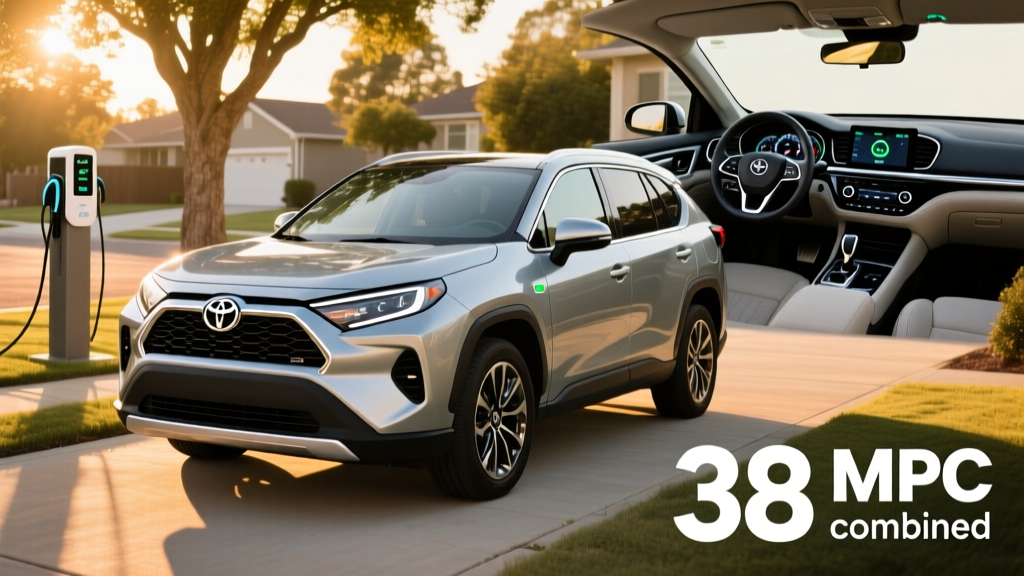
If you've been searching for 2021 RAV4 Hybrid MPG data before pulling the trigger on a used purchase, you're looking at one of the most efficient compact SUVs Toyota has ever built. With an EPA-rated 40 MPG combined, standard electronic AWD, and a proven hybrid powertrain, the 2021 RAV4 Hybrid remains a benchmark in the used-hybrid market — even five years after its release.
This guide covers every number that matters: real-world fuel economy vs. EPA stickers, the difference between this HEV and the plug-in RAV4 Prime, battery longevity data, and whether a used 2021 model still qualifies for any tax incentives in 2026.
HEV vs. PHEV: Which RAV4 Hybrid Are We Talking About?
Toyota sold two electrified RAV4 variants for the 2021 model year, and confusing them is the single most common mistake buyers make. Here's the distinction:
2021 RAV4 Hybrid (HEV)
- Type: Conventional hybrid — no plug, no external charging
- Battery: 1.6 kWh nickel-metal hydride (NiMH)
- Electric-only driving: Very short distances at low speed (under ~1 mile)
- Refueling: Gas station only, like any conventional car
- EPA MPG: 41 city / 38 highway / 40 combined
2021 RAV4 Prime (PHEV)
- Type: Plug-in hybrid — charges from a wall outlet or charger
- Battery: 18.1 kWh lithium-ion
- Electric-only range: 42 miles (EPA)
- Refueling: Plug in for electric miles + gas station for longer trips
- EPA: 94 MPGe (electric+gas) / 38 MPG (gas-only after battery depletes)
The rest of this article focuses on the 2021 RAV4 Hybrid (HEV) — the non-plug model. If you're researching the RAV4 Prime PHEV, we cover its electric range and charging specs in the comparison section below.
2021 RAV4 Hybrid MPG: EPA Ratings vs. Real-World Results
The EPA rates the 2021 RAV4 Hybrid at 41 MPG city / 38 MPG highway / 40 MPG combined across all trims with the standard electronic on-demand AWD system. These figures come from fueleconomy.gov and apply to every trim (LE, XLE, XLE Premium, SE, XSE, Limited) since they all share the same powertrain.
| Driving Condition | EPA MPG | Real-World Expectation |
|---|---|---|
| City | 41 MPG | 42–45 MPG (hybrids excel in stop-and-go) |
| Highway (70 mph) | 38 MPG | 34–37 MPG (aero drag reduces hybrid advantage) |
| Combined | 40 MPG | 37–42 MPG (varies by driving mix) |
| Cold weather (below 30°F) | — | 33–37 MPG (engine runs more for cabin heat) |
Real-World MPG Insight
Toyota's hybrid system recovers energy during braking and low-speed driving, which is why the city MPG is actually higher than the highway number — the opposite of a gas-only car. Owners who do mostly urban and suburban driving routinely report 42–45 MPG on forums and fuel-tracking apps like Fuelly. Highway-heavy commuters should expect 34–37 MPG at sustained 70–75 mph speeds. In sub-freezing winter conditions, expect a 10–15% drop because the gasoline engine runs more frequently to provide cabin heat and maintain battery temperature.
Powertrain Specs: What's Under the Hood
The 2021 RAV4 Hybrid pairs a 2.5-liter four-cylinder Atkinson-cycle engine with two electric motor-generators (one front, one rear) through Toyota's fourth-generation Hybrid Synergy Drive system.
| Engine | 2.5L 4-cylinder Atkinson-cycle |
| Engine Output | 176 HP / 163 lb-ft torque |
| Front Electric Motor | 118 HP / 149 lb-ft |
| Rear Electric Motor (AWD) | 54 HP / 89 lb-ft |
| Net Combined System HP | 219 HP |
| 0–60 MPH | 7.4 seconds |
| Transmission | eCVT (planetary gearset, no traditional belts) |
| Drivetrain | Electronic on-demand AWD (standard all trims) |
| Hybrid Battery | 1.6 kWh NiMH (sealed, no external charging) |
| Fuel Tank | 14.5 gallons |
| Total Driving Range | ~580 miles (at 40 MPG combined) |
| Towing Capacity | 1,750 lbs |
The 219 combined horsepower is a meaningful upgrade over the gas-only 2021 RAV4's 203 HP, and the electric motors deliver instant torque from a stop, making the hybrid feel noticeably quicker in daily driving despite only a modest 0–60 advantage (7.4 sec vs. 8.1 sec for the gas model).
RAV4 Hybrid vs. RAV4 Prime (PHEV): Spec-by-Spec Comparison
For buyers cross-shopping the used market, here's how the conventional hybrid stacks up against its plug-in sibling:
| Spec | RAV4 Hybrid (HEV) | RAV4 Prime (PHEV) |
|---|---|---|
| Combined System HP | 219 HP | 302 HP |
| 0–60 MPH | 7.4 sec | 5.7 sec |
| Battery Capacity | 1.6 kWh (NiMH) | 18.1 kWh (Li-ion) |
| Electric-Only Range | N/A (under 1 mile) | 42 miles (EPA) |
| Gas-Only MPG (after battery) | 40 combined | 38 combined |
| MPGe (electric + gas) | N/A | 94 MPGe |
| External Charging | No | Yes — Level 1 (120V) or Level 2 (240V) |
| Level 2 Charge Time (0–100%) | N/A | ~2.5 hours (6.6 kW onboard charger) |
| DC Fast Charging | N/A | No (no DC fast-charge capability) |
| AWD System | Electronic on-demand | Electronic on-demand (more powerful rear motor) |
| Original MSRP (base) | $28,500 (LE) | $39,220 (SE) |
| Federal Tax Credit (original) | $0 | $7,500 (was eligible in 2021) |
The RAV4 Prime is the clear performance and efficiency winner if you can charge at home — 42 miles of electric range covers most daily commutes without using a drop of gas. But the Prime commanded a ~$10,700 premium at base MSRP, and used examples remain significantly more expensive. The conventional Hybrid makes sense if you lack home charging access or want a lower purchase price.
Battery Warranty, Longevity, and Replacement Cost
Toyota Hybrid Battery Warranty
Toyota covers the 2021 RAV4 Hybrid's battery pack for 10 years or 150,000 miles (whichever comes first) under its Hybrid Battery Warranty. This applies from the vehicle's original in-service date. For a 2021 model, that means factory coverage extends through approximately 2031 or 150,000 miles.
The warranty guarantees the battery against defects and excessive capacity loss. If the battery fails within this window, Toyota replaces it at no cost.
Toyota's NiMH hybrid batteries have a strong longevity track record. Data aggregated from owner reports and fleet usage shows most RAV4 Hybrid batteries retain functional capacity well past 150,000 miles. Unlike full EV batteries, the hybrid pack is small (1.6 kWh) and is never deeply cycled — the system keeps the state of charge between roughly 40% and 80%, which dramatically reduces degradation.
Out-of-warranty replacement cost: If the hybrid battery eventually needs replacement beyond the warranty period, expect to pay between $2,000 and $4,000 for a refurbished or new pack, plus $500–$800 in labor. Third-party refurbished batteries are widely available for under $2,500 installed at independent hybrid-specialist shops. This is a fraction of full EV battery replacement costs.
Pricing, Tax Credits, and 2026 Used Purchase Economics
The 2021 RAV4 Hybrid is no longer sold new, so you'll be shopping the used market. Here's what to expect:
| Trim | Original MSRP | 2026 Used Price Range (est.) |
|---|---|---|
| LE | $28,500 | $22,000–$25,500 |
| XLE | $30,000 | $24,000–$27,500 |
| XLE Premium | $32,825 | $26,000–$29,500 |
| SE | $31,950 | $25,500–$28,500 |
| XSE | $33,950 | $27,000–$30,500 |
| Limited | $36,075 | $28,500–$32,000 |
Federal tax credit: The conventional RAV4 Hybrid (HEV) has never qualified for the federal §30D plug-in vehicle tax credit — it has no plug and no sufficient battery capacity. This was true in 2021 and remains true in 2026.
Used EV credit (§25E): Under current IRS rules, the used clean vehicle credit provides up to $4,000 (30% of sale price, capped) for qualifying used plug-in vehicles. However, the conventional RAV4 Hybrid does not qualify for §25E either, because it is not a plug-in vehicle. Only the RAV4 Prime (PHEV) could potentially qualify, subject to income caps ($75,000 single / $150,000 joint), the $25,000 maximum sale price threshold, and dealer reporting requirements.
State incentives: A handful of states offer rebates or HOV lane access for hybrids, but these vary widely and change frequently. Check your state's energy office or DMV for current programs.
Who Should Buy the 2021 RAV4 Hybrid vs. a Full EV or Gas Car
Decision Framework
Choose the 2021 RAV4 Hybrid (HEV) if:
- You don't have access to home or workplace charging (apartment, street parking)
- You want maximum fuel efficiency with zero behavior change — just fill up with gas
- You regularly drive in cold climates where EV range loss is a concern
- Your budget is $22,000–$30,000 for a used compact SUV
- You want AWD without the fuel economy penalty of a gas-only AWD SUV
Choose the RAV4 Prime (PHEV) if:
- You can install a Level 2 charger at home
- Your daily round-trip commute is under 42 miles (you'll rarely use gas)
- You want the performance bump (302 HP, 5.7-sec 0–60)
- You want to reduce fuel consumption to near-zero on weekdays
Choose a full EV (e.g., Tesla Model Y, Hyundai Ioniq 5) if:
- You have reliable home charging and want to eliminate gas entirely
- Your typical trips fall within 250–300 miles (or you're comfortable with road-trip charging)
- You want the lowest per-mile fuel cost (electricity at $0.12/kWh ≈ $0.04/mile vs. gas at ~$0.12/mile)
- You want to qualify for the full §30D tax credit on a new purchase (up to $7,500)
Choose a gas-only RAV4 if:
- Upfront purchase price is the top priority (gas models are ~$3,000–$5,000 cheaper used)
- You drive very few miles per year (under 8,000), making fuel savings less impactful
Pros, Cons, and Ownership Realities
Pros
- 40 MPG combined is exceptional for an AWD compact SUV
- City MPG exceeds highway — ideal for commuters and urban drivers
- Standard AWD on every trim (no FWD penalty model)
- 10-year / 150,000-mile hybrid battery warranty (still active through ~2031)
- 219 HP provides confident merging and passing power
- No charging infrastructure required — zero lifestyle adjustment
- Strong Toyota reliability reputation and resale value retention
- ~580-mile total range means fewer fill-ups than most gas SUVs
Cons
- No federal tax credit eligibility (HEV, not a plug-in)
- Highway MPG drops to 34–37 at sustained 70+ mph speeds
- Cold weather reduces efficiency by 10–15% (engine runs for cabin heat)
- 1,750-lb towing capacity is limited for a compact SUV
- CVT drone under hard acceleration (common to Toyota hybrids)
- Used prices remain elevated due to sustained demand
- No spare tire — uses tire repair kit (Limited trim has temporary spare)
Frequently Asked Questions
How many MPG does the 2021 RAV4 Hybrid get?
The EPA rates it at 41 MPG city, 38 MPG highway, and 40 MPG combined. Real-world results typically range from 37–45 MPG depending on your driving mix. City-heavy drivers often exceed the EPA estimate, while highway-heavy drivers fall slightly below it.
Does the 2021 RAV4 Hybrid need to be plugged in?
No. The RAV4 Hybrid (HEV) is a conventional hybrid that charges its small battery through regenerative braking and the gasoline engine. You never plug it in. Only the RAV4 Prime (PHEV) requires external charging to access its electric-only range.
How far can the RAV4 Prime go on electric only?
The 2021 RAV4 Prime has an EPA-rated 42 miles of electric-only range. In real-world conditions with moderate temperatures and mixed speeds, expect 35–40 miles. Cold weather (below freezing) can reduce this to 28–33 miles due to battery efficiency loss and cabin heating demands.
Is the 2021 RAV4 Hybrid reliable, and what does a battery replacement cost?
Toyota's hybrid powertrains are among the most reliable in the industry, with extensive fleet and owner data supporting longevity past 200,000 miles. The hybrid battery is covered for 10 years / 150,000 miles. Out-of-warranty replacement costs $2,000–$4,000 for a refurbished or new pack, significantly less than a full EV battery.
Does the 2021 RAV4 Hybrid qualify for any tax credit?
No. The conventional RAV4 Hybrid (HEV) does not qualify for the federal §30D new vehicle credit or the §25E used clean vehicle credit because it is not a plug-in vehicle. The RAV4 Prime (PHEV) was eligible for the $7,500 federal credit when purchased new, and may qualify for the used §25E credit (up to $4,000) if the sale price is $25,000 or less and buyer income limits are met. Consult IRS guidelines or a tax professional for your specific situation.
How does the RAV4 Hybrid's MPG compare to a gas-only RAV4?
The gas-only 2021 RAV4 AWD is rated at 27 city / 34 highway / 30 combined MPG. The hybrid's 40 combined MPG represents a 33% improvement. Over 15,000 miles per year at $3.50/gallon, that difference saves approximately $550–$650 annually in fuel costs.
What's the difference between the RAV4 Hybrid's AWD and a traditional AWD system?
The RAV4 Hybrid uses an electronic on-demand AWD system with a dedicated rear electric motor — there's no mechanical driveshaft connecting the front and rear axles. The rear motor engages automatically when slip is detected or during hard acceleration. This approach is lighter and more efficient than a mechanical AWD system, though it's not designed for serious off-road use.