Quick Verdict: A Pioneering PHEV That Still Makes Sense on a Budget
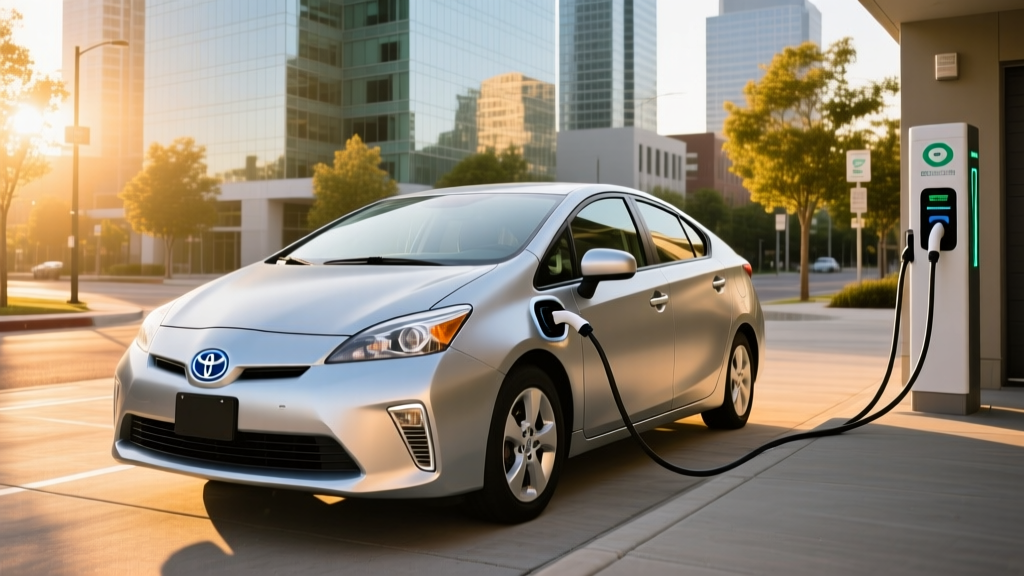
The 2014 Toyota Prius Plug-In Hybrid (often called the Prius PHEV or Prius Plug-In) was Toyota's first mass-market plug-in hybrid sold in the United States. Available exclusively in select states—primarily California, Oregon, Washington, New York, New Jersey, Connecticut, Rhode Island, Maryland, Massachusetts, and Hawaii—this model bridged the gap between the conventional Prius HEV and a full battery-electric vehicle. In 2026, it remains one of the most affordable entries into plug-in ownership on the used market, typically selling for $8,000–$14,000 depending on mileage and battery health.
Its 11-mile EPA-rated electric-only range is modest by today's standards (the 2026 Prius Prime delivers up to 44 miles), but the 2014 Plug-In still offers genuine gas-free commuting for short trips, combined with the bulletproof reliability Toyota's Hybrid Synergy Drive is known for. If you're shopping for a budget PHEV and understand its limitations, it's a compelling choice.
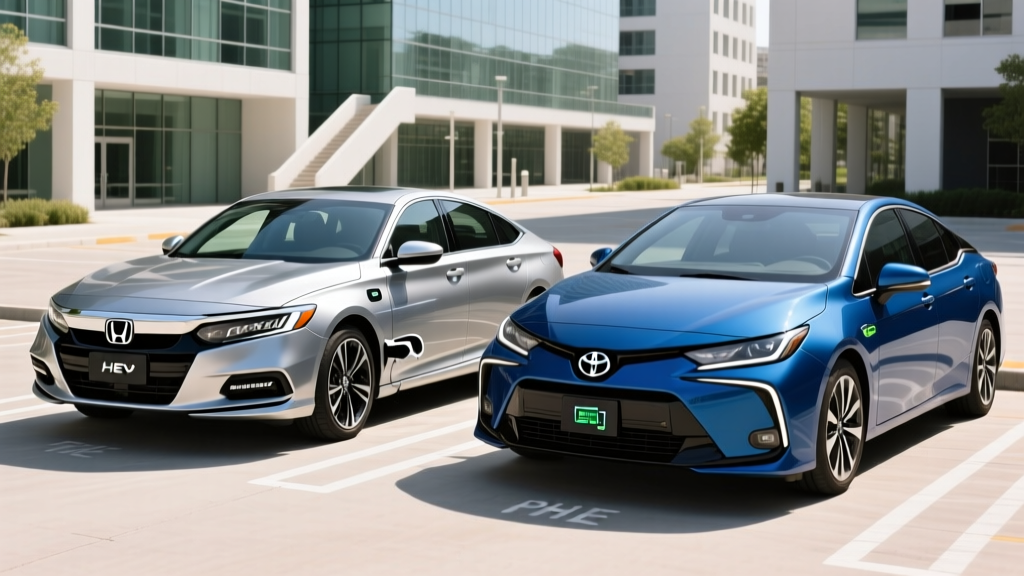
HEV vs PHEV: What Makes the Plug-In Prius Different?
Conventional Hybrid (HEV) — 2014 Prius Liftback: The standard 2014 Prius uses a small 1.3 kWh nickel-metal hydride (NiMH) battery that recharges exclusively through regenerative braking and the gasoline engine. You never plug it in. EPA-rated at 50 MPG combined, it operates as a charge-sustaining hybrid at all times.
Plug-In Hybrid (PHEV) — 2014 Prius Plug-In: The Plug-In variant carries a larger 4.4 kWh lithium-ion battery (approximately 3.4 kWh usable) and can be plugged into a standard 120V outlet or a 240V Level 2 charger. This unlocks an EPA-rated 11 miles of electric-only driving in EV mode before the gasoline engine engages. After the battery depletes, it operates exactly like a conventional Prius hybrid.
The critical distinction: a conventional HEV cannot drive on electricity alone for meaningful distances. The PHEV can operate as a short-range EV for daily errands, then switch seamlessly to hybrid mode for longer trips—eliminating range anxiety entirely.
Fuel Economy, EV Range & Powertrain Specs
| Specification | 2014 Prius Plug-In Hybrid |
|---|---|
| EPA Electric-Only Range | 11 miles |
| EPA Combined MPG (charge-sustaining/hybrid mode) | 50 MPG |
| EPA City MPG (hybrid mode) | 51 MPG |
| EPA Highway MPG (hybrid mode) | 49 MPG |
| MPGe (electric + gas combined) | 95 MPGe |
| Total Combined Range (EV + gas) | ~540 miles |
| Battery Capacity | 4.4 kWh total / ~3.4 kWh usable (Li-ion) |
| Gasoline Engine | 1.8L 4-cylinder Atkinson cycle, 98 HP |
| Electric Motor | 60 kW (80 HP) |
| Combined Net Horsepower | 134 HP |
| 0–60 mph | ~9.8 seconds |
| Transmission | eCVT (planetary gearset) |
| Gas Tank Capacity | 10.6 gallons |
| EV-Only Top Speed | 62 mph |
Charging Time and Capability
The 2014 Prius Plug-In charges via a standard J1772 connector. It does not support DC fast charging—a common limitation of early PHEVs. Here's what to expect:
- Level 1 (120V standard outlet): Approximately 2.5–3 hours for a full charge using the included EVSE cord (~1.4 kW).
- Level 2 (240V home or public charger): Approximately 1.5 hours for a full charge (~3.3 kW onboard charger limit).
- DC Fast Charging: Not available. The vehicle lacks a CCS or CHAdeMO port.
For most owners, overnight Level 1 charging from a standard household outlet is sufficient given the small battery. A Level 2 home charger offers convenience but isn't strictly necessary.
EPA Fuel Economy Breakdown
| Driving Mode | City | Highway | Combined |
|---|---|---|---|
| EV Mode (electric only) | 95 MPGe (11 miles range) | ||
| Hybrid Mode (charge-sustaining) | 51 MPG | 49 MPG | 50 MPG |
Source: EPA / fueleconomy.gov
Real-World MPG and EV Range: What to Actually Expect
The EPA's 11-mile EV range estimate assumes moderate temperatures, flat terrain, and conservative driving. In real-world use, expect some variation:
- Summer, city driving (below 50 mph): 11–13 miles of EV range. The regenerative braking in stop-and-go traffic helps extend range.
- Highway driving (65–75 mph): 7–9 miles of EV range. Higher speeds drain the small battery quickly.
- Cold weather (below 40°F): 6–8 miles of EV range. Battery chemistry loses efficiency, and cabin heating draws significant power. The gasoline engine may also activate sooner to provide heat.
In hybrid mode after EV depletion, real-world fuel economy closely tracks the EPA's 50 MPG combined. Many owners report 52–56 MPG in city driving thanks to the Atkinson-cycle engine's efficiency at low speeds and frequent regenerative braking. Highway driving at 75+ mph typically yields 44–47 MPG.
The 10.6-gallon fuel tank provides a practical total range of approximately 540 miles when combining EV and hybrid operation—enough for most road trips without range anxiety.
Battery Health, Warranty, and Replacement Cost
Original Battery Warranty: Toyota warranted the 2014 Prius Plug-In's lithium-ion traction battery for 8 years/100,000 miles in most states, and 10 years/150,000 miles in California Air Resources Board (CARB) states (CA, OR, WA, NY, NJ, CT, RI, MD, MA, and others adopting CARB standards).
Current Status (2026): A 2014 model is now 12 years old. The original battery warranty has expired for virtually all examples on the road, even in CARB states.
Battery Degradation in Practice
Toyota's lithium-ion pack in the Plug-In has proven more durable than early skeptics predicted. Based on owner reports and fleet data:
- Mild degradation (5–10% capacity loss): Common at 80,000–120,000 miles. EV range drops from 11 miles to roughly 9–10 miles—barely noticeable in daily use.
- Moderate degradation (15–25% capacity loss): Possible at 150,000+ miles. EV range drops to 7–9 miles. Hybrid-mode MPG remains largely unaffected.
- Catastrophic failure: Rare. Toyota's battery management system (BMS) maintains a generous buffer (roughly 1 kWh of the 4.4 kWh total is reserved), protecting the cells from deep cycling that accelerates wear.
Battery Replacement Cost
If the traction battery does fail outside of warranty, here's what to budget:
- New OEM Toyota battery: $3,500–$5,000 installed at a dealership.
- Refurbished/remanufactured battery: $1,800–$2,800 installed at an independent hybrid specialist.
- Individual module replacement: Some specialist shops can replace only the failed modules within the pack for $800–$1,500, though this is a temporary fix if other modules are also aging.
Given the vehicle's current used-market value of $8,000–$14,000, a full OEM battery replacement is difficult to justify economically. A refurbished pack or module-level repair makes more financial sense. Before purchasing, ask for a hybrid battery health check—many Toyota dealers and independent shops can read the battery's State of Health (SoH) via the OBD-II port using tools like Techstream or third-party apps.
Used Pricing and Tax Credit Eligibility
As of 2026, the 2014 Toyota Prius Plug-In Hybrid is available exclusively on the used market. Typical pricing:
- 80,000–100,000 miles: $10,000–$14,000
- 100,000–140,000 miles: $8,000–$11,000
- 140,000+ miles: $6,500–$8,500
Pricing varies significantly by region, condition, and battery health. California examples tend to command a premium due to HOV lane sticker eligibility (though original white Clean Air Vehicle stickers for 2014 models have long since expired).
Tax Credit Eligibility
When new, the 2014 Prius Plug-In qualified for a $2,500 federal tax credit under the original IRC §30D rules (the credit was based on battery capacity; the 4.4 kWh pack yielded a smaller credit than larger-battery PHEVs).
In 2026, under the current IRS §30D clean vehicle credit rules, the used EV credit (IRC §25E) allows eligible buyers to claim 30% of the sale price, up to $4,000, on a qualifying used plug-in vehicle. Key requirements include:
- Sale price must be $25,000 or less (virtually all 2014 Prius Plug-In examples qualify).
- Buyer income caps: $75,000 single / $112,500 head of household / $150,000 joint filers (modified adjusted gross income).
- The vehicle must be at least two model years old (2014 easily qualifies).
- The credit can be transferred to the dealer at the point of sale as a discount, or claimed on your federal tax return.
- The vehicle must be purchased from a licensed dealer (private-party sales do not qualify).
For a $10,000 used 2014 Prius Plug-In, the 30% calculation yields $3,000—potentially reducing your effective purchase price to $7,000. Consult a tax professional to confirm your eligibility, as income limits and sourcing rules apply.
Reliability and Ownership Costs
The 2014 Prius Plug-In inherits the legendary reliability of the third-generation Prius platform (2010–2015). The Hybrid Synergy Drive powertrain has been proven across millions of vehicles worldwide. Key reliability notes:
- Engine: The 1.8L 2ZR-FXE Atkinson-cycle engine is one of Toyota's most durable powerplants. With regular oil changes, 250,000+ mile examples are common.
- eCVT transmission: The planetary gearset has no belts, clutches, or bands to wear out. Failures are exceptionally rare.
- Inverter/coolant system: The inverter coolant pump was subject to a recall on some 2010–2014 Prius models. Verify this recall was addressed (check NHTSA VIN lookup at nhtsa.gov/recalls).
- Brakes: Regenerative braking dramatically reduces pad wear. Original brake pads lasting 80,000–120,000 miles is typical.
- 12V auxiliary battery: The small 12V battery (located in the rear cargo area) typically needs replacement every 4–6 years. An AGM-type replacement costs $180–$280.
Maintenance costs are low. There is no transmission fluid to change (Toyota calls it "lifetime" though some specialists recommend a drain-and-fill at 100,000 miles), no timing belt (it uses a chain), and the engine's Atkinson-cycle operation reduces thermal stress. Expect annual maintenance of $300–$500 for a well-maintained example.
Who Should Buy This PHEV (and Who Shouldn't)
Pros
- Proven Toyota reliability with massive owner community and parts availability
- Genuine EV driving for short commutes (under 11 miles)
- 50 MPG combined in hybrid mode—no range anxiety on road trips
- Charges on a standard 120V outlet in ~3 hours—no Level 2 install required
- Low used purchase price ($8K–$14K) plus potential $3,000–$4,000 used EV tax credit
- Low maintenance costs and strong resale demand in eco-conscious markets
Cons
- Only 11 miles of EV range—insufficient for most commutes to be fully electric
- No DC fast charging capability
- Modest 134 HP; highway merging and mountain passes feel underpowered
- 2014 tech: no Apple CarPlay/Android Auto, small infotainment screen, basic backup camera
- Original battery warranty has expired; replacement is a real cost risk
- Available only in select states originally, limiting used inventory in some regions
Choose the 2014 Prius Plug-In If:
- Your daily commute is under 15 miles round-trip and you can charge at home overnight.
- You want a plug-in vehicle but cannot commit to a full EV due to road-trip needs or lack of public charging.
- You're on a tight budget (under $12,000 effective cost after tax credit) and prioritize low running costs.
- You value Toyota's reliability reputation and want minimal maintenance surprises.
Look at a Full EV or Newer PHEV Instead If:
- Your commute exceeds 20 miles and you want genuine gas-free daily driving (consider a used Chevrolet Bolt EV, Nissan Leaf, or a newer Prius Prime with 40+ miles of EV range).
- You need DC fast charging for road trips or apartment living without home charging access.
- You want modern infotainment, driver-assistance features, or a more powerful powertrain.
- You plan to keep the car 8+ years and want battery warranty coverage.
Frequently Asked Questions
How many MPG does the 2014 Toyota Prius Plug-In Hybrid get?
In hybrid mode (after the EV battery is depleted), the 2014 Prius Plug-In is EPA-rated at 51 city / 49 highway / 50 combined MPG. Real-world city driving often yields 52–56 MPG thanks to regenerative braking. Highway driving above 70 mph typically returns 44–47 MPG.
How far can the 2014 Prius Plug-In go on electric only?
The EPA rates it at 11 miles of electric-only range. In real-world summer city driving, some owners see 12–13 miles. Highway speeds and cold weather reduce this to 6–9 miles. The EV-only top speed is 62 mph—above that, the gasoline engine engages automatically.
Hybrid vs PHEV vs EV: which is right for me?
A conventional hybrid (HEV) like the standard Prius never plugs in and offers 50 MPG everywhere—ideal if you lack home charging access. A plug-in hybrid (PHEV) like the Prius Plug-In adds short-range EV capability (11 miles here) for gas-free errands while retaining the gas engine for longer trips—ideal if you have home charging and a short commute. A full EV (BEV) eliminates gasoline entirely with 200–350+ miles of range—ideal if you have reliable home charging and want zero tailpipe emissions with minimal maintenance.
Is the 2014 Prius Plug-In reliable, and what does a battery replacement cost?
Yes. The third-generation Prius platform is among the most reliable vehicles Toyota has ever built. The hybrid powertrain routinely exceeds 200,000 miles with basic maintenance. The lithium-ion traction battery is the primary risk at this age: a refurbished replacement costs $1,800–$2,800, while a new OEM battery runs $3,500–$5,000. Most examples experience only mild capacity loss (5–15%) rather than outright failure.
Does the 2014 Prius Plug-In qualify for any tax credit in 2026?
It no longer qualifies for the new-vehicle §30D credit. However, under the IRC §25E used clean vehicle credit, eligible buyers can claim 30% of the sale price (up to $4,000) when purchasing from a licensed dealer. For a $10,000 example, that's a $3,000 credit. Income caps apply ($75K single / $150K joint), and the vehicle must be sold for $25,000 or less. The credit can be applied at the point of sale as a discount or claimed on your tax return. Consult a tax professional to verify your eligibility under current IRS rules.
Can I charge the 2014 Prius Plug-In at a public fast charger?
No. The 2014 Prius Plug-In only supports Level 1 (120V) and Level 2 (240V) AC charging via a J1772 connector. It does not have a DC fast charging port (CCS or CHAdeMO). This is standard for PHEVs of this era—the small battery doesn't warrant the added cost and weight of DC fast-charging hardware.
What's the difference between the 2014 Prius Plug-In and the newer Prius Prime?
Toyota renamed the Plug-In to "Prius Prime" starting with the 2017 model year. The second-generation Prime (2017–2022) jumped to 25 miles of EV range with an 8.8 kWh battery. The current-generation Prius Prime (2023–2026) offers up to 44 miles of EV range with a 13.6 kWh battery and significantly more power (220 HP combined). If your budget allows, a used 2017+ Prime provides substantially more electric range and modern features.