If you've searched "what does hybrid vehicle mean" and ended up more confused than when you started, you're not alone. The term "hybrid" now covers two very different powertrains — the conventional hybrid (HEV) that never plugs in, and the plug-in hybrid (PHEV) that drives like an EV for 30–50 miles before its gas engine kicks in. Both pair an internal combustion engine with an electric motor and a battery pack, but the size of that battery, how you fuel it, and what it costs to own diverge sharply.
This guide cuts through the marketing to explain exactly what each type delivers in 2026: real-world MPG, electric-only range, battery longevity, tax credit eligibility, and which one actually fits your driving life.
The Core Definition: What Makes a Vehicle a Hybrid
A hybrid vehicle uses two distinct energy sources to move the car — almost always a gasoline engine combined with one or more electric motors powered by a battery pack. The electric motor handles low-speed driving, assists during acceleration, and captures energy during braking (regenerative braking). The result is better fuel economy than a gas-only car without the range limitations of a full battery-electric vehicle (BEV).
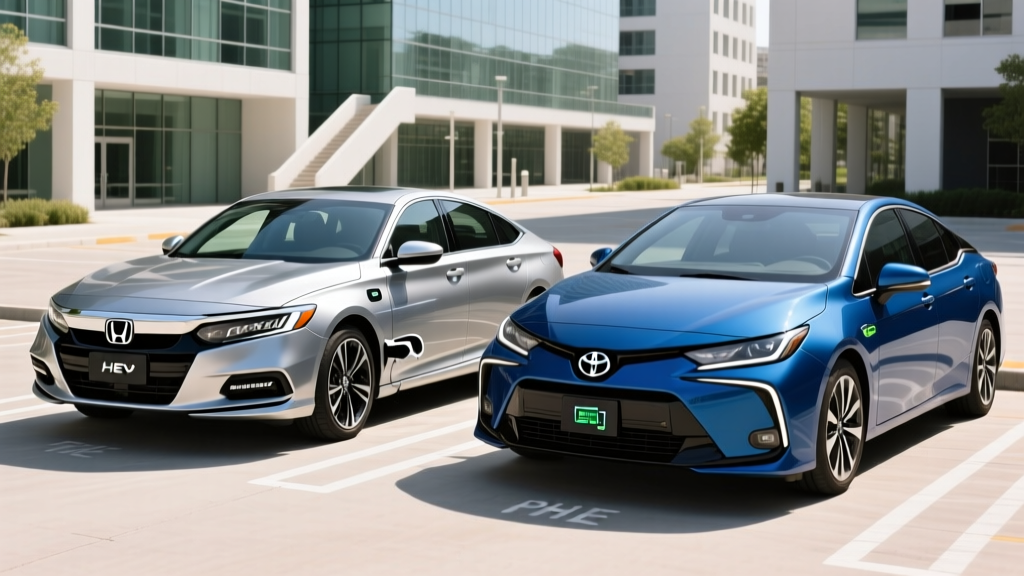
Where confusion creeps in is the split between two hybrid architectures:
Conventional Hybrid (HEV)
Battery size: 1–2 kWh (small, self-charging)
Plug-in required: No — the battery charges via regenerative braking and the gas engine
Electric-only driving: Very limited, typically under 1 mile at low speeds
Examples: Toyota Prius, Honda CR-V Hybrid, Hyundai Tucson Hybrid
Plug-In Hybrid (PHEV)
Battery size: 13–25+ kWh (large, plug-in capable)
Plug-in required: Optional but strongly recommended to capture the EV-like experience
Electric-only driving: 25–50+ miles on a full charge (EPA rated)
Examples: Toyota RAV4 Prime, Jeep Wrangler 4xe, Hyundai Tucson PHEV
The fundamental difference: an HEV is a gas car that's been made more efficient. A PHEV is part EV, part gas car — and how you use it determines whether you get the benefit.
HEV Fuel Economy: Real MPG Numbers That Matter
Conventional hybrids shine in stop-and-go city driving, where regenerative braking constantly recycles energy. Many HEVs actually exceed their EPA city estimates in real-world urban use because the EPA test cycle can't fully replicate aggressive regen capture on long downhill stretches or hyper-efficient driving habits.
| Model | City MPG | Highway MPG | Combined MPG | Combined HP |
|---|---|---|---|---|
| Toyota Prius (LE AWD) | 53 | 54 | 54 | 196 hp |
| Honda CR-V Hybrid (Sport Touring AWD) | 40 | 34 | 37 | 204 hp |
| Hyundai Tucson Hybrid (Blue) | 38 | 38 | 38 | 231 hp |
| Toyota Camry Hybrid (LE) | 53 | 50 | 51 | 225 hp |
| Ford Maverick Hybrid (FWD) | 42 | 33 | 37 | 191 hp |
Source: fueleconomy.gov (EPA estimates). Real-world city MPG may be 2–5 MPG higher for drivers who maximize regenerative braking; highway MPG may drop 3–5 MPG at sustained 75–80 mph speeds.
Real-world MPG reality check: If 70% or more of your driving is highway at 75+ mph, a hybrid's advantage narrows. The electric motor contributes less at sustained high speeds, and the gas engine does most of the work. HEVs still beat their gas-only counterparts on the highway, but the gap is smaller — expect 5–10 MPG improvement rather than the 15–20 MPG gains you'll see in city traffic.
PHEV Deep Dive: Electric Range, Battery Specs, and Charging
A PHEV's value proposition hinges entirely on one number: its EPA-rated electric-only range. Drive within that range and charge daily, and you'll burn almost no gasoline. Ignore the plug and treat it like a regular hybrid, and you're carrying 300+ pounds of dead battery weight for worse fuel economy than a lighter HEV.
| Model | EV Range (EPA) | Battery (kWh usable) | Total Range | Combined HP | DC Fast Charge | Level 2 Charge Time |
|---|---|---|---|---|---|---|
| Toyota RAV4 Prime | 42 mi | 14.9 kWh | ~600 mi | 302 hp | No | ~2.5 hr (6.6 kW) |
| Jeep Wrangler 4xe | 22 mi | 14.9 kWh | ~370 mi | 375 hp | No | ~2.5 hr (6.6 kW) |
| Hyundai Tucson PHEV | 33 mi | 13.8 kWh | ~420 mi | 261 hp | No | ~2 hr (7.2 kW) |
| Chrysler Pacifica PHEV | 32 mi | 16.0 kWh | ~520 mi | 260 hp | No | ~2 hr (6.6 kW) |
| BMW X5 xDrive50e | 38 mi | 25.7 kWh | ~440 mi | 483 hp | No (7.4 kW AC) | ~3.5 hr |
Source: fueleconomy.gov and manufacturer specifications.
The DC fast-charging gap: Almost no PHEV on the market in 2026 supports DC fast charging. The Mitsubishi Outlander PHEV is a rare exception, accepting up to 22 kW DC. For every other PHEV, you're limited to Level 2 AC charging (240V), which means a full charge takes 2–4 hours. This is by design — the battery is small enough that overnight Level 2 charging covers daily needs, and adding DC hardware would raise cost and weight.
When the battery depletes: Once the electric range is used, a PHEV switches to hybrid mode. Expect 27–35 MPG combined in this mode for most PHEV SUVs — respectable, but often 5–10 MPG worse than a purpose-built HEV like the Prius, because the PHEV is heavier.
Hybrid vs PHEV vs Full EV: Which Powertrain Fits You
The right choice depends on three variables: your access to charging, your daily mileage, and your tolerance for behavioral change.
Choose a Conventional Hybrid (HEV) If:
- You have no access to home or workplace charging
- You want zero behavior change — just fill up at gas stations as usual
- Your budget is tighter (HEVs typically start $3,000–$6,000 below PHEV equivalents)
- You drive mostly city miles and want maximum MPG without plugging in
Choose a Plug-In Hybrid (PHEV) If:
- You can install a Level 2 charger at home or have reliable workplace charging
- Your daily round-trip commute falls within the EV range (25–45 miles for most models)
- You regularly take longer road trips where gas infrastructure matters
- You want to drive electric most days but keep a gas safety net
Choose a Full EV (BEV) If:
- You have reliable home charging and your daily driving is under 250 miles
- You want to eliminate gasoline costs and maintenance entirely
- You qualify for the full federal EV tax credit (up to $7,500 under IRS §30D)
- You're comfortable with public DC fast charging for road trips
Battery Longevity, Warranty Coverage, and Replacement Costs
Hybrid battery anxiety is the single biggest objection we hear from buyers. The data, however, is reassuring: modern hybrid battery packs — both HEV and PHEV — are engineered for longevity far beyond early-generation systems.
Federal Hybrid Battery Warranty Mandate
U.S. federal law requires that hybrid and EV battery packs carry a minimum warranty of 8 years / 100,000 miles (10 years / 150,000 miles in CARB states including California, New York, Massachusetts, and others). Most manufacturers meet or exceed this baseline:
- Toyota: 10 years / 150,000 miles on hybrid battery (all 50 states from 2020+)
- Hyundai/Kia: 10 years / 100,000 miles
- Honda: 8 years / 100,000 miles (10 years / 150,000 in CARB states)
- Ford: 8 years / 100,000 miles
The warranty typically covers battery capacity falling below 60–70% of original capacity.
Real-world degradation data: Toyota Prius taxis regularly surpass 200,000 miles on the original hybrid battery. PHEV batteries experience slightly more stress due to deeper charge/discharge cycles, but thermal management systems in modern PHEVs keep degradation in the 10–15% range over 100,000 miles.
Replacement cost if out of warranty:
- HEV battery (Prius-class): $2,000–$4,000 installed
- PHEV battery (RAV4 Prime-class): $6,000–$10,000 installed
- Refurbished/remanufactured options: 30–50% less than new OEM
For context, a conventional automatic transmission replacement on a gas car costs $4,000–$8,000, and the hybrid battery is statistically less likely to fail within the first 150,000 miles.
Pricing, Trim Levels, and 2026 Tax Credit Eligibility
Hybrids carry a price premium over their gas-only siblings, but the gap has narrowed significantly. PHEVs remain more expensive due to the larger battery pack and onboard charging hardware.
| Model | HEV Starting MSRP | PHEV Starting MSRP | Gas-Only Starting MSRP |
|---|---|---|---|
| Toyota RAV4 | $33,425 (Hybrid LE) | $44,515 (Prime SE) | $30,425 (LE) |
| Honda CR-V | $36,230 (Sport Hybrid) | N/A (discontinued PHEV) | $31,450 (LX) |
| Hyundai Tucson | $33,975 (Blue) | $39,425 (SEL) | $29,775 (SE) |
| Toyota Prius | $29,445 (LE) | $34,445 (Prius Prime SE) | N/A (hybrid only) |
Federal Tax Credit Rules for PHEVs (2026)
Under IRS §30D Clean Vehicle Credit, qualifying PHEVs are eligible for up to $7,500 — but the rules are strict and model eligibility shifts as manufacturers update battery sourcing:
- Battery capacity: Must be at least 7 kWh (most PHEVs qualify)
- MSRP cap: Vans/SUVs/pickups ≤ $80,000; sedans ≤ $55,000
- Buyer income cap: AGI ≤ $150,000 single / $300,000 joint / $225,000 head of household
- Battery component sourcing: Percentage of components manufactured or assembled in North America must meet annually increasing thresholds (check irs.gov for current-year requirements)
- Critical minerals: Percentage of critical minerals sourced from the U.S. or FTA partners must meet thresholds
- Point-of-sale transfer: You can transfer the credit to the dealer at purchase to reduce the sale price, rather than waiting to claim it on your tax return
HEV tax credit note: Conventional hybrids (HEVs) do not qualify for the §30D federal tax credit. That credit is reserved for plug-in vehicles (PHEVs and BEVs) with battery capacity ≥ 7 kWh. Some states offer separate incentives for HEVs — check your state energy office or AFDC state incentive database.
Reliability Ratings: How Hybrids Stack Up
Hybrid powertrains have a two-decade track record, and the data favors them over conventional gas powertrains for long-term reliability. The electric motor has far fewer moving parts than a transmission, there's no starter motor to fail, regenerative braking extends brake pad life by 30–50%, and the engine runs less often, reducing wear.
According to IIHS and long-term owner surveys, the Toyota Prius and RAV4 Hybrid consistently rank among the most reliable vehicles in their segments. Honda and Hyundai hybrid systems also perform well, though Hyundai's early PHEV models had some software-related recalls that have since been addressed.
Hybrid (HEV) Pros & Cons
Pros:
- No plug-in needed — zero lifestyle change
- 30–55 MPG combined, strongest in city driving
- Lower purchase price than PHEV or BEV
- Proven 20+ year reliability track record
- Brake pads last 60,000–100,000+ miles
Cons:
- No federal tax credit eligibility
- No electric-only driving (still burns gas at idle and low speeds)
- Highway MPG advantage over gas cars is smaller
- Still requires oil changes and gas-engine maintenance
Plug-In Hybrid (PHEV) Pros & Cons
Pros:
- 25–50 miles of EV driving covers most commutes
- Gas engine eliminates range anxiety on road trips
- Eligible for up to $7,500 federal tax credit (if sourcing rules met)
- Total range often exceeds 500+ miles
- Can pre-condition cabin on grid power
Cons:
- $4,000–$8,000 more expensive than HEV equivalent
- No DC fast charging on most models
- Worse MPG in hybrid mode than a dedicated HEV
- Heavier — reduces payload and handling agility
- Must plug in regularly to realize the value proposition
Frequently Asked Questions
How many MPG does a hybrid vehicle get?
It varies by model and driving conditions. The 2026 Toyota Prius achieves an EPA-rated 54 MPG combined (53 city / 54 highway). SUV hybrids like the Honda CR-V Hybrid deliver around 37 MPG combined. Real-world city driving often yields 2–5 MPG above the EPA estimate thanks to regenerative braking, while sustained highway driving at 75+ mph can drop 3–5 MPG below the sticker.
How far can a PHEV go on electric only?
Most 2026 PHEVs offer 25–45 miles of EPA-rated electric-only range. The Toyota RAV4 Prime leads at 42 miles, while the Jeep Wrangler 4xe sits at the lower end with 22 miles. Real-world EV range drops in cold weather (expect 20–30% loss below freezing) and at highway speeds (the EPA test cycle includes low-speed driving).
Do hybrid vehicles need to be plugged in?
Conventional hybrids (HEVs) do not plug in at all — they recharge their small battery through regenerative braking and the gasoline engine. Plug-in hybrids (PHEVs) can be plugged in to charge their larger battery for electric-only driving, but they'll still operate as regular hybrids if you never plug them in. However, not plugging in a PHEV defeats its primary advantage.
Is a hybrid reliable, and what does battery replacement cost?
Hybrid powertrains are among the most reliable in the auto industry, with Toyota's system backed by two decades of proven performance. Federal law mandates an 8-year/100,000-mile minimum battery warranty (10/150,000 in CARB states). If replacement is needed out of warranty, expect $2,000–$4,000 for an HEV battery and $6,000–$10,000 for a PHEV battery, installed. Refurbished options cost 30–50% less.
Does a hybrid qualify for any tax credit?
Conventional hybrids (HEVs) do not qualify for the federal §30D Clean Vehicle Credit — that's reserved for plug-in vehicles. Qualifying PHEVs can receive up to $7,500, subject to MSRP caps ($80,000 for SUVs, $55,000 for sedans), buyer income limits, and battery sourcing requirements that change annually. Check IRS.gov for current eligibility before purchasing. Some states offer separate rebates for both HEVs and PHEVs.
Hybrid vs PHEV vs EV — which should I buy?
Choose an HEV if you can't charge at home and want maximum MPG with zero lifestyle change. Choose a PHEV if you can charge at home, your commute is under 40 miles round-trip, and you want electric daily driving with a gas backup for road trips. Choose a full BEV if you have home charging, want to eliminate gasoline entirely, and your typical driving is under 250 miles per day.