Quick Verdict: A Proven Hybrid Workhorse
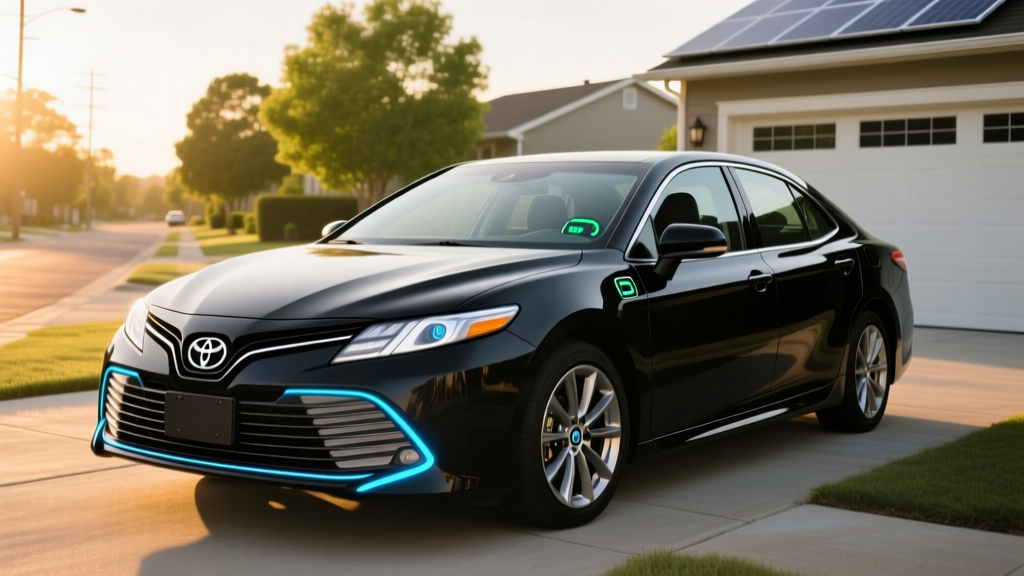
The 2014 Toyota Camry Hybrid is a conventional hybrid electric vehicle (HEV) — not a plug-in. It never needs to be plugged in, uses regenerative braking and a gasoline engine to charge its small battery, and delivers EPA-rated 41 MPG combined. Over a decade after its release, it remains one of the most dependable midsize sedans on the used market, with hybrid battery replacement costs that are manageable and a powertrain that routinely exceeds 200,000 miles with basic maintenance.
For 2026 used-car shoppers, the 2014 Camry Hybrid represents a low-risk entry into electrified driving without the charging infrastructure demands of a full battery electric vehicle (BEV) or the plug-in requirements of a PHEV.
HEV vs PHEV: What the 2014 Camry Hybrid Actually Is
Before diving into specs, it is essential to distinguish what this vehicle is and is not. The 2014 Camry Hybrid is a conventional hybrid (HEV). It has no plug, no electric-only driving range to speak of, and no ability to charge from an external source. The battery charges exclusively through regenerative braking and the gasoline engine.
| Feature | HEV (2014 Camry Hybrid) | PHEV (e.g., Prius Prime) | BEV (e.g., Tesla Model 3) |
|---|---|---|---|
| Plug-in charging | No | Yes | Yes |
| Electric-only range | <1 mile at low speed | 25–44 miles typical | 250–360+ miles |
| Battery size | 1.6 kWh (NiMH) | 8.8–13.6 kWh (Li-ion) | 50–100+ kWh (Li-ion) |
| DC fast charging | No | Varies (some yes) | Yes |
| Federal tax credit (new) | None | Up to $7,500 (§30D) | Up to $7,500 (§30D) |
| Fuel required | Gasoline | Gasoline + electricity | Electricity only |
Toyota did not offer a Camry plug-in hybrid in 2014. The Prius Plug-in Hybrid (later renamed Prius Prime) was Toyota's PHEV offering that year. If you need electric-only commuting capability, the 2014 Camry Hybrid will not provide it — you would need to look at a PHEV or BEV instead.
Fuel Economy: EPA Ratings and Real-World MPG
| Driving Condition | EPA Rating | Real-World Expectation |
|---|---|---|
| City | 40 MPG | 38–45 MPG (hybrids excel in stop-and-go) |
| Highway | 38 MPG | 35–40 MPG (less regen benefit at steady speed) |
| Combined | 41 MPG | 37–43 MPG depending on driving mix |
Source: EPA / fueleconomy.gov
One of the defining characteristics of conventional hybrids is that they frequently exceed their EPA city rating in real-world urban driving. The 2014 Camry Hybrid's Synergy Drive system switches to electric-only mode at low speeds (under ~25 mph in gentle acceleration), meaning heavy traffic with frequent stops actually improves efficiency. Many owners report 43–45 MPG in city commuting.
Highway driving tells a different story. At sustained speeds above 65 mph, the gasoline engine does most of the work, and aerodynamic drag reduces the hybrid advantage. Expect 35–38 MPG on long interstate trips. Cold weather further reduces efficiency by roughly 5–10% as the engine runs more often to provide cabin heat and maintain battery temperature.
Total Range on a Single Tank: With a 17.2-gallon fuel tank and 41 MPG combined, the 2014 Camry Hybrid delivers approximately 705 miles of range before refueling — far exceeding any current BEV and eliminating range anxiety entirely.
Powertrain and Performance Specifications
| Specification | 2014 Toyota Camry Hybrid (LE/XLE) |
|---|---|
| Engine | 2.5L inline-4 Atkinson cycle |
| Engine horsepower | 156 HP @ 5,700 RPM |
| Electric motor output | 105 kW (141 HP) |
| Net combined system HP | 200 HP |
| Transmission | eCVT (electronically controlled CVT) |
| 0–60 mph | ~7.1 seconds |
| Drivetrain | Front-wheel drive |
| Hybrid battery | 1.6 kWh, Nickel-Metal Hydride (NiMH) |
| Curb weight | ~3,435 lbs (LE) |
The 200 HP combined output makes the 2014 Camry Hybrid genuinely quick for its class — the 0–60 mph time of roughly 7.1 seconds beats many non-hybrid midsize sedans of the era. The eCVT is not a belt-driven CVT in the traditional sense; it uses a planetary gearset to blend engine and motor power, which contributes to its legendary reliability. There are no belts to wear, no friction cones to degrade.
Hybrid Battery Longevity, Warranty, and Replacement Cost
This is the single most important question for any used hybrid buyer: How long will the battery last, and what does replacement cost?
The 2014 Camry Hybrid uses a Nickel-Metal Hydride (NiMH) battery pack. NiMH chemistry is less energy-dense than modern lithium-ion, but it has proven remarkably durable in Toyota's hybrid applications. The battery is relatively small (1.6 kWh usable) and operates within a narrow state-of-charge window (roughly 40–80%), which dramatically reduces degradation stress.
Original Hybrid Battery Warranty: 8 years / 100,000 miles (10 years / 150,000 miles in CARB states including California, New York, Massachusetts, and others that follow California emissions standards).
2026 Status: The original factory warranty has expired for all 2014 models. However, many original batteries are still functioning with minimal capacity loss at 150,000–200,000+ miles.
Battery Replacement Cost (2026 Estimates):
- New OEM Toyota battery: $2,500–$3,500 (parts) + $500–$800 labor = approximately $3,000–$4,300 total at a dealership
- Remanned/reconditioned battery: $1,200–$2,000 installed at an independent hybrid specialist
- Individual module replacement: $300–$800 if only one or two modules have failed (a common repair for NiMH packs where a single weak cell drags down the entire pack)
For context, a $3,000 battery replacement on a vehicle that saves roughly $600–$900 per year in fuel (compared to a 25 MPG non-hybrid midsize sedan at 15,000 miles/year and $3.50/gallon) pays for itself in approximately 3.5–5 years. Most 2014 Camry Hybrids on the used market in 2026 are priced between $8,000–$14,000 depending on mileage and condition.
Pricing and Tax Credit Eligibility
| Trim | Original 2014 MSRP | 2026 Used Market Range |
|---|---|---|
| LE Hybrid | $26,810 | $8,000–$11,000 |
| XLE Hybrid | $30,510 | $10,000–$14,000 |
Federal Tax Credit: The 2014 Camry Hybrid did not qualify for any federal tax credit when new, and it does not qualify for the current §30D clean vehicle credit as a used purchase. Under current IRS rules, the Used Clean Vehicle Credit (§25E) applies only to qualified plug-in electric vehicles and fuel cell vehicles — conventional hybrids (HEVs) are excluded. The used vehicle must have a battery capacity of at least 7 kWh to qualify, and the Camry Hybrid's 1.6 kWh NiMH pack falls well below that threshold.
State incentives: A small number of states have offered hybrid-specific rebates or HOV lane access historically, but most have shifted incentives toward PHEVs and BEVs. Check your state's current programs through your state energy office or department of environmental quality.
Who Should Buy This Hybrid vs a PHEV or Full EV
Choose the 2014 Camry Hybrid If:
- You have no access to home or workplace charging (apartment, street parking)
- You drive 15,000+ miles per year and want low fuel costs without behavioral changes
- You want proven reliability with minimal maintenance complexity
- Your budget is under $15,000 for an electrified vehicle
- You take frequent long road trips and cannot plan around charging stops
- You live in an area with limited or unreliable public charging infrastructure
Look at a PHEV or BEV Instead If:
- You have Level 2 home charging and a commute under 40 miles (a PHEV covers most trips on electricity)
- You want to eliminate gasoline use entirely (BEV)
- You want access to the §30D federal tax credit (up to $7,500 for qualifying new PHEVs/BEVs) or the §25E used credit (up to $4,000 for qualifying used PHEVs/BEVs)
- You want the latest safety tech, infotainment, and driver-assistance features (2014 models predate automatic emergency braking as standard)
- You want electric-only silent driving for neighborhood or campus use
The decision framework is straightforward:
- No plug access + high mileage + tight budget → 2014 Camry Hybrid is ideal
- Home charging + short commute + want fuel savings → Consider a used PHEV (Prius Prime, Clarity Plug-in) or newer BEV
- Home charging + want zero tailpipe emissions + budget allows → Modern BEV (Bolt EV, Model 3, Ioniq 5)
Reliability Record and Safety Ratings
The 2014 Camry Hybrid benefits from Toyota's Hybrid Synergy Drive, which has accumulated billions of real-world miles across the Prius, Camry, and Highlander lineups since 1997. The eCVT planetary gearset has no wear items comparable to a traditional automatic transmission (no clutch packs, no torque converter, no bands). The regenerative braking system significantly reduces brake pad wear — many owners report 80,000–100,000+ miles on original brake pads.
The NHTSA gave the 2014 Camry a 5-star overall safety rating. The IIHS rated it a Top Safety Pick. Note that advanced driver-assistance features like automatic emergency braking and lane-keeping assist were not standard on this model year — Toyota Safety Sense became standard on the Camry starting with the 2018 model year.
Common issues to inspect on a used 2014 Camry Hybrid:
- Hybrid battery health: Request a hybrid battery health report from a Toyota dealer or independent hybrid shop. Look for voltage delta between modules — a difference greater than 0.2V under load suggests aging cells
- Brake actuator assembly: Some 2012–2014 Camry Hybrids experienced premature wear in the brake actuator (the electrohydraulic unit that manages regen and friction braking). Listen for unusual buzzing or a firm pedal feel
- 12V auxiliary battery: Like all hybrids, the 12V battery powers electronics and must be in good condition for the hybrid system to boot. A weak 12V battery can mimic hybrid system failure
- Inverter coolant pump: Verify the inverter cooling system has been serviced; check for recall completion (Toyota issued a recall for certain model years)
Frequently Asked Questions
How many MPG does the 2014 Toyota Camry Hybrid get?
The EPA rates the 2014 Camry Hybrid at 40 MPG city, 38 MPG highway, and 41 MPG combined. In real-world city driving with frequent stops, many drivers achieve 43–45 MPG thanks to aggressive regenerative braking and electric-only low-speed operation. Highway driving typically yields 35–38 MPG.
Does the 2014 Camry Hybrid need to be plugged in?
No. The 2014 Camry Hybrid is a conventional hybrid (HEV) with no plug and no external charging capability. The 1.6 kWh NiMH battery charges entirely through regenerative braking and the gasoline engine. You fuel it like any other car at a gas station.
How far can it drive on electric power only?
Less than one mile, and only at very low speeds (under ~25 mph) with gentle throttle input. The electric-only mode is designed for low-speed maneuvering and stop-and-go traffic assist, not for meaningful electric commuting. If you need 20+ miles of electric-only range, you need a PHEV like the Toyota Prius Prime or a full BEV.
Is the 2014 Camry Hybrid reliable, and what does battery replacement cost?
Yes — it is among the most reliable midsize sedans ever produced. The hybrid powertrain routinely exceeds 200,000 miles with basic maintenance. The NiMH hybrid battery often lasts 150,000–200,000+ miles. If replacement is needed, expect $3,000–$4,300 for a new OEM battery at a dealer, or $1,200–$2,000 for a remanufactured unit at an independent hybrid specialist. Individual module repair can cost as little as $300–$800.
Does the 2014 Camry Hybrid qualify for any tax credit?
No. The 2014 Camry Hybrid did not qualify for a federal tax credit when new, and it does not qualify for the current §30D new vehicle credit or the §25E used clean vehicle credit. The IRS requires a minimum 7 kWh battery capacity for used-vehicle credit eligibility, and the Camry Hybrid's 1.6 kWh NiMH pack does not meet that threshold. Only PHEVs and BEVs qualify for federal clean vehicle credits.
How does the 2014 Camry Hybrid compare to a modern BEV in total cost?
At current used prices ($8,000–$14,000) and 41 MPG, annual fuel cost at 15,000 miles and $3.50/gallon is approximately $1,280. A comparable used BEV like a 2018–2020 Chevy Bolt EV (priced $12,000–$18,000 in 2026) has an annual "fuel" cost of roughly $500–$700 at $0.14/kWh national average electricity rates. The BEV saves $600–$800/year on energy but costs more upfront and requires charging access. Over 5 years, total cost of ownership can be comparable — the right choice depends on your charging access, mileage, and upfront budget.
What should I check before buying a used 2014 Camry Hybrid?
Prioritize a hybrid battery health scan (voltage delta across modules), verify the brake actuator is functioning normally, confirm the 12V auxiliary battery is recent, check for open recalls (especially the inverter coolant pump), and review maintenance records. A pre-purchase inspection at a Toyota dealer or hybrid specialist is strongly recommended. Budget $200–$300 for this inspection — it is the best money you will spend on the purchase.