The 2009 Camry Hybrid's Fuel Economy: By the Numbers
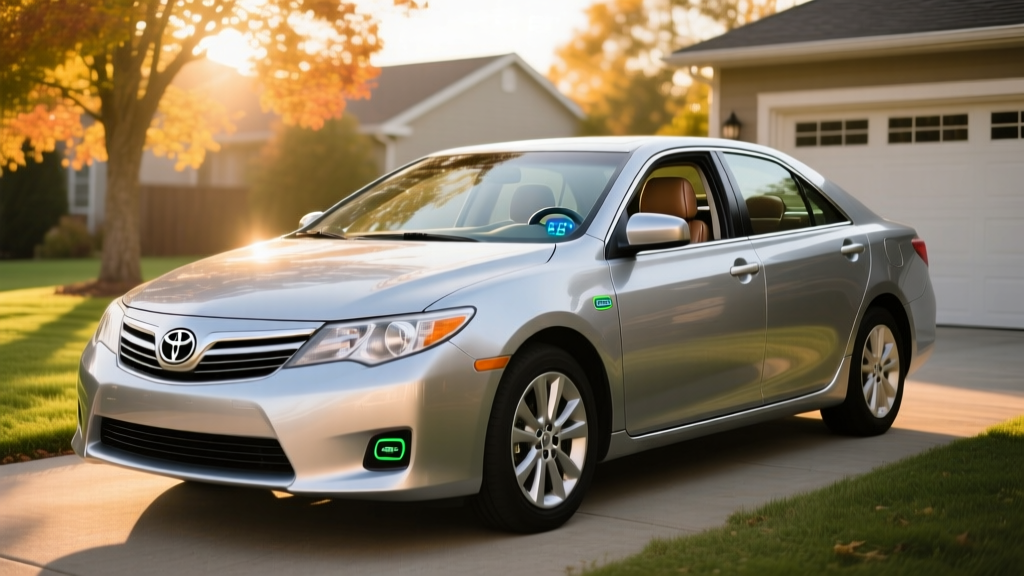
The 2009 Toyota Camry Hybrid was one of the most efficient midsize sedans of its era, and its EPA ratings remain respectable even by today's used-car standards. Before we get into real-world performance, here's the official breakdown from fueleconomy.gov:
| Metric | Value |
|---|---|
| City MPG | 33 |
| Highway MPG | 34 |
| Combined MPG | 34 |
| Annual Fuel Cost (est.) | ~$1,350 (at $3.40/gal, 15k mi/yr) |
| Fuel Type | Regular unleaded (87 octane) |
For a 2009 midsize sedan, a 34 MPG combined rating was genuinely impressive — the conventional 4-cylinder Camry of the same year managed just 24 MPG combined. That's roughly a 40% improvement in fuel economy from the hybrid powertrain, translating to about 150 fewer gallons consumed per year at 15,000 miles of driving.
Real-World MPG: What Owners Actually Report
EPA stickers tell part of the story, but the 2009 Camry Hybrid has a well-documented real-world fuel economy profile built from over 15 years of owner data on platforms like Fuelly and EPA's own owner-submitted estimates.
City driving (stop-and-go): This is where the hybrid system shines. The electric motor handles low-speed launches, and regenerative braking recaptures energy at every stoplight. Many owners report 35–38 MPG in city conditions, actually exceeding the EPA's 33 MPG city estimate. This is common with Toyota's Hybrid Synergy Drive — the EPA test cycle doesn't fully capture the advantage of frequent regen opportunities.
Highway driving (65–75 mph): The picture reverses on the interstate. At sustained high speeds, the 2.4-liter gasoline engine does most of the work, and the electric motor contributes less. Expect 30–33 MPG on the highway, which falls slightly below the EPA's 34 MPG highway rating. Aerodynamic drag and the relatively modest 147-hp combined output mean the engine works harder at speed.
Cold weather impact: In sub-freezing temperatures, expect a 10–15% fuel economy drop. The engine runs more frequently to maintain cabin heat and warm up the catalytic converter, reducing the electric motor's contribution. Northern-climate owners commonly report 28–30 MPG combined in winter.
Overall real-world average: Aggregated owner data points to 31–34 MPG combined in mixed driving, with city-heavy commuters landing on the higher end and highway-dominant drivers on the lower end.
Powertrain Specs: What's Under the Hood
| Component | Specification |
|---|---|
| Gasoline Engine | 2.4L inline-4 (2AZ-FXE, Atkinson cycle) |
| Engine Power | 147 hp @ 6,000 rpm (engine only) |
| Electric Motor | Permanent magnet synchronous, 40 hp (30 kW) |
| Combined System Output | 187 hp (net) |
| Transmission | eCVT (electronically controlled continuously variable) |
| Hybrid Battery | NiMH, 1.6 kWh (gross), 244.8V nominal |
| 0–60 mph | ~8.8 seconds |
| Drivetrain | Front-wheel drive |
| Curb Weight | ~3,680 lbs |
The Atkinson-cycle 2AZ-FXE engine sacrifices some low-end torque for superior thermal efficiency, while the electric motor fills in the torque gap off the line. The eCVT isn't a traditional belt-and-pulley CVT — it's a planetary gearset that seamlessly blends engine and motor power with no fixed gear ratios. This design has proven remarkably durable, with very few reported transmission failures across the Camry Hybrid's production run.
Battery Lifespan, Warranty, and Replacement Cost
The hybrid battery is the single biggest concern for any used HEV buyer. Here's what you need to know about the 2009 Camry Hybrid's NiMH pack.
Degradation reality: NiMH batteries in Toyota hybrids have demonstrated exceptional longevity. Large-scale owner surveys and fleet data show most 2009-era Camry Hybrid batteries retain 85–90% of original capacity at 150,000 miles. Complete failure before 200,000 miles is uncommon, though individual cell degradation can trigger warning lights earlier in hot climates (Arizona, Texas) where sustained high battery temperatures accelerate wear.
Replacement cost in 2026:
- New OEM Toyota battery: $3,000–$4,000 (installed at dealer)
- Remanufactured battery: $1,500–$2,500 (installed at independent hybrid shop)
- Individual cell module replacement: $200–$500 (if only 1–2 of 34 modules have failed — requires a shop with hybrid battery diagnostic capability)
The good news: the 2009 Camry Hybrid's battery is one of the most serviced and well-understood hybrid packs in the aftermarket. Numerous independent shops specialize in NiMH module-level repairs, keeping costs far below a full OEM replacement. A remanufactured battery with a 3-year warranty is the most common and cost-effective choice for a vehicle in this price range.
HEV vs PHEV vs EV: Is This the Right Electrified Car for You?
The 2009 Camry Hybrid occupies a specific niche in the electrified vehicle spectrum. Here's how it compares to modern alternatives for a used-car buyer:
| Factor | 2009 Camry Hybrid (HEV) | Used PHEV (e.g., 2019 Prius Prime) | Used BEV (e.g., 2020 Bolt EV) |
|---|---|---|---|
| Plug-in Required? | No | Yes (for EV range) | Yes (always) |
| Electric-Only Range | None (EV mode ~1 mi at low speed) | ~25 miles | ~238 miles |
| Fuel Cost per Mile | ~$0.10 | ~$0.05 (EV) / $0.09 (gas) | ~$0.04 |
| Home Charging Needed? | No | Recommended | Required |
| Used Price Range (2026) | $5,000–$8,500 | $18,000–$24,000 | $14,000–$19,000 |
| Federal Tax Credit | None | None (used PHEV credit expired/limited) | Up to $4,000 used EV credit (§25E) |
- Your budget is under $9,000 and you want maximum fuel efficiency at that price
- You have no access to home or workplace charging
- Your commute is city-heavy with lots of stop-and-go
- You want a proven, simple powertrain with widespread mechanic support
- You drive 10,000–15,000 miles/year and want to cut fuel costs without lifestyle changes
- You have Level 2 home charging and want near-zero fuel cost on daily commutes
- You drive under 30 miles round-trip and want to eliminate gas entirely on most days
- You want the §25E used EV tax credit (up to $4,000 for qualifying used BEVs/PHEVs — see IRS guidelines)
Does the 2009 Camry Hybrid Qualify for Any Tax Credit?
No. The 2009 Toyota Camry Hybrid does not qualify for any current federal tax credit. Here's why:
- §30D New Clean Vehicle Credit: Applies only to new vehicles. The Camry Hybrid's credit eligibility also expired under the original program when Toyota hit the 250,000-unit manufacturer cap in 2017.
- §25E Used Clean Vehicle Credit: This credit (up to $4,000 or 30% of sale price, whichever is less) applies only to plug-in vehicles — BEVs and PHEVs with at least 7 kWh of battery capacity. The Camry Hybrid's 1.6 kWh NiMH pack doesn't qualify. Conventional HEVs are excluded from §25E.
- State incentives: A small number of states have offered rebates for used hybrids, but most have sunset or shifted focus to plug-in vehicles. Check your state's energy office for current programs.
Reliability, Maintenance, and What to Watch For
The 2009 Camry Hybrid is one of the most reliable vehicles Toyota has produced. The hybrid system actually reduces wear on several conventional components:
- Brakes last longer: Regenerative braking handles most deceleration, so brake pads routinely last 80,000–100,000+ miles.
- No starter motor: The electric motor starts the engine, eliminating a common failure point.
- No alternator: The high-voltage system handles all electrical generation.
- eCVT durability: The planetary gearset has no belts, chains, or clutch packs to wear. Failures are extremely rare.
Known issues to inspect before purchase:
- Hybrid battery cooling fan: Located behind the rear seat. If clogged with dust/pet hair, the battery overheats and degrades faster. Verify the fan runs and the intake vent is clean.
- Brake actuator recalls: Toyota issued a recall for the brake actuator on 2007–2010 Camry Hybrids. Confirm recall service was performed (check NHTSA VIN lookup at nhtsa.gov/recalls).
- Oil consumption: The 2AZ-FXE engine in some 2007–2009 models is known for excessive oil consumption due to piston ring design. Check oil level and ask about consumption history.
- Inverter coolant pump: Can fail around 120,000–150,000 miles. Replacement runs $400–$600. Check for active diagnostic codes.
Frequently Asked Questions
How many MPG does the 2009 Toyota Camry Hybrid actually get?
EPA-rated at 33 city / 34 highway / 34 combined. Real-world results cluster around 31–34 combined, with city-heavy drivers often seeing 35–38 MPG and highway-dominant driving yielding 30–33 MPG. Cold weather reduces efficiency by 10–15%.
Can I plug in the 2009 Camry Hybrid to charge it?
No. This is a conventional hybrid (HEV), not a plug-in hybrid (PHEV). The battery charges exclusively through regenerative braking and the gasoline engine. There is no charge port, no plug, and no electric-only driving range beyond about one mile at very low speeds in EV mode.
How long does the hybrid battery last, and what does replacement cost?
Most 2009 Camry Hybrid batteries reach 180,000–220,000+ miles before significant degradation. A new OEM replacement runs $3,000–$4,000 installed; a remanufactured pack costs $1,500–$2,500 installed. Individual cell module repairs can cost as little as $200–$500 if caught early.
Is the 2009 Camry Hybrid a good buy in 2026?
At $5,000–$8,500 on the used market, it's one of the most cost-efficient vehicles available for drivers without home charging access. The powertrain is proven, parts are abundant, and any competent mechanic can service it. The main risk is hybrid battery age — budget $1,500–$2,500 for a potential replacement within your ownership window if the battery hasn't been serviced.
How does the 2009 Camry Hybrid compare to the 2009 Prius?
The 2009 Prius (second generation) was rated at 46 MPG combined — roughly 35% more efficient. However, the Camry Hybrid offers significantly more interior space, a smoother ride, a quieter cabin, and a more conventional driving feel. If pure fuel economy is the priority, the Prius wins. If comfort and space matter more, the Camry Hybrid is the better choice at similar used prices.
Does this car qualify for the used EV tax credit?
No. The §25E Used Clean Vehicle Credit requires a plug-in vehicle (BEV or PHEV) with at least 7 kWh of battery capacity. The 2009 Camry Hybrid's 1.6 kWh NiMH battery and lack of a charge port disqualify it entirely from federal tax incentives.