Quick Verdict: The 2014 CR-Z Hybrid at a Glance
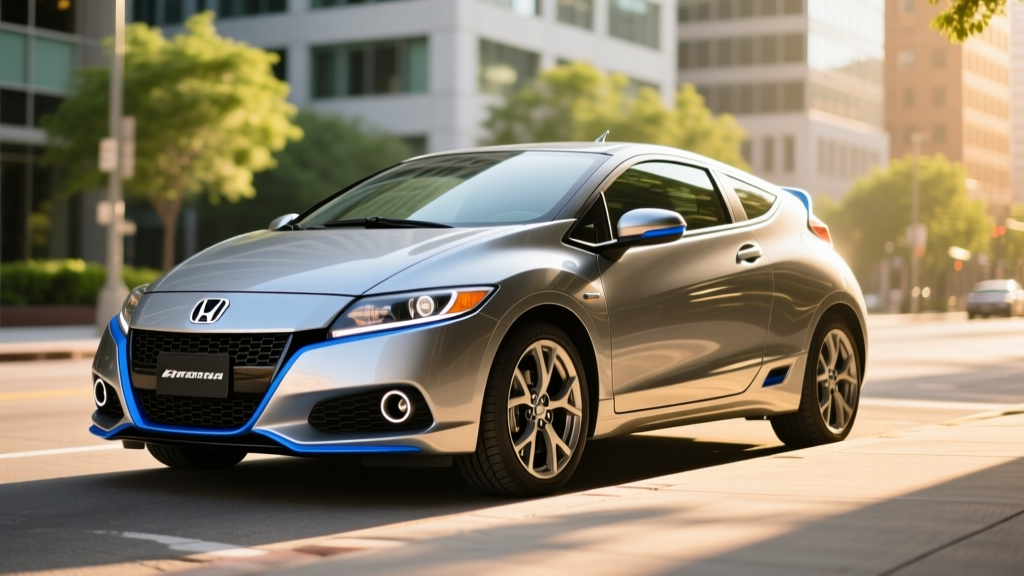
The 2014 Honda CR-Z occupies a strange corner of hybrid history: a two-seat sport coupe that prioritized driving engagement over maximum efficiency. Honda's Integrated Motor Assist (IMA) system pairs a 1.5-liter four-cylinder engine with a small electric motor for a combined 130 horsepower (manual) or 127 hp (CVT). The EPA rates it at 36 MPG combined — respectable, though not class-leading against the Prius or Insight of the same era.
In 2026, the CR-Z is strictly a used-market proposition. Honda discontinued the model after 2016, and it was never offered as a plug-in hybrid (PHEV). If you're cross-shopping used hybrids today, the CR-Z appeals to buyers who want something lighter, sportier, and more distinctive than a Prius — but who still want hybrid fuel economy and Honda reliability.
2014 Honda CR-Z Hybrid: Full Spec Sheet
| Specification | 2014 Honda CR-Z (6-Speed Manual) | 2014 Honda CR-Z (CVT) |
|---|---|---|
| Powertrain Type | HEV (conventional hybrid, no plug) | HEV (conventional hybrid, no plug) |
| Engine | 1.5L i-VTEC inline-4 | 1.5L i-VTEC inline-4 |
| Electric Motor | IMA (10 kW / 13 hp) | IMA (10 kW / 13 hp) |
| Combined Horsepower | 130 hp @ 6,000 rpm | 127 hp @ 6,000 rpm |
| Combined Torque | 140 lb-ft @ 1,000-3,500 rpm | 128 lb-ft @ 1,000-3,500 rpm |
| Hybrid Battery | Nickel-Metal Hydride (NiMH), ~0.6 kWh | Nickel-Metal Hydride (NiMH), ~0.6 kWh |
| EPA City MPG | 31 | 35 |
| EPA Highway MPG | 38 | 38 |
| EPA Combined MPG | 34 | 36 |
| 0-60 mph | ~9.1 seconds | ~9.7 seconds |
| Fuel Tank | 10.6 gallons | 10.6 gallons |
| Total Range (est.) | ~360 miles | ~380 miles |
| Seating | 2 (no rear seats) | 2 (no rear seats) |
| Cargo Volume | 25.1 cu ft (rear seats folded) | 25.1 cu ft (rear seats folded) |
| Original MSRP (2014) | $20,145 – $24,395 | $20,145 – $24,395 |
Source: EPA Fuel Economy
Fuel Economy: EPA Numbers vs Real-World MPG
The 2014 CR-Z's EPA ratings depend on transmission choice:
| Transmission | City | Highway | Combined |
|---|---|---|---|
| 6-Speed Manual | 31 MPG | 38 MPG | 34 MPG |
| CVT Automatic | 35 MPG | 38 MPG | 36 MPG |
Real-World Expectations
Hybrids typically outperform their EPA city ratings in stop-and-go traffic because regenerative braking recovers energy that gas-only cars waste as heat. The CR-Z's IMA system is modest — it assists the engine during acceleration and enables idle stop, but it cannot propel the car on electric power alone. Owners on Fuelly report real-world averages clustering around 33-40 MPG combined, with careful city drivers occasionally exceeding 40 MPG and highway-heavy commutes at 75+ mph dropping to the low 30s.
The CVT's 4 MPG city advantage over the manual is significant — Honda tuned the CVT to keep the engine in its most efficient RPM range, while the manual's gear ratios favor engagement over economy. If maximum MPG is your priority, the CVT is the rational pick; if you value the driving experience, the manual sacrifices very little on the highway.
Honda's three-mode drive system (Sport, Normal, Econ) adjusts throttle response, electric assist, and A/C operation. Econ mode can squeeze out an extra 1-2 MPG in gentle driving, while Sport mode makes the throttle more aggressive and increases IMA assist — useful for merging but thirstier.
The IMA Hybrid System: How It Works
Honda's Integrated Motor Assist (IMA) is fundamentally different from the power-split systems used in the Toyota Prius. In the CR-Z, a thin electric motor sandwiched between the engine and transmission provides assist during acceleration and captures energy during braking. Key characteristics:
- No electric-only mode: The IMA motor cannot move the car without the gas engine running. It supplements, not replaces, gasoline power.
- Small battery: The NiMH pack stores roughly 0.6 kWh — tiny compared to modern PHEVs (10-20 kWh) or BEVs (60-100 kWh). This keeps weight low (~2,850 lbs curb weight) but limits electric assist duration.
- Idle stop: The engine shuts off at red lights and restarts seamlessly when you release the brake (CVT) or engage the clutch (manual).
- Regen braking: The IMA motor acts as a generator during deceleration, topping up the hybrid battery. The effect is mild — don't expect one-pedal driving like a modern EV.
The 1.5L i-VTEC engine produces 113 hp on its own; combined with the IMA motor's 13 hp (at the crankshaft), total system output reaches 130 hp with the manual transmission. This is adequate for daily driving but not quick by modern standards — the 0-60 mph time of roughly 9.1 seconds puts it in the same territory as a base Honda Civic of the era.
Battery Health, Warranty & Replacement Cost
Battery Longevity in Practice
The CR-Z's NiMH battery is far smaller and less stressed than the lithium-ion packs in modern EVs. NiMH chemistry degrades more gracefully — rather than a sudden cliff in capacity, you'll notice gradually reduced electric assist and slightly lower fuel economy as the pack ages. Many first-generation Honda Insight and Civic Hybrid owners reported usable NiMH packs lasting 120,000-150,000+ miles before significant degradation.
That said, a 2014 CR-Z in 2026 is 12 years old. NiMH cells are sensitive to heat and calendar aging, even if mileage is low. If you're buying used, check for:
- IMA warning lights: A dashboard IMA indicator suggests battery trouble. Scan for diagnostic codes before purchasing.
- Recalibration frequency: The IMA system periodically recalibrates the battery's state of charge. Frequent recalibrations (visible as the charge gauge dropping and refilling repeatedly) can signal a weakening pack.
- Idle stop functionality: If the engine no longer shuts off at stoplights, the hybrid battery may not hold sufficient charge.
Battery Replacement Cost
If the IMA battery needs replacement, expect to pay:
- New OEM battery (Honda dealer): $2,000–$3,000 installed
- Refurbished/remanufactured pack: $800–$1,500 installed (from hybrid specialists like Bumblebee Batteries or Independent Honda shops)
- Individual cell replacement: $200–$500 for DIY-savvy owners who replace only the weak cells within the pack
Compared to a full EV battery replacement ($5,000–$20,000+), the CR-Z's hybrid battery is relatively affordable to replace — a meaningful advantage for used-car buyers worried about long-term costs.
Pricing & Tax Credit Eligibility in 2026
Used Market Pricing
As of early 2026, the 2014 Honda CR-Z trades on the used market for approximately:
- High mileage (100k+ miles), fair condition: $5,500–$7,500
- Average mileage (60k–100k), good condition: $7,500–$10,000
- Low mileage (under 60k), excellent condition: $10,000–$13,000
The manual-transmission examples often command a small premium among enthusiast buyers. The EX-L Navi trim with leather and navigation sits at the top of the range.
Federal Tax Credit Status
The 2014 Honda CR-Z does not qualify for the current IRS §30D Clean Vehicle Credit. That credit applies only to new plug-in electric vehicles (BEVs and PHEVs) with sufficient battery capacity — the CR-Z's NiMH pack is far too small, and it's a conventional hybrid with no plug-in capability.
For the used clean vehicle credit (§25E), the vehicle must be a qualified plug-in EV or fuel cell vehicle purchased used for $25,000 or less. The CR-Z does not qualify here either, as it is not a plug-in vehicle. Hybrid-only buyers receive no federal tax incentive in 2026.
Some states offer modest incentives for used hybrid purchases or hybrid battery replacements — check your state's energy office or department of environmental quality for current programs, as these vary widely by jurisdiction.
Reliability & Ownership Costs
Honda's IMA system is one of the most proven hybrid architectures on the road, with roots stretching back to the 1999 Insight. The CR-Z benefits from this maturity:
- Engine: The L15B 1.5L is a simple, naturally aspirated four-cylinder with a timing chain (no belt to replace). Properly maintained, these engines regularly exceed 200,000 miles.
- Transmission: The 6-speed manual is robust. The CVT is generally reliable but has a known history of shudder issues in some Honda CVTs of this era — check for smooth operation at low speeds.
- IMA system: Beyond the battery (discussed above), the electric motor and power electronics are extremely durable. Failures are rare.
- Brakes: Regenerative braking reduces wear on the friction brakes. Many CR-Z owners report original brake pads lasting 80,000+ miles.
Insurance costs are low — the CR-Z is a modest-powered, two-seat coupe with inexpensive parts. Expect annual premiums in the $800–$1,200 range depending on your profile and state.
Who Should Buy the 2014 CR-Z Hybrid?
Choose the CR-Z If:
- You want a distinctive, sporty-looking hybrid that stands out from the Prius crowd
- You value a manual transmission — one of the very few hybrids ever offered with a stick shift
- Your commute is city-heavy where regen braking boosts MPG
- You only need two seats and occasional cargo space
- You want hybrid efficiency without plug-in complexity or charging concerns
- Budget is $6,000–$12,000 for a used hybrid
Look Elsewhere If:
- You need back seats or more than 25 cu ft of cargo space
- You want maximum hybrid MPG (Prius gets 50+ combined)
- You want electric-only driving or plug-in capability
- You want the latest infotainment, safety tech, or driver-assist features
- Highway-heavy commute at 80+ mph (efficiency drops significantly)
- You qualify for the $7,500 federal EV credit and can stretch to a new PHEV or BEV
CR-Z vs Alternatives: Quick Comparison
| Vehicle | Type | Combined MPG | Seats | 2026 Used Price (est.) |
|---|---|---|---|---|
| 2014 Honda CR-Z | HEV | 34-36 | 2 | $5,500–$13,000 |
| 2014 Toyota Prius | HEV | 50 | 5 | $8,000–$14,000 |
| 2014 Honda Insight | HEV | 42 | 5 | $6,000–$10,000 |
| 2017 Toyota Prius Prime | PHEV | 54 + 25 mi EV | 4 | $14,000–$19,000 |
Frequently Asked Questions
How many MPG does the 2014 Honda CR-Z hybrid get?
The EPA rates the 2014 CR-Z at 31 city / 38 highway / 34 combined with the 6-speed manual, and 35 city / 38 highway / 36 combined with the CVT. Real-world owners typically see 33-40 MPG combined, with city driving sometimes exceeding the EPA estimate thanks to regenerative braking.
Can the 2014 CR-Z drive on electric power only?
No. The CR-Z uses Honda's IMA system, which is a conventional hybrid (HEV). The electric motor only assists the gasoline engine — it cannot propel the car independently. There is no plug, no charging port, and no electric-only range. If electric-only driving is important to you, consider a PHEV like the Toyota Prius Prime (25-44 miles electric-only depending on model year) or a full BEV.
Is the 2014 CR-Z reliable, and what does a battery replacement cost?
The CR-Z is generally reliable, benefiting from Honda's proven IMA system and a simple naturally aspirated engine. The main concern for a 12-year-old hybrid is the NiMH battery pack. Replacement runs $800–$1,500 for a refurbished pack or $2,000–$3,000 for a new OEM unit. The small pack size makes this far less expensive than an EV battery replacement. Many packs last 120,000-150,000+ miles before significant degradation.
Does the 2014 CR-Z qualify for any tax credits?
No. The federal §30D Clean Vehicle Credit and the §25E used clean vehicle credit both require plug-in capability (BEV or PHEV). The CR-Z is a conventional hybrid with no plug and a battery too small to qualify. No federal tax incentive applies. Check your state's energy office for any local hybrid incentives, though most states have shifted incentives toward plug-in vehicles.
Should I buy a used CR-Z hybrid or a used Prius?
It depends on your priorities. The Prius delivers roughly 14 MPG more in combined driving, seats five, and has a larger cargo area. The CR-Z offers sportier styling, available manual transmission, and a more engaging drive at the cost of practicality and efficiency. If MPG and utility matter most, the Prius wins. If you want a fun, distinctive hybrid coupe and don't need rear seats, the CR-Z has no direct rival.
Does the CR-Z need to be plugged in?
No. The CR-Z is a self-charging conventional hybrid. The battery charges through regenerative braking and the gasoline engine. You never plug it in — just fill up with gas and drive. Total range per tank is approximately 360-380 miles.
For current EPA ratings, visit fueleconomy.gov. For federal tax credit rules, see the IRS Clean Vehicle Credits page. Safety ratings available at NHTSA.gov.