The 2013 Toyota Camry Hybrid XLE occupies a specific niche in the used-car market: a midsize sedan that delivers genuine fuel savings without requiring a plug, a charging routine, or any behavioral change from its driver. More than a decade after it left the showroom, this third-generation Camry Hybrid remains a benchmark for conventional hybrid (HEV) reliability — and a useful baseline for shoppers weighing whether to go hybrid, plug-in hybrid, or full battery-electric in 2026.
This guide breaks down the exact fuel economy, powertrain specs, battery longevity data, and ownership economics of the 2013 Camry Hybrid XLE. We'll also clarify where a conventional hybrid fits against modern PHEVs and BEVs so you can make an informed purchase decision.
HEV vs PHEV vs EV: Where the 2013 Camry Hybrid Fits
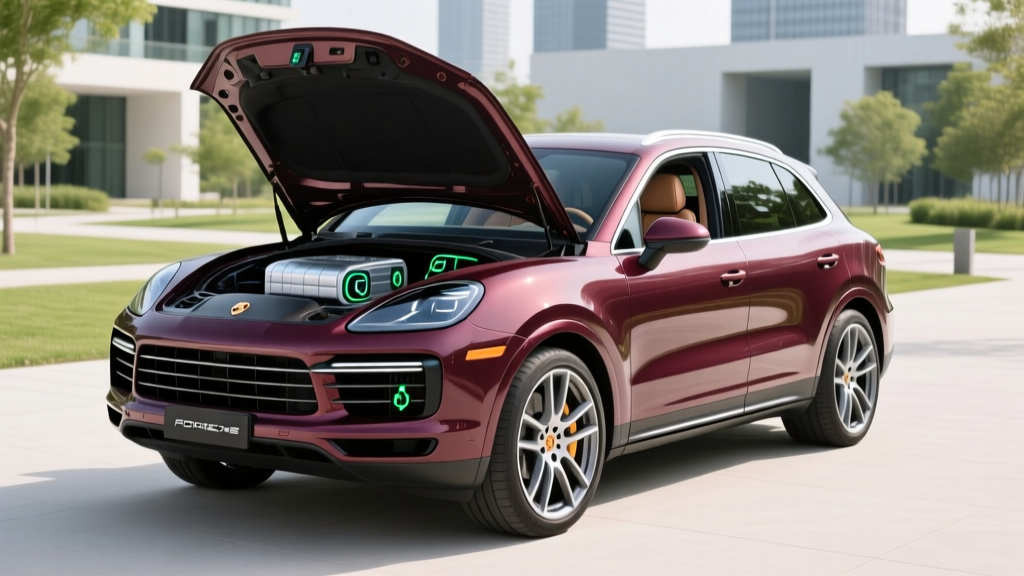
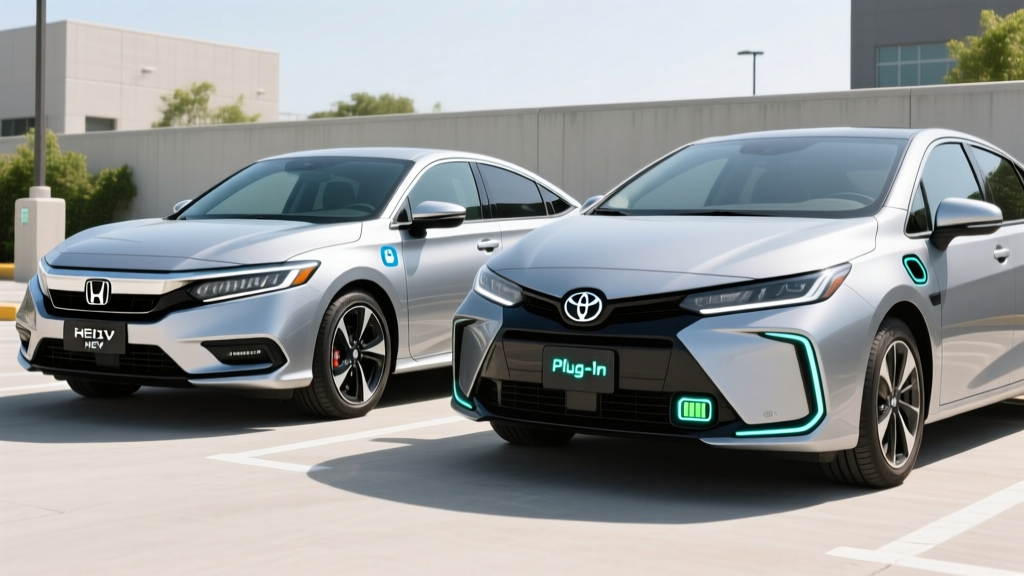
Conventional Hybrid (HEV) — The 2013 Camry Hybrid is an HEV. It pairs a gasoline engine with a small electric motor and a ~1.6 kWh nickel-metal hydride (NiMH) battery. You never plug it in. The battery recharges through regenerative braking and the engine. The electric motor assists at low speeds and during acceleration, but the car cannot drive on electricity alone for meaningful distances.
Plug-in Hybrid (PHEV) — A PHEV like the Toyota RAV4 Prime or Chrysler Pacifica Hybrid has a larger battery (typically 13–20 kWh), a charging port, and 25–45 miles of electric-only range before the gas engine kicks in. You plug it in overnight to get that electric range; after it depletes, it operates as a conventional hybrid.
Battery-Electric Vehicle (BEV) — A BEV like the Tesla Model 3 or Hyundai Ioniq 5 has no gas engine. It runs entirely on a large battery (60–100+ kWh) and must be charged from an outlet or station. Range is typically 250–400 miles per charge.
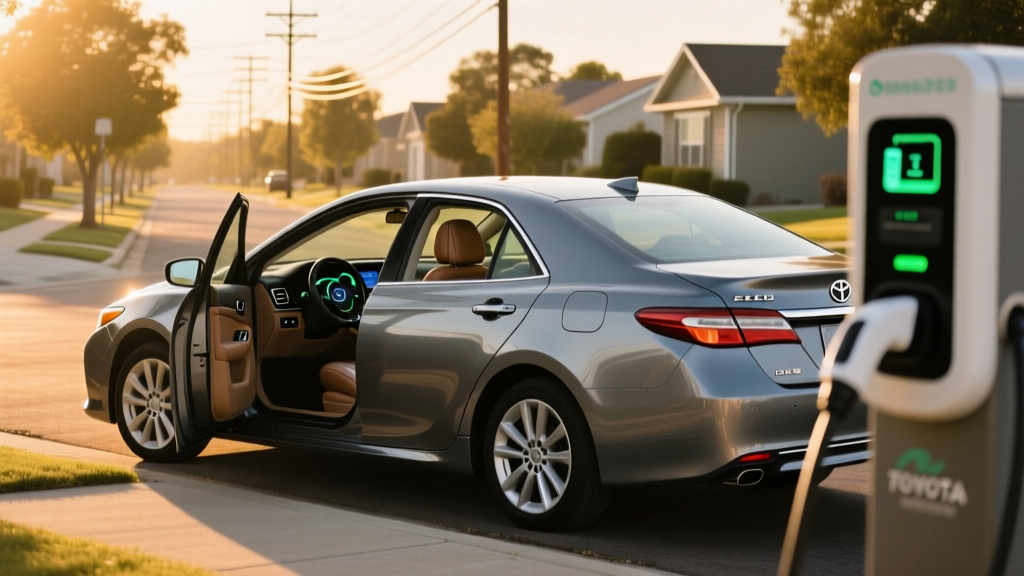
The 2013 Camry Hybrid XLE is strictly an HEV. It has no plug, no electric-only driving mode beyond brief low-speed assist, and no eligibility for federal EV tax credits. Its value proposition is simplicity: fill up with gas, drive normally, and get substantially better fuel economy than a comparable gas-only Camry.
Fuel Economy: EPA Ratings and Real-World MPG
The EPA rated the 2013 Toyota Camry Hybrid at the following fuel economy figures, which apply to the XLE trim with its 17-inch alloy wheels:
| Metric | EPA Rating |
|---|---|
| City MPG | 40 MPG |
| Highway MPG | 38 MPG |
| Combined MPG | 40 MPG |
| Fuel Tank Capacity | 17.0 gallons |
| Total Range (est.) | ~680 miles |
Real-world MPG reality check: Toyota's Hybrid Synergy Drive system excels in stop-and-go city driving, where regenerative braking and electric-motor assist do the most work. Many owners report exceeding the EPA city figure — 42–45 MPG is achievable in moderate-temperature urban commuting. Highway driving is the opposite: at sustained 70–80 MPH speeds, expect 34–37 MPG, because the gasoline engine does nearly all the work and the hybrid system provides minimal benefit.
Cold-weather impact: In sub-freezing temperatures, expect a 5–10% fuel economy reduction. The engine runs more frequently to maintain cabin heat and bring the catalytic converter to operating temperature. This is a modest penalty compared to the 20–30% range loss a BEV experiences in the same conditions.
Compared to the gas-only 2013 Camry (2.5L 4-cylinder, EPA 25/35/28 MPG combined), the Hybrid XLE's 40 MPG combined represents roughly a 43% improvement in fuel efficiency. At 12,000 miles per year and $3.25/gallon gas, that translates to approximately $600–$700 in annual fuel savings.
Powertrain Specs: Engine, Motor, and Combined Output
| Specification | 2013 Camry Hybrid XLE |
|---|---|
| Engine | 2.5L inline-4 Atkinson-cycle |
| Engine Power | 156 hp @ 5,700 rpm |
| Electric Motor Power | 105 kW (141 hp) |
| Combined Net Horsepower | 200 hp |
| Transmission | eCVT (planetary gearset) |
| Drivetrain | Front-wheel drive |
| Hybrid Battery | ~1.6 kWh NiMH (sealed) |
| 0–60 MPH (est.) | ~7.6 seconds |
| Curb Weight | ~3,515 lbs |
The 200 combined horsepower figure may surprise shoppers expecting hybrid sluggishness. The Camry Hybrid XLE's eCVT — which is not a belt-and-cone CVT but a planetary gearset that seamlessly blends engine and motor power — delivers smooth, linear acceleration. The 0–60 time of approximately 7.6 seconds is competitive with the gas-only Camry V6 of the same era.
The Atkinson-cycle 2.5L engine sacrifices some low-RPM torque for higher thermal efficiency, but the electric motor's instant torque (available from 0 RPM) fills the gap during initial acceleration. This is the core engineering advantage of Toyota's Hybrid Synergy Drive: the engine and motor compensate for each other's weaknesses.
Hybrid Battery: Lifespan, Degradation, and Replacement Cost
Original warranty coverage: Toyota covered the 2013 Camry Hybrid's battery with an 8-year/100,000-mile warranty (10 years/150,000 miles in California and states that follow CARB emissions standards). As of 2026, this original warranty has expired for all 2013 examples unless the vehicle was sold new in a CARB state and has under 150,000 miles — a rare scenario.
Expected battery lifespan: Toyota's NiMH hybrid batteries have demonstrated exceptional longevity in real-world use. Data from fleet operators, taxi services, and high-mileage owners shows these batteries routinely lasting 180,000–250,000 miles before significant capacity loss. The NiMH chemistry is less energy-dense than modern lithium-ion but far more tolerant of the shallow charge-discharge cycles that define hybrid operation. The battery management system keeps the pack between roughly 40% and 80% state of charge, avoiding the deep cycles that accelerate degradation.
What happens when the battery degrades? You won't be stranded. A degraded hybrid battery reduces fuel economy — perhaps dropping from 40 MPG to 32–35 MPG — and may trigger a check-engine light with hybrid-system diagnostic codes. The car remains drivable on the gasoline engine alone, but efficiency drops noticeably.
Battery replacement costs in 2026:
- Toyota dealership (new OEM pack): $3,000–$4,000 including labor
- Refurbished/reconditioned pack: $1,500–$2,500 from hybrid specialists like Green Bean Battery or Re-Involt
- Individual module replacement: $500–$1,000 if only a few of the 34 NiMH modules have failed (diagnostic-dependent)
Given that a 2013 Camry Hybrid XLE in good condition trades for roughly $8,000–$13,000 in the used market (depending on mileage and condition), a $3,500 OEM battery replacement represents a significant percentage of the vehicle's value. Many owners opt for refurbished packs or sell the vehicle when the battery fails beyond the 150,000-mile mark.
Reliability Track Record and Common Issues
The 2013 Camry Hybrid benefits from Toyota's long-standing reputation for hybrid powertrain durability. The Hybrid Synergy Drive system has been in production since the 1997 Prius, and by 2013, it was a mature, well-debugged platform. NHTSA records show no systemic hybrid-battery-related recalls for this model year.
Known issues to watch for:
- Hybrid battery cooling fan: The battery fan filter (located behind the rear seat) can clog with dust and pet hair, causing the battery to overheat and degrade faster. Cleaning or replacing this filter ($20 part, 10-minute job) is essential maintenance that many owners overlook.
- Brake actuator assembly: Some 2012–2014 Camry Hybrids have experienced premature wear in the brake actuator, which integrates regenerative and friction braking. Replacement runs $1,200–$1,800. Listen for unusual grinding or a stiff pedal feel.
- 12V auxiliary battery: Like all hybrids, the Camry has a standard 12V battery (located in the trunk) that powers electronics. It typically lasts 4–6 years. If the car won't "start" (enter Ready mode), the 12V battery is usually the culprit, not the hybrid pack.
- Water pump (electric): The electric water pump that cools the inverter can fail around 100,000–140,000 miles. Replacement is approximately $500–$800.
Overall, the 2013 Camry Hybrid XLE is among the most reliable vehicles in its class. The powertrain's simplicity — no turbocharger, no multi-speed automatic transmission, no complex emissions equipment — means fewer failure points than comparable gas-only midsize sedans.
Pricing, Tax Credits, and Ownership Economics
Used market pricing (2026):
- High mileage (150,000+ mi, fair condition): $7,000–$9,000
- Average mileage (100,000–140,000 mi, good condition): $10,000–$12,000
- Low mileage (under 80,000 mi, excellent condition): $12,000–$14,000
Tax credit eligibility: The 2013 Camry Hybrid XLE does not qualify for the federal §30D clean vehicle tax credit. That credit applies only to new battery-electric vehicles (BEVs) and plug-in hybrids (PHEVs) that meet battery-sourcing, MSRP, and buyer income requirements. Conventional hybrids like the Camry Hybrid have never been eligible for federal purchase incentives. Some states previously offered hybrid rebates, but nearly all have transitioned to EV/PHEV-only programs.
5-year ownership cost estimate (assuming $11,000 purchase price, 12,000 miles/year, $3.25/gallon gas):
| Cost Category | Estimated 5-Year Total |
|---|---|
| Purchase Price | $11,000 |
| Fuel (60,000 mi @ 40 MPG) | $4,875 |
| Insurance (avg. $1,100/yr) | $5,500 |
| Maintenance & Repairs | $2,500–$4,000 |
| Hybrid Battery Reserve | $0–$3,000 (if replacement needed) |
| Total Estimated | $23,875–$28,375 |
For comparison, a similarly priced gas-only 2013 Camry LE (28 MPG combined) would cost approximately $6,430 in fuel over the same period — roughly $1,550 more. The Hybrid's fuel savings partially offset its higher purchase price and potential battery replacement risk.
Who Should Choose the 2013 Camry Hybrid XLE?
Reasons to Buy
- Proven 40 MPG combined with no plug-in requirement or behavioral change
- Exceptional hybrid powertrain reliability with 200,000+ mile track record
- Low entry price ($8,000–$14,000) for a fuel-efficient midsize sedan
- XLE trim adds leather, heated seats, dual-zone climate, and premium audio
- Minimal range anxiety — 680+ mile total range, 5-minute gas fill-ups
- No dependence on charging infrastructure availability
Reasons to Look Elsewhere
- Original hybrid battery warranty has expired; replacement costs $1,500–$4,000
- No EV tax credit eligibility — new PHEVs/BEVs may net lower effective cost
- Outdated infotainment (no Apple CarPlay, no Android Auto, no modern ADAS)
- No electric-only driving capability; still burns gas for every trip
- Safety tech limited to ABS, stability control, and 8 airbags (no AEB, no lane-keep)
- Age-related wear items (suspension, bushings, seals) add to maintenance costs
Decision Framework: Camry Hybrid vs. Modern Alternatives
Choose the 2013 Camry Hybrid XLE if:
- Your budget is under $14,000 and you need reliable, efficient daily transportation
- You lack access to home or workplace charging (apartment, street parking)
- You drive primarily in city/stop-and-go traffic where the hybrid system excels
- You want to minimize upfront cost and are comfortable with a 12-year-old vehicle
- You drive under 12,000 miles per year and fuel savings matter but aren't transformative
Consider a newer PHEV (e.g., Toyota Prius Prime, RAV4 Prime) if:
- You have home Level 2 charging and a commute under 40 miles round-trip
- You want to drive most days on electricity while keeping gas for road trips
- You qualify for the §30D federal tax credit (up to $7,500 with income/MSRP/sourcing limits)
- You want modern safety features (AEB, lane-keeping, adaptive cruise)
Consider a full BEV (e.g., Tesla Model 3, Hyundai Ioniq 5) if:
- You have reliable home charging and your daily driving is under 250 miles
- You want to eliminate gas purchases entirely and minimize moving-part maintenance
- You qualify for federal/state EV incentives that narrow the price gap
- You prioritize the lowest per-mile energy cost (~$0.04–$0.06/mile on home electricity vs. ~$0.08–$0.10/mile for the Camry Hybrid)
Frequently Asked Questions
How many MPG does the 2013 Toyota Camry Hybrid XLE get?
The EPA rates the 2013 Camry Hybrid XLE at 40 MPG city, 38 MPG highway, and 40 MPG combined. In real-world driving, expect 42–45 MPG in city traffic and 34–37 MPG on the highway. Cold weather reduces these figures by roughly 5–10%.
Does the 2013 Camry Hybrid need to be plugged in?
No. The 2013 Camry Hybrid is a conventional hybrid (HEV), not a plug-in hybrid. It charges its small NiMH battery through regenerative braking and the gasoline engine. You simply fill it with gas and drive. There is no charging port and no electric-only driving mode.
Is the hybrid battery reliable, and what does replacement cost?
Toyota's NiMH hybrid batteries are among the most durable in the industry, routinely lasting 180,000–250,000 miles. If replacement is needed, expect $3,000–$4,000 for a new OEM pack at a dealership or $1,500–$2,500 for a refurbished pack from a hybrid specialist. The original 8-year/100,000-mile warranty (10/150,000 in CARB states) has expired for virtually all 2013 examples as of 2026.
Does the 2013 Camry Hybrid qualify for any tax credits?
No. The federal §30D clean vehicle tax credit applies only to new BEVs and PHEVs. Conventional hybrids have never been eligible for federal purchase incentives. Check your state's current programs, but most state hybrid incentives have also ended or transitioned to EV-only eligibility.
How does the 2013 Camry Hybrid compare to a modern PHEV or EV?
The Camry Hybrid offers proven 40 MPG efficiency at a low used-car price ($8,000–$14,000) with no charging requirement. A modern PHEV like the Prius Prime provides 40+ miles of electric-only range plus hybrid operation, but costs $28,000–$35,000 new (before tax credits). A BEV eliminates gas entirely but requires charging access and a higher upfront investment. The Camry Hybrid remains the lowest-cost, lowest-complexity path to strong fuel economy for buyers without charging infrastructure.
What is the XLE trim's advantage over the LE Hybrid?
The XLE adds leather-trimmed heated front seats, dual-zone automatic climate control, a premium JBL audio system, auto-dimming rearview mirror, HomeLink, and 17-inch alloy wheels (vs. 16-inch on LE). The mechanical powertrain and EPA fuel economy are identical between LE and XLE. The XLE's larger wheels may reduce real-world MPG by approximately 1 MPG in some driving conditions.