Quick Verdict: A Performance PHEV Ahead of Its Time
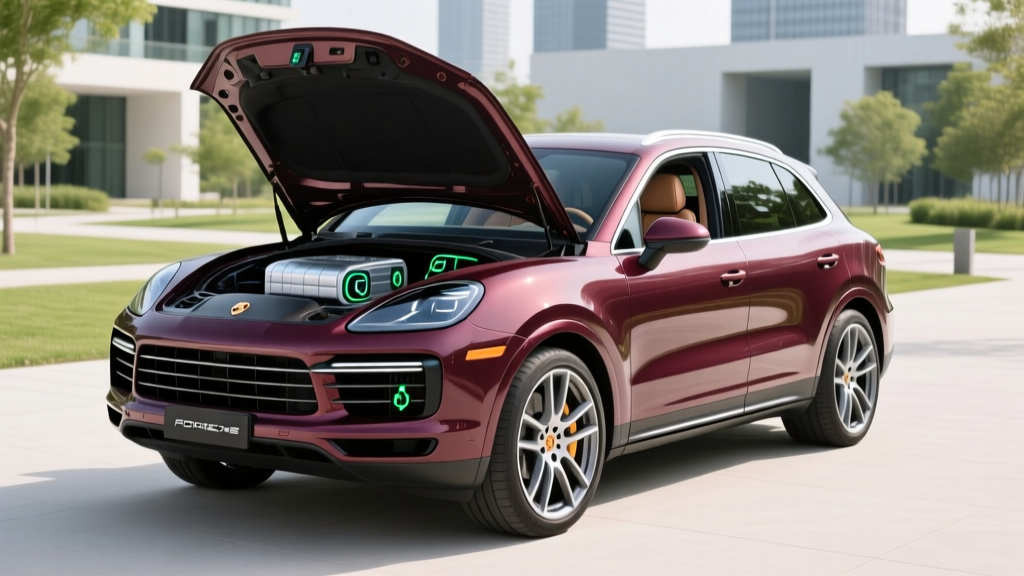
The 2016 Porsche Cayenne S E-Hybrid was one of the first luxury plug-in hybrid SUVs to market, blending a supercharged V6 with an electric motor for 416 combined horsepower and a modest but usable electric-only range. Nearly a decade later, it remains an intriguing used-car proposition for buyers who want Porsche badge prestige, genuine electric commuting capability, and the flexibility of a gas engine for road trips — without committing to a full battery-electric vehicle.
But buying a 2016 PHEV in 2026 means confronting real questions: How much has the high-voltage battery degraded? What does replacement cost? And does the EPA-rated efficiency hold up in the real world? This guide covers every number you need before signing on a used Cayenne E-Hybrid.
| Spec | Value |
|---|---|
| Powertrain | 3.0L Supercharged V6 + Electric Motor |
| Combined Horsepower | 416 HP @ 5,500 RPM |
| Combined Torque | 435 lb-ft @ 1,250–4,000 RPM |
| 0–60 mph | 5.4 seconds (Porsche est.) |
| High-Voltage Battery | 10.8 kWh (lithium-ion, liquid-cooled) |
| EPA Electric-Only Range | 13 miles |
| EPA Combined MPGe | 46 MPGe |
| EPA MPG (gas-only, combined) | 22 MPG |
| Total Combined Range | ~420 miles (est.) |
| Level 2 Charge Time (0–100%) | ~2.5 hours (3.6 kW onboard charger) |
| DC Fast Charging | Not supported |
| Drivetrain | All-wheel drive (AWD), 8-speed Tiptronic |
| Original MSRP (base) | $78,200 |
| Current Used Price (2026) | $22,000–$32,000 (condition/mileage dependent) |
| Hybrid Battery Warranty (original) | 8 years / 100,000 miles |
HEV vs. PHEV: Where the Cayenne E-Hybrid Fits
Before diving deeper, it is worth clarifying what this vehicle actually is, because the terminology still trips up many used-car shoppers.
| Feature | Conventional Hybrid (HEV) | Plug-In Hybrid (PHEV) | Battery Electric (BEV) |
|---|---|---|---|
| Plugs in? | No | Yes | Yes |
| Electric-only range | 0–2 miles (low-speed only) | 10–50+ miles (model dependent) | 200–400+ miles |
| Gas engine? | Yes | Yes | No |
| Example | Toyota RAV4 Hybrid | 2016 Cayenne S E-Hybrid | Tesla Model Y |
The 2016 Cayenne S E-Hybrid is a plug-in hybrid (PHEV). It has a high-voltage battery large enough to drive on electricity alone for short distances, and it must be plugged in to realize its efficiency potential. If you never charge it, you are simply carrying around 300+ pounds of dead battery weight and getting roughly 20–22 MPG — worse than a conventional Cayenne. This is the single biggest mistake used PHEV buyers make: purchasing one without home charging access.
Electric-Only Range and Charging: What 10.8 kWh Gets You
The Cayenne E-Hybrid's 10.8 kWh lithium-ion battery pack was competitive in 2016. The EPA rated it at 13 miles of electric-only range and 46 MPGe when operating in electric mode. That range figure is modest by 2026 PHEV standards — the current-generation Cayenne E-Hybrid offers over 30 miles — but it was meaningful for its era.
EPA sticker: 13 miles electric-only. In practice, expect 10–12 miles on a full charge in moderate weather at city speeds. Highway driving at 70 mph reduces electric range to roughly 8–9 miles. In freezing temperatures (below 32°F), expect a 20–30% reduction, yielding 7–9 miles. Battery degradation in a 10-year-old pack may further reduce this to 9–11 miles when new-to-you, depending on prior charging habits and State of Health (SoH).
Charging is straightforward but slow by modern standards. The onboard charger is rated at 3.6 kW, meaning a full charge from a 240V Level 2 source takes approximately 2.5 hours. On a standard 120V household outlet (Level 1, roughly 1.2 kW), a full charge takes 8–9 hours — fine for overnight replenishment.
There is no DC fast charging capability. The Cayenne S E-Hybrid uses a standard J1772 connector for AC charging. You will not find CCS or CHAdeMO ports here, which is typical for PHEVs of this generation.
Powertrain Deep Dive: 416 HP from Two Sources
The Cayenne S E-Hybrid pairs a 3.0-liter supercharged V6 (producing 333 HP on its own) with a 95 HP electric motor integrated into the 8-speed Tiptronic automatic transmission. Combined output is 416 HP and 435 lb-ft of torque, delivered through Porsche's all-wheel-drive system.
The electric motor provides instant torque fill at low RPM while the supercharger spools, eliminating the lag typical of turbocharged setups. The result is a 0–60 mph time of approximately 5.4 seconds — genuinely quick for a 5,100-pound SUV, and competitive with many sport sedans of the era.
Driving modes include:
- E-Power: Electric-only driving, up to ~78 mph, limited to the battery's usable capacity
- Hybrid: The car manages gas and electric automatically for optimal efficiency
- Sport / Sport Plus: Both power sources deploy maximum output; battery recharges under deceleration
- E-Charge: The gas engine charges the battery while driving — useful for preserving electric range for city driving ahead
Fuel Economy: EPA Numbers vs. Real-World MPG
When the battery is depleted and the Cayenne operates as a conventional hybrid, the EPA rates it at 22 MPG combined (21 city / 24 highway, per fueleconomy.gov). This is the number that matters most if you cannot charge regularly.
| Mode | City | Highway | Combined |
|---|---|---|---|
| Electric + Gas (blended) | 46 MPGe (EPA) | ||
| Gas-only (charge-depleted) | 21 MPG | 24 MPG | 22 MPG |
| Real-world observed (owner reports) | 19–21 MPG | 22–25 MPG | 20–22 MPG |
In real-world driving, owners consistently report 20–22 MPG combined when operating on gas alone — close to the EPA estimate. Highway efficiency slightly exceeds the EPA figure at steady speeds, while aggressive city driving and cold weather can drop it to 18–19 MPG. For context, the gas-only 2016 Cayenne S (twin-turbo V6) achieves 20 MPG combined, so the E-Hybrid's advantage is modest unless you are charging daily and driving within its electric range.
The efficiency story changes dramatically if you charge nightly and commute under 13 miles round-trip. In that scenario, you may burn almost no gasoline on weekdays, using the engine only for longer weekend trips. Some owners report annual gasoline consumption of 200–400 gallons — a fraction of what a gas-only Cayenne would require.
Battery Health, Warranty, and Replacement Cost
When new, Porsche warranted the high-voltage battery for 8 years or 100,000 miles (whichever came first), covering defects and capacity loss below a defined threshold (typically 70% State of Health). For a 2016 model, this warranty expired in 2024 at the latest. Any used 2016 Cayenne E-Hybrid you buy today is out of factory hybrid battery warranty unless an extended warranty was purchased and is transferable.
This is the critical ownership question for any 10-year-old PHEV. The 10.8 kWh lithium-ion pack uses NMC (nickel-manganese-cobalt) chemistry, which was standard for the era but is more susceptible to calendar degradation than modern LFP (lithium iron phosphate) cells.
Based on owner reports and technician data, a well-maintained 2016 Cayenne E-Hybrid battery at 80,000–120,000 miles typically retains 75–85% of its original capacity. This means real-world electric range may have dropped from 13 miles to approximately 10–11 miles — still usable but noticeably reduced.
Battery replacement cost: A new OEM high-voltage battery from Porsche currently runs $8,000–$12,000 including parts and labor at a dealership. Independent EV specialists may offer refurbished or reconditioned packs for $4,000–$7,000. Some shops can replace individual failed modules within the pack for $500–$1,500 per module, extending the pack's life at lower cost. Always request a battery State of Health (SoH) report from a Porsche diagnostic tool (PIWIS) before purchasing.
The 12V auxiliary battery is a separate, conventional component and costs $200–$400 to replace — standard for any vehicle.
Pricing, Tax Credits, and Used-Buyer Economics
When new, the 2016 Cayenne S E-Hybrid started at $78,200 and qualified for the full $7,500 federal tax credit under the pre-2023 rules (which had no MSRP caps, income limits, or battery-sourcing requirements). That credit is no longer available for used purchases of this specific model year under the same terms.
Under current 2026 IRS rules (IRS §25E), a used clean vehicle credit of up to $4,000 (30% of the sale price, capped at $4,000) may be available if:
- The vehicle is purchased from a licensed dealer for $25,000 or less
- The buyer's modified adjusted gross income is under $75,000 (single) / $150,000 (joint)
- The vehicle is at least two model years old (the 2016 qualifies)
- The buyer has not claimed another used-EV credit in the prior three years
Given that a well-kept 2016 Cayenne E-Hybrid typically sells for $22,000–$32,000 in 2026, units priced at or below $25,000 may qualify — but many examples exceed the price cap. Always confirm eligibility with a tax professional and verify the dealer participates in the IRS point-of-sale transfer program.
Total cost of ownership context: Insurance for a used Cayenne E-Hybrid runs $1,800–$2,800 annually depending on your profile and location. Maintenance is higher than a Toyota but typical for Porsche — budget $1,200–$2,000 per year for routine service, brakes, and tires. The regenerative braking system does extend brake pad life significantly compared to the gas-only Cayenne.
Reliability and Long-Term Ownership
The 2016 Cayenne S E-Hybrid's powertrain is generally robust. The 3.0L supercharged V6 (shared with Audi and VW Group vehicles) is well-proven with hundreds of thousands of examples on the road. The electric motor and power electronics have proven durable, with few widespread failure reports.
Known issues to inspect before buying:
- Coolant system: The hybrid system uses a dedicated cooling circuit. Check for coolant leaks around the electric motor housing and the high-voltage battery cooling lines. Repair cost: $800–$2,500.
- Air suspension: Many Cayennes were equipped with optional air suspension. Air struts typically fail at 80,000–120,000 miles at $1,500–$2,500 per corner. Aftermarket replacements are available for less.
- Transfer case: Some owners report premature wear on the AWD transfer case at high mileage. Listen for grinding or clunking during low-speed turns. Replacement: $2,000–$4,000.
- Brake master cylinder: A known recall item. Verify recall completion via NHTSA.gov using the VIN.
Overall, the hybrid system itself is not a reliability liability — it is the conventional Porsche components (suspension, cooling, electronics) that drive repair costs. A pre-purchase inspection at a Porsche dealer or qualified independent specialist is strongly recommended and typically costs $200–$400.
Who Should Buy the 2016 Cayenne E-Hybrid (and Who Shouldn't)
Choose the 2016 Cayenne S E-Hybrid if:
- You want a luxury performance SUV under $30,000 with genuine electric commuting capability
- Your daily commute is under 15 miles round-trip and you can charge at home overnight
- You take regular road trips where gas-engine flexibility matters
- You value Porsche driving dynamics and are willing to accept European maintenance costs
Choose a full EV (like a used Tesla Model Y or Audi e-tron) if:
- You want zero gasoline purchases and minimal drivetrain maintenance
- You have reliable home and workplace charging and rarely exceed 250 miles per trip
- You want a vehicle still under factory battery warranty
Choose a conventional hybrid (like a Lexus RX 450h) if:
- You cannot install a home charger and want efficiency without plugging in
- You prioritize low maintenance costs and long-term reliability over performance
- You want a simpler ownership experience with no high-voltage battery replacement risk
Pros
- 416 HP and 5.4-second 0–60 — genuine sports-SUV performance
- 13-mile electric range covers many daily commutes gas-free
- Porsche build quality, ride refinement, and steering feel
- Regenerative braking extends brake pad life significantly
- Used pricing has dropped 60%+ from original MSRP
- May qualify for up to $4,000 used-EV tax credit (if priced ≤$25,000)
Cons
- Factory hybrid battery warranty has expired (ended 2024)
- Battery replacement could cost $8,000–$12,000 out of pocket
- 13-mile electric range is short by 2026 PHEV standards
- No DC fast charging — Level 2 only at 3.6 kW
- Porsche maintenance and repair costs remain high
- 22 MPG gas-only is unimpressive for a hybrid SUV
- Air suspension and transfer case repairs are expensive at this age
Frequently Asked Questions
How many MPG does the 2016 Cayenne E-Hybrid get?
The EPA rates it at 46 MPGe when using both electric and gas power, and 22 MPG combined (21 city / 24 highway) when operating on gasoline alone after the battery is depleted. Real-world owners typically report 20–22 MPG combined on gas, which is close to the EPA estimate.
How far can the 2016 Cayenne E-Hybrid go on electric only?
The EPA rated the electric-only range at 13 miles. In real-world driving, expect 10–12 miles in moderate conditions, dropping to 7–9 miles in freezing weather or at highway speeds. A 10-year-old battery with some degradation may deliver 9–11 miles when fully charged.
Does the 2016 Cayenne E-Hybrid qualify for a tax credit in 2026?
It no longer qualifies for the new-vehicle §30D credit. However, under the IRS §25E used clean vehicle credit, you may claim up to $4,000 (30% of sale price, capped at $4,000) if you buy from a dealer for $25,000 or less, meet income limits ($75K single / $150K joint), and have not claimed the credit in the past three years. Consult a tax professional to confirm eligibility.
Is the hybrid battery reliable, and what does replacement cost?
The high-voltage battery is generally reliable but is now out of factory warranty (expired 2024). Expect 75–85% capacity retention at 80,000–120,000 miles. A new OEM replacement runs $8,000–$12,000 at a dealer; refurbished packs from independent shops cost $4,000–$7,000. Always request a PIWIS battery health report before purchasing.
Can the 2016 Cayenne E-Hybrid DC fast charge?
No. It supports only AC charging via a J1772 connector at up to 3.6 kW (Level 2), taking about 2.5 hours for a full charge. Level 1 (120V) charging takes 8–9 hours. There is no DC fast charging port.
Hybrid vs PHEV vs EV — which should I choose?
If you can charge at home and commute under 15 miles, the PHEV gives you electric daily driving with gas-engine road-trip flexibility. If you cannot charge at home, a conventional hybrid (HEV) like the Lexus RX 450h delivers efficiency without a plug. If you want zero gas, minimal maintenance, and have charging access, a full BEV is the better long-term bet — but you sacrifice the gas-engine safety net for long trips.
Sources: EPA / fueleconomy.gov — 2016 Porsche Cayenne S E-Hybrid, IRS — Used Clean Vehicle Credit (§25E), NHTSA Recall Lookup.