Quick Verdict: A Luxury Hybrid That Was Ahead of Its Time
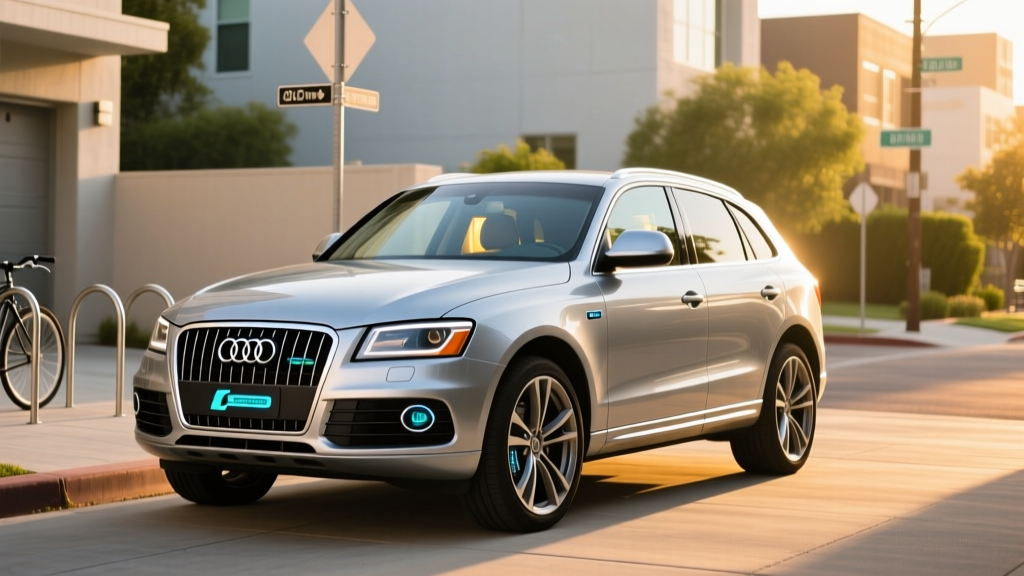
The 2013 Audi Q5 Hybrid represents a specific moment in electrification history — when Audi paired a turbocharged 2.0-liter four-cylinder with an electric motor sandwiched between the engine and transmission, creating a conventional hybrid (HEV) that required no plug and no behavior change from the driver. Audi discontinued the Q5 Hybrid after the 2016 model year, replacing it with the Q5 TFSI e plug-in hybrid (PHEV) in later generations. If you're shopping for a 2013 Audi Q5 Hybrid on the used market today, this guide covers the exact fuel economy figures, battery longevity data, replacement costs, and the ownership realities you need to evaluate before signing the paperwork.
| Specification | Value |
|---|---|
| Powertrain Type | Conventional Hybrid (HEV) — no plug-in |
| Engine | 2.0L Turbocharged I4 (211 hp, 258 lb-ft) |
| Electric Motor | 45 hp (34 kW), integrated in transmission housing |
| Combined System Output | 245 hp / 354 lb-ft torque |
| Transmission | 8-speed Tiptronic automatic (torque converter replaced by electric motor) |
| Hybrid Battery | 1.3 kWh nominal (lithium-ion), ~0.9 kWh usable |
| EPA MPG (City / Hwy / Combined) | 24 / 30 / 26 MPG |
| 0–60 mph | 6.9 seconds |
| Drivetrain | quattro AWD |
| Original MSRP | $55,895 (Premium Plus trim) |
| Typical Used Price (2026) | $9,000–$15,000 depending on mileage and condition |
| Hybrid Battery Warranty (Original) | 8 years / 100,000 miles |
HEV vs PHEV: Understanding What the Q5 Hybrid Actually Is
This distinction matters because it changes everything about how you own the vehicle. The 2013 Q5 Hybrid is a conventional hybrid (HEV), not a plug-in hybrid (PHEV). It charges its small 1.3 kWh lithium-ion battery exclusively through regenerative braking and the gasoline engine. You never plug it in. There is no EV-only range to speak of — the electric motor assists the gas engine during acceleration and enables brief electric-only creeping at very low speeds (under 0.6 miles at roughly 20 mph), but it cannot sustain highway or meaningful distance driving on electricity alone.
| Feature | HEV (This Q5 Hybrid) | PHEV (e.g., Q5 TFSI e) | BEV (e.g., Audi Q4 e-tron) |
|---|---|---|---|
| Plug-in Required? | No | Yes (Level 1 or 2) | Yes (Level 2 or DC fast) |
| Electric-Only Range | Negligible (<1 mi low speed) | 20–30 miles typical | 200–300+ miles |
| Gas Engine? | Yes (primary) | Yes (backup + highway) | No |
| Fuel Economy Benefit | Moderate (~20% vs gas-only) | High (if charged daily) | 100% electric |
| Home Charging Needed? | No | Strongly recommended | Essential |
| Used Market Price (2026) | $9K–$15K | $25K–$40K | $22K–$50K+ |
For buyers considering a 2013 Q5 Hybrid: if you don't have access to home or workplace charging, an HEV like this is the most practical electrified option. You get the fuel economy benefit of regenerative braking and electric motor assist with zero infrastructure requirements.
Fuel Economy: EPA Ratings and Real-World MPG
The EPA rated the 2013 Audi Q5 Hybrid at 24 city / 30 highway / 26 combined MPG according to fueleconomy.gov. For context, the non-hybrid 2013 Q5 with the same 2.0T engine and quattro AWD was rated at 20 city / 28 highway / 22 combined — so the hybrid delivers a roughly 4 MPG combined improvement, or about 18% better fuel economy.
| Driving Cycle | EPA Rating | Real-World Expectation |
|---|---|---|
| City | 24 MPG | 24–27 MPG (hybrids often exceed EPA in stop-and-go due to regen) |
| Highway | 30 MPG | 26–29 MPG (sustained high speed reduces electric motor benefit) |
| Combined | 26 MPG | 24–27 MPG depending on driving mix and climate |
Real-world note: Hybrid fuel economy behaves differently than gas-only vehicles. City driving — with frequent stops that enable regenerative braking — is where this powertrain shines. Owners who do mostly suburban and city driving frequently report matching or slightly exceeding the 24 MPG city figure. Highway-dominant commutes at 75+ mph will trend toward 25–27 MPG, as aerodynamic drag dominates and the electric motor provides minimal assist at sustained speed. Cold weather (below 35°F) typically reduces MPG by 5–10% as the engine runs longer to heat the cabin and the battery operates less efficiently.
Powertrain Deep Dive: How the Hybrid System Works
Audi's hybrid system in the 2013 Q5 is a parallel hybrid architecture. The 2.0-liter TFSI engine produces 211 horsepower and 258 lb-ft of torque on its own. A 45-hp (34 kW) electric motor sits between the engine and the 8-speed Tiptronic transmission, replacing the traditional torque converter. Combined system output is 245 horsepower and 354 lb-ft of torque — a meaningful bump over the gas-only Q5 2.0T's 211 hp.
The electric motor draws from a 1.3 kWh (nominal) lithium-ion battery pack located under the cargo floor. Usable capacity is roughly 0.9 kWh — the system maintains a state-of-charge buffer to protect battery longevity. This is a very small battery by modern standards (a current PHEV typically carries 13–25 kWh), but it's sufficient for the motor-assist and regenerative braking functions of an HEV.
The system operates in several modes automatically:
- EV mode: Electric-only at low speeds (under ~20 mph, very short distances)
- Hybrid mode: Engine and motor work together, optimized by the ECU
- Regenerative braking: Motor acts as a generator during deceleration, recapturing kinetic energy
- Engine-only: At sustained highway speeds, the gas engine handles propulsion while the battery maintains charge
- Boost: Full combined output during hard acceleration (0–60 in 6.9 seconds)
The result is a vehicle that feels brisk off the line (electric motor torque fills in the turbo lag), operates quietly at low speeds, and seamlessly blends between electric and gas power without any driver intervention.
Hybrid Battery Reliability, Warranty, and Replacement Cost
This is the most critical question for any used hybrid buyer. The 2013 Q5 Hybrid's lithium-ion battery was covered under Audi's original hybrid component warranty of 8 years / 100,000 miles (extended to 10 years / 150,000 miles in California Air Resources Board states). As of 2026, that original factory warranty has expired on all 2013 models unless the vehicle has exceptionally low mileage and was certified pre-owned with extended coverage.
2013 Audi Q5 Hybrid — Battery Longevity Summary
- Original Warranty: 8 yr / 100,000 mi (10 yr / 150,000 mi in CARB states)
- Warranty Status in 2026: Expired on all 2013 models
- Expected Battery Lifespan: 10–15 years / 150,000–200,000 miles before significant degradation
- Battery Replacement Cost: $2,500–$5,000 (parts + labor at independent shops; $4,000–$7,000+ at Audi dealerships)
- Common Failure Mode: Gradual capacity loss reducing MPG benefit over time, rather than sudden failure
Real-world reliability data: The Q5 Hybrid's battery pack is relatively small (1.3 kWh), which means it cycles more frequently than a larger PHEV or BEV battery. However, Audi's battery management system is conservative with charge/discharge buffers, which helps longevity. Most 2013 Q5 Hybrids on the road in 2026 have experienced some degradation — typically manifesting as slightly reduced electric-assist duration and a 1–3 MPG drop from original fuel economy figures. Complete battery failure before 150,000 miles is uncommon but not unheard of.
If you're evaluating a specific used 2013 Q5 Hybrid, request a pre-purchase inspection that includes a hybrid battery health check. An Audi dealer can pull the battery state-of-health (SoH) data through the OBD-II diagnostic system. Look for SoH above 70% — below that threshold, the fuel economy benefit diminishes noticeably, and replacement should be factored into your purchase negotiation.
Is the 2013 Q5 Hybrid Reliable Overall?
Beyond the hybrid battery, the 2013 Q5 carries the same reliability profile as the standard B8.5-generation Q5. Key mechanical considerations for used buyers:
- 2.0T TFSI engine: Generally robust, but watch for oil consumption (a known issue in 2009–2014 VW/Audi 2.0T engines). Some owners report excessive oil burn requiring piston ring replacement ($2,000–$4,000).
- 8-speed Tiptronic (ZF 8HP): One of the most reliable automatic transmissions in the industry. Fluid change every 60,000 miles is recommended.
- quattro AWD system: Torsen-based, mechanically simple, very durable.
- Hybrid-specific components: The electric motor and power electronics have proven reliable. The main risk is the battery pack (discussed above).
- Brakes: Regenerative braking reduces pad wear — many owners report original brake pads lasting 80,000+ miles.
The NHTSA gave the 2013 Q5 a 4-star overall safety rating. The IIHS rated it Good in most crash tests, though it predates the more rigorous small-overlap testing protocols.
Tax Credits and Incentives: What Applies to a Used Hybrid?
The 2013 Audi Q5 Hybrid does not qualify for the federal §30D new clean vehicle tax credit — that credit applies only to new vehicle purchases and has specific MSRP, income, and battery-sourcing requirements under current IRS rules. The Q5 Hybrid's original $7,500-equivalent-era incentives are long expired.
However, there is a relevant incentive for used buyers:
Used Clean Vehicle Credit (§25E) — Potential Eligibility
- Credit Amount: Up to $4,000 or 30% of sale price (whichever is less)
- Vehicle Requirement: Must be a qualified clean vehicle (HEVs with battery capacity ≥4 kWh qualify — the Q5 Hybrid's 1.3 kWh battery does NOT meet this threshold)
- Sale Price Cap: Vehicle must sell for $25,000 or less
- Buyer Income Cap: AGI ≤ $75,000 (single) / $150,000 (joint) / $112,500 (head of household)
- Dealer Requirement: Must purchase from a licensed dealer who reports the sale to the IRS
- Verdict for Q5 Hybrid: NOT eligible — battery capacity below the 4 kWh minimum
Bottom line on incentives: The 2013 Q5 Hybrid does not qualify for federal tax credits as a used purchase. The hybrid battery is too small (1.3 kWh) to meet the §25E used vehicle credit's 4 kWh minimum. Check your state for any local incentives, but most state programs also target new PHEVs and BEVs. Consult a tax professional and review current rules at irs.gov for any updates.
Who Should Buy the 2013 Audi Q5 Hybrid — and Who Shouldn't
Pros
- No plug-in needed — works with any lifestyle or parking situation
- 245 hp combined output is brisk for a compact luxury SUV
- quattro AWD standard for all-weather capability
- 24–27 real-world MPG beats the gas-only Q5 by ~18%
- Regenerative braking extends brake pad life significantly
- Premium Audi interior quality, quiet cabin, strong build
- Depreciation has already occurred — strong value at $9K–$15K
Cons
- Hybrid battery out of warranty; replacement costs $2,500–$7,000
- No meaningful electric-only range — this is not a PHEV
- No federal tax credit eligibility as a used purchase
- 2.0T oil consumption issue affects some examples
- 26 MPG combined is modest by 2026 hybrid standards (Toyota RAV4 Hybrid gets 40 MPG combined)
- Limited cargo space due to battery pack under cargo floor
- Infotainment and driver-assistance tech is a decade behind current models
Decision Framework: Is the 2013 Q5 Hybrid Right for You?
Choose the 2013 Q5 Hybrid if: You want a premium compact SUV with AWD and modestly better fuel economy than a gas Q5, you lack home charging access, your budget is $10K–$15K, and you're comfortable with potential hybrid battery replacement costs down the road.
Choose a newer PHEV instead if: You have home charging, you want 20+ miles of electric-only commuting, you want current warranty coverage, and your budget allows $25K+.
Choose a full BEV instead if: You have reliable home Level 2 charging, your daily driving is under 250 miles, you want zero tailpipe emissions, and you want the lowest per-mile fuel cost.
Choose a Toyota RAV4 Hybrid or Honda CR-V Hybrid instead if: Maximum MPG (40+ combined) is your priority over luxury branding, and you want lower long-term maintenance costs.
Frequently Asked Questions
How many MPG does the 2013 Audi Q5 Hybrid get?
The EPA rates it at 24 city / 30 highway / 26 combined MPG. In real-world driving, expect 24–27 MPG combined, with city-dominant routes yielding the best results thanks to regenerative braking. Highway-heavy driving at 75+ mph will trend toward 25–26 MPG.
Can the 2013 Q5 Hybrid drive on electric power only?
Only marginally. The electric motor can propel the vehicle at very low speeds (under ~20 mph) for less than a mile — useful for creeping in traffic or pulling out of a driveway silently. It cannot sustain highway speeds or meaningful distances on electricity alone. This is a conventional hybrid, not a plug-in.
Do I need to plug in the 2013 Q5 Hybrid?
No. This is a conventional hybrid (HEV). The battery charges through regenerative braking and the gasoline engine. There is no plug, no charging cable, and no home charging infrastructure required.
Is the 2013 Q5 Hybrid reliable, and what does battery replacement cost?
The hybrid system itself is generally reliable. The main risk is the 1.3 kWh lithium-ion battery, which is now out of warranty on all 2013 examples. Replacement costs $2,500–$5,000 at independent shops or $4,000–$7,000+ at Audi dealerships. The 2.0T engine is known for potential oil consumption issues — a pre-purchase inspection is essential.
Does the 2013 Q5 Hybrid qualify for any tax credit?
No federal tax credit applies. The §30D new vehicle credit doesn't apply to used purchases, and the §25E used clean vehicle credit requires a minimum 4 kWh battery — the Q5 Hybrid's 1.3 kWh pack falls short. Check your state for any local incentives, but most target new electrified vehicles.
How does the Q5 Hybrid compare to the gas-only 2013 Q5?
The hybrid adds 34 combined horsepower (245 vs 211), improves fuel economy by about 4 MPG combined (26 vs 22), and provides smoother low-speed acceleration thanks to electric motor torque fill. The trade-off is slightly reduced cargo space (battery under the floor), higher complexity, and potential battery replacement cost as the vehicle ages.
What should I check before buying a used 2013 Q5 Hybrid?
Request a pre-purchase inspection that includes: hybrid battery state-of-health reading (target above 70%), oil consumption history, transmission fluid condition, and a full diagnostic scan. Verify maintenance records, particularly for timing chain tensioner service and transmission fluid changes. Budget $1,000–$2,000 annually above the purchase price for maintenance on a luxury German SUV of this age.