Quick Verdict: The Only Plug-In Hybrid Minivan That Still Matters
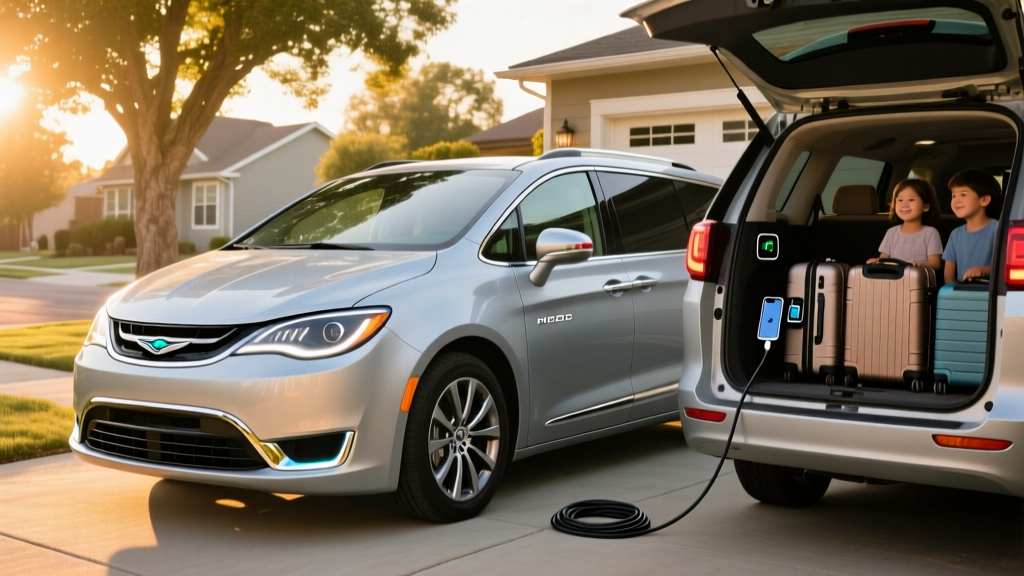
If you need three rows, a sliding door, and the ability to do the school run on pure electricity, the 2022 Chrysler Pacifica Hybrid remains a segment of one. No other minivan on the US market pairs a plug-in hybrid powertrain with seven-passenger seating. For families who want electric commuting without range anxiety on road trips, it fills a gap that neither a pure EV nor a conventional hybrid can match.
But buying a 2022 model in 2026 means navigating the used market, understanding how its 16 kWh battery holds up over time, and knowing that the federal tax credit that once applied at purchase is no longer available to second buyers. Here's the complete ownership picture — range, efficiency, charging, reliability, and cost.
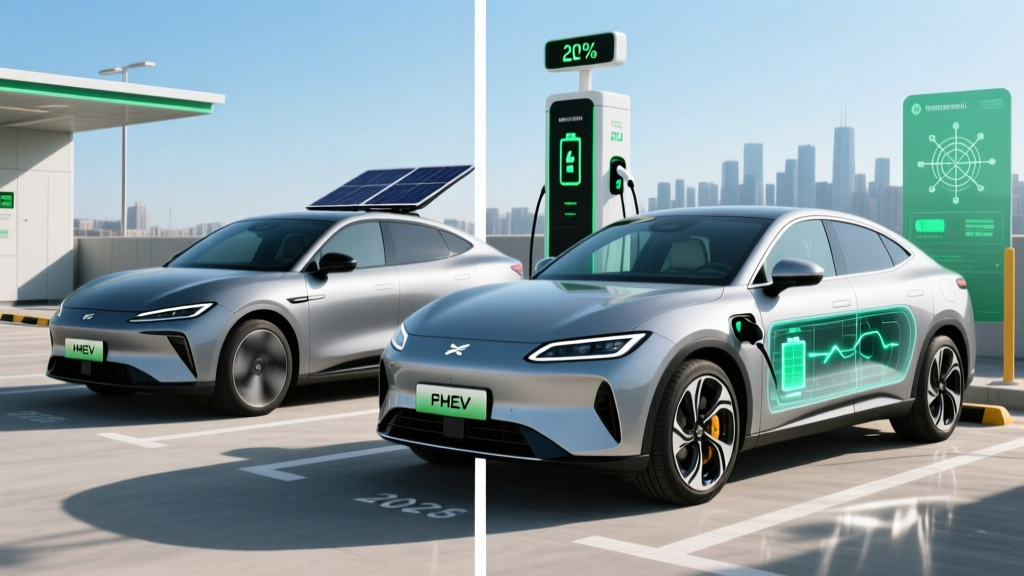
HEV vs PHEV: What the Pacifica Hybrid Actually Is
Conventional Hybrid (HEV): A small battery recharged by the engine and regenerative braking. No plug. Toyota Sienna Hybrid is an HEV — it gets ~36 MPG but has zero electric-only range.
Plug-In Hybrid (PHEV): A larger battery you can charge from a wall outlet or charger. The Pacifica Hybrid is a PHEV — it drives up to 32 miles on electricity alone before the gasoline engine engages. You plug it in to get the benefit, but if you forget, it operates as a conventional hybrid.
This distinction matters because some shoppers confuse the Pacifica Hybrid with the standard gas Pacifica or assume it charges itself like a Prius. To unlock its efficiency advantage, you need access to a 120V outlet (Level 1) or a 240V Level 2 charger at home or work.
Range, MPG, and Efficiency: The Numbers
The 2022 Pacifica Hybrid pairs a 3.6-liter V6 engine with two electric motors and a 16 kWh lithium-ion battery pack (usable capacity approximately 13 kWh). Here's how the EPA rates it:
| Metric | EPA Rating | Real-World Expectation |
|---|---|---|
| Electric-only range | 32 miles | 26–30 mi (highway/cold weather) |
| MPGe (electric + gas) | 82 MPGe | Varies with charge frequency |
| Gas-only MPG (combined) | 30 MPG | 27–31 MPG |
| Gas-only city | 29 MPG | 28–32 MPG (regen helps in stop-and-go) |
| Gas-only highway | 30 MPG | 26–29 MPG at 75+ mph |
| Total combined range | 430 miles | ~380–420 mi with full tank + full charge |
Real-World Range Note: The EPA's 32-mile electric range assumes moderate temperatures and mixed driving. In winter conditions (below 35°F), expect 22–26 miles of electric range due to cabin heating loads and reduced battery efficiency. On pure highway driving at 70+ mph, electric range drops to approximately 24–27 miles. The 14-gallon fuel tank provides the remaining distance once the battery depletes.
Owners who charge nightly and commute under 30 miles round-trip report using gasoline only on weekend road trips. If you rarely plug in, the Pacifica Hybrid defaults to roughly 28–30 MPG as a heavy hybrid — still better than the gas-only Pacifica's 22 MPG combined, but not transformative.
Powertrain and Performance
| Specification | 2022 Chrysler Pacifica Hybrid |
|---|---|
| Engine | 3.6L V6 Atkinson-cycle |
| Electric motors | 2 (integrated in eFlite CVT) |
| Combined horsepower | 260 hp |
| Transmission | eFlite electrically variable transmission (EVT) |
| Drivetrain | Front-wheel drive (AWD not available on PHEV) |
| 0–60 mph | ~7.1 seconds |
| Battery capacity | 16 kWh total (~13 kWh usable), lithium-ion |
| Towing capacity | Not rated for towing (PHEV only; gas Pacifica: 3,600 lb) |
| Cargo (behind 3rd row) | 32.3 cu ft |
| Cargo (max, seats folded) | 140.5 cu ft |
The dual-motor EVT is smooth and adequate for family hauling. Electric-only mode provides surprisingly strong low-end torque for merging and school-zone driving. However, the PHEV powertrain is FWD-only — if you need all-wheel drive, Chrysler offers it on the gas Pacifica but not the plug-in variant. The battery placement under the floor also eliminates the Stow 'n Go second-row seating found on gas models; the PHEV's captain's chairs fold forward but don't disappear into the floor.
Charging: Times, Levels, and Connector Details
The Pacifica Hybrid uses a standard J1772 connector for AC charging. It does not support DC fast charging — a notable limitation compared to some competitors, though typical for PHEVs with smaller batteries.
| Charging Level | Power | Time (0–100%) | Practical Notes |
|---|---|---|---|
| Level 1 (120V household) | ~1.4 kW | ~14 hours | Overnight works if you start with some charge |
| Level 2 (240V, 32A) | ~7.2 kW | ~2 hours | Full charge in a typical workday or overnight |
| DC Fast Charge | N/A | N/A | Not supported — J1772 AC only |
The onboard charger maxes out at 7.2 kW, meaning even a 48-amp Level 2 circuit won't charge it any faster than a 32-amp unit. For most owners, a basic 240V/32A home charger (like a ChargePoint Home Flex or similar) delivers a full charge in about two hours — more than sufficient for overnight top-ups. Level 1 charging from a standard outlet is viable if your daily electric commute is under 20 miles and you can plug in for 10+ hours.
Pricing, Trims, and Tax Credit Status (2026 Used Market)
The 2022 Chrysler Pacifica Hybrid was sold in three trims:
- Hybrid Touring: ~$47,500 MSRP (base)
- Hybrid Touring L: ~$50,500 MSRP
- Hybrid Limited: ~$54,000 MSRP
- Pinnacle Hybrid: ~$57,100 MSRP
As a 2026 used-market purchase, expect to pay roughly $28,000–$40,000 depending on mileage, trim, and condition. Higher-mileage Touring models start near $28K, while low-mileage Pinnacle trims command $38K+.
Federal Tax Credit Status (2026):
- The original §30D new-vehicle credit of $7,500 was available to first purchasers in 2022, subject to income and battery-sourcing rules.
- As a used vehicle in 2026, the Used Clean Vehicle Credit (§25E) may apply: up to $4,000 or 30% of the sale price (whichever is lower) if you meet income caps ($75K single / $150K married filing jointly) and the vehicle is purchased from a licensed dealer for under $25,000.
- However, most 2022 Pacifica Hybrids sell above the $25,000 used-vehicle price cap, making them ineligible for the §25E credit in most cases.
- Check current rules at IRS.gov Used Vehicle Credit page and consult a tax professional before relying on credit eligibility.
Battery Longevity, Warranty, and Replacement Cost
Factory Battery Warranty: Chrysler covers the Pacifica Hybrid's 16 kWh battery pack for 10 years / 100,000 miles (whichever comes first) in CARB states, and 8 years / 100,000 miles in non-CARB states. The warranty guarantees the battery will retain at least 70% of its original capacity.
Real-World Degradation: Owner reports and fleet data suggest the Pacifica Hybrid's battery loses approximately 8–12% of capacity over the first 4–5 years / 60,000 miles under normal use. This translates to a reduction from 32 miles of electric range to roughly 27–29 miles — noticeable but not debilitating.
Replacement Cost: Out-of-warranty battery replacement runs approximately $7,500–$9,500 including parts and labor, based on dealer estimates. Third-party refurbished packs may become more available as the fleet ages. For context, most hybrid battery packs outlast 150,000+ miles before degrading below 70% capacity.
The hybrid system (power electronics, motors, EVT) also carries the same 8- or 10-year warranty. The conventional 12V auxiliary battery is a standard lead-AGM unit, warrantied separately for 3 years/36,000 miles — budget $200–$300 for replacement when needed.
Reliability and Common Issues
The Pacifica Hybrid's powertrain has proven reasonably durable, but the nameplate carries some baggage. The most commonly reported issues across 2017–2022 model years include:
- Early battery recalls: Chrysler issued recalls for certain 2017–2018 Pacifica Hybrids related to battery cell defects that could cause stalling or, in rare cases, fire risk. The 2022 model year is not affected by the primary recall campaigns, but always verify a specific VIN on NHTSA.gov.
- Electrical gremlins: Some owners report infotainment reboots and Uconnect screen freezes — software-related, typically resolved with OTA updates or dealer reflashes.
- Sliding door mechanisms: Power sliding doors on all Pacifica trims have been a historical wear point. Inspect seals and tracks on any used example.
Overall, the hybrid powertrain itself (engine, motors, battery) has been more reliable than the surrounding electronics. The IIHS gave the 2022 Pacifica a Top Safety Pick rating when equipped with optional front crash prevention — check IIHS.org for specific test scores by trim.
Who Should Buy This vs a Full EV or Gas Minivan
Choose the Pacifica Hybrid if:
- You have home charging access and a daily commute under 30 miles (you'll rarely burn gas)
- You need three rows and a minivan form factor but want lower running costs
- You take road trips where a pure EV's charging stops would be impractical with kids
- You want to reduce fuel consumption without committing to full electrification
Choose a gas minivan (Toyota Sienna Hybrid HEV, Honda Odyssey) if:
- You cannot charge at home or work — the PHEV premium won't pay off
- You need AWD (Sienna offers it; Pacifica Hybrid does not)
- You need maximum cargo flexibility (Stow 'n Go is unavailable on PHEV)
- Upfront budget is tight — gas models are $8K–$12K cheaper used
Choose a full EV (Kia EV9, Tesla Model X) if:
- You have reliable home and destination charging
- You want zero tailpipe emissions and the lowest per-mile fuel cost
- You're willing to accept higher purchase prices and plan trips around DC fast chargers
Pros
- 32 miles of electric-only range covers most school/activity commutes
- Smooth, quiet electric driving in EV mode
- 30 MPG combined as a hybrid is excellent for a 4,800-lb minivan
- Seven-passenger seating with family-friendly features
- Strong battery warranty (8–10 yr / 100K mi)
Cons
- No DC fast charging — 2-hour minimum on Level 2
- No AWD option (FWD only)
- No Stow 'n Go second-row seating
- Not rated for towing
- Used-market tax credit eligibility unlikely due to price cap
- Infotainment can be buggy on older software versions
Frequently Asked Questions
How many MPG does the 2022 Chrysler Pacifica Hybrid get?
The EPA rates it at 30 MPG combined (29 city / 30 highway) when operating as a hybrid after the battery depletes. In real-world driving, expect 27–31 MPG depending on conditions. When charged regularly, effective MPGe reaches 82, and many owners use gasoline only for long trips.
How far can the Pacifica Hybrid go on electric only?
The EPA rates it at 32 miles of electric-only range. In real-world driving, expect 26–30 miles in moderate temperatures and 22–26 miles in cold weather or sustained highway speeds above 65 mph.
Does the 2022 Pacifica Hybrid qualify for any tax credit in 2026?
As a used vehicle, it could theoretically qualify for the §25E Used Clean Vehicle Credit (up to $4,000), but the vehicle must sell for $25,000 or less from a licensed dealer. Most 2022 Pacifica Hybrids sell above that threshold on the current used market, making them ineligible. Always verify with a tax professional and check IRS rules.
Is the Pacifica Hybrid reliable, and what does battery replacement cost?
The hybrid powertrain has been generally reliable, with the battery covered for 8–10 years / 100,000 miles. Out-of-warranty battery replacement costs approximately $7,500–$9,500. Most packs retain 88–92% capacity at the 5-year mark based on owner data. Check NHTSA for any open recalls on a specific VIN.
Can I charge the Pacifica Hybrid at a DC fast charger?
No. The Pacifica Hybrid supports only AC charging via a J1772 connector — Level 1 (120V, ~14 hours) or Level 2 (240V, ~2 hours). It cannot accept DC fast charging, which is typical for plug-in hybrids with smaller battery packs.
How does the Pacifica Hybrid compare to the Toyota Sienna Hybrid?
The Sienna is a conventional hybrid (HEV) — it gets ~36 MPG combined but has no plug and no electric-only range. The Pacifica Hybrid offers 32 miles of EV driving but only 30 MPG once the battery depletes. If you can charge at home, the Pacifica uses less gasoline for short commutes. If you can't charge, the Sienna's higher MPG and available AWD make it the better hybrid choice. The Sienna also retains Stow 'n Go-style seating flexibility that the Pacifica PHEV lacks.