Quick Verdict: A First-Generation Hybrid That Still Commutes Well
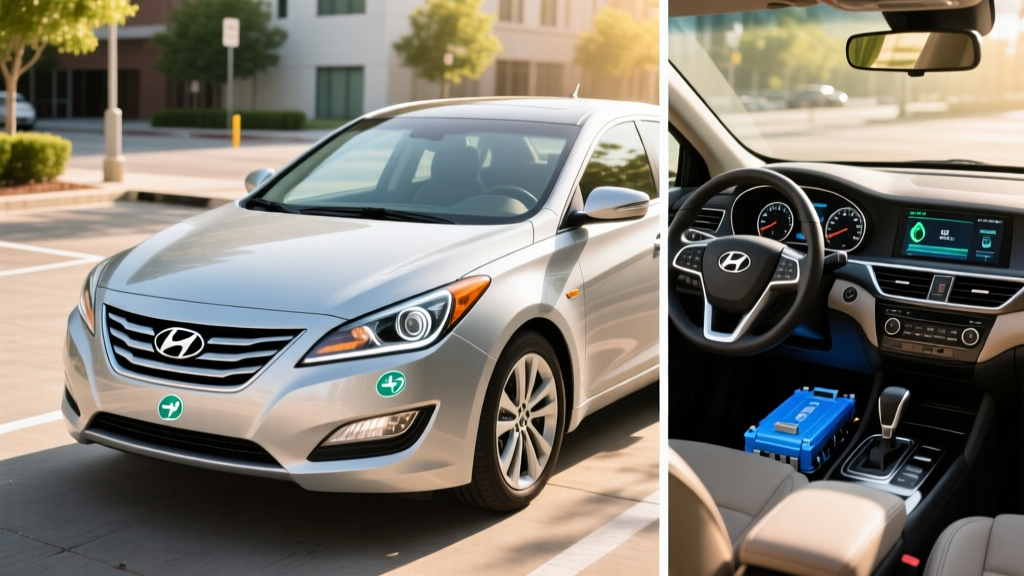
The 2012 Hyundai Sonata Hybrid was Hyundai's first serious attempt at a midsize hybrid sedan in the U.S. market, slotting into a segment dominated by the Toyota Camry Hybrid and Ford Fusion Hybrid. Built on the conventional hybrid (HEV) architecture — meaning it never needs to be plugged in — it pairs a 2.4-liter four-cylinder engine with an electric motor and a compact lithium-polymer battery pack. More than a decade later, this model shows up on the used market at bargain prices, and buyers want to know: does the fuel economy hold up, and will the hybrid battery survive?
The short answer is yes on both counts, with caveats. The 2012 Sonata Hybrid delivers real-world fuel economy that often exceeds its EPA estimates in city driving, and its hybrid battery warranty remains one of the best in the industry. But it's not a plug-in hybrid (PHEV), it has no electric-only driving range to speak of, and its highway efficiency trails modern competitors. Here's the full breakdown.
HEV vs PHEV: What the 2012 Sonata Hybrid Actually Is
A common point of confusion among used-car shoppers is whether this Sonata needs to be plugged in. It does not. The 2012 Sonata Hybrid is a conventional hybrid electric vehicle (HEV). It charges its battery exclusively through regenerative braking and the gasoline engine. There is no charging port, no electric-only range, and no plug.
| Feature | Conventional Hybrid (HEV) | Plug-in Hybrid (PHEV) |
|---|---|---|
| Plug-in charging? | No | Yes |
| Electric-only range | None (motor assists engine) | 20–50+ miles typical |
| Battery size | ~1.4 kWh (small) | 10–25 kWh (large) |
| Gas engine | Primary power source | Backup / range extender |
| 2012 Sonata Hybrid? | Yes — this is it | No (Sonata PHEV arrived later, different generation) |
If you're looking for a Sonata with plug-in capability and electric-only miles, you'd need to look at the later-generation Sonata Plug-in Hybrid (introduced for the 2016 model year) or the current-generation Sonata Hybrid, which is still an HEV. Hyundai has never offered a current-gen Sonata PHEV in the U.S. as of 2026.
Fuel Economy: EPA Ratings vs Real-World MPG
The 2012 Sonata Hybrid was rated by the EPA at the following fuel economy figures:
| Driving Cycle | EPA MPG |
|---|---|
| City | 35 MPG |
| Highway | 40 MPG |
| Combined | 37 MPG |
Source: fueleconomy.gov
Real-World MPG: What Owners Actually See
Conventional hybrids tend to perform better than their EPA city ratings in stop-and-go traffic because regenerative braking recaptures energy that a gas car wastes as heat. The Sonata Hybrid's real-world behavior follows this pattern:
- City / suburban driving: Owners frequently report 36–40 MPG, meeting or slightly exceeding the EPA city estimate. The hybrid system shines here.
- Highway cruising (70+ mph): Expect 34–38 MPG. At sustained highway speeds, the electric motor contributes less and the 2.4L engine does most of the work. Aerodynamic drag and the vehicle's 3,490-lb curb weight work against it.
- Cold weather (below 35°F): A 10–15% drop is typical for any hybrid in winter. The engine runs more often to generate cabin heat, and battery chemistry is less efficient at low temperatures. Expect 30–33 MPG combined in deep winter.
- Combined real-world average: Most owners land between 34–38 MPG depending on driving mix, which tracks closely with the EPA combined figure.
Real-world MPG tip: Hybrids reward gentle acceleration and anticipatory braking. Aggressive driving negates the hybrid advantage more severely than in a conventional gas car because you bypass the electric motor's efficiency window.
Powertrain Specs: Engine, Motor, and Combined Output
| Specification | Value |
|---|---|
| Gas engine | 2.4L inline-4 (Theta II) |
| Engine horsepower | 169 HP @ 6,000 RPM |
| Electric motor | 30 kW (40 HP) permanent magnet |
| Combined system output | 206 HP |
| Transmission | 6-speed automatic (no CVT) |
| Hybrid battery | 1.4 kWh lithium-polymer |
| 0–60 mph | ~8.5 seconds (est.) |
| Curb weight | 3,490 lbs |
| Fuel tank | 18.5 gallons |
| Total driving range | ~684 miles (at 37 MPG combined) |
Unlike the Toyota Camry Hybrid of the same era, which used a continuously variable transmission (CVT), Hyundai opted for a traditional 6-speed automatic. This gives the Sonata Hybrid a more conventional driving feel — shifts are perceptible, and there's no "rubber band" effect — but it sacrifices some efficiency optimization that a CVT provides. The trade-off is subjective: some drivers prefer the normal shift feel, while others prioritize the Camry's smoother, if drone-y, acceleration.
The 206 combined horsepower was competitive for the class in 2012 and remains adequate for merging and passing today. The electric motor fills in torque at low RPMs, giving the Sonata Hybrid respectable off-the-line responsiveness in city driving.
Hybrid Battery Longevity, Warranty, and Replacement Cost
This is the top concern for any used hybrid buyer, and it's where the 2012 Sonata Hybrid has a notable advantage: Hyundai's hybrid battery warranty.
Hyundai Hybrid Battery Warranty
- Coverage: 10 years / 100,000 miles (whichever comes first)
- Applies to: Hybrid battery pack and hybrid-system components
- Original owner: Full 10yr/100k coverage
- Second owner: Coverage may reduce to 5yr/60k depending on transferability terms — verify with Hyundai using the VIN
For a 2012 model, the original 10-year/100,000-mile warranty expired in 2022 for most vehicles. This means a used 2012 Sonata Hybrid in 2026 is likely out of factory hybrid battery warranty unless an extended warranty was purchased or specific state emissions warranty provisions apply (California and states adopting CARB standards sometimes mandate 15-year hybrid battery coverage).
Battery Lifespan in Practice
Hyundai's lithium-polymer hybrid batteries in this generation have proven durable. The 1.4 kWh pack is small and operates within a narrow state-of-charge window (roughly 40–80%), which minimizes degradation stress. Many owners report 150,000–200,000+ miles on the original battery without significant capacity loss. Hybrid battery failure is not a widespread issue for this model year, though individual units can fail.
Replacement Cost
If the hybrid battery does fail out of warranty:
- New OEM battery (dealer): $2,500–$3,500 installed
- Refurbished / aftermarket battery: $1,200–$2,000 installed
- Individual cell replacement (specialist shop): $800–$1,500 depending on failed cells
Compare this to a full EV battery replacement ($5,000–$20,000+), and the hybrid battery cost is relatively manageable. The small 1.4 kWh pack simply contains far fewer cells to replace.
Used Market Pricing and Tax Credit Eligibility
As of early 2026, the 2012 Hyundai Sonata Hybrid trades on the used market in a range that reflects its age, mileage, and condition:
- High mileage (120k+), fair condition: $4,500–$6,000
- Average mileage (80k–120k), good condition: $6,000–$8,500
- Low mileage (under 80k), excellent condition: $8,500–$11,000
Does It Qualify for Any Tax Credit?
Federal §30D New EV Credit: No. This credit applies only to new vehicle purchases, and the 2012 Sonata Hybrid is long out of production.
Federal Used Clean Vehicle Credit (§25E): This credit offers up to $4,000 (or 30% of the sale price, whichever is less) for qualifying used EVs and PHEVs purchased from a dealer. However, conventional hybrids (HEVs) do not qualify. The §25E credit requires the vehicle to have a plug — either a battery electric vehicle (BEV) or a plug-in hybrid (PHEV). Since the 2012 Sonata Hybrid is an HEV with no plug, it is ineligible for the federal used clean vehicle credit.
State incentives: Most state EV incentives also target plug-in vehicles. A few states offer modest registration-fee reductions or HOV-lane access for hybrids, but these programs vary widely and change frequently. Check your state's DMV or energy office for current rules.
Reliability, Safety, and Ownership Costs
The 2012 Sonata Hybrid carries generally good reliability marks, though it's not without known issues:
- Theta II engine concerns: Hyundai's 2.4L Theta II engine family was subject to recalls and extended warranties related to connecting-rod bearing wear and potential engine seizure. Hyundai settled a class-action lawsuit and extended engine warranty coverage to lifetime for affected vehicles. Check whether the specific VIN has had the knock-sensor detection system (KSDS) software update performed — this is critical. Details at NHTSA.gov.
- Hybrid system: The hybrid-specific components (battery, inverter, motor) have been reliable with few widespread complaints.
- Brakes: Regenerative braking reduces wear on the friction brakes. Many owners report 80,000–100,000+ miles on original brake pads.
- Transmission: The 6-speed automatic has been largely trouble-free in this application.
Safety Ratings
The 2012 Sonata (including the Hybrid) earned a 5-star overall safety rating from NHTSA and was an IIHS Top Safety Pick (the pre-2013 criteria, which did not include the small-overlap front test introduced later). For a 2012 vehicle, this was strong performance. By 2026 standards, it lacks modern ADAS features like automatic emergency braking, lane-keeping assist, and adaptive cruise control — all of which are now standard or available on most new vehicles.
Estimated Annual Ownership Costs
At 37 MPG combined with gas averaging $3.25/gallon (2026 national average), annual fuel cost for 12,000 miles/year is approximately $1,054. Compare that to a 25 MPG conventional midsize sedan at the same mileage and fuel price: $1,560/year. The hybrid saves roughly $500/year in fuel.
Pros and Cons of the 2012 Sonata Hybrid in 2026
Pros
- Strong city MPG — often exceeds EPA 35 MPG city estimate
- No plug-in required — works with existing gas-station infrastructure
- Conventional 6-speed automatic avoids CVT drone
- Spacious midsize cabin with large trunk (16.4 cu ft)
- Low used-market entry price ($5k–$10k)
- Hybrid battery replacement is affordable vs. EV batteries
- Lifetime engine warranty (Theta II settlement) may still apply
Cons
- No electric-only driving capability
- No federal or state tax credits available (HEV, not PHEV)
- Outdated infotainment — no Apple CarPlay / Android Auto
- Lacks modern ADAS (no AEB, no lane-keeping, no blind-spot monitor on base trims)
- Highway MPG trails newer hybrids and PHEVs
- Original hybrid battery warranty likely expired (10yr/100k from 2012)
- Theta II engine recall history — must verify KSDS update
Who Should Buy This Hybrid vs a PHEV or Full EV?
Choose the 2012 Sonata Hybrid (HEV) if:
- You want better fuel economy without changing your fueling habits
- You don't have access to home or workplace charging (no plug needed)
- Your budget is under $10,000 for a fuel-efficient daily driver
- You drive a mix of city and highway miles
- You want a proven, simple hybrid system with low maintenance costs
Choose a PHEV (e.g., Toyota Prius Prime, Hyundai Ioniq PHEV) if:
- You can charge at home or work (Level 1 or Level 2)
- Most of your daily driving is under 30–40 miles (coverable on electric only)
- You want to reduce gas consumption dramatically while keeping a gas engine for road trips
- You want eligibility for the federal §25E used clean vehicle credit (up to $4,000)
Choose a Full EV (BEV) if:
- You have reliable home Level 2 charging
- Your daily commute is within the vehicle's real-world range
- You want zero tailpipe emissions and the lowest per-mile fuel cost
- You want access to HOV lanes, federal/state incentives, and the latest ADAS technology
The 2012 Sonata Hybrid occupies a specific niche: affordable, no-plug efficiency for budget-conscious commuters who want to spend less at the pump without investing in charging infrastructure. It won't deliver the transformative experience of a PHEV or BEV, but it will reliably return 35+ MPG for years with minimal fuss.
Frequently Asked Questions
How many MPG does the 2012 Sonata Hybrid get?
The EPA rates it at 35 city / 40 highway / 37 combined MPG. Real-world driving typically yields 34–38 MPG combined, with city driving often reaching 36–40 MPG and highway cruising dropping to 34–38 MPG. Cold weather can reduce these figures by 10–15%.
Does the 2012 Sonata Hybrid need to be plugged in?
No. It is a conventional hybrid (HEV), not a plug-in hybrid (PHEV). The battery charges through regenerative braking and the gasoline engine. There is no charging port.
How far can the 2012 Sonata Hybrid drive on electric only?
It cannot drive on electric power alone at meaningful speeds. The electric motor assists the gas engine during acceleration and low-speed crawling, but the gas engine is always the primary power source. There is no EV-only mode.
Is the hybrid battery reliable, and what does replacement cost?
The 1.4 kWh lithium-polymer hybrid battery has been reliable in practice, with many units lasting 150,000–200,000+ miles. If replacement is needed out of warranty, expect $2,500–$3,500 for a new OEM battery or $1,200–$2,000 for a refurbished unit.
Does the 2012 Sonata Hybrid qualify for any tax credit?
No. Federal clean vehicle credits (§30D for new, §25E for used) require a plug-in vehicle — either a BEV or PHEV. Conventional hybrids (HEVs) are not eligible. Some states may offer minor incentives, but most target plug-in vehicles.
What is the difference between the Sonata Hybrid and Sonata PHEV?
The 2012 Sonata Hybrid is a conventional HEV — no plug, no electric-only range. The Sonata Plug-in Hybrid (PHEV) was introduced for the 2016 model year and offered approximately 27 miles of electric-only range with a larger battery that could be charged via a plug. They are fundamentally different powertrain configurations.
Should I worry about the Theta II engine recall?
Yes — verify the vehicle's recall status at NHTSA.gov/recalls using the VIN. Hyundai extended engine warranty coverage as part of a class-action settlement, but the knock-sensor detection system (KSDS) software update must have been performed to maintain that coverage. Confirm this with a Hyundai dealer before purchase.
How does the 2012 Sonata Hybrid compare to the 2012 Camry Hybrid?
The 2012 Camry Hybrid LE was EPA-rated at 43 city / 39 highway / 41 combined — notably more efficient, especially in city driving, thanks to Toyota's more mature hybrid synergy drive system and CVT. The Sonata Hybrid counters with a more conventional driving feel (6-speed automatic), a larger trunk, and Hyundai's strong warranty history. On pure MPG, the Camry Hybrid wins; on driving dynamics and value, the Sonata Hybrid is competitive.