Quick Verdict: The 2012 Lexus CT200h Hybrid in 2026
The 2012 Lexus CT200h was the luxury brand's first dedicated hybrid hatchback — essentially a premium Toyota Prius wrapped in Lexus sheet metal with a sportier chassis tune. More than a decade after its debut, it remains one of the most reliable and fuel-efficient used vehicles on the market. With an EPA-rated 43 MPG combined and a proven third-generation Toyota Hybrid Synergy Drive powertrain, the CT200h is a compelling used-car buy for commuters who want luxury touches without the complexity of plug-in charging.
This is a conventional hybrid (HEV), not a plug-in hybrid (PHEV) and not a battery electric vehicle (BEV). You never plug it in. The gasoline engine and regenerative braking handle all battery charging internally. If you're searching for a 2012 Lexus CT200h hybrid and wondering whether it still holds up in 2026, the short answer is yes — provided you understand its limitations: modest power, a firm ride, and an aging interior.
| Spec | Value |
|---|---|
| Powertrain | 1.8L 4-cyl Atkinson-cycle + electric motor (HEV) |
| Combined Horsepower | 134 hp (net system output) |
| Engine Output | 98 hp @ 5,200 rpm |
| Electric Motor Output | 80 hp (60 kW) |
| Transmission | eCVT (planetary gearset) |
| Hybrid Battery | 1.3 kWh (usable ~0.9 kWh), Nickel-Metal Hydride (NiMH) |
| EPA Fuel Economy | 43 city / 40 highway / 42 combined MPG |
| 0–60 mph | 9.8 seconds |
| Drivetrain | Front-wheel drive |
| Cargo Volume | 14.3 cu ft (rear seats up), 37.4 cu ft (folded) |
| Curb Weight | ~3,130 lbs |
| Original MSRP (2012) | $29,120 (base) – ~$36,000 (loaded) |
| 2026 Used Price Range | $8,500 – $14,000 (depending on mileage/condition) |
Fuel Economy: EPA Numbers vs. Real-World MPG
The EPA rates the 2012 Lexus CT200h at 43 MPG city, 40 MPG highway, and 42 MPG combined according to fueleconomy.gov. These figures were competitive in 2012 and remain respectable today — the 2026 Toyota Prius achieves 57 MPG combined, but costs significantly more on the used market.
| Driving Cycle | EPA Rating | Real-World Expectation |
|---|---|---|
| City | 43 MPG | 44–48 MPG (hybrids excel in stop-and-go) |
| Highway | 40 MPG | 36–39 MPG (aero drag, limited regen at steady speed) |
| Combined | 42 MPG | 38–45 MPG (varies by driving mix and climate) |
Like most conventional hybrids, the CT200h actually tends to exceed its EPA city rating in real-world stop-and-go traffic, where regenerative braking recovers the most energy and the engine shuts off frequently. Highway driving is where this hybrid loses its edge — the 1.8L Atkinson-cycle engine runs more often at sustained speeds, and the NiMH battery's small capacity provides minimal electric-only assist.
In cold weather (below 30°F), expect a 5–10% drop in fuel economy. The engine runs longer to heat the cabin and bring the catalytic converter to operating temperature, reducing the time spent in electric-only mode. Owners in northern climates typically report 37–40 MPG combined during winter months.
HEV vs. PHEV vs. EV: Where the CT200h Fits
| Feature | HEV (CT200h) | PHEV (e.g., Prius Prime) | BEV (e.g., Chevy Bolt EV) |
|---|---|---|---|
| Plug-in Required? | No | Yes (for EV range) | Yes (always) |
| Electric-Only Range | ~0.5 mi at low speed | 25–44 mi (model dependent) | 200–350+ mi |
| Total Range | ~400+ mi (gas tank) | ~500–600 mi combined | 200–350+ mi |
| Fuel/Energy Cost | Gas only (~$0.09/mi) | Gas + electricity | Electricity only (~$0.04/mi) |
| Home Charging Needed? | No | Recommended | Essential |
| Maintenance Complexity | Low (proven) | Moderate | Low (fewer moving parts) |
The 2012 CT200h is a conventional hybrid electric vehicle (HEV). Its small 1.3 kWh NiMH battery cannot be plugged in and provides only brief electric-only creeping at very low speeds (roughly half a mile below 25 mph under light load). This is fundamentally different from a plug-in hybrid (PHEV) like the Toyota Prius Prime, which offers 25–44 miles of genuine electric-only driving and requires regular plug-in charging to realize its efficiency advantage.
The CT200h is ideal for drivers who:
- Cannot install a home charger (apartment dwellers, street parking)
- Want maximum simplicity — no charging cables, no plug-in routine
- Drive a mix of city and highway with no single dominant pattern
- Value reliability and low maintenance over cutting-edge efficiency
If you have home charging access and a short commute (under 30 miles), a used PHEV or a full BEV like the Chevy Bolt EV will deliver lower per-mile energy costs. But if you need a car you can simply get in and drive — with no infrastructure requirements — the CT200h's HEV architecture is the right call.
Powertrain Deep Dive: Toyota's Third-Gen Hybrid System
The 2012 CT200h uses Toyota's third-generation Hybrid Synergy Drive (HSD), the same system found in the 2010–2015 Toyota Prius. The powertrain combines:
- 1.8-liter 2ZR-FXE Atkinson-cycle inline-4: Produces 98 hp and 105 lb-ft of torque. The Atkinson cycle delays intake valve closing, sacrificing some low-end torque for higher thermal efficiency.
- Permanent-magnet electric motor (MG2): Generates up to 80 hp (60 kW) and serves as the primary drive motor at low speeds and the main regenerative braking motor.
- Generator motor (MG1): Functions as a starter, generator, and planetary gearset speed controller — it enables the eCVT's seamless ratio adjustment without a traditional belt-and-pulley CVT.
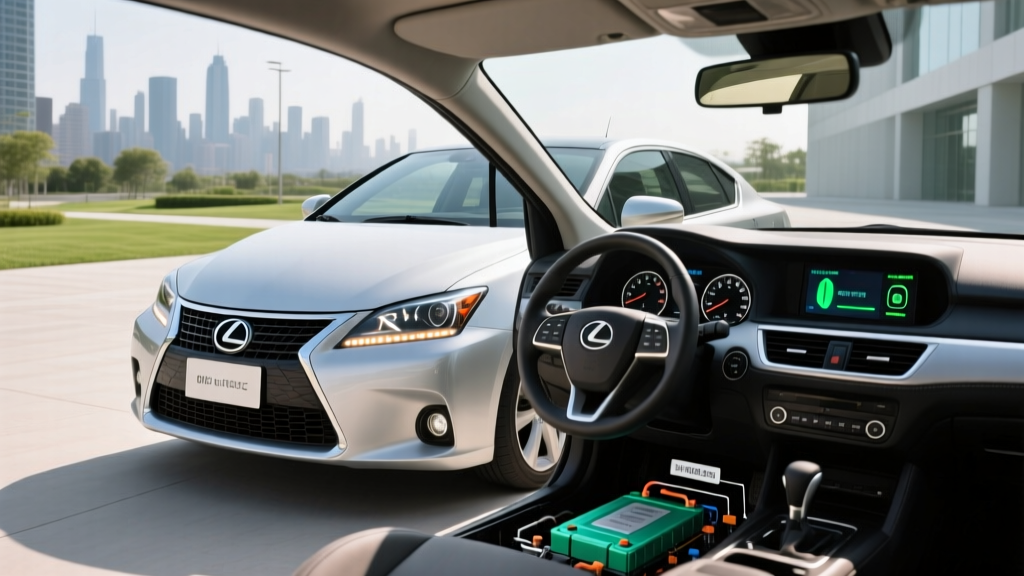
- NiMH hybrid battery pack: 1.3 kWh total capacity (approximately 0.9 kWh usable), located under the rear cargo floor. The small buffer preserves battery longevity by avoiding deep discharge cycles.
Combined system output is rated at 134 net horsepower. This is modest by modern standards — the 0–60 mph time of 9.8 seconds feels leisurely, especially when merging onto fast-moving freeways. The CT200h has a "Sport" mode that sharpens throttle response and adjusts the electric power steering weight, but it cannot overcome the fundamental power deficit. This car prioritizes efficiency over acceleration, and buyers should test-drive with that expectation.
Hybrid Battery Longevity, Warranty & Replacement Cost
Original Hybrid Battery Warranty: 8 years / 100,000 miles (10 years / 150,000 miles in California and CARB-adopting states) for defects and capacity loss below threshold.
2026 Status: The original warranty has expired for all 2012 models. Battery health is now an out-of-pocket ownership consideration.
Battery longevity is the top concern for any used hybrid buyer, and the CT200h's NiMH pack has a strong track record. Toyota's third-generation HSD battery is one of the most proven in the industry — taxis and fleet Priuses routinely exceed 200,000 miles on the original pack. The CT200h's battery is physically smaller and less stressed than the Prius pack (due to the car's lower weight and less aggressive charge/discharge cycling), which works in its favor for longevity.
That said, a 2012 model is now 14 years old. NiMH chemistry degrades with both cycle count and calendar age, regardless of mileage. Most CT200h owners report 150,000–200,000+ miles before noticeable capacity loss triggers a hybrid system warning. Signs of a weakening battery include:
- More frequent engine starts at stoplights (battery can't sustain electric-only idle)
- Reduced regenerative braking strength
- A noticeable drop in fuel economy (3–5 MPG below historical average)
- Dashboard hybrid system warning light
Battery replacement costs in 2026:
- New OEM Toyota/Lexus battery: $2,500–$3,500 (part + labor at a dealer)
- Remanufactured aftermarket pack: $1,200–$2,000 (from suppliers like Green Bean Battery or Dorman)
- Individual module replacement: $300–$600 if only 1–2 of the 28 NiMH modules have failed (a hybrid specialist can test and swap individual modules)
When evaluating a used 2012 CT200h, request a hybrid battery health check — many independent hybrid specialists can read the pack's internal resistance and state-of-health via an OBD-II scan tool. A pack showing balanced module voltages (within 0.2V of each other) and low internal resistance is healthy regardless of age.
Reliability, Safety & Ownership Costs
The 2012 Lexus CT200h benefits from one of the most reliable powertrains ever mass-produced. The Toyota HSD system has no traditional starter motor, no alternator, no accessory drive belt, and the eCVT planetary gearset has no clutches or bands to wear out. Brake pads last significantly longer than in conventional cars because regenerative braking handles most deceleration — many owners report 80,000+ miles on original brake pads.
Common issues specific to the 2012 CT200h (beyond the hybrid battery) include:
- 12V auxiliary battery: Located in the rear cargo area. Like all 12V batteries, it requires replacement every 4–6 years. A dead 12V battery can prevent the hybrid system from booting, even if the main traction battery is healthy.
- Water pump (electric): The CT200h uses an electric coolant pump for the inverter cooling circuit. Failure is uncommon but has been reported around 120,000–150,000 miles ($400–$600 replacement).
- EGR valve clogging: Carbon buildup in the exhaust gas recirculation system can cause rough idle or check-engine lights after 100,000+ miles. A $150–$250 cleaning typically resolves it.
- Navigation/infotainment: The 2012 Lexus infotainment system (with the mouse-like Remote Touch controller) is dated and slow by 2026 standards. Many owners opt for an aftermarket head unit with Apple CarPlay/Android Auto.
For safety, the 2012 CT200h earned a Top Safety Pick rating from the IIHS, with "Good" ratings in all crashworthiness categories. Standard safety equipment includes 10 airbags, stability control, and available pre-collision warning (on models equipped with the optional Pre-Collision System).
Annual ownership cost estimate (2026):
- Fuel (12,000 mi/yr @ 42 MPG, $3.40/gal): ~$970
- Insurance: $900–$1,300 (varies by state and driver profile)
- Maintenance: $300–$500 (oil changes, tire rotation, cabin filter)
- Estimated annual total: $2,200–$2,800
Does the 2012 CT200h Qualify for Any Tax Credit?
No. The 2012 Lexus CT200h does not qualify for the federal §30D Clean Vehicle Credit. That credit applies only to new plug-in electric vehicles (BEVs and PHEVs meeting battery sourcing and income requirements), and the CT200h is a conventional hybrid with no plug-in capability.
There is no federal tax credit for purchasing a used conventional hybrid in 2026. Some states or local utilities offer small rebates for hybrid purchases or registrations — check your state's energy office or utility provider for current programs, but these are uncommon and typically modest ($100–$500).
The CT200h's value proposition is purely operational: low fuel cost, minimal maintenance, and strong reliability — not purchase incentives.
Who Should Buy the 2012 Lexus CT200h Hybrid?
Choose the 2012 CT200h if:
- You want a reliable, fuel-efficient daily driver with no charging infrastructure needed
- Your commute is city-heavy (where hybrids shine with 44+ MPG real-world)
- You value Lexus build quality, a quiet cabin, and premium materials at a used-car price
- You want a proven powertrain with widely available parts and hybrid specialist support
- Budget is $9,000–$14,000 and you want low total cost of ownership
Look elsewhere if:
- You need strong acceleration (9.8s 0–60 is slow for freeway merging)
- You want modern tech (no CarPlay, dated infotainment, no advanced ADAS)
- You have home charging and want the lowest per-mile cost (a used BEV wins here)
- You need significant cargo space (14.3 cu ft is tight for a hatchback)
- You regularly carry rear-seat passengers (the rear seat is cramped for adults)
Pros
- 43 MPG EPA city; real-world often higher in stop-and-go
- Exceptional powertrain reliability (Toyota HSD proven to 200K+ mi)
- Lexus build quality, quiet ride, premium interior materials
- No plug-in required — zero infrastructure dependency
- Low maintenance costs (long brake life, no belts, simple eCVT)
- Affordable used pricing ($8.5K–$14K in 2026)
Cons
- Sluggish 9.8-second 0–60 time
- Firm ride quality (sport-tuned suspension is harsh on rough roads)
- Cramped rear seat and limited cargo volume (14.3 cu ft)
- Dated infotainment with no smartphone integration
- NiMH battery aging risk at 14+ years old (replacement $1,200–$3,500)
- No federal tax credit or purchase incentives
Frequently Asked Questions
How many MPG does the 2012 Lexus CT200h hybrid get?
The EPA rates it at 43 MPG city, 40 MPG highway, and 42 MPG combined. In real-world city driving, many owners see 44–48 MPG thanks to regenerative braking. Highway driving typically yields 36–39 MPG. Cold weather can reduce combined economy by 5–10%.
Is the 2012 CT200h a plug-in hybrid?
No. The 2012 CT200h is a conventional hybrid (HEV). It has no plug, no charging port, and no meaningful electric-only range. The gasoline engine and regenerative braking handle all battery charging. You fuel it like a normal car at a gas station.
How long does the CT200h hybrid battery last and what does replacement cost?
The NiMH hybrid battery typically lasts 150,000–200,000+ miles, though at 14 years old, calendar degradation is a factor regardless of mileage. A new OEM replacement costs $2,500–$3,500 installed. Remanufactured packs run $1,200–$2,000. Individual module repair by a hybrid specialist can cost as little as $300–$600.
Is the 2012 Lexus CT200h reliable?
Yes. It uses the Toyota third-generation Hybrid Synergy Drive, one of the most proven hybrid powertrains ever built. The eCVT has no wear-prone clutches or belts. The main long-term concerns are the aging NiMH battery, the 12V auxiliary battery, and potential EGR valve carbon buildup after 100,000+ miles. Overall, it is one of the most reliable vehicles in its class and year.
Does the 2012 CT200h qualify for a federal tax credit?
No. Federal §30D clean vehicle credits apply only to new plug-in electric vehicles (BEVs and PHEVs). The CT200h is a conventional hybrid with no plug-in capability, so it is ineligible for federal purchase credits. Some state or utility rebates may apply — check local programs.
How does the CT200h compare to the Toyota Prius of the same era?
The CT200h shares its powertrain with the 2010–2015 Prius but adds Lexus sound insulation, a stiffer suspension, premium interior materials, and more standard features. The trade-off: the CT200h is slightly heavier (reducing MPG by ~1–2 MPG vs. the Prius), has less rear-seat and cargo space, and commands a modest price premium on the used market. If you prioritize comfort and quiet, the CT200h wins. If you prioritize maximum efficiency and space, the Prius is the better pick.
Should I buy a 2012 CT200h or a used full EV in 2026?
If you have reliable home charging (Level 2, 240V) and a commute under 200 miles round-trip, a used BEV like the Chevy Bolt EV or Nissan Leaf will cost less per mile to operate and requires almost no drivetrain maintenance. If you lack home charging, regularly drive long distances, or want zero range-planning hassle, the CT200h's gas-and-go simplicity is the more practical choice in 2026.