Quick Verdict: Is the 2011 Sonata Hybrid Still Worth It?
The 2011 Hyundai Sonata Hybrid was Hyundai's first serious entry into the mainstream hybrid sedan market, competing directly with the Toyota Camry Hybrid and Ford Fusion Hybrid of its era. It pairs a 2.4-liter four-cylinder engine with an electric motor and a lithium-polymer battery pack — a chemistry choice that was genuinely forward-thinking for 2011. Now, over a decade later, it remains a practical used-car option for budget-conscious commuters who want hybrid efficiency without plug-in complexity.
But buying a 15-year-old hybrid in 2026 comes with specific risks — primarily battery degradation and replacement cost. This guide covers everything a prospective buyer needs: exact EPA fuel economy, real-world MPG expectations, powertrain specs, battery health considerations, and how this first-generation Sonata Hybrid stacks up against modern HEVs, PHEVs, and full EVs.
| Spec | Value |
|---|---|
| Powertrain | 2.4L I4 + electric motor (HEV) |
| Combined Horsepower | 206 hp |
| Engine Output | 169 hp @ 6,000 rpm |
| Electric Motor Output | 40 hp (30 kW) |
| Transmission | 6-speed automatic |
| Battery Type | Lithium-polymer (Li-Poly) |
| Battery Capacity | 1.4 kWh (nominal) |
| EPA MPG (City / Hwy / Combined) | 35 / 40 / 37 MPG |
| Fuel Tank | 18.5 gallons |
| 0–60 mph | ~8.5 seconds |
| Original MSRP | $26,050 (base) |
| Typical 2026 Used Price | $4,500 – $7,500 |
How Many MPG Does the 2011 Sonata Hybrid Get?
The EPA rates the 2011 Sonata Hybrid at 35 MPG city, 40 MPG highway, and 37 MPG combined. These figures come from Hyundai's early full-parallel hybrid architecture, which uses a traditional 6-speed automatic rather than the e-CVT found in Toyota's Hybrid Synergy Drive. That choice gives it a more conventional driving feel but slightly sacrifices the seamless low-speed efficiency that CVTs provide.
| Driving Condition | EPA Rating | Real-World Expectation |
|---|---|---|
| City | 35 MPG | 33–37 MPG |
| Highway | 40 MPG | 35–39 MPG |
| Combined | 37 MPG | 34–37 MPG |
Real-World MPG vs. EPA Sticker
In practice, the 2011 Sonata Hybrid's real-world fuel economy depends heavily on driving style and battery health. Unlike Toyota's series-parallel system, which excels at low-speed electric-only creeping, Hyundai's parallel setup engages the gas engine more readily. Owners frequently report:
- City commuting (stop-and-go): 33–36 MPG. The hybrid system recovers energy through regenerative braking, but the gasoline engine starts more often than in a Camry Hybrid.
- Highway cruising (65–75 mph): 36–40 MPG. The 6-speed automatic allows efficient high-gear operation, and highway MPG often meets or slightly exceeds the EPA estimate on flat terrain.
- Cold weather (below 32°F): Expect a 10–15% reduction, bringing combined MPG down to roughly 30–33. The engine runs longer to heat the cabin and maintain battery temperature.
- Aged battery (10+ years): A degraded hybrid battery reduces regenerative braking effectiveness and electric-assist availability, potentially dropping combined MPG to 30–33 if the battery hasn't been replaced.
According to fueleconomy.gov, the 2011 Sonata Hybrid's 37 MPG combined places it behind the 2011 Toyota Camry Hybrid (41 MPG combined) but competitive with the 2011 Ford Fusion Hybrid (39 MPG combined).
HEV vs. PHEV vs. EV: Where Does the Sonata Hybrid Fit?
The 2011 Sonata Hybrid is a conventional hybrid (HEV) — not a plug-in hybrid. This distinction matters enormously for buyers comparing it to modern alternatives.
| Feature | HEV (2011 Sonata Hybrid) | PHEV (e.g., 2026 Sonata PHEV) | BEV (e.g., Ioniq 6) |
|---|---|---|---|
| Plug-in charging? | No — self-charging | Yes — Level 1/2 | Yes — Level 1/2/DC |
| Electric-only range | ~1 mile at low speed | 30–40 miles | 250–360 miles |
| Gas engine? | Yes (primary power) | Yes (backup + hybrid) | No |
| Federal tax credit (§30D)? | No | Up to $7,500* | Up to $7,500* |
| Fueling cost per mile | ~$0.10–$0.13 | ~$0.04 (electric) / $0.10 (gas) | ~$0.03–$0.05 |
| Home charger needed? | No | Recommended | Essential |
*Federal §30D tax credit eligibility depends on MSRP caps, buyer income limits, battery sourcing requirements, and point-of-sale transfer rules per current-year IRS guidelines. The 2011 Sonata Hybrid, as a used HEV, does not qualify for any federal new-vehicle tax credit. Used EVs and PHEVs may qualify for up to $4,000 under §25E, but only for plug-in vehicles meeting battery-capacity thresholds — not conventional hybrids.
Who Should Choose This HEV?
The 2011 Sonata Hybrid makes sense for buyers who:
- Cannot install a home charger (apartment, street parking, landlord restrictions)
- Want better fuel economy than a gas car without changing their fueling habits
- Have a tight budget ($5,000–$8,000) and need reliable daily transportation
- Drive 15,000+ miles/year and want to reduce fuel costs without range anxiety
It does not make sense for buyers who:
- Can charge at home and want to maximize electric-only driving (choose a PHEV or BEV)
- Want the lowest possible per-mile operating cost (a BEV at $0.03–$0.05/mile wins)
- Want current-year warranty coverage and modern safety tech
Powertrain Deep Dive: Engine, Motor, and Battery
The 2011 Sonata Hybrid uses Hyundai's first-generation TMED (Transmission-Mounted Electric Device) architecture. Here's how the components break down:
Gasoline Engine
The 2.4-liter Theta II inline-four produces 169 horsepower and 156 lb-ft of torque. It runs on the Atkinson cycle — a hallmark of hybrid engines — which sacrifices peak power for greater thermal efficiency by keeping the intake valve open longer during the compression stroke.
Electric Motor
A 30 kW (40 hp) electric motor sits between the engine and transmission, providing torque fill during acceleration and enabling brief electric-only operation at very low speeds (typically under 25 mph, light throttle). Combined system output is rated at 206 horsepower.
Lithium-Polymer Battery Pack
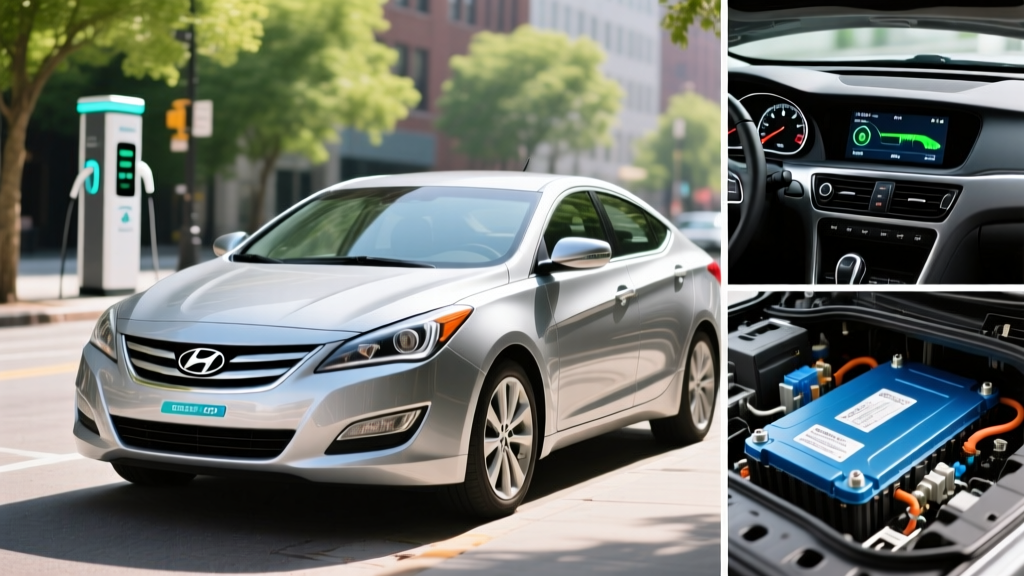
Hyundai chose a 1.4 kWh lithium-polymer (Li-Poly) battery pack supplied by LG Chem — a notable decision in 2011, when most competitors used nickel-metal hydride (NiMH). Lithium-polymer offered better energy density and weight savings, though the pack's small capacity means electric-only driving is extremely limited (roughly 1 mile at parking-lot speeds).
The battery is air-cooled, which is simpler but less effective at managing temperature extremes than liquid-cooled systems. In hot climates (Arizona, Texas, Southern California), air-cooled hybrid batteries tend to degrade faster — something buyers in those regions should specifically check.
Battery Health, Warranty, and Replacement Cost
Original Battery Warranty
Hyundai originally warranted the 2011 Sonata Hybrid's battery pack for 8 years / 100,000 miles (10 years / 100,000 miles in CARB states including California, New York, Massachusetts, and others). As of 2026, the original factory warranty has expired for every 2011 model-year vehicle unless an extended warranty was purchased separately.
How Long Does the Battery Actually Last?
Hybrid battery degradation in the 2011 Sonata Hybrid depends on climate, driving patterns, and mileage. Based on owner reports and industry data:
- Typical lifespan: 120,000–180,000 miles before significant degradation (below ~70% capacity)
- Hot climates: Degradation accelerates; some owners report failures between 100,000–130,000 miles
- Moderate climates: Many batteries last 150,000+ miles with gradual capacity loss
- Symptoms of a failing battery: Reduced MPG (2–5 MPG drop), more frequent engine starts, reduced regenerative braking, check-engine light with hybrid system codes
Battery Replacement Cost
If the hybrid battery in a 2011 Sonata Hybrid needs replacement, here are the realistic options:
| Option | Cost Range | Warranty |
|---|---|---|
| New OEM battery (Hyundai dealer) | $3,000 – $4,500 | 1 year / 12,000 miles |
| Remanufactured battery (specialist shop) | $1,800 – $2,800 | 1–3 years / 12,000–36,000 miles |
| Used/salvage battery | $500 – $1,200 | 30–90 days (if any) |
| Individual cell/module replacement | $400 – $900 | Varies by shop |
At typical 2026 used-car values of $4,500–$7,500, a new OEM battery replacement can consume 40–80% of the vehicle's value. This is the single most important cost risk for prospective buyers. Before purchasing, get a hybrid battery health check — many independent hybrid specialists and some dealers can read the battery's State of Health (SoH) via OBD-II.
Pre-Purchase Battery Check: What to Look For
- OBD-II hybrid battery scan: Check for voltage imbalance between modules (any cell group more than 0.3V different from others signals degradation)
- MPG test drive: If the car consistently returns below 30 MPG combined in normal conditions, the battery may be degraded
- Regen braking feel: A healthy battery accepts charge during deceleration; weak regen suggests the battery can't accept full charge current
- Service history: Ask whether the battery has been replaced — a recent replacement (with documentation) is actually a positive for a used purchase
Does the 2011 Sonata Hybrid Qualify for Any Tax Credits?
No. The 2011 Hyundai Sonata Hybrid does not qualify for the federal §30D Clean Vehicle Credit, which is reserved for plug-in electric vehicles (PHEVs and BEVs) with sufficient battery capacity. Conventional hybrids (HEVs) have not qualified for federal purchase incentives since the mid-2000s phase-out of the original hybrid tax credit.
For used-vehicle buyers, the federal §25E Used Clean Vehicle Credit (up to $4,000 or 30% of sale price, whichever is lower) also does not apply — it requires the vehicle to be a plug-in EV or fuel-cell vehicle, not a conventional hybrid.
Some states and municipalities offer minor incentives for used hybrid purchases (reduced registration fees, HOV lane access in certain states), but these vary widely. Check your state's DMV or energy office for current programs.
Reliability and Long-Term Ownership
The 2011 Sonata Hybrid received mixed reliability ratings during its production years. The Theta II engine family was subject to a major Hyundai recall and extended warranty program due to connecting-rod bearing failures — this applies to both hybrid and non-hybrid 2.4L engines. Buyers should verify whether the recall service (engine inspection and potential replacement) was completed.
Common Issues
- Theta II engine failure: Bearing wear leading to knocking, stalling, or seizure. Check NHTSA recall status at nhtsa.gov/recalls using the VIN.
- Hybrid battery degradation: Expected after 120,000+ miles, especially in hot climates
- Hybrid system inverter coolant pump: Some units fail, triggering a warning light — replacement runs $400–$700
- 12V auxiliary battery: Like all cars, the 12V battery needs replacement every 3–5 years; the 2011 Sonata Hybrid uses a standard 12V located in the trunk
What's the Total Cost of Ownership?
At 37 MPG combined and current national gas prices (~$3.20/gallon average), the 2011 Sonata Hybrid costs approximately $0.11 per mile in fuel. Compare that to:
| Vehicle | MPG / MPGe | Cost Per Mile (fuel/energy) |
|---|---|---|
| 2011 Sonata Hybrid (HEV) | 37 MPG | ~$0.09–$0.12 |
| 2011 Sonata 2.4L (gas only) | 26 MPG | ~$0.12–$0.15 |
| 2026 Toyota Camry Hybrid | 52 MPG | ~$0.06–$0.08 |
| 2026 Hyundai Ioniq 6 (BEV) | 140 MPGe | ~$0.03–$0.05 |
The savings over a gas-only Sonata are meaningful — roughly $300–$450 per year at 15,000 miles/year — but a modern hybrid or EV dramatically widens that gap.
Pros
- Low used-car price ($4,500–$7,500)
- No plug-in charging required — works like a normal gas car
- 37 MPG combined still beats most non-hybrid sedans
- Comfortable ride quality, spacious rear seat
- Li-Poly battery was advanced for its era
- Strong highway MPG (40 EPA)
Cons
- Original battery warranty expired — replacement risk is real
- Theta II engine recall history requires VIN verification
- Less city MPG than Toyota's hybrid system
- No federal or state tax credit eligibility
- Dated infotainment and safety technology
- Air-cooled battery degrades faster in hot climates
2011 Sonata Hybrid vs. Modern Alternatives: What Should You Buy?
Decision Framework
- Choose the 2011 Sonata Hybrid if: Your budget is under $8,000, you can't charge at home, you want better-than-average MPG without behavioral changes, and you've verified battery health and engine recall status.
- Choose a newer used hybrid (2018+ Camry Hybrid, 2019+ Sonata Hybrid) if: You can spend $12,000–$20,000 and want remaining battery warranty, modern safety features (AEB, lane-keeping), and 45–52 MPG combined.
- Choose a used PHEV (Prius Prime, Clarity PHEV) if: You can charge at home, your commute is under 25 miles, and you want to drive mostly on electricity while keeping a gas backup.
- Choose a used BEV (Bolt EV, Model 3, Leaf) if: You have reliable home charging, want the lowest per-mile cost, and are ready to plan around charging infrastructure for longer trips.
Frequently Asked Questions
How many MPG does the 2011 Sonata Hybrid actually get in real driving?
Expect 34–37 MPG combined in normal conditions. City driving yields 33–36 MPG, and highway cruising can reach 38–40 MPG. Cold weather and a degraded battery will reduce these figures by 10–15%.
Is the 2011 Sonata Hybrid a plug-in hybrid?
No. It is a conventional hybrid (HEV) that charges its own battery through regenerative braking and the gasoline engine. You never plug it in. Hyundai did not offer a Sonata plug-in hybrid until the 2016 model year.
How much does it cost to replace the hybrid battery?
A new OEM battery costs $3,000–$4,500 at a Hyundai dealer. Remanufactured options from independent hybrid specialists run $1,800–$2,800. Individual module repairs can cost $400–$900 but are a temporary fix if multiple modules are degraded.
Does the 2011 Sonata Hybrid qualify for any tax credit?
No. Federal tax credits (§30D for new vehicles, §25E for used) apply only to plug-in electric vehicles. Conventional hybrids like the 2011 Sonata Hybrid are not eligible for any current federal purchase incentive.
Is the 2011 Sonata Hybrid reliable?
Reliability is mixed. The hybrid system itself is generally durable, but the Theta II 2.4L engine has a documented history of bearing failures that led to a major Hyundai recall and extended warranty program. Verify recall completion via NHTSA before purchasing. The lithium-polymer battery typically lasts 120,000–180,000 miles depending on climate.
Can I drive the 2011 Sonata Hybrid on electric power only?
Only marginally. The 1.4 kWh battery and 30 kW motor allow very brief electric-only movement at low speeds (under 25 mph, light throttle) — essentially parking-lot crawling. Unlike a PHEV, it cannot sustain highway speeds or meaningful distances on electricity alone.
How does the 2011 Sonata Hybrid compare to a 2011 Toyota Camry Hybrid?
The 2011 Camry Hybrid rates at 41 MPG combined vs. the Sonata's 37 MPG — a meaningful 4 MPG advantage largely due to Toyota's more efficient e-CVT powertrain. However, the Sonata offers slightly more horsepower (206 vs. 187 combined) and a more traditional driving feel with its 6-speed automatic. Both are viable used purchases; the Camry Hybrid typically commands a higher used price.