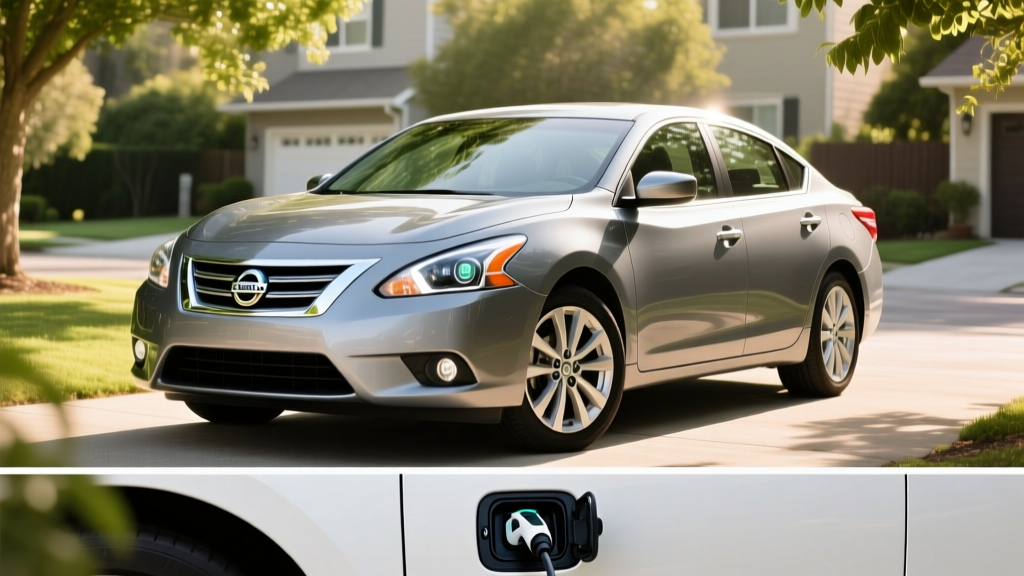
The 2011 Nissan Altima Hybrid occupies a curious space in electrified automotive history. Nissan borrowed Toyota's proven Hybrid Synergy Drive system, paired it with a 2.5-liter four-cylinder engine, and dropped the result into one of America's best-selling midsize sedans. The outcome was a conventional hybrid (HEV) that delivered competitive fuel economy without requiring a plug — a pragmatic bridge for buyers not ready to commit to full electric or plug-in hybrid ownership.
This guide covers everything a used-car shopper or current owner needs to know: EPA and real-world MPG, the Toyota-derived powertrain, battery longevity and replacement costs, and whether this aging hybrid still makes financial sense in today's market.
2011 Nissan Altima Hybrid: Key Specifications at a Glance
| Specification | Value |
|---|---|
| Vehicle Type | Conventional Hybrid (HEV) — no plug |
| Engine | 2.5L inline-4 (QR25DE) + electric motor |
| Combined Horsepower | 198 hp (net system output) |
| Transmission | eCVT (electronically controlled CVT) |
| Hybrid Battery | ~1.3 kWh nickel-metal hydride (NiMH) |
| EPA City MPG | 35 MPG |
| EPA Highway MPG | 33 MPG |
| EPA Combined MPG | 33 MPG (32 MPG for some trim configurations) |
| Drivetrain | Front-wheel drive |
| 0–60 mph (est.) | ~8.0 seconds |
| Original MSRP (2011) | ~$27,950 (base) |
| Used Price Range (2026) | $3,500 – $7,000 depending on mileage/condition |
Fuel Economy: EPA Sticker vs. Real-World MPG
The EPA rates the 2011 Altima Hybrid at 35 MPG city / 33 MPG highway / 33 MPG combined, according to fueleconomy.gov. For a 2011 midsize sedan, those numbers were competitive — roughly matching the Toyota Camry Hybrid of the same era and significantly outperforming the gas-only Altima's 26 MPG combined.
| Driving Scenario | Expected MPG |
|---|---|
| EPA City (sticker) | 35 MPG |
| EPA Highway (sticker) | 33 MPG |
| EPA Combined (sticker) | 33 MPG |
| Real-world city (stop-and-go) | 33 – 38 MPG |
| Real-world highway (70+ mph) | 29 – 33 MPG |
| Real-world combined (mixed) | 30 – 35 MPG |
| Cold-weather city (below 35°F) | 28 – 32 MPG |
Why real-world city MPG can exceed the EPA sticker: Like most conventional hybrids, the Altima Hybrid benefits heavily from regenerative braking and electric-motor assist at low speeds. In dense urban traffic with frequent stops, the electric motor handles more of the propulsion load, and the gas engine shuts off at idle. Owners who drive primarily in city conditions often report 36–38 MPG — exceeding the EPA city estimate.
Why highway MPG drops: At sustained highway speeds, aerodynamic drag dominates and the electric motor contributes less. The 2.5L engine does most of the work, and the hybrid advantage narrows. Expect 29–33 MPG on long highway trips at 70–80 mph, particularly with A/C running and a loaded cabin.
Cold-weather penalty: NiMH batteries lose efficiency in cold temperatures, and the engine runs more frequently to maintain cabin heat. Expect a 10–15% MPG reduction in sub-freezing conditions, bringing real-world winter city driving down to 28–32 MPG.
Understanding the Powertrain: Toyota's Hybrid System in a Nissan
The most technically interesting aspect of the 2011 Altima Hybrid is its powertrain lineage. Nissan licensed Toyota's Hybrid Synergy Drive — the same planetary-gear eCVT architecture used in the Camry Hybrid and Prius of that era. This is not the same hybrid system Nissan later developed in-house for models like the Pathfinder Hybrid or the e-Power series-hybrid system.
Engine: The QR25DE 2.5-liter inline-4 produces 158 horsepower and 162 lb-ft of torque on its own. It runs an Atkinson-cycle combustion strategy (via variable valve timing), which sacrifices low-end torque for improved thermal efficiency — a hallmark of Toyota's hybrid engine tuning.
Electric motor: A permanent-magnet synchronous motor integrated into the transaxle adds electric propulsion and regenerative braking. Combined net system output is 198 horsepower.
Transmission: The eCVT is not a belt-driven CVT like Nissan's conventional Xtronic units. It uses a planetary gearset to seamlessly blend engine and motor power — the same robust design that has proven extremely reliable in millions of Toyota hybrids worldwide.
Hybrid battery: A ~1.3 kWh nickel-metal hydride (NiMH) pack mounted behind the rear seat. This is a small buffer battery — typical for conventional hybrids of this era. It does not plug in and cannot be charged externally. The battery recharges through regenerative braking and engine-generated electricity.
HEV vs. PHEV vs. Full EV: Where Does the Altima Hybrid Fit?
| Factor | 2011 Altima Hybrid (HEV) | Modern PHEV (e.g., 2026 RAV4 Prime) | Full EV (e.g., 2026 Tesla Model 3) |
|---|---|---|---|
| Plug-in required? | No — never plugs in | Yes — Level 1 or Level 2 | Yes — Level 2 or DC fast |
| Electric-only range | None (motor assists only) | 30–45 miles | 250–350+ miles total |
| Fuel/energy cost per mile | ~$0.10–$0.12 (gas) | ~$0.04 (electric) / ~$0.10 (gas) | ~$0.03–$0.05 (electric) |
| Home charging needed? | No | Recommended for full benefit | Essential |
| Federal tax credit (new) | None (expired long ago) | Up to $7,500 (§30D, if eligible) | Up to $7,500 (§30D, if eligible) |
| Used EV credit (§25E) | Not eligible (HEV) | Up to $4,000 (if eligible) | Up to $4,000 (if eligible) |
| Best for | No-plug convenience, city driving | Short electric commutes + road trips | Home charging access, lowest operating cost |
The 2011 Altima Hybrid is a conventional hybrid (HEV). It generates all its electricity internally — through regenerative braking and the gasoline engine. You never plug it in. This is fundamentally different from a plug-in hybrid (PHEV) like the Toyota RAV4 Prime or Chrysler Pacifica Hybrid, which has a larger battery (typically 15–20 kWh) that charges from a wall outlet and provides 30–45 miles of pure electric driving before the gas engine kicks in.
Choose the Altima Hybrid if: You want better fuel economy than a gas car but lack access to home or workplace charging. You want zero behavior change — just fill up at the gas station as usual.
Choose a PHEV if: You have home charging and a commute under 40 miles, but still want gas-engine range for road trips without range anxiety.
Choose a full EV if: You have reliable home Level 2 charging, want the lowest per-mile energy cost, and your daily driving plus typical road trips fit within modern EV range (250–350+ miles EPA).
Hybrid Battery Lifespan, Warranty & Replacement Cost
Original hybrid battery warranty: 8 years / 100,000 miles (whichever comes first) for most states. In CARB states (California, New York, Massachusetts, and others adopting California emissions standards), the warranty extended to 10 years / 150,000 miles.
Current status (2026): All 2011 Altima Hybrids are now beyond the original factory hybrid battery warranty, regardless of mileage. Any battery failure is an out-of-pocket expense.
How long do these batteries last? The NiMH pack in the Altima Hybrid shares DNA with the Toyota Camry Hybrid's battery, which has a strong track record of lasting 150,000–200,000+ miles before significant degradation. However, at 15 years old, most 2011 Altima Hybrids are approaching or exceeding the point where NiMH cells begin losing capacity. The battery doesn't typically fail catastrophically — instead, it gradually loses its ability to hold charge, which reduces electric-motor assist and lowers MPG.
Signs of hybrid battery degradation:
- Noticeable drop in fuel economy (e.g., from 33 to 25–28 MPG combined)
- The gas engine runs more frequently, even at low speeds
- Dashboard warning lights (check engine, hybrid system warning)
- Reduced regenerative braking feel
- Diagnostic codes P0A80 or similar (hybrid battery pack deterioration)
Battery replacement cost:
- OEM Nissan/Toyota replacement battery: $2,500 – $4,000 (parts only, dealer pricing varies)
- Aftermarket refurbished NiMH pack: $1,200 – $2,200
- Individual cell reconditioning/replacement: $500 – $1,200 (specialist hybrid shops)
- Labor: $300 – $600 (2–4 hours at most shops familiar with Toyota-style hybrid systems)
Given that a clean 2011 Altima Hybrid sells for $3,500–$7,000 in the current used market, a full OEM battery replacement can represent 40–80% of the vehicle's value. This is the central economic calculus for any used hybrid buyer: budget for a potential battery replacement, or factor its risk into your purchase price.
Pre-purchase tip: Have a hybrid-qualified mechanic perform a battery health scan using an OBD-II tool that reads hybrid battery state of health (SoH). Many independent hybrid specialists can assess individual cell voltage balance and overall pack capacity for $50–$100 — a small investment that can save thousands.
Reliability & Ownership Costs
The 2011 Altima Hybrid's reliability story is split between two very different systems:
The Toyota-derived hybrid powertrain: Excellent. The eCVT planetary gearset has no belts or clutches to wear out, and the Hybrid Synergy Drive architecture has proven itself across millions of Toyota and Lexus vehicles. The electric motor is essentially maintenance-free. This is the most reliable component in the car.
The Nissan-built chassis and electronics: More mixed. The 2007–2012 Altima generation had known issues with:
- CVT transmission concerns (though the hybrid's eCVT is mechanically different and more robust than Nissan's belt-driven Xtronic CVT)
- Power steering pump failures (electric power steering)
- Interior trim and dashboard material degradation
- Standard 12V battery drain issues (common to many cars of this era)
Estimated annual maintenance costs: $600 – $1,000 per year for a 15-year-old vehicle, excluding hybrid battery replacement. This includes brakes (regenerative braking extends pad life significantly), tires, fluids, and age-related wear items.
Insurance: Typically $80 – $130/month depending on driver profile and state. The Altima Hybrid does not carry the insurance premium surcharge sometimes associated with modern EVs.
Pros
- Toyota-derived hybrid system is proven and durable
- 33 MPG combined still competitive for a gas-hybrid sedan
- No plug-in required — zero infrastructure dependency
- Regenerative braking extends brake pad life significantly
- Comfortable midsize sedan with decent trunk space (13.1 cu ft, slightly reduced by battery)
- Low purchase price on the used market ($3,500–$7,000)
Cons
- Hybrid battery is 15 years old — replacement risk is real
- No electric-only driving mode
- Outdated infotainment and safety tech by 2026 standards
- No eligibility for federal used-EV tax credit (§25E) — HEVs don't qualify
- Trunk space reduced by rear-mounted battery pack
- Nissan discontinued the Altima Hybrid after 2011 — limited parts support vs. Toyota
Tax Credits & Incentives: What Applies in 2026?
Federal new-vehicle credit (§30D): The 2011 Altima Hybrid never qualified for the full $7,500 federal tax credit that applied to plug-in vehicles. Under the original Energy Improvement and Extension Act, conventional hybrids like this one were eligible for a much smaller credit (typically $250–$2,350 depending on the manufacturer's cumulative hybrid sales), and Nissan's allocation was exhausted long ago. No federal new-vehicle credit is available.
Federal used-EV credit (§25E): This credit, which provides up to $4,000 or 30% of the sale price (whichever is less) for qualifying used plug-in vehicles, does not apply to conventional hybrids. The Altima Hybrid is not a plug-in vehicle and is therefore ineligible.
State incentives: A small number of states offer rebates or HOV-lane access for hybrid vehicles, but most have shifted their incentive programs toward plug-in vehicles and full EVs. Check your state's current programs — but assume no incentive applies.
For current federal tax credit rules on plug-in vehicles, refer to the IRS clean vehicle credits page.
Who Should Buy a 2011 Altima Hybrid in 2026?
Buy this car if:
- You need an affordable commuter sedan with no plug-in requirement
- Your commute is primarily city/suburban stop-and-go (where hybrid MPG shines)
- You want proven Toyota hybrid reliability at a Nissan used-car price
- You have a trusted hybrid specialist nearby for battery diagnostics
- You're budgeting $3,500–$7,000 total and can absorb a potential $1,500–$3,000 battery replacement
Skip this car if:
- You have home charging access — a used PHEV or EV will save more on fuel
- You drive mostly highway miles (the hybrid advantage narrows significantly)
- You want modern safety features (automatic emergency braking, lane-keeping, blind-spot monitoring)
- You want eligibility for the federal used clean-vehicle tax credit
- You plan to keep the car 5+ years and want to avoid battery replacement risk
Frequently Asked Questions
How many MPG does the 2011 Nissan Altima Hybrid get?
The EPA rates it at 35 MPG city, 33 MPG highway, and 33 MPG combined. In real-world driving, expect 30–35 MPG combined, with city driving sometimes exceeding the EPA estimate (36–38 MPG) thanks to regenerative braking, and highway driving dropping to 29–33 MPG at sustained high speeds.
Does the 2011 Altima Hybrid need to be plugged in?
No. This is a conventional hybrid (HEV), not a plug-in hybrid. The battery recharges through regenerative braking and the gasoline engine. You never plug it in — just fill up at the gas station like any other car.
Is the 2011 Altima Hybrid reliable?
The Toyota-licensed hybrid powertrain (eCVT, electric motor, hybrid control system) is highly reliable, sharing architecture with the Camry Hybrid. The Nissan-built chassis, interior, and electronics are average for the era. The primary reliability concern at this age is hybrid battery degradation — budget for a potential $1,500–$3,500 battery replacement.
How much does it cost to replace the hybrid battery?
An OEM replacement runs $2,500–$4,000 for the battery alone, plus $300–$600 labor. Aftermarket refurbished packs cost $1,200–$2,200. Individual cell reconditioning at a hybrid specialist can be as low as $500–$1,200. Given the car's $3,500–$7,000 used value, this is a significant expense to factor in.
Does the 2011 Altima Hybrid qualify for any tax credit?
No. It does not qualify for the federal §30D new clean vehicle credit (it's not a plug-in vehicle, and any original hybrid credits expired long ago). It also does not qualify for the §25E used clean vehicle credit, which applies only to plug-in vehicles (PHEVs and full EVs). Some states may offer minor incentives for hybrids, but most have shifted focus to plug-in vehicles.
How does the Altima Hybrid compare to the 2011 Toyota Camry Hybrid?
Very closely — they share the same Hybrid Synergy Drive architecture. The Camry Hybrid was rated at 31 MPG combined (slightly lower on paper due to different tuning and weight), but real-world results are comparable. The Camry Hybrid benefits from broader parts availability and Toyota's dealer network for hybrid service. If choosing between the two at similar prices, the Camry Hybrid has a slight edge in long-term serviceability.
Why did Nissan discontinue the Altima Hybrid?
Nissan ended the Altima Hybrid after the 2011 model year due to low sales volume and the licensing arrangement with Toyota. Nissan later pursued its own hybrid strategies (including the e-Power series-hybrid system used in international markets) and shifted focus toward full EVs like the Leaf. The Altima Hybrid remains the only Nissan sedan to have used Toyota's hybrid system.
Sources: EPA fuel economy data via fueleconomy.gov; IRS clean vehicle credit rules via irs.gov; NHTSA vehicle information via nhtsa.gov.