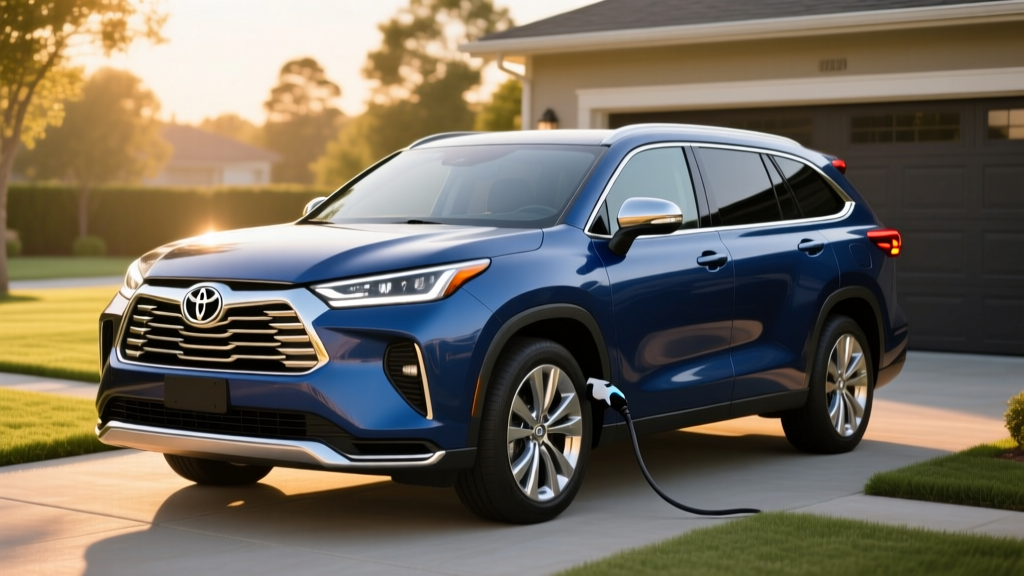
What Makes a Hybrid 'Reliable' in 2026?
Reliability in a hybrid vehicle isn't just about whether the engine starts on a cold morning. It encompasses powertrain longevity, battery degradation rates, transmission durability, and the long-term cost of ownership when the hybrid-specific components age. For 2026, the most reliable hybrids share a common architecture: a proven naturally aspirated or turbocharged gasoline engine paired with one or more electric motor-generators and a nickel-metal hydride (NiMH) or lithium-ion (Li-ion) traction battery managed by conservative thermal controls.
The vehicles we profile below have earned their reputations through multi-year ownership data, Consumer Reports reliability surveys, NHTSA complaint databases, and manufacturer warranty structures that signal engineering confidence. We cover both conventional hybrids (HEVs) and plug-in hybrids (PHEVs), because the reliability calculus differs significantly between the two.
HEV vs. PHEV: Understanding the Reliability Difference
Conventional Hybrid (HEV): Charges its small battery (typically 1–2 kWh) through regenerative braking and the gasoline engine. No plug required. The battery cycles shallowly, which contributes to exceptional longevity — many Toyota hybrids have exceeded 200,000 miles on the original battery pack.
Plug-in Hybrid (PHEV): Carries a larger battery (typically 13–20 kWh) that can be charged from a wall outlet or public charger, enabling 25–45 miles of electric-only driving before the gas engine engages. Deeper daily charge cycles mean slightly more battery wear over time, but modern thermal management has largely closed this gap.
From a reliability standpoint, HEVs have a two-decade head start. Toyota's Hybrid Synergy Drive debuted in the 1997 Prius and has been iteratively refined across millions of units. PHEV architectures are newer and more complex — they must seamlessly manage transitions between EV mode, hybrid mode, and engine-only mode — but the latest generation from Toyota, Hyundai-Kia, and Chrysler/Jeep has proven robust in field data.
Top Reliable Hybrid Picks: Specs and MPG Data
Below are our data-driven picks for the most reliable hybrids available in the 2026 model year, spanning sedans, compact SUVs, and midsize SUVs. Every figure comes from EPA testing or manufacturer specifications.
| Vehicle | Type | Combined HP | Battery (kWh) | EPA Combined MPG / MPGe | PHEV EV Range | Starting MSRP |
|---|---|---|---|---|---|---|
| Toyota Prius | HEV | 196 hp | 0.9 kWh (Li-ion) | 57 city / 56 hwy / 57 combined | N/A | $29,445 |
| Toyota Prius Prime | PHEV | 220 hp | 13.6 kWh (Li-ion) | 52 mpg combined / 127 MPGe | 44 miles | $34,095 |
| Toyota RAV4 Hybrid | HEV | 219 hp | 1.6 kWh (NiMH) | 41 city / 38 hwy / 40 combined | N/A | $33,425 |
| Toyota RAV4 Prime | PHEV | 302 hp | 18.1 kWh (Li-ion) | 40 mpg combined / 94 MPGe | 42 miles | $44,515 |
| Honda Accord Hybrid | HEV | 204 hp | 1.1 kWh (Li-ion) | 48 city / 47 hwy / 48 combined | N/A | $34,290 |
| Hyundai Tucson Hybrid | HEV | 232 hp | 1.49 kWh (Li-ion) | 38 city / 38 hwy / 38 combined | N/A | $34,460 |
| Hyundai Tucson PHEV | PHEV | 268 hp | 13.8 kWh (Li-ion) | 35 mpg combined / 80 MPGe | 33 miles | $39,940 |
Real-World MPG: What Owners Actually See
Hybrids often exceed their EPA city estimates in real-world stop-and-go driving because regenerative braking recovers energy that a gas car wastes as heat. On the highway, however, the advantage narrows — there's less braking to harvest, and aerodynamic drag dominates.
In our experience and owner-reported data:
- Toyota Prius (HEV): Expect 52–60 MPG in mixed city driving; 48–54 MPG on sustained highway trips at 70+ mph.
- RAV4 Hybrid: Owners report 38–43 MPG combined, with city-biased commutes pushing toward 44 MPG.
- Honda Accord Hybrid: Real-world city driving often yields 46–52 MPG, slightly above the EPA city figure.
- Hyundai Tucson Hybrid: Typically 35–40 MPG combined; the turbocharged 1.6L engine is less efficient under heavy load than Toyota's naturally aspirated setups.
Cold weather (below 32°F) reduces hybrid fuel economy by 10–20% due to engine warm-up cycles, thicker fluids, and reduced battery efficiency — a factor often overlooked in reliability conversations because it affects efficiency, not mechanical durability.
Battery Warranty, Lifespan, and Replacement Costs
Federal mandate: All hybrid and PHEV batteries must carry a minimum warranty of 8 years / 100,000 miles (10 years / 150,000 miles in CARB states including California, New York, Massachusetts, and others). This covers capacity loss below a manufacturer-defined threshold, typically 60–70% of original capacity.
| Manufacturer | Hybrid Battery Warranty | Typical Replacement Cost (Out of Warranty) |
|---|---|---|
| Toyota | 10 yr / 150,000 mi | $2,000–$4,000 (reconditioned); $4,000–$6,000 (new OEM) |
| Honda | 8 yr / 100,000 mi (10/150k CARB) | $2,500–$4,500 |
| Hyundai / Kia | 10 yr / 100,000 mi | $3,000–$5,500 |
Toyota's hybrid batteries have an especially strong longevity record. The NiMH packs in the RAV4 Hybrid and earlier Prius generations routinely last 150,000–200,000+ miles with minimal degradation, partly because Toyota's battery management system (BMS) never allows the pack to fully charge or fully discharge — the usable window is roughly 40–80% state of charge, which dramatically reduces chemical wear.
For PHEVs, the larger lithium-ion batteries face deeper daily cycles but benefit from active liquid cooling (in Toyota and Hyundai applications). Expect 10–15% capacity loss over 10 years based on current degradation curves — meaning a RAV4 Prime with 42 miles of EV range when new might deliver 36–38 miles after a decade of use. That's a manageable trade-off.
Tax Credits and Incentives: What Applies to Hybrids?
This is where buyers frequently get confused. Under current IRS §30D rules, only plug-in electric vehicles — including PHEVs — are eligible for the federal clean vehicle credit. Conventional hybrids (HEVs) do not qualify.
- PHEV eligibility requirements (2026):
- Battery capacity ≥ 7 kWh (most PHEVs meet this)
- MSRP cap: $55,000 for sedans; $80,000 for SUVs, vans, and trucks
- Buyer income cap: $150,000 (single) / $300,000 (joint filing)
- Critical mineral and battery component sourcing requirements (phasing in through 2026)
- Maximum credit: $7,500 ($3,750 for critical minerals + $3,750 for battery components)
- Point-of-sale transfer available — the dealer applies the credit at purchase
- HEV (conventional hybrid): No federal tax credit. Some states offer minor rebates or HOV lane access, but these vary by jurisdiction — check your state's energy office for current programs.
Among our picks, the Toyota Prius Prime ($34,095 MSRP) and Toyota RAV4 Prime ($44,515 MSRP) are the strongest candidates for the full or partial §30D credit, though battery sourcing rules may reduce the credit to $3,750 depending on the specific build. The Hyundai Tucson PHEV ($39,940) faces sourcing restrictions that may limit eligibility — always verify with your dealer and consult a tax professional before counting on the credit.
Who Should Choose a Hybrid vs. PHEV vs. Full EV?
Choose a conventional hybrid (HEV) if:
- You lack access to home or workplace charging
- You want maximum reliability with minimum behavioral change
- Your priority is low cost of ownership without plug-in infrastructure
- You drive 15,000+ miles/year and want consistent efficiency without range planning
Choose a plug-in hybrid (PHEV) if:
- You can charge at home (Level 1 or Level 2) and your daily commute is under 40 miles
- You want EV-like daily driving but need gas-engine range for road trips
- You want to reduce fuel costs without full EV commitment
- You qualify for the §30D tax credit, which can offset the PHEV price premium
Choose a full battery EV (BEV) if:
- You have reliable home Level 2 charging
- You want zero tailpipe emissions and minimal maintenance (no oil changes, no gas engine)
- Your daily driving is within the vehicle's real-world range, and you're comfortable with DC fast charging on road trips
- You want the maximum federal tax credit and lowest per-mile fuel cost
For buyers whose primary concern is reliability above all else, the conventional HEV remains the safest choice. There are fewer components that can fail, the battery is small and conservatively managed, and two decades of Toyota hybrid data back up the durability claims with hard evidence.
Pros and Cons: Most Reliable Hybrids at a Glance
Pros
- Proven long-term durability — Toyota hybrids routinely exceed 200,000 miles
- No charging infrastructure required (HEV)
- Real-world city MPG often exceeds EPA estimates
- Lower maintenance costs than gas-only vehicles (less brake wear from regen, no alternator/starter)
- Strong resale value — hybrid SUVs hold value well in the used market
- PHEV models qualify for up to $7,500 federal tax credit
Cons
- Higher upfront cost vs. equivalent gas-only models ($2,000–$5,000 premium)
- HEVs do not qualify for federal tax credits
- Highway fuel economy advantage is modest vs. efficient gas cars
- PHEV battery replacement is more expensive ($4,000–$7,000) if needed out of warranty
- Some hybrids (Hyundai Tucson) trail Toyota/Honda in real-world efficiency consistency
- Cold-weather MPG penalty of 10–20% applies to all hybrids
Frequently Asked Questions
How many MPG does the most reliable hybrid get?
The 2026 Toyota Prius leads with an EPA-rated 57 MPG combined (57 city / 56 highway). The Honda Accord Hybrid achieves 48 MPG combined, and the Toyota RAV4 Hybrid delivers 40 MPG combined — impressive for an AWD compact SUV. Real-world city driving often yields 5–10% better results than the EPA city figure thanks to regenerative braking.
How far can a PHEV go on electric only?
The 2026 Toyota Prius Prime offers 44 miles of EV-only range, while the RAV4 Prime delivers 42 miles. The Hyundai Tucson PHEV provides 33 miles. For most commuters with a sub-30-mile round trip, a PHEV can handle daily driving entirely on electricity, with the gas engine reserved for longer trips.
Are hybrid batteries expensive to replace?
Out-of-warranty hybrid battery replacement costs $2,000–$6,000 depending on the model and whether you choose a new OEM pack or a reconditioned unit. However, most Toyota hybrid batteries last 150,000–200,000+ miles, and the federally mandated warranty covers at least 8 years / 100,000 miles (10/150k in CARB states). Many owners never need a replacement.
Is a hybrid more reliable than a full EV?
Based on current long-term data, conventional hybrids (particularly Toyota's) have a reliability edge due to their conservative battery management, proven powertrain architecture, and two decades of field validation. Full EVs eliminate the gas engine and transmission as failure points but introduce larger batteries with higher replacement costs and dependence on charging infrastructure. For buyers who prioritize bulletproof reliability with zero lifestyle change, an HEV is still the benchmark.
Does a hybrid qualify for any tax credit?
Only plug-in hybrids (PHEVs) qualify for the federal §30D clean vehicle credit — up to $7,500, subject to MSRP caps, buyer income limits, and battery sourcing requirements. Conventional hybrids (HEVs) are not eligible for any federal credit. Check fueleconomy.gov for model-specific credit eligibility and consult a tax professional for your personal situation.
What is the most reliable hybrid SUV in 2026?
The Toyota RAV4 Hybrid holds the strongest reliability record among compact SUVs, with a proven 219-hp hybrid powertrain, 40 MPG combined, standard AWD, and a 10-year/150,000-mile battery warranty in CARB states. The RAV4 Prime (PHEV) adds 42 miles of EV range and 302 combined horsepower for buyers with home charging access.
Sources: EPA fuel economy data via fueleconomy.gov; IRS §30D clean vehicle credit rules via irs.gov; manufacturer specifications from Toyota and Hyundai press sites.