Quick Verdict: A Luxury Hybrid Bargain With Proven Reliability
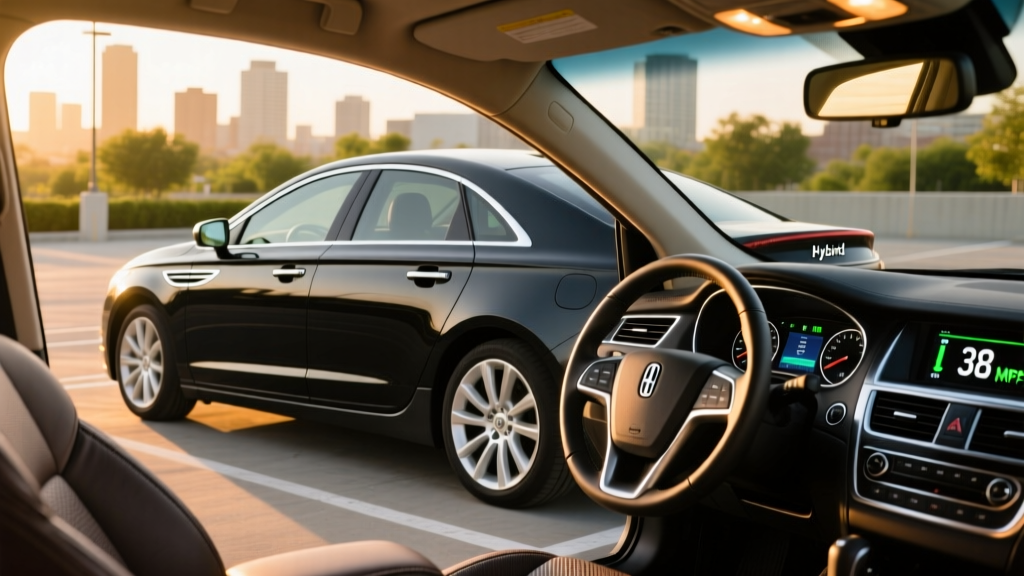
The 2011 Lincoln MKZ Hybrid was Ford's luxury-division answer to the Toyota Camry Hybrid, sharing the proven Fusion Hybrid powertrain but wrapping it in Lincoln's premium interior. More than a decade later, it remains one of the most affordable entry points into a reliable hybrid sedan on the used market — typically changing hands between $5,000 and $9,000 depending on mileage and condition.
As a conventional hybrid (HEV), the MKZ Hybrid requires no plug-in charging, no home electrical upgrades, and no range-planning anxiety. You fill it with gas and drive. Its 1.35 kWh nickel-metal hydride (NiMH) battery is small by modern standards but has demonstrated exceptional longevity in real-world fleet and owner data.
This guide covers everything a 2026 used-car buyer needs to know: exact fuel economy, powertrain specs, battery health expectations, replacement costs, and how the MKZ Hybrid stacks up against buying a newer hybrid, a plug-in hybrid (PHEV), or a full battery-electric vehicle (BEV).
HEV vs PHEV vs EV: What the 2011 MKZ Hybrid Actually Is
Before diving into specs, it's essential to understand where this vehicle fits in the electrified-vehicle landscape — because confusing a conventional hybrid with a plug-in hybrid is one of the most common buyer mistakes.
| Feature | HEV (2011 MKZ Hybrid) | PHEV (e.g., Toyota Prius Prime) | BEV (e.g., Tesla Model 3) |
|---|---|---|---|
| Plug-in charging required? | No — gas only | Yes — Level 1/Level 2 | Yes — Level 2 / DC fast |
| Electric-only range | 0 miles (motor assists engine) | 25–44 miles typical | 250–360+ miles (full battery) |
| Battery size | 1.35 kWh (NiMH) | 8–18 kWh (NMC/LFP) | 50–100 kWh (NMC/LFP) |
| Fuel source | Gasoline only | Gasoline + electricity | Electricity only |
| Federal tax credit (new) | None | Up to $7,500 (§30D) | Up to $7,500 (§30D) |
| Used EV tax credit | Not eligible | Not eligible | Up to $4,000 (§25E) |
The 2011 MKZ Hybrid is a conventional hybrid (HEV). Its electric motor supplements the gasoline engine — it cannot drive on electricity alone at meaningful speeds or distances. The battery recharges through regenerative braking and the engine; you never plug it in. This is fundamentally different from a PHEV like the Chrysler Pacifica Hybrid or a BEV like the Hyundai Ioniq 5.
Fuel Economy: EPA Ratings vs Real-World MPG
The 2011 MKZ Hybrid's fuel economy is its headline feature, and it remains competitive even against 2026 hybrid sedans.
| Driving Cycle | EPA Rating | Real-World Expectation |
|---|---|---|
| City | 41 MPG | 38–44 MPG |
| Highway | 36 MPG | 33–38 MPG |
| Combined | 39 MPG | 36–41 MPG |
Source: EPA Fuel Economy Guide — 2011 Lincoln MKZ Hybrid
Why real-world city MPG often beats the EPA estimate: Hybrids excel in stop-and-go driving because regenerative braking recaptures energy that a gas car wastes as heat. In heavy urban traffic, owners frequently report 42–44 MPG. Conversely, sustained highway driving at 75+ MPH reduces the hybrid system's advantage, and real-world highway numbers can dip to 33–34 MPG, especially with roof cargo or aggressive acceleration.
Cold-weather impact: In sub-freezing temperatures, expect a 5–10% fuel economy reduction (roughly 2–4 MPG combined). The engine runs longer to heat the cabin and bring the catalytic converter to operating temperature. This is far less severe than the 20–35% range loss a full EV experiences in the same conditions, but it's worth budgeting for if you live in northern climates.
With a 16.5-gallon fuel tank, the MKZ Hybrid delivers approximately 580–640 miles of real-world range between fill-ups — competitive with many modern long-range EVs and far more convenient for road trips given the ubiquity of gas stations.
Powertrain Specs: Engine, Motor, and Combined Output
| Specification | 2011 Lincoln MKZ Hybrid |
|---|---|
| Engine | 2.5L Atkinson-cycle inline-4 |
| Engine horsepower | 156 HP @ 6,000 RPM |
| Engine torque | 136 lb-ft @ 2,250 RPM |
| Electric motor | Permanent-magnet AC synchronous |
| Motor horsepower | ~105 HP (peak) |
| Combined system output | 191 HP |
| Transmission | eCVT (planetary gearset, no fixed gears) |
| Battery type | Nickel-metal hydride (NiMH) |
| Battery capacity | 1.35 kWh (gross) |
| Drivetrain | Front-wheel drive (FWD) |
| 0–60 MPH | ~8.5 seconds |
| Curb weight | ~3,760 lbs |
The 2.5L Atkinson-cycle engine sacrifices peak power for thermal efficiency — it's the same cycle Toyota has used in Prius engines for decades. The eCVT is not a belt-driven continuously variable transmission like those in some gas cars; it's a planetary gearset that seamlessly blends engine and motor power with no rubber-band effect or shifting sensation.
Acceleration is adequate for merging and passing but not quick. The 8.5-second 0–60 time trails the 2026 Honda Accord Hybrid (~7.5 seconds) and is far behind any modern EV. That said, the electric motor provides instant low-RPM torque, making the car feel responsive around town despite the modest peak numbers.
Battery Health, Warranty, and Replacement Cost
The number-one concern for any used-hybrid buyer is battery longevity. Here's what the data shows for the 2011 MKZ Hybrid's NiMH pack.
Original Factory Warranty: 8 years / 100,000 miles (10 years / 150,000 miles in CARB states including California, New York, Massachusetts, and others adopting California emissions standards).
Warranty coverage threshold: Battery capacity loss below 60% of original capacity constitutes a warranty claim.
Status in 2026: The original warranty has expired for virtually all 2011 MKZ Hybrids unless the vehicle has unusually low mileage and is registered in a CARB state.
Real-world battery longevity: The Ford/Lincoln hybrid system of this era (shared with the Fusion Hybrid and Escape Hybrid) has proven remarkably durable. Taxi fleets running the Ford Escape Hybrid — which uses similar NiMH chemistry and management — regularly exceeded 200,000 miles on the original battery. The MKZ's battery management system keeps the NiMH pack in a narrow state-of-charge window (roughly 40–60%), which dramatically reduces degradation.
That said, a 15-year-old NiMH battery will have lost some capacity. Most 2011 MKZ Hybrids on the road today show a modest reduction in electric-assist frequency and slightly lower MPG than when new — typically a 1–3 MPG drop from the original EPA combined figure. The car remains fully drivable; the hybrid system simply leans more on the gasoline engine.
Battery replacement cost (2026 estimates):
- Refurbished/remanufactured pack: $1,500–$2,500 installed
- New OEM pack (if still available): $3,000–$4,500 installed
- Individual cell/module replacement: $500–$1,200 at a hybrid specialist shop
Before purchasing, have a hybrid-qualified mechanic perform a battery health check using an OBD-II scanner that reads the hybrid battery's state of health (SoH) and individual module voltages. Significant voltage imbalance between modules indicates a pack nearing end-of-life.
Used Pricing and Tax Credit Eligibility
As of early 2026, the 2011 Lincoln MKZ Hybrid trades in the following ranges on the used market:
- High mileage (130,000+ miles): $4,000–$6,000
- Average mileage (80,000–130,000 miles): $6,000–$8,500
- Low mileage (under 80,000 miles, clean title): $8,500–$11,000
Federal tax credits: The 2011 MKZ Hybrid does not qualify for any current federal tax credit. The IRS §25E used clean vehicle credit (up to $4,000) applies only to used BEVs and PHEVs purchased from a dealer — conventional hybrids like the MKZ are excluded. Similarly, the §30D new vehicle credit applies only to new BEVs and PHEVs meeting battery-sourcing and critical-mineral requirements.
State incentives: A small number of states offer rebates or HOV-lane access for hybrids, but most state incentive programs now focus on PHEVs and BEVs. Check your state's energy office or DMV for current programs, as these change frequently.
Reliability, Common Issues, and Ownership Costs
The 2011 MKZ Hybrid benefits from sharing its powertrain with the Ford Fusion Hybrid, one of the most reliable hybrid sedans of its era. Key reliability notes:
Powertrain: The 2.5L Atkinson-cycle engine and eCVT are among the most durable components Ford has produced. The eCVT has no belts, clutches, or torque converter to wear out — it's a simple planetary gearset with very few failure points. Timing chain issues that plagued some Ford EcoBoost engines do not apply here.
Known issues to check:
- Brake actuator: The regenerative braking system uses an electrohydraulic brake actuator that can fail on higher-mileage examples. Replacement runs $800–$1,500. Test for a firm, consistent brake pedal during your pre-purchase drive.
- Electric power steering (EPS): Some Ford/Lincoln vehicles of this era experienced EPS motor failures. Listen for unusual whining or notchiness when turning the wheel at low speeds.
- SYNC infotainment: The first-generation Microsoft SYNC system is slow by 2026 standards and prone to Bluetooth connectivity issues. This is an annoyance, not a safety concern.
- A/C blend door actuator: A common Ford issue of the era — listen for clicking behind the dashboard and verify that temperature changes respond promptly.
Insurance: The MKZ Hybrid typically costs $100–$140/month to insure (varies by state, driving record, and coverage level). Hybrid-specific insurance discounts that some carriers offered in 2011 have largely disappeared.
Maintenance savings vs gas-only cars: The hybrid system reduces brake wear significantly (regenerative braking handles most deceleration), and the engine's Atkinson cycle reduces thermal stress. Expect brake pads to last 60,000–80,000 miles. There is no transmission fluid to change on a regular interval (Ford specifies "lifetime" fluid for the eCVT, though many mechanics recommend a drain-and-fill at 100,000 miles as preventive maintenance).
Who Should Buy the 2011 MKZ Hybrid — and Who Shouldn't
Pros
- 39 MPG combined EPA — still competitive in 2026
- No plug-in charging needed — ideal for apartment dwellers
- Proven, durable NiMH hybrid system
- Luxury interior at economy-car used pricing
- 580+ mile real-world driving range
- Low maintenance costs (brake life, no conventional transmission)
Cons
- 8.5-second 0–60 — sluggish by modern standards
- Dated infotainment and driver-assist technology
- Highway MPG drops to 33–34 at 75+ MPH
- NiMH battery aging — replacement likely within 3–5 years if original
- No federal tax credit eligibility (new or used)
- FWD only — no AWD option for snow-belt buyers
Choose the 2011 MKZ Hybrid if:
- Your budget is under $10,000 and you want a fuel-efficient luxury sedan
- You drive primarily in city or suburban traffic (where hybrid MPG shines)
- You cannot install a home charger (apartment, condo, street parking)
- You want zero learning curve — drive it exactly like a gas car
Look at a newer PHEV or BEV instead if:
- You have home charging access and want electric-only daily commuting
- You want modern safety tech (automatic emergency braking, lane-keeping assist)
- You want to qualify for federal or state EV tax credits
- You need AWD for winter driving
Frequently Asked Questions
How many MPG does the 2011 Lincoln MKZ Hybrid get?
The EPA rates the 2011 MKZ Hybrid at 41 MPG city, 36 MPG highway, and 39 MPG combined. In real-world driving, city-heavy commuters often see 40–44 MPG, while highway-dominant drivers should expect 33–38 MPG. Cold weather reduces combined MPG by roughly 5–10%.
Can I drive the 2011 MKZ Hybrid on electric power only?
Only at very low speeds (under ~25 MPH) for short distances (a few hundred yards). This is a conventional hybrid — the electric motor assists the gasoline engine but cannot independently propel the car at normal driving speeds. If you want meaningful electric-only range (25–44 miles), you need a plug-in hybrid (PHEV) like the Toyota RAV4 Prime or a full BEV.
Is the 2011 MKZ Hybrid reliable, and what does a battery replacement cost?
Yes — the Ford/Lincoln hybrid powertrain of this era has demonstrated strong reliability, with many examples exceeding 200,000 miles on the original battery. If replacement is needed, expect $1,500–$2,500 for a refurbished pack or $3,000–$4,500 for a new OEM unit (if available). Always get a pre-purchase hybrid battery health check.
Does the 2011 MKZ Hybrid qualify for any tax credit?
No. The 2011 MKZ Hybrid is a conventional hybrid (HEV) and does not qualify for the federal §30D new vehicle credit or the §25E used clean vehicle credit. Both credits are limited to plug-in vehicles (PHEVs and BEVs) meeting specific battery-sourcing, MSRP, and buyer-income requirements. Some states may offer minimal hybrid incentives — check your state energy office.
How does the 2011 MKZ Hybrid compare to a 2026 hybrid like the Toyota Camry Hybrid?
The 2026 Toyota Camry Hybrid (LE AWD) achieves 51 MPG city / 49 MPG highway / 50 MPG combined — a substantial 11 MPG improvement over the MKZ. It also includes modern safety features (automatic emergency braking, adaptive cruise control, lane-centering), Apple CarPlay/Android Auto, and a full factory warranty. However, a new Camry Hybrid starts around $30,000, while the used MKZ Hybrid costs $5,000–$9,000. The value proposition depends entirely on your budget and how long you plan to keep the car.
Do I need to plug in the 2011 MKZ Hybrid?
No. This is a conventional hybrid — the battery charges through regenerative braking and the gasoline engine. There is no plug, no charging port, and no home electrical work required. You fuel it exclusively with gasoline, just like a conventional car.
What is the difference between the MKZ Hybrid and the Ford Fusion Hybrid?
The 2011 MKZ Hybrid and 2011 Ford Fusion Hybrid share the identical powertrain, battery, and eCVT. The MKZ adds Lincoln-specific styling, a more luxurious interior (leather, wood trim, upgraded sound insulation), and additional standard features (heated/cooled seats, THX audio). Mechanically, they are the same vehicle — and both benefit from the same strong reliability record.