Quick Verdict: A Sporty Hybrid That Prioritizes Fun Over Frugality
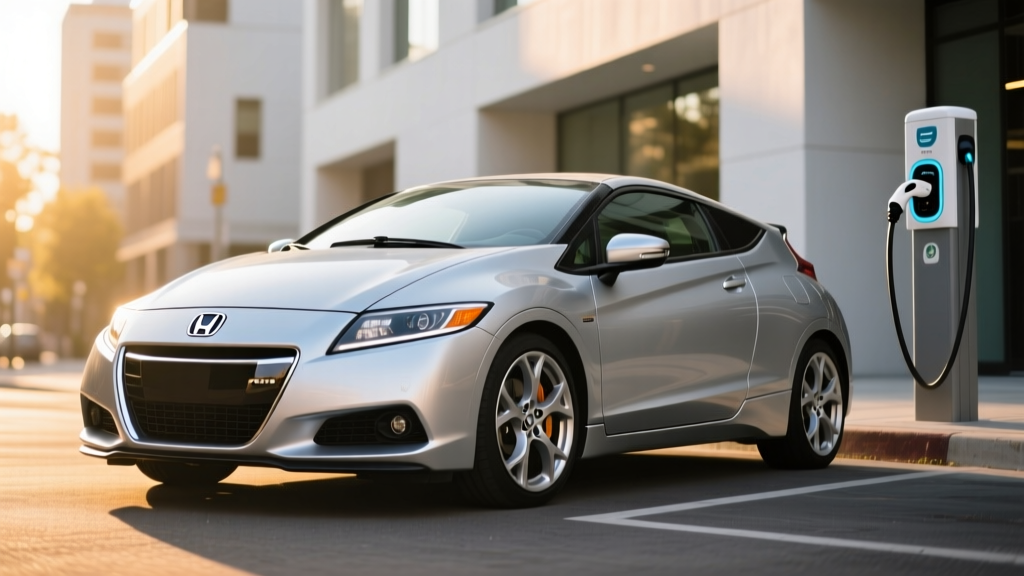
The 2011 Honda CR-Z hybrid occupies a unique niche in Honda's electrified history: a two-seat sport coupe that sacrificed maximum fuel economy for driving engagement. With EPA ratings of 36 city / 39 highway / 37 combined MPG (CVT automatic) or 31 city / 37 highway / 33 combined (6-speed manual), it never matched the Prius on efficiency — and it wasn't designed to. Honda's Integrated Motor Assist (IMA) system was tuned for responsive acceleration rather than hypermiling.
If you're shopping for a used CR-Z in 2026, you're likely looking at a 14-year-old hybrid with 100,000+ miles. The good news: the IMA system has proven remarkably durable, parts remain available, and real-world fuel economy often exceeds EPA estimates in city driving. The bad news: it's a two-seater with limited cargo space, and the 122 combined horsepower means you won't win any stoplight drags.
This guide covers everything a used-car buyer needs to know about the 2011 CR-Z hybrid — from real-world MPG validation to IMA battery replacement costs.
How Many MPG Does the 2011 Honda CR-Z Hybrid Get?
| Transmission | City MPG | Highway MPG | Combined MPG |
|---|---|---|---|
| CVT Automatic | 36 | 39 | 37 |
| 6-Speed Manual | 31 | 37 | 33 |
Source: EPA Fuel Economy Guide
Real-World MPG vs. EPA Estimates
Owner-reported data from Fuelly and CR-Z forums consistently shows real-world fuel economy that meets or slightly exceeds EPA estimates for the CVT model, with many drivers reporting 38-42 MPG combined in mixed driving. The IMA system's electric motor assist is most effective at low speeds and during acceleration from stops — exactly the conditions that tank conventional gas car efficiency.
Highway driving tells a different story. At sustained 70+ MPH speeds, the CR-Z's aerodynamic drag and the IMA system's limited electric assist mean you'll see 35-38 MPG — below the EPA highway estimate. This is typical for Honda's first-generation IMA architecture, which uses a small electric motor sandwiched between the engine and transmission rather than a full hybrid system like Toyota's HSD.
Cold weather impact: Expect a 10-15% fuel economy penalty in freezing temperatures. The IMA battery's nickel-metal hydride (NiMH) chemistry loses efficiency in cold weather, and the engine runs richer during warm-up cycles.
2011 CR-Z Powertrain: Honda's IMA System Explained
| Specification | 2011 Honda CR-Z |
|---|---|
| Engine | 1.5L i-VTEC inline-4 |
| Engine HP | 111 hp @ 6,000 rpm |
| Electric Motor | IMA (10 kW / 13 hp) |
| Combined System Output | 122 hp @ 6,000 rpm |
| Torque | 128 lb-ft (CVT) / 127 lb-ft (MT) |
| 0-60 MPH | 9.1 seconds (CVT) |
| IMA Battery | NiMH, 0.6 kWh (nominal) |
| Fuel Tank | 10.6 gallons |
| Total Range | ~390 miles (CVT combined) |
How Honda's IMA System Works
The Integrated Motor Assist system in the 2011 CR-Z is a mild hybrid architecture — not a full hybrid like the Toyota Prius or a plug-in hybrid (PHEV). Here's the distinction:
Conventional Hybrid (HEV) vs. Plug-In Hybrid (PHEV) vs. Mild Hybrid
- Full Hybrid (HEV): Can drive on electric power alone at low speeds; larger battery (1-2 kWh); regenerative braking recharges battery; no plug required. Example: Toyota Prius.
- Plug-In Hybrid (PHEV): Larger battery (8-20+ kWh); 20-50 miles electric-only range; requires plug-in charging for maximum benefit; qualifies for federal tax credits when new. Example: Toyota RAV4 Prime.
- Mild Hybrid (IMA): Electric motor assists engine but cannot drive on electric power alone; small battery (under 1 kWh); regenerative braking; no plug required. Example: 2011 Honda CR-Z.
The CR-Z's IMA motor provides torque fill during acceleration and enables idle stop-start, but the gasoline engine is always engaged when the vehicle is moving. The 0.6 kWh NiMH battery pack is recharged exclusively through regenerative braking and engine power — the CR-Z cannot be plugged in.
IMA Battery Lifespan and Replacement Cost
Original Warranty Coverage
When new, Honda covered the IMA battery for 8 years / 80,000 miles in most states, or 10 years / 150,000 miles in California Air Resources Board (CARB) states (CA, CT, ME, MA, NJ, NY, OR, RI, VT, WA).
By 2026, all 2011 CR-Z vehicles are well beyond factory hybrid battery warranty coverage.
Real-World IMA Battery Longevity
Honda's IMA batteries have demonstrated better longevity than early Toyota Prius NiMH packs, with many CR-Z owners reporting original batteries lasting 150,000-200,000 miles before requiring replacement. The smaller battery capacity and less aggressive charge/discharge cycles contribute to this durability.
However, at 14 years old, even low-mileage CR-Z examples may show battery degradation. Warning signs include:
- IMA warning light or "Check IMA System" message on dash
- Reduced regenerative braking capability
- Engine not shutting off at stops (idle stop disabled)
- Lower fuel economy than expected (2-5 MPG drop)
- Battery state-of-charge gauge showing fewer bars than normal
IMA Battery Replacement Costs (2026)
| Option | Cost Range | Warranty |
|---|---|---|
| New OEM Honda IMA Battery | $2,000 - $2,800 (parts + labor) | 3 years / 36,000 miles |
| Remanufactured IMA Battery | $1,200 - $1,800 (parts + labor) | 1-3 years (varies by supplier) |
| Used/Salvage IMA Battery | $400 - $800 (parts only) | 30-90 days typical |
| DIY Replacement | $400 - $2,000 (parts only, 2-4 hours labor) | Varies |
The IMA battery in the CR-Z is located behind the seats in the cargo area. Replacement is moderately complex but within reach of experienced DIY mechanics. The process requires disabling the high-voltage system, removing interior trim, and swapping the battery module. Most independent hybrid specialists charge 2-3 hours labor.
Cost-benefit reality check: With 2011 CR-Z values ranging from $4,000-$8,000 depending on mileage and condition, a $2,500 OEM battery replacement represents 30-60% of the vehicle's value. Many owners opt for remanufactured units or continue driving with degraded (but functional) batteries.
Who Should Buy the 2011 CR-Z Hybrid?
Pros
- Engaging driving dynamics for a hybrid (manual transmission available)
- 37-42 MPG real-world combined (CVT)
- Proven IMA reliability with 150K+ mile battery lifespan
- Low insurance costs (sports coupe styling, econo-car performance)
- Unique styling that still turns heads in 2026
- Lightweight (2,800 lbs) makes it nimble in urban traffic
Cons
- Two-seat layout severely limits practicality
- Modest 122 hp means slow acceleration (9.1 sec 0-60)
- Cargo space compromised by IMA battery placement
- Outdated infotainment (no Apple CarPlay/Android Auto)
- Highway fuel economy below EPA estimate at 70+ MPH
- Beyond factory warranty — battery replacement is out-of-pocket
CR-Z vs. Full EV vs. Modern Hybrid: Decision Framework
Choose the 2011 CR-Z Hybrid if:
- You want a cheap, fuel-efficient commuter with sporty styling
- You drive under 15,000 miles/year (fuel savings justify purchase price)
- You don't need back seats or significant cargo space
- You lack home charging access (no plug required)
- You're mechanically inclined and comfortable with a 14-year-old vehicle
Choose a modern full hybrid (2024-2026 Prius, Civic Hybrid) if:
- You need four seats and modern safety features
- You want 50+ MPG combined with better highway efficiency
- You prefer a warranty and latest infotainment tech
Choose a plug-in hybrid (PHEV) if:
- You have home charging and a short commute (20-40 miles)
- You want electric-only driving for daily errands with gas backup for road trips
- You qualify for federal or state PHEV incentives (used PHEV credit up to $4,000 under §25E)
Choose a full EV if:
- You have reliable home Level 2 charging
- Your daily driving is under 200 miles
- You want minimal maintenance and the lowest per-mile energy cost
- You qualify for the $7,500 federal EV tax credit (§30D) on a new purchase
Tax Credits and Incentives: What Applies in 2026?
The 2011 Honda CR-Z hybrid does not qualify for any federal tax credits when purchased used in 2026. Here's why:
- New Clean Vehicle Credit (§30D): Only applies to new vehicle purchases. The CR-Z was discontinued after 2016.
- Used Clean Vehicle Credit (§25E): Provides up to $4,000 or 30% of sale price (whichever is lower) for used EVs and PHEVs. However, the CR-Z's mild hybrid IMA system does not meet the minimum 4 kWh battery capacity requirement for §25E eligibility.
- State incentives: Most state hybrid incentives expired years ago or apply only to new purchases. Check your state's current programs at AFDC State Laws & Incentives.
The CR-Z's primary financial advantage in 2026 is its low purchase price ($4,000-$8,000) combined with 37+ MPG fuel economy — not tax incentives.
Reliability and Common Issues
According to NHTSA data, the 2011 CR-Z has a strong reliability record with few major recalls or systemic failures. The IMA system, 1.5L i-VTEC engine, and CVT/manual transmissions have all proven durable with proper maintenance.
Common Issues to Watch For:
- IMA battery degradation: Expected after 10-15 years; see replacement cost section above
- 12V auxiliary battery: Located in the engine bay; replace every 4-5 years ($150-$200)
- CVT transmission fluid: Change every 30,000-60,000 miles to prevent shudder ($150-$250)
- Brake actuator recall: Verify recall 11V-528 was performed (free brake system inspection/repair)
- Air conditioning compressor: Electric A/C compressor can fail at 100K+ miles ($800-$1,200 replacement)
Regular maintenance follows Honda's standard schedule: oil changes every 5,000-7,500 miles, timing chain (no replacement required), and standard brake/suspension service. The CR-Z's lightweight and modest power output mean tires, brakes, and suspension components last longer than typical sport compacts.
FAQ: 2011 Honda CR-Z Hybrid
Can I plug in the 2011 Honda CR-Z to charge it?
No. The CR-Z is a conventional mild hybrid (HEV), not a plug-in hybrid (PHEV). The IMA battery recharges through regenerative braking and engine power. There is no charging port.
How much does it cost to replace the IMA battery?
Expect $1,200-$2,800 depending on whether you choose remanufactured or OEM replacement and whether you DIY or use a shop. The battery is located behind the seats and requires 2-4 hours labor for professional installation.
Is the CR-Z fuel efficient enough to justify buying in 2026?
At 37-42 MPG real-world combined, the CR-Z saves roughly $600-$800/year in fuel costs compared to a 25 MPG gas car (assuming 12,000 miles/year and $3.50/gallon). Over 5 years, that's $3,000-$4,000 in savings — meaningful given the $4,000-$8,000 purchase price.
Does the CR-Z qualify for any federal tax credit?
No. The CR-Z's mild hybrid system with 0.6 kWh battery does not meet the 4 kWh minimum for the Used Clean Vehicle Credit (§25E). It also doesn't qualify for the new vehicle credit (§30D) since it's only available used.
How does the CR-Z compare to a modern hybrid like the 2025 Civic Hybrid?
The 2025 Civic Hybrid achieves 49 MPG combined with 200 combined horsepower, four seats, modern safety tech, and a full warranty — but starts at $28,000+. The CR-Z offers 37 MPG and two seats for $4,000-$8,000 used. It's a budget choice with trade-offs.
What's the CR-Z's total range on a full tank?
With a 10.6-gallon tank and 37 MPG combined (CVT), expect roughly 390 miles of range. Highway-only driving at 70 MPH drops this to 350-370 miles.
Is the manual transmission version more fuel efficient?
No. The 6-speed manual is rated 31 city / 37 highway / 33 combined — 4 MPG lower than the CVT. The manual exists for driving engagement, not efficiency.